How to Choose a Rose Charm Necklace: Metals, Chains & Care
Discover how to choose the perfect rose charm necklace. Our buying guide covers metal grades, chain pairings, clasp security, and pricing tiers.

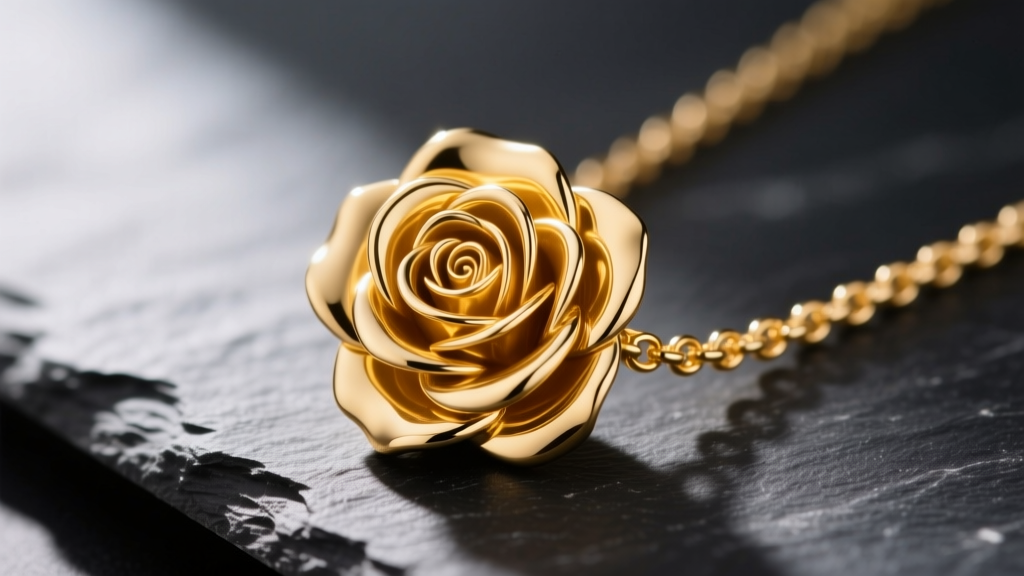
The rose charm necklace is a timeless botanical staple in fine jewelry, symbolizing romance, resilience, and natural beauty. However, the market is flooded with everything from $15 fast-fashion pendants to $2,000 artisan-crafted heirlooms. When shopping for a rose charm necklace, the difference between a piece that tarnishes in a month and one that lasts a lifetime comes down to manufacturing techniques, metal purity, and structural engineering. This comprehensive buying guide breaks down exactly what to look for when investing in a rose pendant, ensuring you get the best craftsmanship for your budget.
The Anatomy of a High-Quality Rose Charm
The visual impact of a rose pendant relies entirely on how it was manufactured. There are two primary methods used in the industry: die-striking and lost-wax casting.
Die-Struck vs. Lost-Wax Casting
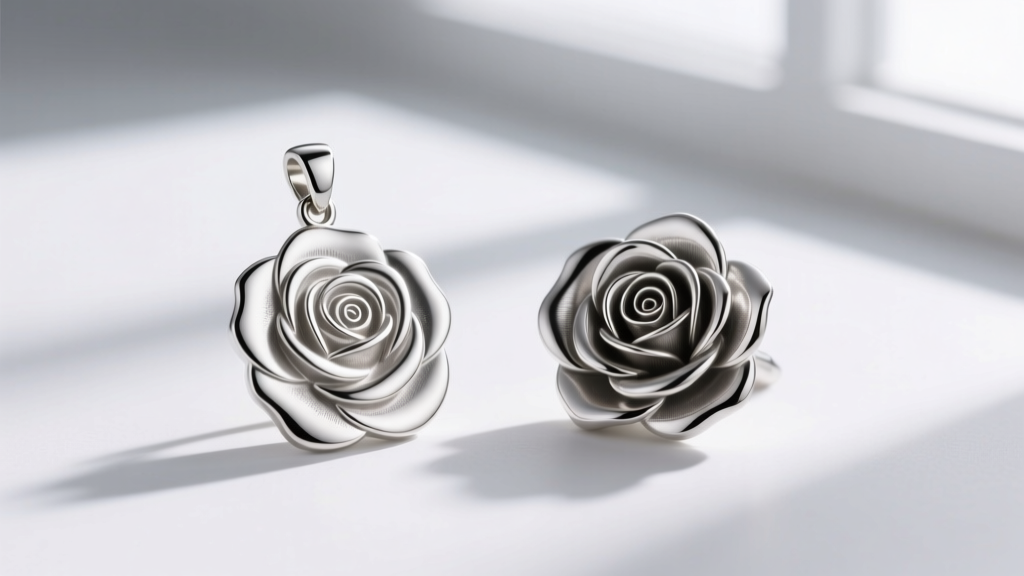
Mass-market rose charms are typically die-struck. This process involves stamping a flat sheet of metal with a heavy press. While cost-effective, it results in a shallow, two-dimensional design. The petals lack deep undercuts, making the rose look flat and lifeless from a side profile.
Premium rose charms are created using lost-wax casting. A jeweler sculpts a 3D wax model, allowing for deeply layered, overlapping petals with realistic thorns and leaves. The wax is encased in plaster, melted out, and replaced with molten metal. This method creates deep shadows and highlights, giving the rose a sculptural, lifelike quality.
Enamel and Gemstone Accents
If your rose charm features color, pay attention to the technique. Cold enamel (essentially colored epoxy resin) is common in budget pieces but will yellow and chip within a year. Vitreous enamel (glass fused to metal at high heat) or guilloché (enamel over engine-turned metal patterns) are hallmarks of fine jewelry and will retain their luster for decades. For gem-set roses, ensure the stones are prong-set rather than glued, as adhesive degrades when exposed to perfumes and skin oils.
Metal Grades: What Actually Lasts?
The metal composition dictates the longevity, hypoallergenic properties, and maintenance requirements of your necklace. The Federal Trade Commission (FTC) Jewelry Guides strictly regulate how these metals can be marketed, yet confusing terminology still traps many buyers.
| Metal Type | Composition | Lifespan & Wear | Average Price Range |
|---|---|---|---|
| Sterling Silver (925) | 92.5% Silver, 7.5% Copper | Lifetime. Will tarnish; requires regular polishing. | $45 - $150 |
| Gold Vermeil | 925 Silver base, 2.5µm+ Gold plating | 1-3 Years. Plating will eventually wear off on high-friction areas. | $70 - $180 |
| Gold Filled | Brass base, 5% Gold by weight (mechanically bonded) | 5-10 Years. Highly durable, but cannot be easily resized or repaired. | $50 - $120 |
| Solid 14k / 18k Gold | 58.5% or 75% Pure Gold alloyed with copper/silver | Lifetime. Tarnish-resistant, hypoallergenic, and holds intrinsic value. | $300 - $1,200+ |
Pro Tip: If you opt for gold vermeil, verify the micron thickness. According to GIA educational standards, true vermeil must have a gold layer of at least 2.5 microns. Anything less is considered standard gold plating and will rub off rapidly against the skin.
Chain Pairings: Matching the Rose to the Right Link
A beautiful rose pendant will be ruined if hung on an inadequate chain. The chain must complement the visual weight of the charm while providing structural support. Here is how to match them:
- Box Chains: The gold standard for pendants. The square links lie flat, resist kinking, and distribute the weight of a heavy 3D rose charm evenly. They do not pull chest hair or catch on delicate fabrics.
- Cable Chains: A classic choice featuring uniform oval links. Best suited for lightweight, flat, die-struck rose charms. Avoid thin cable chains for heavy pendants, as the links can stretch and deform over time.
- Rope Chains: Twisted links that offer incredible sparkle and tensile strength. Ideal for vintage-style or highly detailed cast rose pendants, though the twists can trap lotions and dead skin cells.
The Weight-to-Gauge Ratio Rule
Jewelers use a practical heuristic to prevent chain breakage: The Weight-to-Gauge Ratio. Divide the weight of your rose charm (in grams) by 10 to find the absolute minimum chain thickness (in millimeters). For example, if your solid gold rose pendant weighs 6 grams, the chain must be at least 0.6mm thick. However, for daily wear, we recommend adding 0.2mm to that baseline for a safety margin, making a 0.8mm box chain the ideal choice.
Clasp Security and Jump Ring Failures
The most common point of failure on any necklace is not the chain itself, but the jump ring—the small circular loop that connects the rose charm to the chain.
Soldered vs. Unsoldered Jump Rings
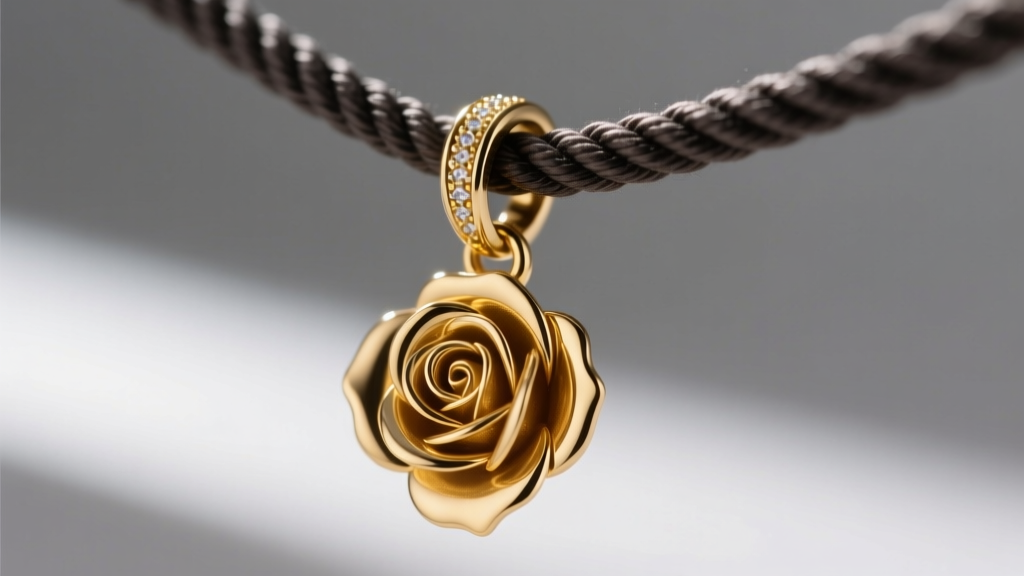
If the jump ring on your rose pendant has a visible slit (unsoldered), it is a structural liability. Every time the heavy charm swings and catches on a sweater, the tension pulls the slit open, eventually dropping the pendant. High-end jewelers use soldered jump rings, where the slit is fused shut with a laser or torch. If your charm arrives with an unsoldered ring, take it to a local bench jeweler to have it soldered for less than $15.
Clasp Mechanics
Avoid spring-ring clasps for heavy rose pendants; the internal springs degrade, and they are difficult to operate with one hand. Opt for a lobster clasp with a sturdy internal mechanism. For chains thicker than 1.5mm, a toggle clasp or a fold-over clasp provides superior security and a more luxurious finishing touch.
Pricing Tiers and What to Expect
Understanding market pricing prevents you from overpaying for base metals disguised as fine jewelry.
- Fashion Tier ($15 - $40): Typically brass or zinc alloy with "flash plating" (less than 0.5 microns of gold). The rose details are often muddy, and the piece will cause green skin discoloration within weeks. Avoid for sensitive skin.
- Demi-Fine Tier ($60 - $180): Sterling silver bases with heavy gold vermeil or rhodium plating. Features better casting details and secure lobster clasps. Excellent for trend-driven buyers who want the look of solid gold without the luxury price tag.
- Fine Jewelry Tier ($350 - $1,500+): Solid 14k or 18k gold, sometimes featuring lab-grown diamond accents or vitreous enamel. These pieces are cast with deep undercuts, feature soldered jump rings, and are designed to be passed down as heirlooms.
Care and Maintenance for Botanical Motifs
Rose charms are notoriously difficult to clean because the overlapping petals and thorns create deep crevices that trap sebum, perfume, and environmental dust. Over time, this buildup dulls the metal and can cause skin irritation.
Jeweler's Warning: Never put an enameled rose charm or a rose set with porous gemstones (like pearls or opals) into an ultrasonic cleaner. The high-frequency vibrations will shatter the glass enamel and fracture the stones.
For solid gold or sterling silver rose charms without delicate accents, the safest cleaning method is a soak in warm water with a few drops of mild, phosphate-free dish soap. Use a soft-bristled baby toothbrush to gently agitate the soap into the petal crevices. Rinse thoroughly with distilled water to prevent hard water spots, and dry completely with a microfiber cloth before storing in an anti-tarnish pouch.
By prioritizing lost-wax casting, verifying metal micron thickness, and ensuring structural integrity at the jump ring, you can confidently select a rose charm necklace that remains as captivating on day 1,000 as it was on day one.


