Troubleshooting Your Family Initial Necklace: Fixes for Tangling & Wear
Is your family initial necklace tangling or fading? Discover expert troubleshooting tips for chain selection, metal grades, and clasp upgrades.

The Mechanical Realities of Multi-Pendant Jewelry
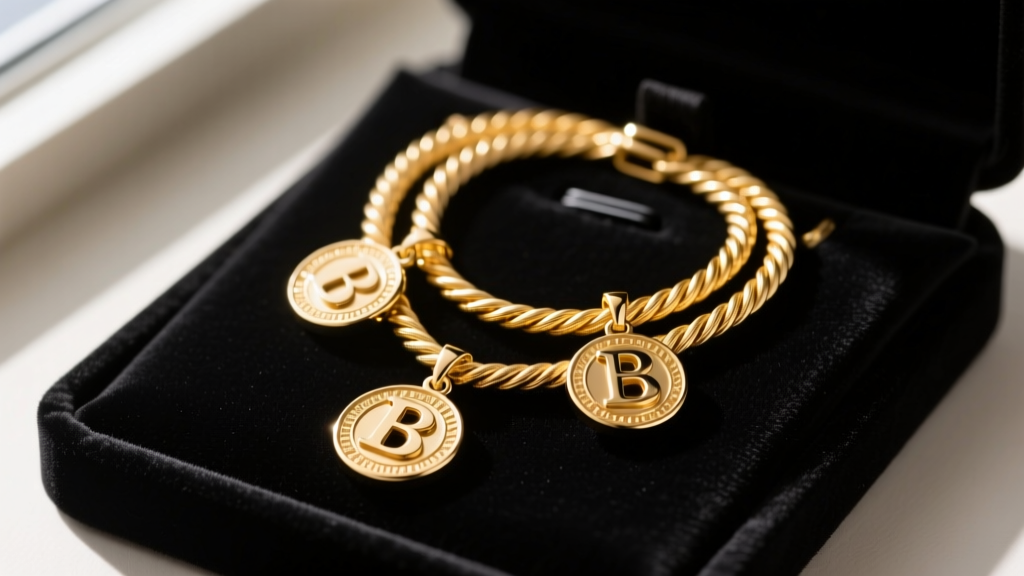
A beautifully curated family initial necklace is more than just an accessory; it is a wearable archive of your most cherished connections. However, combining multiple letter charms onto a single chain introduces unique mechanical and metallurgical challenges that standard solitaire pendants simply do not face. When you wear three, four, or even five initial pendants, you are essentially creating a complex system of independent pendulums. Each charm has a different center of gravity, surface area, and weight distribution. As you move, these pendants swing, collide, and interact with the microscopic links of your chain, leading to the most common complaints we see in our repair studio: chronic tangling, faded engravings, and hardware fatigue.
If your daily wear piece has become a source of frustration rather than joy, you are not alone. In this comprehensive troubleshooting guide, we will break down the exact physics causing your necklace to fail and provide actionable, bench-jeweler-level solutions to restore its functionality and brilliance.
Solving the Multi-Pendant Tangling Nightmare
Tangling in a family initial necklace is rarely a matter of bad luck; it is a matter of friction and chain geometry. Standard cable chains, while classic, consist of uniform oval links that lay flat. When multiple flat pendants rest against a flat chain, the surface area contact is maximized. As the charms flip over during daily movement, the bail (the loop connecting the charm to the chain) can easily slip between the links of a cable chain, causing a knot that tightens with every subsequent movement.
Chain Weave Selection Matrix
To eliminate tangling, you must disrupt the surface contact between the charm bails and the chain links. Upgrading your chain style is the most effective permanent fix. Below is a comparison of common chain weaves and their tangling propensity when holding multiple initials.
| Chain Style | Link Geometry | Friction Level | Tangling Risk (Multi-Charm) |
|---|---|---|---|
| Standard Cable | Flat, uniform ovals | High | Severe (Bails slip into links) |
| Box Chain | Square, 3D interlocking | Low | Minimal (Rigid structure) |
| Wheat Chain | Woven, directional | Very Low | None (Smooth surface) |
| Rope Chain | Twisted, helical | Medium | Moderate (Can catch on rough bails) |
For a multi-initial setup, a 14k gold wheat chain or a 1.5mm box chain are the optimal choices. Their three-dimensional structures prevent the flat bails of initial charms from finding a groove to slip into. Furthermore, ensuring that the inner diameter of your charm bails is at least 0.5mm larger than the width of your chain will drastically reduce mechanical binding.
Troubleshooting Faded or Lost Engravings
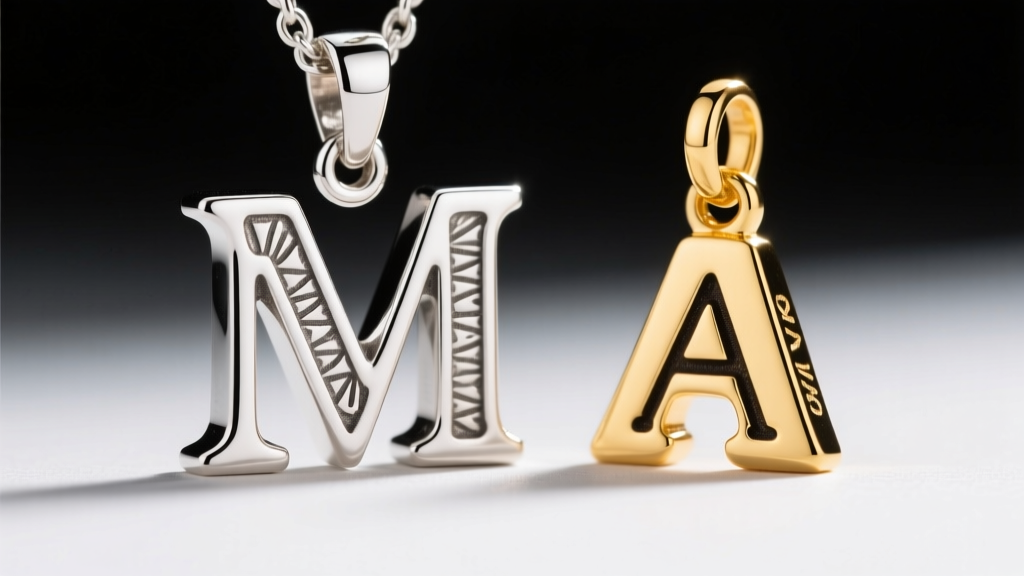
Another frequent issue with family initial necklaces is the gradual disappearance of the letters themselves. This is almost always a result of the engraving method used during manufacturing, combined with the hardness of the base metal. According to the Gemological Institute of America (GIA), the alloy composition of your gold or silver directly impacts how well it holds surface detailing.
Laser Engraving vs. Hand Stamping
Most mass-market initial necklaces utilize laser engraving. A laser burns away the top layer of metal, typically achieving a depth of only 0.05mm to 0.1mm. While this allows for intricate, perfectly uniform fonts, it is fundamentally a surface-level alteration. When worn daily against the skin, clothing, and other charms, this shallow layer is polished away by micro-abrasions within 12 to 18 months.
The Fix: If you are replacing a faded charm or commissioning a new family initial necklace, opt for hand stamping. A jeweler uses a hardened steel die and a heavy mallet to physically displace the metal, creating a depth of 0.5mm to 1.0mm. This displacement means the letter is structurally integrated into the charm. However, hand stamping requires a thicker metal blank. Ensure your initial charms are at least 16-gauge (1.3mm thick); stamping into a flimsy 20-gauge blank will warp the metal and cause the charm to cup or bend permanently.
Hardware Failures: Clasps and Jump Rings
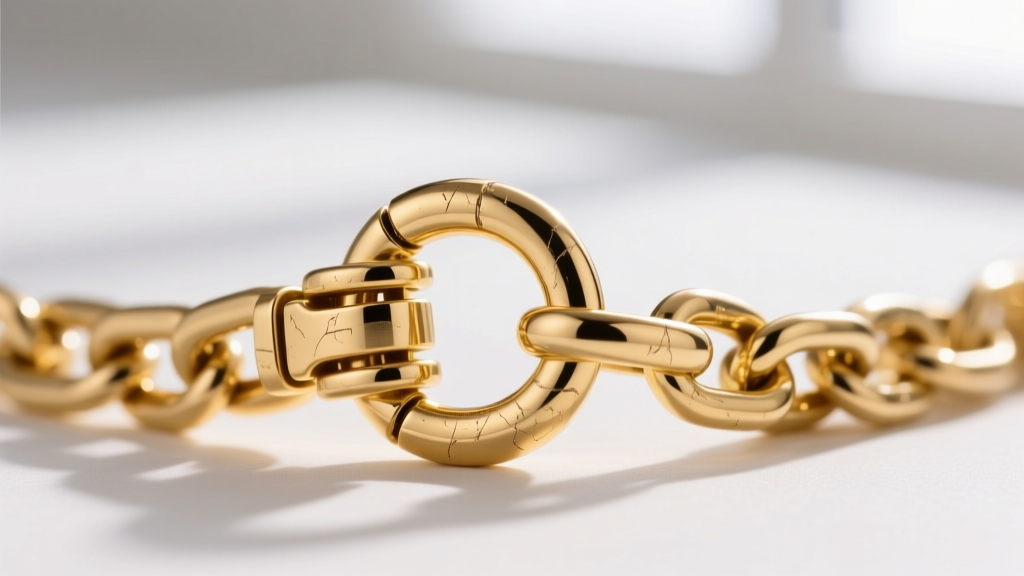
The weight of multiple solid metal initials adds significant tensile stress to the weakest points of your necklace: the clasp and the jump rings. A standard spring-ring clasp relies on a tiny internal steel spring. When subjected to the dynamic, swinging weight of four or five brass or gold initials, the spring mechanism fatigues, leading to a clasp that refuses to stay closed or snaps open when snagged on a sweater.
Upgrading Your Closure System
For a family initial necklace weighing more than 6 grams, a spring ring is mechanically insufficient. You must upgrade to a solid 14k lobster clasp with a minimum length of 12mm. Lobster clasps utilize a heavier, more robust internal spring and a wider jaw that locks securely into the end ring.
Equally critical are the jump rings connecting your clasp to the chain. Standard open jump rings are simply cut wire; under the pendulum stress of multiple charms, the cut ends can pull apart, resulting in lost pendants. Have a local jeweler solder your jump rings shut using a laser welder or micro-torch. If soldering is not an option, replace them with 18-gauge split rings (which function like miniature key rings) to guarantee the structural integrity of your chain's termination points.
Metallurgical Breakdowns: Tarnish and Allergies
If the skin beneath your family initial necklace is turning green, or if the charms themselves are developing a dark, oxidized patina, you are dealing with a metallurgical mismatch. Many affordable initial necklaces are made from gold vermeil or standard 925 sterling silver.
While Jewelers of America notes that 925 sterling silver is a premium standard, it contains 7.5% copper. When multiple sterling silver initials rub against each other and your skin's natural acidity, the copper oxidizes rapidly, causing black tarnish. Similarly, gold vermeil must have a minimum of 2.5 microns of gold plating over sterling silver. The high-friction collision of multiple charms will wear through this plating at the edges and bails within months, exposing the reactive silver beneath.
The Ultimate Material Solution
For a multi-charm setup that requires zero maintenance and will not trigger contact dermatitis, you must transition to solid 14k gold (yellow or rose). 14k gold is 58.5% pure gold, alloyed with silver, copper, and zinc for durability. It will not tarnish, it will not wear away to reveal a base metal, and it possesses the exact Vickers hardness required to keep hand-stamped initials crisp for decades. If budget constraints make solid gold for all five family members impossible, consider a hybrid approach: use a solid 14k gold chain and clasp (the high-wear areas), and reserve gold vermeil strictly for the pendants, ensuring you remove the necklace before showering or exercising.
Quick-Reference Troubleshooting Chart
Use this diagnostic matrix to quickly identify and resolve the specific failure points of your necklace.
| Symptom | Root Cause | Bench-Jeweler Fix |
|---|---|---|
| Constant knotting at the nape | Flat cable chain + lightweight charms | Swap to a 1.2mm Wheat or Box chain |
| Letters turning black/fading | Shallow laser engraving + copper alloy | Re-stamp by hand on 16-gauge solid 14k blanks |
| Clasp popping open randomly | Spring ring tension failure from weight | Install a 12mm solid Lobster clasp |
| Charms slipping off the chain | Open jump rings pulling apart | Laser solder all connection rings shut |
| Skin turning green/itchy | Vermeil plating wearing through to brass/copper | Upgrade to solid 14k or 18k gold components |
Final Thoughts on Longevity
A family initial necklace is meant to be a generational piece, but treating it like a delicate, single-pendant chain will lead to premature failure. By understanding the physics of multi-charm tangling, demanding deeper hand-stamped engravings, and reinforcing your hardware with soldered rings and lobster clasps, you can transform your necklace from a high-maintenance frustration into a flawless, everyday heirloom. Always consult with a certified bench jeweler to execute these structural upgrades, ensuring your family's story remains securely around your neck for years to come.


