Is It Safe to Sleep With a Necklace On? A Technical Guide
Is it safe to sleep with a necklace on? We analyze chain tension, metal fatigue, clasp failure modes, and skin-safe materials for nighttime wear.

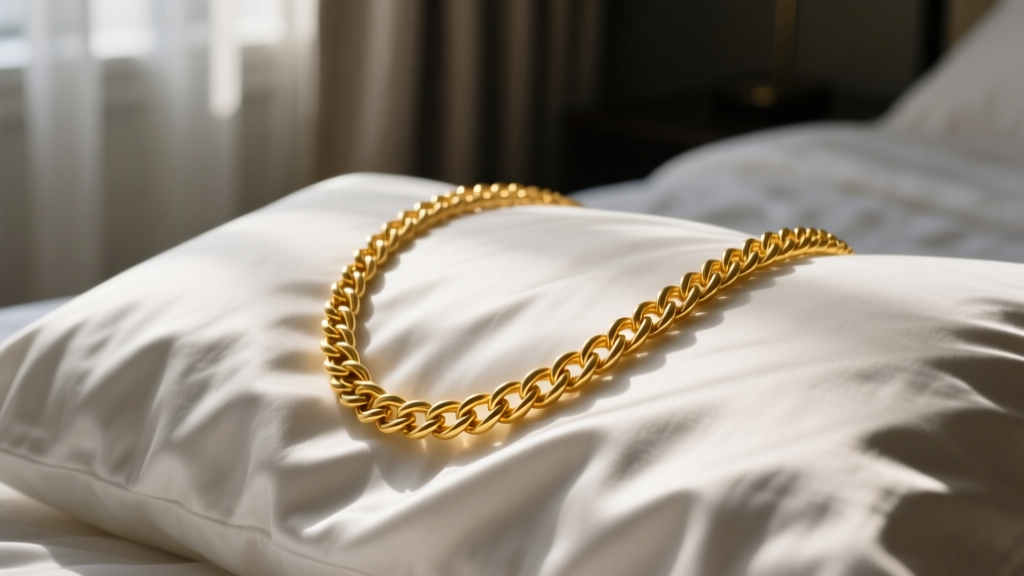
For many jewelry enthusiasts, certain pieces—like sentimental lockets, religious pendants, or permanent welded chains—never leave the body. But when the lights go out, the physical environment changes drastically. If you have ever asked yourself, is it safe to sleep with a necklace on, the answer requires looking past simple comfort and examining the biomechanics of sleep, metallurgical fatigue, and dermatological friction. As a domain expert in jewelry styling and material science, I will break down exactly what happens to your necklaces during the eight hours you are unconscious, and which pieces are actually engineered to survive the night.
The Biomechanics of Nocturnal Chain Tension
To understand nighttime jewelry wear, we must first look at human sleep mechanics. According to the Sleep Foundation, the average adult shifts positions between 20 and 40 times per night. During Non-Rapid Eye Movement (NREM) sleep, your body retains muscle tone, meaning tossing and turning generates significant kinetic force.
When a delicate chain gets caught between your shoulder and a high-friction cotton pillowcase, the localized tensile stress can spike dramatically. A standard 0.8mm (approx. 20-gauge) cable chain has a tensile failure point of roughly 2.5 to 3 pounds of pressure. A sudden, unconscious jerk of the neck can easily exert 5 to 8 pounds of localized force on a single trapped link, resulting in immediate structural failure or permanent elongation.
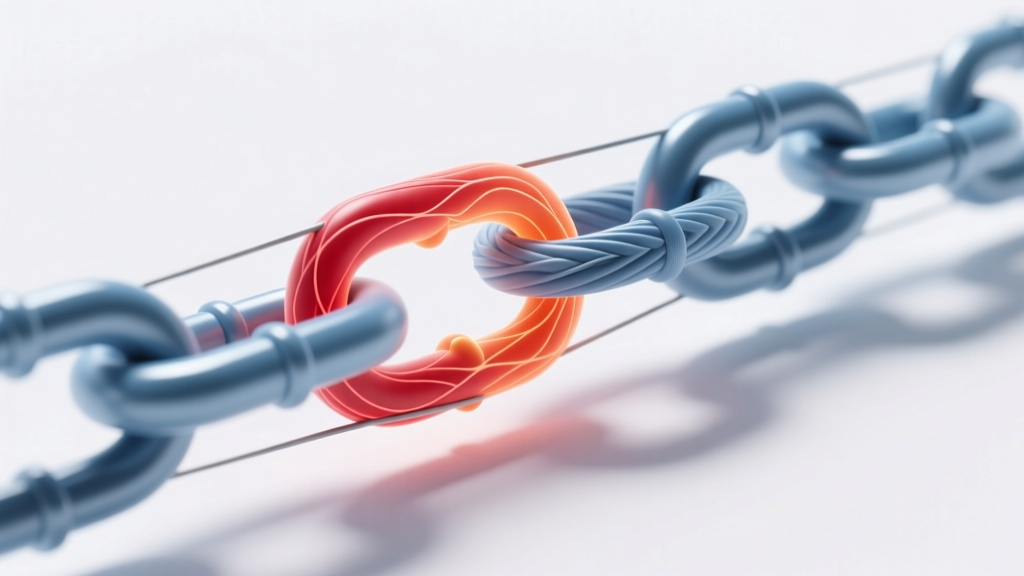
Metallurgical Vulnerabilities: 14k vs. 18k Gold
Not all gold is created equal, especially when subjected to the crushing weight of a sleeping body. The purity of gold directly dictates its structural integrity.
- 18k Gold (75% Pure): With a Vickers hardness of roughly 125 HV, 18k gold is exceptionally soft. While it offers a rich, warm color, it is highly susceptible to stretching and micro-abrasions when subjected to the friction of bedsheets.
- 14k Gold (58.5% Pure): Alloyed with stronger metals like copper, zinc, and silver, 14k gold boasts a Vickers hardness of 140-160 HV. This makes it significantly more resistant to the crushing and pulling forces of sleep.
- Platinum: While incredibly dense and durable against wear, platinum is malleable. A heavy platinum pendant chain can easily bend out of shape if you sleep directly on the links, though it rarely snaps.
For a comprehensive breakdown of precious metal properties and alloy compositions, the Gemological Institute of America (GIA) provides extensive metallurgical data confirming that lower-karat gold alloys are vastly superior for 24/7 wear.
Chain Link Architecture and Failure Modes
The geometry of the chain link dictates how it handles nocturnal stress. Here is a technical comparison of common chain styles and their sleep durability.
| Chain Style | Tensile Strength | Crush Resistance | Sebum Trap Risk | Sleep Verdict |
|---|---|---|---|---|
| Cable | Low | Moderate | Low | Avoid (High snap risk) |
| Box | High | Very Low | Moderate | Avoid (Prone to kinking) |
| Rope | Very High | High | High | Safe (If >1.5mm gauge) |
| Wheat | High | Moderate | High | Conditional |
Box chains are particularly problematic for sleepers. Their geometric, square links rely on precise angles. If you roll over onto a box chain, the links can easily crush inward, causing the chain to kink and permanently lose its flexibility. Rope chains, conversely, distribute tension radially across multiple intertwined links, making them the most resilient against sudden pulling.
Clasp Mechanics: The Weakest Link
If the chain doesn't break, the clasp usually fails. The microscopic engineering of your necklace clasp plays a massive role in nighttime safety.
Spring Ring Clasps
Spring rings rely on a tiny internal steel spring. When exposed to continuous body heat and the compressive force of your head resting against a pillow, these springs can lose tension or become permanently depressed. Furthermore, the tiny lever is easily snagged by blanket threads, pulling the clasp open while you sleep.
Lobster Clasps
Lobster clasps offer a much stronger mechanical grip and a heavier internal spring. However, the external lever can still catch on hair or high-thread-count sheets. If you must sleep in a necklace, ensure it features a lobster clasp with a recessed lever or a seamless, welded permanent closure.
Dermatological Friction and Contact Dermatitis
Beyond structural damage to the jewelry, we must consider the biological impact on your skin. The American Academy of Dermatology notes that prolonged contact with certain metals, combined with moisture, is a primary trigger for allergic contact dermatitis.
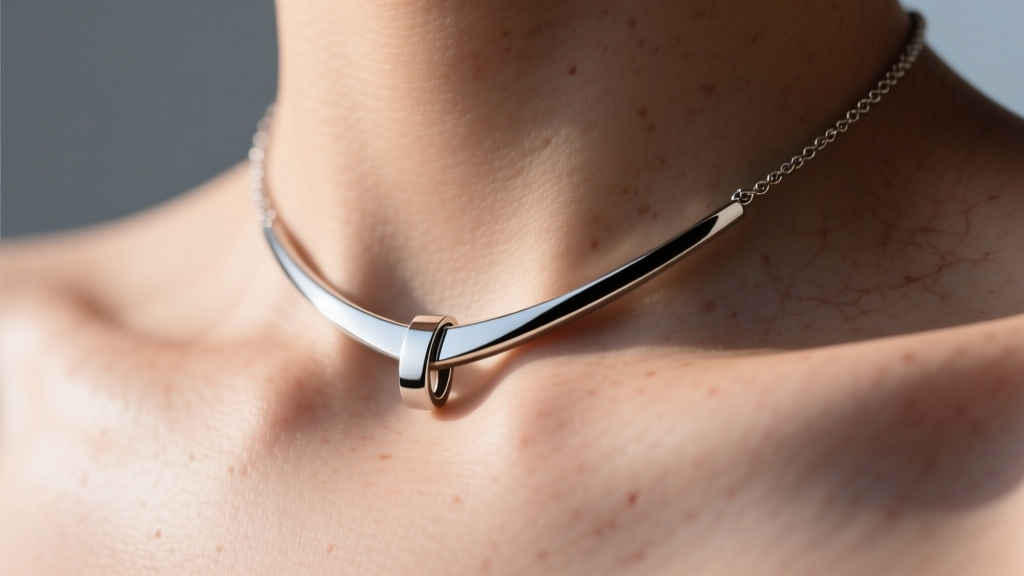
During sleep, your body temperature fluctuates, and you naturally perspire. This sweat mixes with dead skin cells and sebum, creating a mildly acidic environment. If your necklace contains nickel (common in lower-grade white gold or cheap silver alloys), this acidic moisture accelerates galvanic corrosion, leaching nickel ions directly into your pores and causing severe contact dermatitis. Furthermore, chains with deep crevices—like wheat or rope chains—trap this biological debris, leading to bacterial buildup and localized acne along the décolletage.
The Titanium Alternative
If you require a necklace for 24/7 wear due to sensory preferences or medical alert needs, Grade 23 Titanium (Ti6Al4V) is the ultimate metallurgical solution. It is entirely nickel-free, biocompatible (used in surgical implants), and possesses a tensile strength that far exceeds gold or silver, making it virtually indestructible during sleep.
Expert Verdict: A Decision Framework
So, is it safe to sleep with a necklace on? The technical answer is conditional. Use this framework to decide whether your necklace should stay on or go into the jewelry box at night:
“A necklace is only safe for sleep if it possesses a tensile strength greater than 5 lbs, features a crush-proof link geometry, and is forged from a biocompatible, nickel-free alloy.” — Jewelry Material Science Consensus, 2026
Take It Off If:
- The chain is under 1.2mm in thickness (18-gauge or thinner).
- It is an 18k or 22k gold chain (too soft, will stretch).
- It features a delicate box or snake chain (will crush and kink).
- The pendant has sharp prongs or delicate gemstone settings that can snag on linens.
- It uses a standard spring-ring clasp.
Keep It On If:
- The chain is a rope or solid curb link, 1.5mm or thicker.
- The metal is 14k gold, platinum, or surgical-grade titanium.
- The necklace is a seamless, permanently welded chain (no clasp to fail).
- You sleep on a silk or satin pillowcase, which reduces the friction coefficient by up to 40% compared to cotton.
Ultimately, while the romantic idea of never taking off a cherished pendant is appealing, the physics of sleep are unforgiving. By understanding the specific gauge, alloy, and link architecture of your jewelry, you can make an informed, scientifically backed decision that protects both your investment and your skin.


