Troubleshooting Female Necklace Chain Length & Fit Issues
Is your necklace sitting wrong? Troubleshoot common female necklace chain length issues with our expert fit guide, neckline pairings, and sizing hacks.

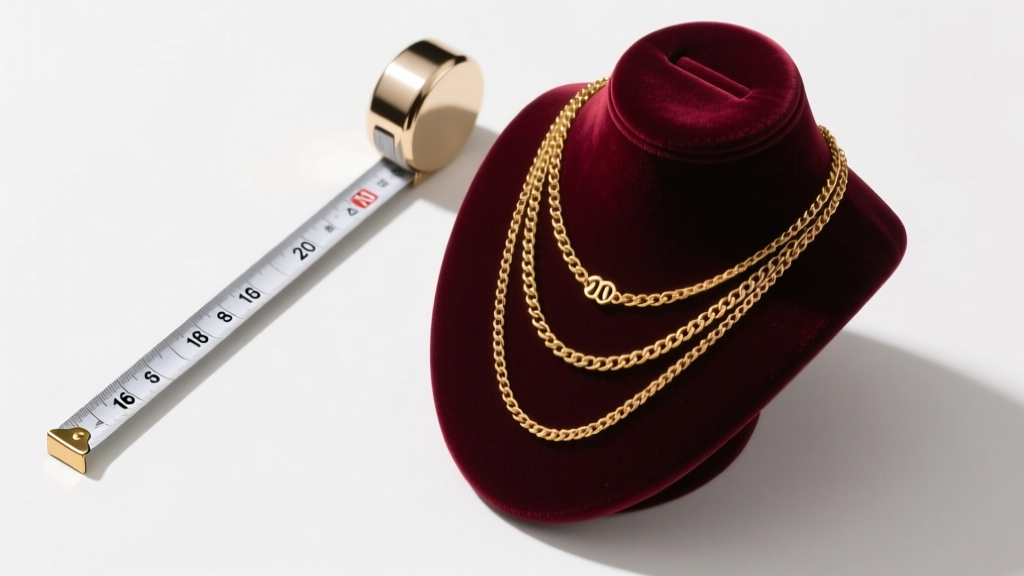
There are few things more frustrating in jewelry shopping than ordering a beautifully crafted piece, only to find that the female necklace chain length sits entirely wrong against your collarbone. A chain that is meant to drape elegantly can easily turn into a restrictive choker or an awkward, dangling hazard depending on your unique anatomy, the weight of your pendant, and the garment you are wearing. In 2026, with the massive shift toward direct-to-consumer online jewelry boutiques, understanding how to troubleshoot and correct chain length discrepancies is an essential skill for any collector.
This comprehensive troubleshooting guide moves beyond generic sizing charts. We will diagnose the exact physics of pendant drag, map chain lengths to precise neck circumferences, and provide actionable hardware hacks to salvage chains that currently sit in the dreaded 'no man's land' of your neckline.
The Anatomy of a Chain Length Fail
The jewelry industry relies on legacy standards for chain lengths: 16 inches (collar), 18 inches (princess), 20 inches (matinee), and 24 inches (opera). However, these standards were established using a standardized dress form with a 13.5-inch neck circumference and a specific torso drop. If your anatomy deviates from this mid-century baseline, standard female necklace chain length metrics will fail you.
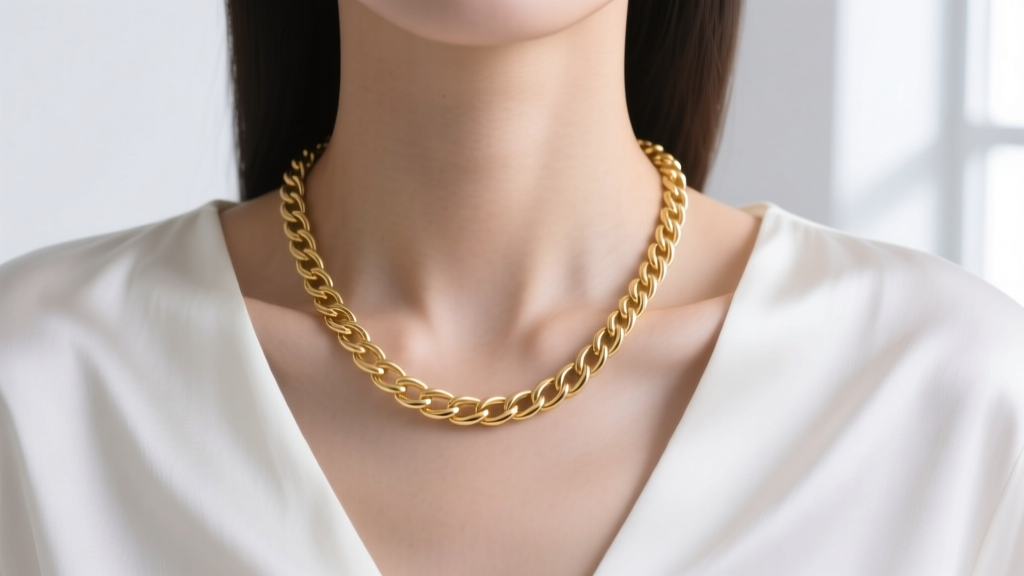
The most common failure is the 'awkward gap.' This occurs when an 18-inch chain rests exactly on the hem of a crew-neck t-shirt or gets lost in the fold of a scoop neck. The chain is neither short enough to frame the face nor long enough to layer over the garment. Another frequent issue is the 'choke effect,' where a 16-inch chain, intended to sit comfortably at the base of the throat, instead rides up into the soft tissue of the neck, causing discomfort and redness.
Troubleshooting by Neck Circumference & Torso Proportion
To accurately troubleshoot your fit, you must discard standard size labels and measure your actual neck circumference using a flexible tailor's tape. Measure exactly where you want the top of the chain to rest, then add two inches for a comfortable baseline. According to Blue Nile's necklace guide, understanding your baseline is the only way to predict how a chain will drape.
| Neck Circumference | Standard Industry Size | Actual Ideal Length for Comfort | Best Chain Style |
|---|---|---|---|
| Under 13 inches | 16" (Collar) | 15" - 16" | Delicate Cable or Snake Chain |
| 13 to 14 inches | 18" (Princess) | 17" - 18" | Box Chain or Bead Chain |
| 14.5 to 15.5 inches | 20" (Matinee) | 19" - 20" | Rope or Curb Chain |
| Over 16 inches | 22"+ | 22" - 24" | Wheat or Figaro Chain |
If you have a longer torso, an 18-inch chain will sit much higher on your chest than it would on someone with a shorter torso, because the chain must travel further down the slope of your shoulders before it can drape downward. For longer torsos, always size up by at least two inches to achieve the visual 'princess' drop.
The Physics of Pendant Drag (Why Your Chain Stretches)
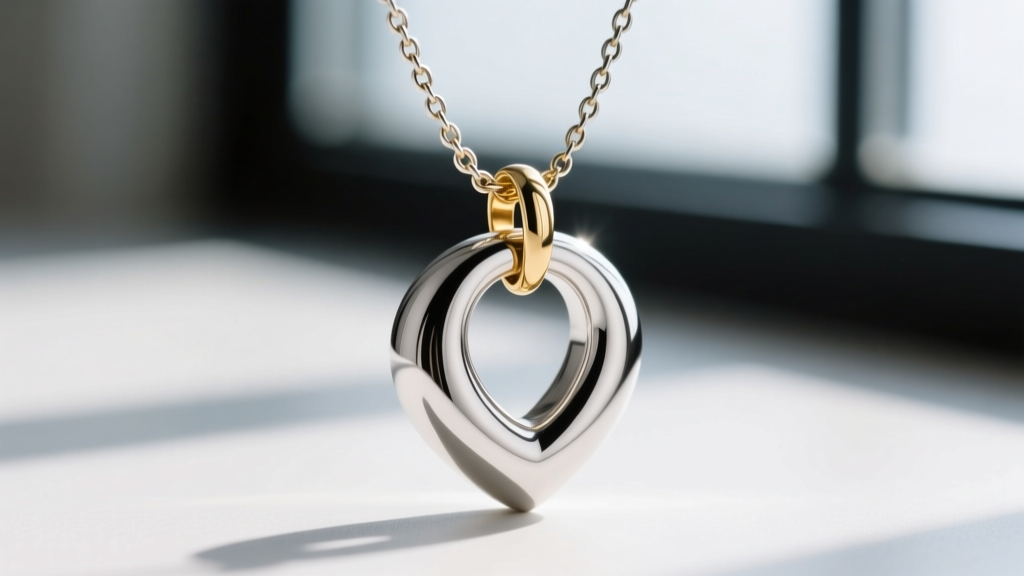
Have you ever bought a 16-inch chain, attached a heavy gemstone pendant, and suddenly found it sitting like an 18-inch chain? This is a structural phenomenon known as 'pendant drag.' When a heavy pendant (typically anything over 8 grams) is suspended from a delicate chain (under 1.2mm in gauge), the weight pulls the chain into a deep catenary curve. This extreme V-shape effectively adds 1 to 2.5 inches of visual drop to the chain's resting position.
Calculating Gauge vs. Weight
- 0.8mm - 1.0mm Chains: Can support up to 4 grams before experiencing severe pendant drag. Best for lightweight solitaire diamonds or small pearl drops.
- 1.2mm - 1.5mm Chains: Can support 5 to 12 grams. The chain will form a gentle curve, adding roughly 0.5 inches to the visual drop.
- 2.0mm+ Chains: Can support 15+ grams. Heavy pendants will not distort the drape of a thick box or curb chain, meaning the length you buy is the length you get.
Troubleshooting Fix: If you already own a delicate chain and want to wear a heavy pendant, you must purchase the chain two inches shorter than your desired final resting place to compensate for the drag.
Neckline Conflict Resolution
A major reason a female necklace chain length feels 'wrong' is due to a clash with the geometry of your clothing. A chain that sits beautifully on bare skin can look messy against fabric. Here is how to troubleshoot specific neckline conflicts:
- The Crew Neck Clash: An 18-inch chain will almost always tangle with the ribbed hem of a standard crew neck t-shirt. Solution: Size up to a 22-inch matinee chain that falls below the hem, or size down to a strict 14-inch choker that sits entirely above the fabric line.
- The V-Neck Void: If your chain crosses the V-neck line at an awkward angle, it breaks the visual symmetry of the outfit. Solution: Use an 18-inch or 20-inch chain with a Y-drop or lariat style that mimics and parallels the angle of the garment's V-neck.
- The Turtleneck Bulk: Standard chains disappear into the folds of thick knitwear. Solution: Reserve 28-inch to 32-inch opera-length chains for turtlenecks, and ensure the chain gauge is at least 2.5mm so it remains visible against the heavy fabric.
Pro-Tip: When layering multiple chains over a silk blouse, ensure there is a minimum 2-inch gap between each chain length (e.g., 16", 18", and 20"). Anything less will cause the clasps to migrate and tangle at the nape of your neck.
Hardware Hacks for Immediate Fixes
If you are currently stuck with a chain that is slightly too long or too short, you do not necessarily need to visit a jeweler for a permanent soldering alteration. Modern jewelry hardware offers several reversible troubleshooting methods.
For Chains That Are Too Short
Purchase a 'chain extender.' These are small, 2-to-3-inch lengths of chain with a lobster clasp on one end and a jump ring on the other. They attach directly to your existing clasp. For a seamless look, ensure the extender's metal finish and link style (e.g., cable, rolo) exactly match your primary chain. Tiffany & Co. sizing standards often incorporate built-in 2-inch extenders on their modern pieces precisely to mitigate this issue.
For Chains That Are Too Long
If a chain is slightly too long and you want to avoid cutting it, use a silicone necklace tightener or a 'slider bead.' A slider bead is a small, silicone-lined metal bead that you thread both ends of the chain through, allowing you to pinch the chain at the nape of your neck and slide it up to shorten the drape without altering the metal links. Alternatively, the 'safety pin hack' involves gathering the excess chain at the back of the neck and securing it with a small, gold-plated safety pin hidden beneath your hair or collar—though this is strictly a temporary, emergency fix.
Ultimately, mastering the female necklace chain length requires treating jewelry not just as an accessory, but as an architectural element that must interact harmoniously with your body's unique geometry and your wardrobe's structural lines. By measuring accurately, accounting for pendant physics, and utilizing adjustable hardware, you can ensure every piece in your collection sits exactly where it belongs.


