How Do You Measure the Length of a Necklace? The Ultimate Fit Guide
Learn exactly how do you measure the length of a necklace for the perfect fit. Explore sizing charts, neckline pairings, and pro tips.


The Physics of Drape: Why Precision Matters
When shopping for fine jewelry, understanding how do you measure the length of a necklace is only half the battle. The true challenge lies in understanding the physics of drape. A 20-inch chain made of lightweight 14k gold hollow rope will sit entirely differently on the décolletage compared to a 20-inch solid sterling silver box chain. Heavier chains, such as a 5mm Cuban link, pull the necklace tighter against the base of the neck due to gravity and structural rigidity, effectively shortening the visual drop by up to an inch. Conversely, a delicate 1mm cable chain conforms to the body's contours, hanging lower and looser. Therefore, measuring isn't just about the physical end-to-end distance; it is about anticipating how the chain's gauge, weight, and material will interact with your unique anatomy.
Step-by-Step: How Do You Measure the Length of a Necklace?
To get an accurate baseline, you need to simulate the drape before committing to a purchase. Avoid using metal tape measures, as they can kink, scratch delicate skin, and fail to mimic the flexibility of a jewelry chain.
Method 1: The String and Ruler Technique
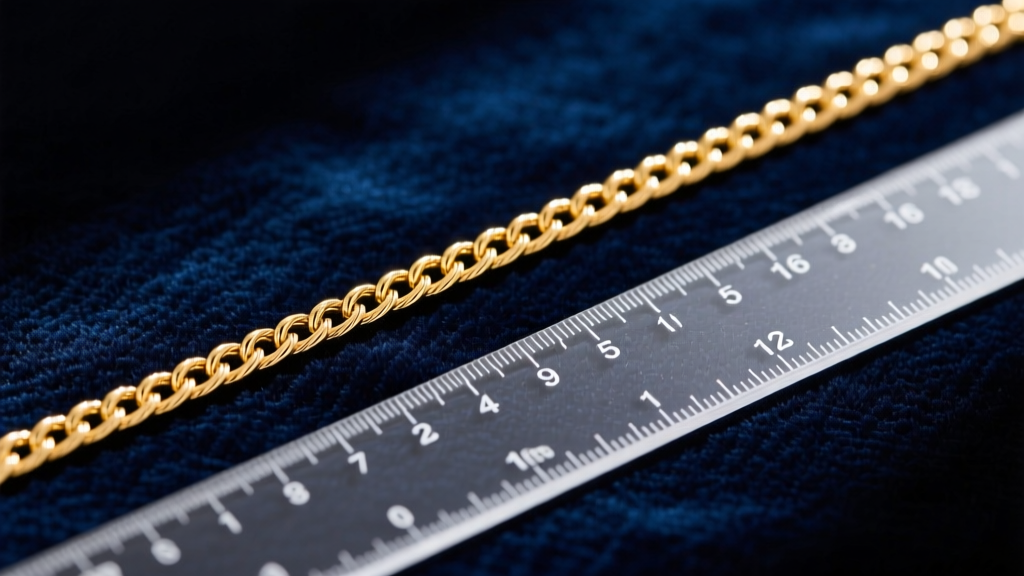
This is the gold standard for determining your ideal length before buying. Cut a piece of non-stretchable string or cotton thread. Wrap it around your neck and adjust it until it rests exactly where you want the necklace to fall. Hold the string at that point, remove it carefully, and lay it completely flat against a rigid acrylic ruler. Measure the exact distance. If you plan to wear a pendant, subtract the pendant's drop length (including the bail) from your desired visual resting point to find the required chain length.
Method 2: Measuring an Existing Piece
If you already own a necklace that fits perfectly, lay it flat on a table. Fasten the clasp and smooth out any kinks. Measure from the very end of the jump ring on one side to the very end of the clasp on the other. According to manufacturing standards cited by jewelry suppliers like Rio Grande, you must include the clasp hardware in your total measurement, as this accounts for the actual wearable circumference. However, note that large lobster claws can add up to 0.75 inches of bulk, which slightly alters the drape compared to a flush spring-ring clasp.
Standard Necklace Lengths and Where They Fall
The jewelry industry relies on standard classifications to help buyers visualize the fit. According to the Jewelers of America, these are the universally recognized benchmarks for women's jewelry, though individual proportions will shift the exact placement.
| Length (Inches) | Industry Name | Typical Placement | Best Neckline Pairing |
|---|---|---|---|
| 12" - 13" | Collar | Wraps tightly above the collarbone | Open neck, off-shoulder, V-neck |
| 14" - 16" | Choker | Rests on the lower neck / collarbone | Crew neck, scoop neck, boat neck |
| 17" - 19" | Princess | Falls just below the collarbone | High crew, turtleneck, deep V |
| 20" - 24" | Matinee | Rests on the upper bust / chest | Business attire, blazers, casual |
| 28" - 36" | Opera | Falls below the bust line | High necklines, evening wear |
| 37"+ | Lariat / Rope | Long, often doubled or knotted | Minimalist dresses, bohemian styles |
Adjusting for Neck Circumference and Body Proportions
A common mistake is assuming standard lengths behave identically on every body. The average female neck circumference ranges from 13 to 15 inches, while the average male neck measures between 15 and 19 inches. If you have a 15-inch neck circumference, a standard 16-inch choker will leave only half an inch of breathing room, acting more like a tight collar. For a comfortable choker fit, you generally want to add 1.5 to 2 inches to your actual neck measurement.
Furthermore, height and torso length drastically alter the visual impact of longer chains. A 24-inch matinee necklace will rest near the sternum on a woman who is 5'2", but it may barely clear the collarbone on a woman who is 5'10". Always use the string method to verify placement against your own torso rather than relying solely on the industry name.

The Pendant Drop Factor and Hardware Quirks
When calculating how do you measure the length of a necklace for a pendant, you must account for the bail (the loop connecting the pendant to the chain). A standard bail adds about 0.25 to 0.5 inches to the drop. However, oversized or decorative bails on heavy gemstone pendants can push the focal point down by a full 1.5 inches. If you want a pendant to rest exactly in the hollow of your throat (usually an 18-inch visual drop), and your pendant has a 1-inch total drop including the bail, you must purchase a 17-inch chain.
Hardware weight also plays a sneaky role. If you pair a heavy lobster clasp with an ultra-fine 0.8mm chain, the weight imbalance will cause the clasp to constantly migrate to the front of your neck. To counteract this, jewelers often add a small silicone stopper bead or a counterweight tag near the clasp to maintain the necklace's center of gravity.
Pro Tips for Layering and Extenders
If you plan to layer, the spacing between chains is critical to avoid tangling and visual clutter. The optimal spacing between layered necklaces is 2 to 3 inches. For example, pair a 14-inch choker with a 16.5-inch princess chain, followed by a 19-inch matinee. When purchasing, prioritize necklaces that feature a 2-inch extender chain. Extenders not only provide micro-adjustability for different collars and necklines but also allow you to fine-tune the tension of a choker based on daily fluctuations in skin hydration and temperature. For high-end fine jewelry, ensure the extender chain matches the exact gauge and metal purity of the main chain to prevent uneven tarnishing or weak points.


