How to Fix a Flipping Diamond Big Necklace and Clasp Issues
Learn how to troubleshoot a flipping diamond big necklace, fix clasp failures, and prevent prong snagging with expert bench jeweler advice.

The Physics of Statement Jewelry: Why Your Necklace Flips
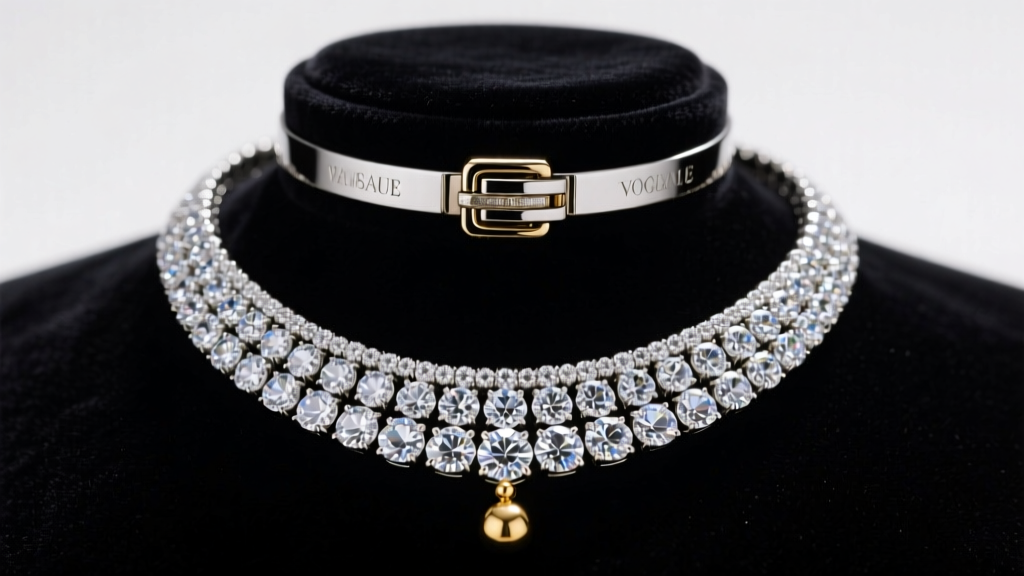
Owning a substantial piece of fine jewelry is a milestone, but wearing a heavy, oversized piece comes with unique mechanical frustrations. The most common complaint among collectors is the tendency of a diamond big necklace to constantly flip, causing the clasp to migrate from the nape of the neck to the collarbone. This is not a defect in the jewelry itself, but a basic issue of physics and weight distribution.
When the center of gravity is heavily skewed toward the front—such as a 40-gram diamond pendant hanging on a 15-gram chain—the pendulum effect takes over. Every time you move, the heavier front pulls the lighter back upward and around. To troubleshoot this, you must artificially rebalance the piece. A master bench jeweler can solve this by adding a counterweight. This involves soldering a small, dense 18k gold bead or a secondary diamond station (usually weighing between 5 to 10 grams) exactly one inch away from the clasp. This anchors the back of the necklace, keeping the clasp securely hidden at the nape.
Another structural fix is upgrading the chain itself. Thin chains (under 1.5mm) lack the rigidity to support large centerpieces. Upgrading to a 2.5mm to 3.5mm Franco, Wheat, or Cuban link chain provides the necessary structural backbone to distribute the weight more evenly across the shoulders, drastically reducing the flipping effect.
Clasp Failures: Matching Hardware to Heavy Loads
A major failure point in oversized jewelry is the clasp. Many mass-market jewelers equip heavy necklaces with inadequate hardware to save on precious metal costs. If your necklace weighs over 30 grams, relying on a standard spring ring or a lightweight lobster clasp is a recipe for catastrophic loss.
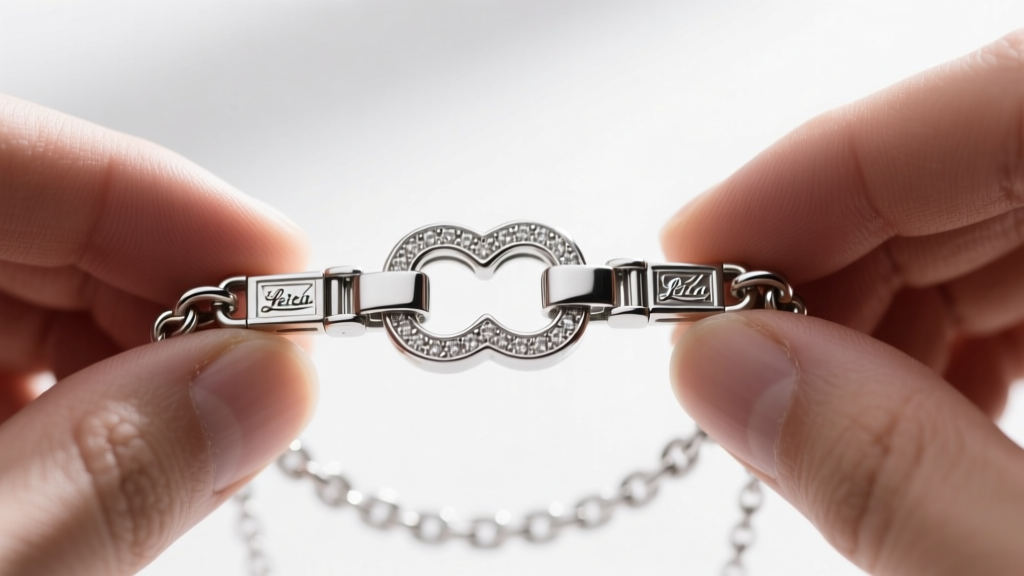
Spring rings rely on a tiny internal spring that easily fatigues under constant tension, while standard lobster clasps can warp at the hinge when subjected to the lateral pull of a heavy pendant. For a true statement piece, you need hardware engineered for high-tensile loads.
| Clasp Type | Max Safe Weight Limit | Best Use Case | Failure Mode |
|---|---|---|---|
| Spring Ring | Up to 15 grams | Delicate chains, lightweight solitaires | Internal spring fatigue, ring deformation |
| Standard Lobster | 15 - 35 grams | Medium-weight chains, everyday pendants | Hinge warping, trigger mechanism sticking |
| Heavy-Duty Lobster | 35 - 50 grams | Thick chains, medium statement pieces | Clasp jaw misalignment over time |
| Box Clasp w/ Figure-8 Safety | 50+ grams | Heavy diamond big necklace designs, tennis necklaces | Tongue wear (requires annual professional tightening) |
If your necklace exceeds 50 grams, a double-locking box clasp with figure-8 safety catches is mandatory. The box clasp uses a folded metal 'tongue' that clicks securely into a receiving slot, while the figure-8 safety wires act as a secondary backup system. According to the Jewelers of America, having a certified bench jeweler inspect the tongue tension of a box clasp annually is critical, as repeated insertion can compress the metal and cause it to slip out of the housing.
Structural Fatigue and Prong Snagging Risks
Large diamonds require substantial settings, which inherently increases the profile of the jewelry. High-profile settings are notorious for snagging on silk blouses, cashmere sweaters, and even hair. When a large prong catches on fabric, the sudden kinetic jerk can bend the precious metal, loosening the grip on the diamond.
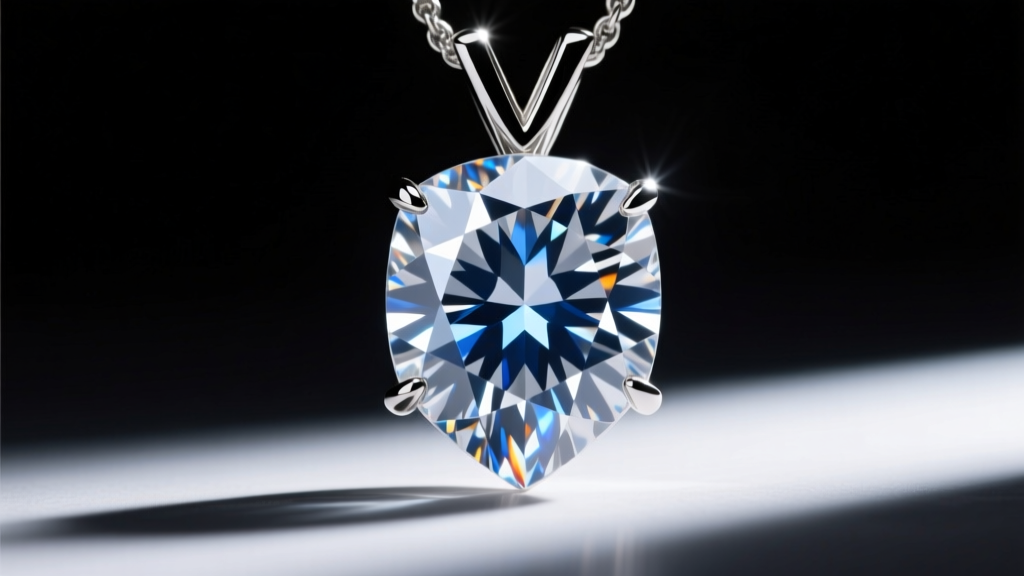
To troubleshoot and prevent this, examine the setting style. If your large centerpiece features a pear, marquise, or heart-shaped diamond, the pointed corners are highly vulnerable to chipping. Standard rounded prongs do not offer adequate protection for these shapes. You must ensure your jeweler has utilized V-prongs—custom-shaped metal tips that completely cap and protect the sharp apex of the stone.
Furthermore, be cautious with cleaning. While the Gemological Institute of America (GIA) recommends ultrasonic cleaners for many diamond pieces, placing a massive, multi-stone statement necklace into an ultrasonic bath can be disastrous. The high-frequency cavitation can easily shake loose smaller pavé accents or fracture-filled stones embedded in the heavy mounting. Instead, clean large, complex necklaces using a soft-bristled brush, warm water, and a mild, ammonia-free dish soap, taking care to gently dry the underside of the setting where lotion and skin oils accumulate.
Metal Fatigue and Chain Stretching
The sheer weight of a large diamond centerpiece places continuous stress on the chain links directly adjacent to the bail (the loop connecting the pendant to the chain). Over time, this localized stress causes the metal to undergo work hardening and eventual stretching. You may notice the links near the bail becoming oval-shaped or visibly thinner than the rest of the chain.
Troubleshooting Chain Stretch:
- Rotate the Bail: If your pendant has a movable bail, ensure it is not rigidly soldered, allowing it to glide smoothly across the chain rather than creating a fixed friction point.
- Reinforce the Jump Ring: The jump ring connecting the bail to the chain should be soldered shut. If it is merely pressed together, the weight of the diamond will eventually pull it open, leading to loss.
- Upgrade to a Solid Bail: Flimsy wire bails will bend under heavy loads. A cast, solid-metal bail with a wider interior diameter distributes the weight across multiple chain links rather than concentrating it on a single point.
When to Seek Professional Bench Jeweler Intervention
While some minor adjustments can be managed at home, structural repairs on heavy jewelry require professional equipment. If your chain has stretched, a jeweler can use laser welding to add microscopic beads of matching gold or platinum to the interior of the stretched links, effectively shrinking them back to their original tolerance without the need for messy traditional soldering that can damage nearby diamonds.
Never attempt to bend a warped lobster clasp or tighten a loose prong with household pliers. Precious metals used in fine jewelry, particularly platinum and 18k gold, require specific annealing temperatures and specialized prong-pushing tools to avoid metal fatigue and catastrophic snapping.
Ultimately, a heavy diamond piece is an investment that requires proactive maintenance. By addressing weight distribution, upgrading your clasp hardware, and ensuring your prongs are engineered for the specific geometry of your stones, you can wear your statement jewelry with absolute confidence, free from the constant annoyance of flipping and the anxiety of clasp failure.


