The Blue Agate Necklace Trend: 2026 Style & Stone Guide
Discover the 2026 blue agate necklace trend. We analyze natural vs. dyed stones, pricing tiers, chain gauges, and neckline styling frameworks.

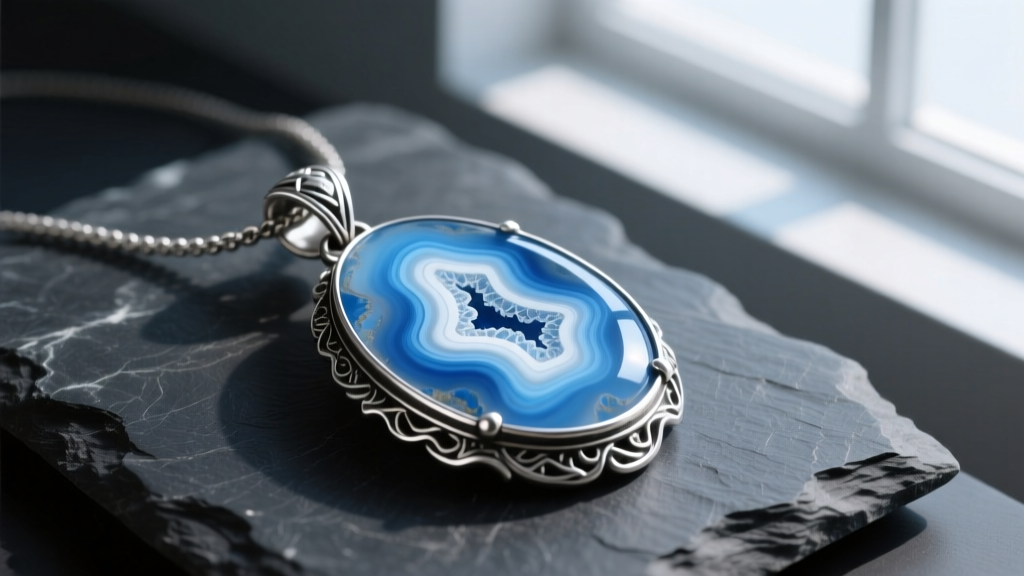
The 2026 Shift: From Dyed Novelties to Natural Mineralogy
In the landscape of 2026 jewelry trends, the blue agate necklace has undergone a radical transformation. Historically relegated to mass-produced, heavily dyed souvenir jewelry, blue agate is being reclaimed by artisanal lapidaries and high-end designers who are championing the "Earth-Core" aesthetic. This movement prioritizes geological authenticity over artificial saturation, shifting consumer focus toward natural inclusions, raw edges, and unaltered mineral banding.
To understand this trend, we must first address the gemological reality. True agate is a banded variety of chalcedony (microcrystalline quartz). According to the Gemological Institute of America (GIA), chalcedony is naturally porous, which makes it highly susceptible to chemical dyeing. Consequently, up to 90% of the "blue agate" on the commercial market is actually gray or white agate that has been treated with aniline dyes or sugar-acid solutions to achieve a vibrant, uniform cobalt or navy hue. However, the 2026 market is aggressively rejecting these treatments in favor of natural Blue Lace Agate and Dumortierite-included Quartz, which offer complex, unrepeatable visual textures.
Decoding the Blue Agate Necklace Market: Pricing & Grades
When sourcing a blue agate necklace, understanding the mineralogical distinctions is critical for accurate valuation. The Mindat.org mineral database classifies agate strictly by its banded chalcedony structure, yet the commercial jewelry trade frequently uses "blue agate" as a catch-all term for any blue banded or included quartz. Below is a breakdown of the three primary materials you will encounter in the current market.
| Stone Variant | Primary Origin | Treatment Status | Mohs Hardness | Price Range (30x20mm Pendant) |
|---|---|---|---|---|
| Dyed Commercial Agate | Brazil / Uruguay | Aniline / Sugar-Acid | 6.5 - 7.0 | $15 - $45 |
| Natural Blue Lace Agate | Namibia / South Africa | None (Natural Banding) | 6.5 - 7.0 | $85 - $250 |
| Dumortierite Quartz | Madagascar / Sri Lanka | None (Mineral Inclusions) | 7.0 | $120 - $400 |
Note: Dumortierite quartz is technically not an agate, but rather clear quartz heavily included with the borate mineral dumortierite. It is frequently mislabeled as "dark blue agate" by retailers due to its similar visual weight and lapidary applications.
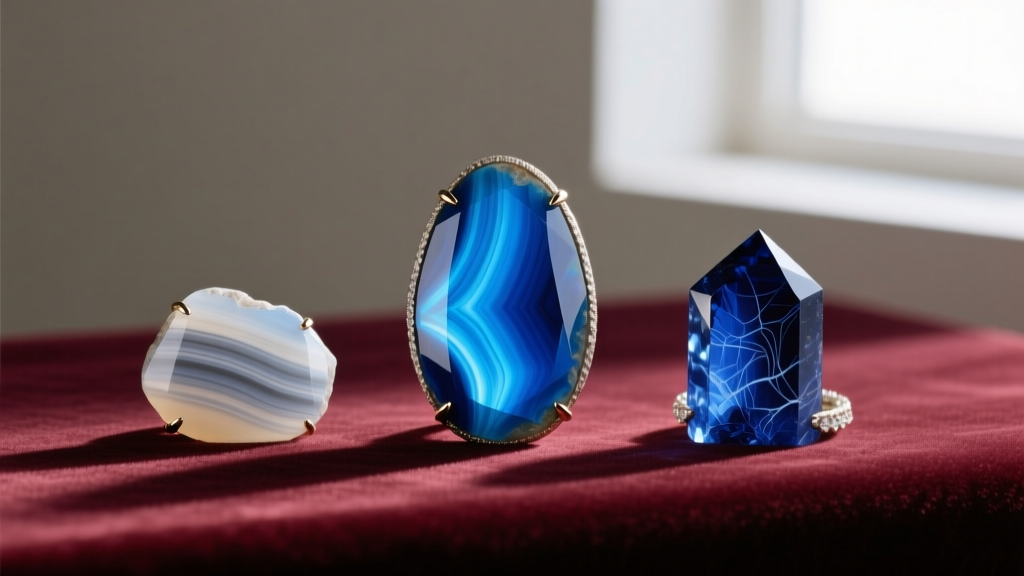
2026 Lapidary Trends: The Rise of the Raw Edge
The most defining characteristic of the 2026 blue agate necklace trend is the departure from the traditional, high-polish domed cabochon. While a perfectly calibrated 30x22mm oval cabochon remains a staple in classic bezel settings, contemporary designers are embracing freeform geode slices and matte-finished raw edges.
The Matte-Honed Finish
Instead of polishing the stone to a glass-like luster (which can sometimes obscure the delicate, microscopic banding of Blue Lace Agate), modern lapidaries are stopping at a 600-grit hone. This leaves the stone with a smooth, satin-matte finish that diffuses light and emphasizes the stark white and pale blue concentric layers. This finish pairs exceptionally well with oxidized sterling silver, creating a moody, archaeological aesthetic that dominates current editorial styling.
Asymmetric Drusy Inclusions
Designers are now intentionally cutting agate nodules to preserve the interior druzy (micro-crystalline) pockets. A blue agate necklace featuring a polished banded exterior that abruptly transitions into a sparkling, unpolished druzy cavity commands a 40% to 60% premium over standard cabochons, as it requires highly skilled, custom wire-wrapping or open-back bezel fabrication to secure the fragile crystals without crushing them.
Chain Metallurgy & Hardware: Engineering the Drape
A common failure point in artisanal necklaces is the mismatch between the pendant's carat weight and the chain's tensile strength. Blue agate is a dense stone; a substantial 40x30mm freeform slice can easily weigh between 45 and 65 carats (9 to 13 grams). Selecting the correct hardware is non-negotiable for longevity.
- The Bail and Jump Ring: Avoid glue-on bails entirely. The porosity of chalcedony can absorb cyanoacrylate adhesives, leading to eventual degradation and stone loss. Insist on a soldered sterling silver or 14k gold-filled bail. The jump ring connecting the bail to the chain must be a minimum of 18-gauge (1.0mm) wire thickness and feature a flush, soldered seam to prevent the chain from slipping through.
- Chain Gauge Recommendations: For pendants exceeding 15 grams, a delicate 0.9mm cable chain will suffer from link distortion over time. Opt instead for a 2.5mm to 3.0mm Rolo chain or a 1.5mm Box chain. These structures distribute the pendant's weight evenly across the collarbone and resist kinking.
- Clasp Mechanics: Lobster clasps are standard, but for heavier raw-edge agate lariats, a custom S-hook or a magnetic neodymium clasp with a secondary safety chain provides a superior, ergonomic user experience.
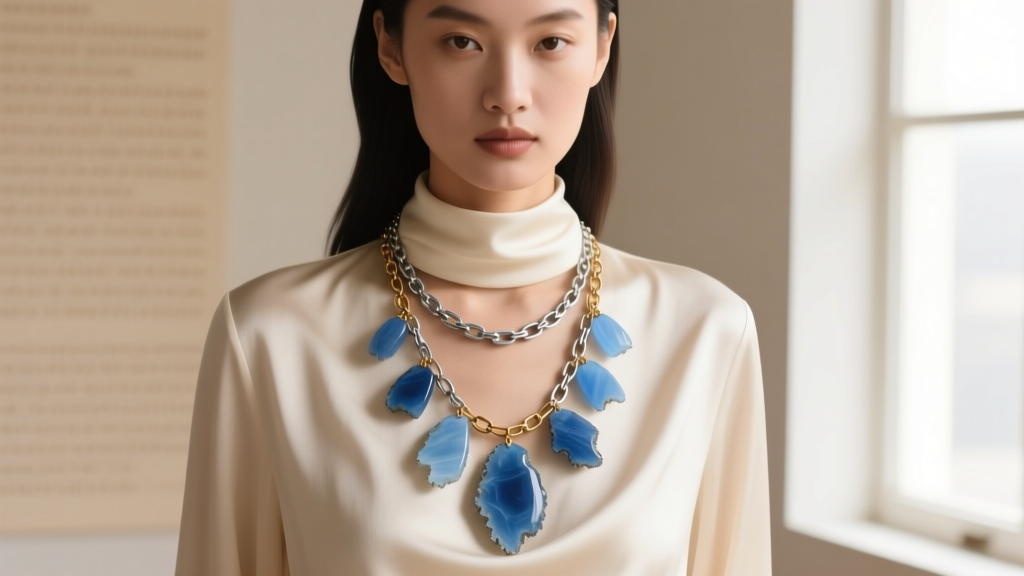
The 2026 Styling Framework: Necklines and Lengths
Styling a blue agate necklace requires an understanding of both color theory and spatial geometry. The pale, frosty blues of natural Blue Lace Agate act as a neutral, while the deep, saturated navy of Dumortierite Quartz serves as a high-contrast anchor. Use the following framework to match your stone and chain length to your wardrobe.
1. The Banded Bezel Choker (14 to 16 Inches)
Best Stone: Natural Blue Lace Agate (high-contrast white/blue banding).
Best Neckline: Sweetheart or deep V-neck.
Styling Note: A wide, horizontal oval or rectangular slice set in a thick gold bezel sits perfectly in the clavicle hollow. The horizontal geometry of the stone complements the sweeping curves of a sweetheart neckline, drawing the eye upward without overwhelming the collarbone.
2. The Asymmetric Raw-Cut Lariat (22 to 26 Inches)
Best Stone: Freeform Dumortierite Quartz or Drusy Agate.
Best Neckline: Cowl-neck, turtleneck, or structured crew-neck.
Styling Note: The 2026 "quiet luxury" evolution relies on textural contrast. A long, mixed-metal lariat (e.g., oxidized silver chain with 14k yellow gold accents) ending in a raw, unpolished agate spear creates a striking vertical line over heavy winter knits or silk cowl-neck blouses. The matte stone absorbs light, providing a sophisticated, understated focal point.
3. The Layered Mineral Maximalist (18 & 20 Inches)
Best Stone: Small 10mm banded agate beads or geometric faceted drops.
Best Neckline: Open button-down or scoop neck.
Styling Note: Layering requires strict gauge discipline. Pair an 18-inch 1.2mm box chain featuring a single, small blue agate drop with a 20-inch 2.0mm paperclip link chain. The contrasting link sizes prevent the chains from tangling, a common frustration when layering microcrystalline quartz beads.
Care and Maintenance for Banded Chalcedony
Despite its respectable 6.5 to 7.0 Mohs hardness, a blue agate necklace requires specific care protocols to maintain its structural and visual integrity. Never place natural or dyed agate in an ultrasonic cleaner. The high-frequency vibrations can cause micro-fractures along the natural banding planes, and the heat generated can cause aniline dyes in treated stones to bleed or fade rapidly. Furthermore, avoid prolonged exposure to direct, intense UV sunlight, which can dehydrate the stone's microscopic water inclusions, leading to a dull, chalky appearance over time. Clean your necklace using only lukewarm water, a pH-neutral dish soap, and a soft microfiber cloth, ensuring you dry the hardware thoroughly to prevent oxidation on unsealed silver components.
As the 2026 jewelry landscape continues to favor geological storytelling over mass-produced uniformity, the blue agate necklace stands out as a versatile, deeply personal artifact. By prioritizing natural banding, demanding robust hardware, and styling with intentional geometry, you elevate this ancient stone into a masterclass of modern mineralogy.


