Large Clasp Necklace Buying Guide: Styles and Durability
Discover how to choose the perfect large clasp necklace. Our buying guide covers toggle, magnetic, and oversized clasps, metal grades, and chain gauges.

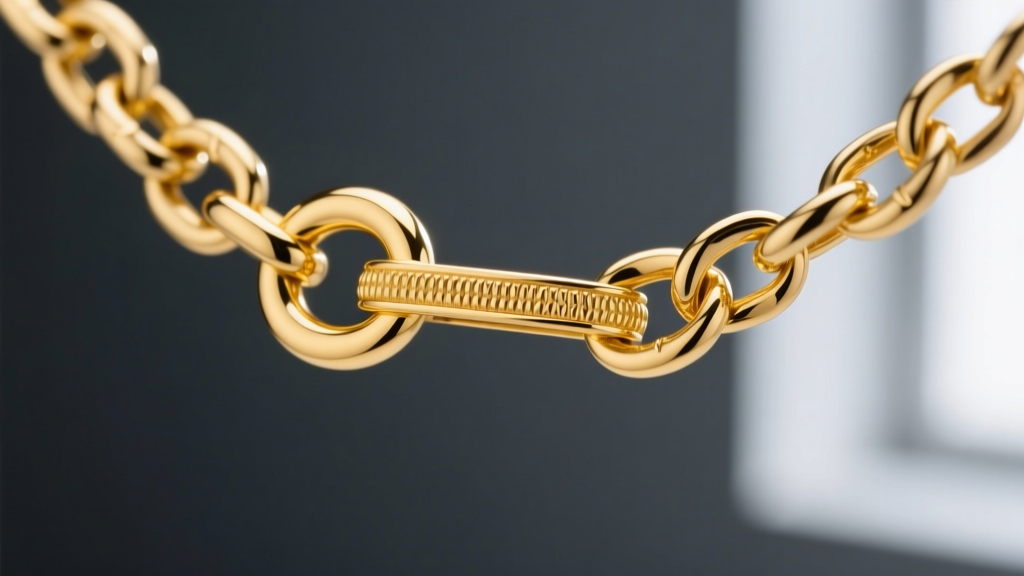
The Evolution of the Clasp: From Hidden Utility to Focal Point
For decades, the jewelry industry treated the clasp as a necessary evil—a purely functional component meant to be hidden at the nape of the neck. However, contemporary jewelry design has completely inverted this philosophy. The large clasp necklace has emerged as a dominant trend, transforming the closure mechanism into a statement piece, an ergonomic advantage, and a customizable anchor for pendants. Whether you are investing in a heavy gold chain or a modern silver link necklace, understanding the mechanics, metallurgy, and proportional rules of oversized clasps is critical to making a purchase that lasts.
This comprehensive buying guide breaks down exactly what to look for when shopping for a large clasp necklace, moving beyond basic aesthetics into the structural engineering that dictates a piece's longevity.
Four Primary Types of Large Clasps
Not all oversized clasps serve the same purpose. Some are designed for sheer visual impact, while others prioritize accessibility or heavy weight-bearing. Here is how the four main categories compare in real-world applications.
| Clasp Type | Best For | Ideal Chain Gauge | Failure Risk |
|---|---|---|---|
| Toggle (T-Bar) | Statement front-closures, layering | 2.5mm - 5.0mm | Slipping if chain is too short |
| Oversized Lobster | Pendant attachment, streetwear | 3.0mm - 7.0mm | Internal spring fatigue |
| Magnetic (Neodymium) | Accessibility, seamless aesthetics | 1.5mm - 4.0mm | Magnet degradation, shear force |
| Decorative Box | Heavy tennis chains, vintage styles | 4.0mm - 8.0mm | Tongue warping without safety |
The Toggle Ratio Rule
When buying a toggle clasp necklace, the most common point of failure is an improper bar-to-ring ratio. For a toggle to remain secure under the kinetic movement of daily wear, the T-bar must be at least 20% wider than the inner diameter of the receiving ring. If you are buying a piece with a 15mm inner ring, the bar must be a minimum of 18mm long. Anything less, and the necklace will inevitably slip off when you lean forward.
Metallurgy and Durability: What Fails First?
The metal grade you choose profoundly impacts the structural integrity of a large clasp. While consumers often chase higher karat gold for prestige, it is a metallurgical liability for mechanical clasps.

Why 14k Gold Outperforms 18k in Mechanical Clasps
According to the Gemological Institute of America (GIA), the Vickers hardness (HV) of standard 18k yellow gold sits around 100-120 HV, making it relatively soft and malleable. In contrast, 14k gold, which contains a higher percentage of copper and zinc alloys, boasts a hardness of 130-150 HV. For an oversized lobster clasp or a spring-ring mechanism, that extra tensile strength is non-negotiable. An 18k gold spring lever will warp and lose its tension within months of daily use, whereas a 14k gold lever will maintain its snap for decades. If you prefer the rich color of 18k or 22k gold, opt for rigid clasp designs like cast toggles or magnetic tubes, which do not rely on internal spring tension.
The Sterling Silver Fatigue Factor
Sterling silver (925) is highly susceptible to metal fatigue at the hinge points of large clasps. If you are purchasing a heavy silver chain with a large silver lobster clasp, ensure the lever is reinforced with a steel insert or opt for a thicker, cast-brass lever that has been heavily rhodium-plated. Pure silver levers on heavy chains will bend outward over time, causing the clasp to pop open unexpectedly.
The Hidden Weakness: Jump Rings and Soldering
The clasp itself is rarely the first thing to break on a high-quality necklace. The true point of failure is the jump ring connecting the clasp to the chain. When you invest in a large clasp necklace, you are often dealing with heavier chains that exert significant gravitational pull on the connection points.
- Unsoldered Jump Rings: Standard split-jump rings will pull apart under the weight of a 4mm+ chain. Avoid these on any necklace weighing over 25 grams.
- Soldered Jump Rings: The industry standard for fine jewelry. The ring is fused shut with laser or torch soldering, meaning the chain link will break before the jump ring opens.
- Split Rings: Functioning like a miniature keyring, double-loop split rings offer excellent security for heavy chains but can be difficult to manipulate with long fingernails.
As noted by Rio Grande Jewelry Findings, the jump ring diameter must also be correctly proportioned to the clasp loop. A jump ring that is too thick will restrict the clasp's movement, causing premature wear on the metal loop.
Sizing and Proportions: The Drop Length Rule
A large clasp necklace requires careful consideration of chain length, particularly for front-closure designs. The physics of a necklace dictate how the clasp behaves on the body.
Calculating Slack for Toggles and Hooks
If you are buying a necklace with a large front-facing toggle or an S-hook clasp, the chain must have adequate slack to allow the clasp to articulate. A tight 16-inch choker will create too much lateral tension, forcing the toggle bar to align parallel with the ring, leading to immediate slippage. For a standard 18-inch princess length, ensure the designer has incorporated at least 1.5 inches of functional slack near the clasp. If you prefer a choker fit, avoid toggles entirely and opt for an oversized magnetic or box clasp.
Accessibility and Ergonomic Considerations
One of the most practical reasons to invest in a large clasp necklace is improved accessibility. For individuals with arthritis, neuropathy, or limited fine motor skills, fumbling with a microscopic 5mm lobster clasp at the back of the neck is incredibly frustrating.
Magnetic Clasps: High-end magnetic clasps utilize N52-grade neodymium magnets encased in stainless steel or precious metal housings. These provide up to 15 lbs of pull force, ensuring the necklace stays secure while allowing for effortless one-handed application. Note: Magnetic clasps should be avoided by individuals with pacemakers or implantable cardioverter defibrillators (ICDs).
Oversized Carabiners: Inspired by climbing gear, large carabiner clasps with a 3cm+ drop provide a wide, easy-to-grip surface area. Look for carabiners with a locking screw-gate mechanism to prevent accidental snags on clothing.
Final Verdict: What to Demand from the Jeweler
When shopping for a large clasp necklace, do not let the visual appeal of a chunky gold or silver closure blind you to its structural realities. Demand soldered jump rings for any chain over 3mm in gauge. Insist on 14k gold for any clasp utilizing an internal spring, and verify the bar-to-ring ratio on any toggle design. By treating the clasp as a critical piece of engineering rather than just an afterthought, you will secure a piece of jewelry that is as durable and functional as it is striking.


