Ultimate Cleaning and Care Guide for a Letter V Necklace
Learn expert cleaning and maintenance tips for your letter V necklace. Discover how to safely polish metals, clean pave stones, and prevent tangling.

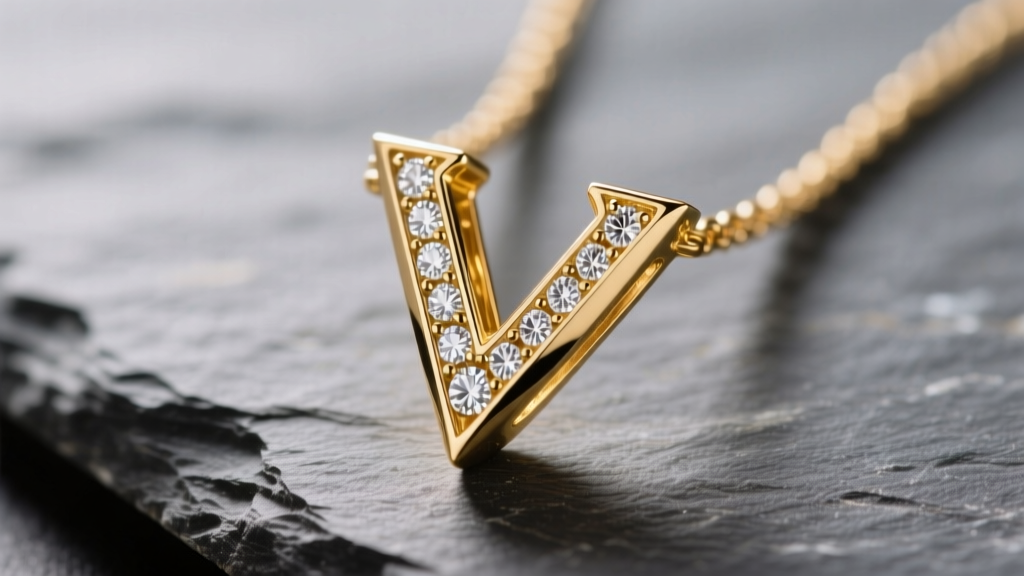
Initial jewelry has transcended fleeting trends to become a permanent staple in modern wardrobes, and the letter V necklace remains one of the most sought-after silhouettes. Whether it represents your first name, a loved one, or a meaningful roman numeral, a letter V pendant features a distinct geometric profile that requires specialized maintenance. Unlike simple circular or bar pendants, the sharp 45-degree inner angles, intricate bail connections, and frequent use of micro-pave diamond accents make the letter V uniquely prone to trapping debris, lotions, and environmental tarnish.
In this comprehensive 2026 care guide, we break down the exact chemistry, tools, and techniques required to keep your letter V necklace looking as brilliant as the day you unboxed it. We will move beyond generic jewelry advice and provide actionable, material-specific frameworks trusted by professional bench jewelers.
The Unique Anatomy of a Letter V Pendant
Before applying any cleaning solution, it is crucial to understand why a letter V necklace demands a different approach than a standard solitaire pendant. The geometry of the letter V creates a deep, acute vertex at the bottom center. This inner corner acts as a magnet for dead skin cells, sebum, and cosmetic residue. When you wipe the pendant with a standard polishing cloth, the fabric bridges the sharp angles, leaving the deepest part of the vertex completely untouched.
Furthermore, letter pendants are inherently top-heavy. This places continuous friction on the bail—the small loop that connects the pendant to the chain. Over time, a mixture of sweat and metal dust creates a gritty paste inside the bail, which can silently wear down the metal and eventually cause the pendant to detach. According to the American Gem Society, inspecting and cleaning the bail and jump rings is just as critical as polishing the face of the jewelry.
Daily Wear and Tear: What Damages Initial Necklaces?
The longevity of your necklace is dictated by your daily habits. The most common culprits of degradation for initial pendants include:
- Chlorine and Bromine: Exposure to swimming pools or hot tubs causes microscopic stress fractures in gold alloys (especially 14k and 18k), leading to prong failure in diamond-accented V pendants.
- Sulfur-Rich Sweat: Human sweat contains trace amounts of sulfur. When trapped in the sharp inner corners of a sterling silver V pendant, it accelerates the formation of silver sulfide (tarnish) at an exponential rate.
- Layering Friction: The sharp upper terminals of the letter V can act like tiny blades, scratching adjacent chains if worn in a layered stack without proper spacing.
Step-by-Step Cleaning Routine for Letter V Necklaces
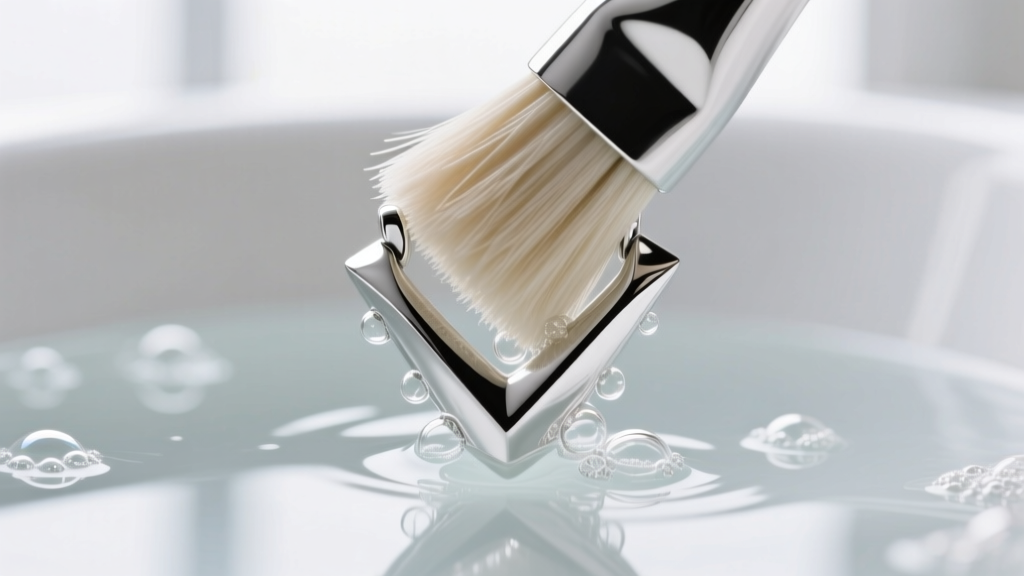
To safely remove accumulated grime without damaging delicate metalwork or gemstone settings, follow this professional bench-jeweler cleaning protocol.
Step 1: The pH-Neutral Soak
Fill a small glass bowl with lukewarm water (ideally between 85°F and 95°F). Hot water can cause metal prongs to expand, potentially loosening gemstones. Add three drops of a pH-neutral, lotion-free dish soap (such as Dawn Free & Clear). Avoid moisturizing soaps, as they leave a cloudy lipid film on both the metal and any diamonds. Submerge the necklace for exactly 10 to 15 minutes to soften the sebum trapped in the V vertex.
Step 2: Targeted Vertex Brushing
Remove the necklace from the bath. Using a specialized baby toothbrush (which features ultra-soft bristles trimmed to roughly 5mm) or a #2 soft sable jeweler's brush, gently agitate the inner corners of the V. Brush at a 45-degree angle, pushing the bristles directly into the acute vertex and the underside of the bail. If your V pendant features micro-pave diamonds, brush from the back of the setting toward the front to push debris out from behind the stones.
Step 3: The Distilled Rinse and Safe Dry
Rinse the pendant under a gentle stream of distilled water. Tap water contains minerals and chlorine that can leave hard water spots on high-polish metals. Pat the piece dry with a lint-free microfiber cloth. To ensure no moisture remains trapped in the bail or behind pave stones, use a hair dryer on the 'cool' setting for 30 seconds. As recommended by the Gemological Institute of America (GIA), ensuring diamonds and their settings are completely dry prevents long-term skin irritation and metal degradation.
Material-Specific Maintenance Chart
Not all letter V necklaces are created equal. The core material dictates the chemical cleaners you can safely use. Refer to the table below to identify your necklace's material and its corresponding care requirements.
| Material Type | Safe Cleaning Agents | Polishing Method | Tarnish Risk |
|---|---|---|---|
| Solid 14k/18k Gold | Mild dish soap, warm water | Untreated 100% cotton cloth | Very Low |
| Sterling Silver (925) | Mild dish soap, specialized silver dip (sparingly) | Sunshine or treated silver polishing cloth | High (Requires anti-tarnish storage) |
| Gold Vermeil | Mild dish soap ONLY (No chemicals or dips) | Gentle wipe with untreated microfiber (Do not rub hard) | Moderate (Gold layer can wear off) |
| Enamel-Accented V | Lukewarm water, minimal soap | Soft cloth, avoid polishing the enamel directly | Low tarnish, but high chip/crack risk |
Advanced Maintenance: The Ultrasonic Cleaner Danger Zone
Many jewelry owners invest in at-home ultrasonic cleaners, assuming they are the ultimate solution for intricate initial necklaces. However, you must exercise extreme caution. Ultrasonic cleaners operate by emitting high-frequency sound waves (typically around 40kHz) that create microscopic cavitation bubbles in the liquid. When these bubbles collapse, they generate intense localized shockwaves.
If your letter V necklace features micro-pave diamonds, rhinestones, or delicate milgrain detailing, these shockwaves can easily vibrate the tiny wax-set prongs loose, resulting in catastrophic stone loss. Furthermore, if your V pendant incorporates black or white enamel filling—a popular design choice for modern monogram necklaces—the ultrasonic vibrations will cause micro-fractures in the glass-like enamel, leading to clouding or complete chipping. Reserve ultrasonic cleaning strictly for solid, unadorned metal chains, and always clean the V pendant by hand.
Proper Storage to Prevent the 'V' Snag
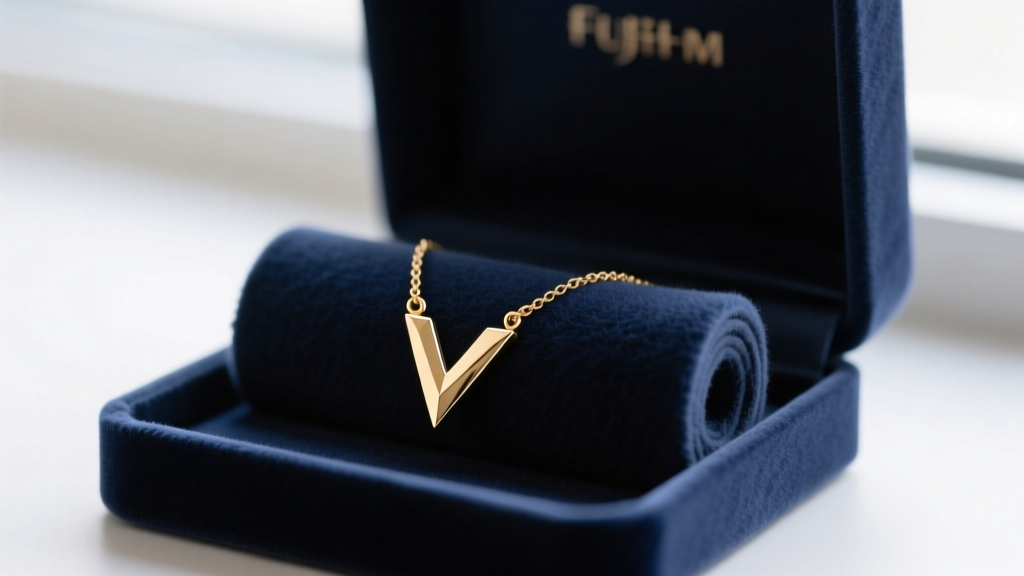
The sharp upper terminals of the letter V are notorious for catching on the links of nearby chains, creating frustrating tangles that can weaken and snap delicate cable or rope chains. Proper storage is just as vital as the cleaning process.
Never throw a letter V necklace loosely into a communal jewelry box. Instead, utilize a specialized anti-tarnish felt jewelry roll. Drape the chain over the felt roll so that the V pendant hangs freely on one side, and the clasp hangs on the other. This prevents the chain from looping back onto itself. If you prefer a flat jewelry box, fasten the clasp and lay the necklace in a dedicated, individual compartment lined with Pacific cloth or treated anti-tarnish flannel. For sterling silver V pendants, dropping a small silica gel packet or a 3M anti-tarnish strip into the storage compartment will absorb ambient moisture and sulfur, keeping the sharp inner corners bright and oxidation-free for months between wears.
By respecting the unique geometry of the letter V and adhering to these material-specific cleaning protocols, your initial necklace will maintain its structural integrity and brilliant finish for decades to come.


