Troubleshooting a Flipping Necklace With Peace Sign Pendant
Is your necklace with peace sign pendant constantly flipping? Learn expert troubleshooting tips for bail sizing, chain gauges, and metal tarnishing.

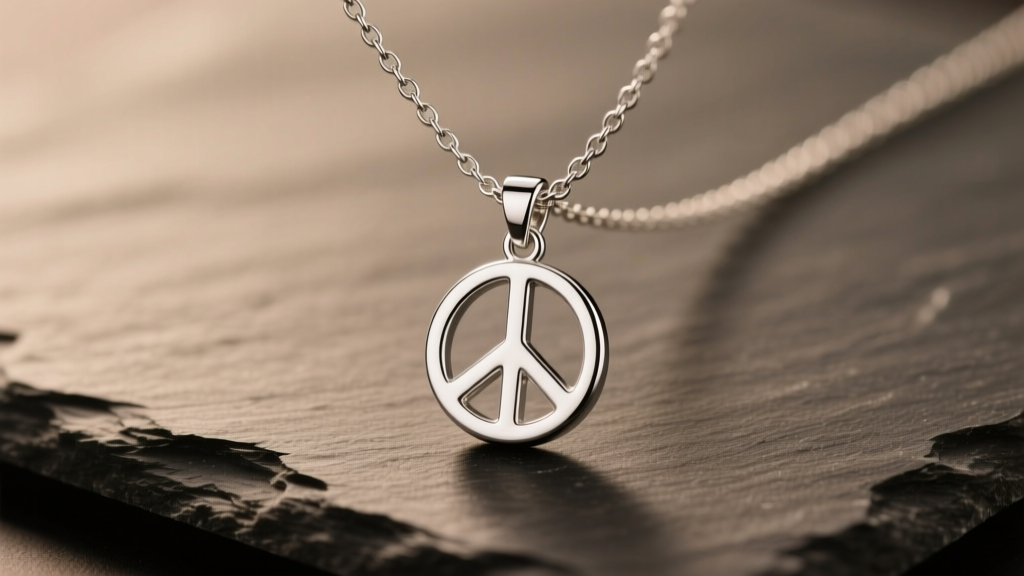
The peace sign is one of the most enduring symbols in jewelry history, but wearing a necklace with peace sign pendants often comes with a unique set of mechanical and metallurgical frustrations. From the pendant constantly flipping upside down to the chain snapping at the bail, these issues are rarely just bad luck—they are usually the result of poor weight distribution, incompatible chain gauges, or substandard alloy casting. As we navigate the 2026 vintage and retro jewelry revival, understanding the structural anatomy of your peace sign necklace is essential for keeping it looking pristine and functioning perfectly.
This guide dives deep into the physics of pendant flipping, metallurgical reactions that cause skin discoloration, and the exact hardware upgrades you need to troubleshoot and fix your favorite peace sign jewelry.
The Physics of the Flip: Why Peace Signs Rotate
The most common complaint regarding peace sign pendants is their tendency to flip forward or backward along the chain. This is not a curse; it is a matter of physics. The peace symbol is inherently bottom-heavy. The inverted Y-shape (the stem and two lower diagonals) concentrates the mass in the lower third of the pendant. If the bail—the loop that connects the pendant to the chain—is soldered too low on the pendant's back, the center of gravity shifts outside the pivot point, causing the pendant to rotate on the Z-axis.
To solve this, you must address the bail placement and the chain's friction. A standard loop bail on a smooth cable chain offers almost zero resistance, allowing the bottom-heavy pendant to swing freely. The solution is to either counter-weight the top of the pendant (a technique used by high-end jewelers who add a small, hidden gold or silver bead to the top inside curve) or to increase the friction between the bail and the chain.
Chain and Bail Compatibility Matrix
Upgrading your chain is the most cost-effective way to stop a flipping peace sign. The goal is to select a chain with enough structural rigidity and surface texture to hold the bail in place. Below is a troubleshooting matrix for pairing chains with heavy, asymmetrical pendants.
| Chain Type | Recommended Gauge | Bail Compatibility | Friction Level & Stability |
|---|---|---|---|
| Cable Chain | 1.0mm - 1.5mm | Standard loop bails | Low (Prone to flipping; avoid for heavy peace signs) |
| Rolo Chain | 2.0mm - 3.0mm | Wide tube bails | Medium (Stabilizes heavy pendants via interlocking links) |
| Box Chain | 1.2mm - 2.0mm | Clip-on or pinch bails | High (Flat surfaces lock the pendant in place) |
| Wheat Chain | 1.5mm - 2.5mm | Standard loop bails | Medium-High (Woven texture provides excellent grip) |
According to jewelry findings experts at Halstead Bead, matching the inner diameter of the bail to the outer width of the chain is critical. If you are using a 2.5mm rolo chain, ensure your peace sign pendant has a bail with an inner diameter of at least 3.5mm to prevent the chain from bunching up and forcing the pendant to twist.
Solving the "Green Neck" and Tarnish Problem
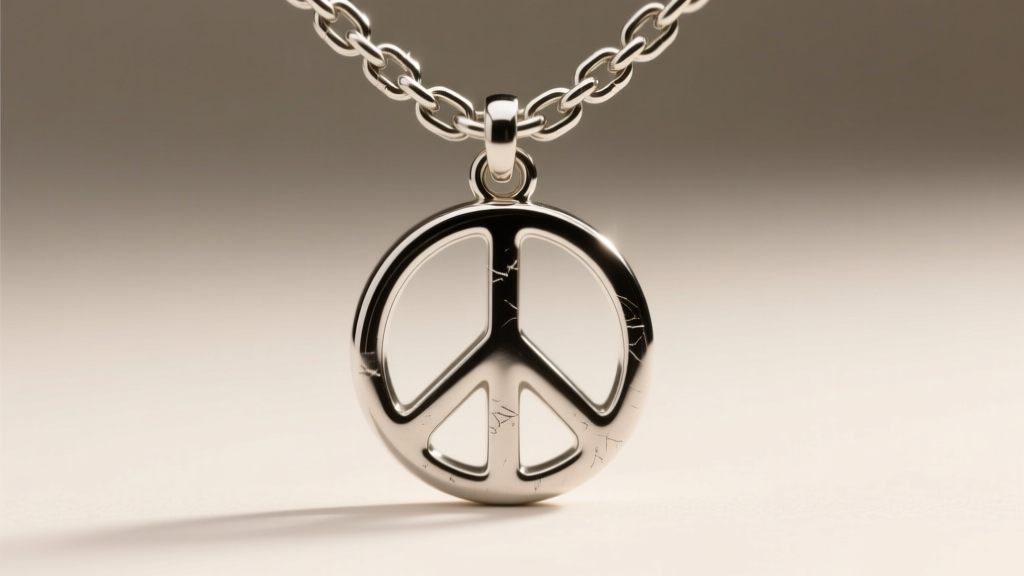
If your neck turns green or your pendant rapidly darkens, you are dealing with a metallurgical failure. Many mass-market peace sign pendants are cast from Zamak—a zinc alloy containing aluminum, magnesium, and copper—and then electroplated with a microscopic layer of silver or gold. Once that plating wears away from friction against your skin, the underlying metals react with the urea, salts, and chlorides in your sweat, creating copper chloride (the green residue).
Material Grade Breakdown for Troubleshooting
- 925 Sterling Silver: Contains 92.5% silver and 7.5% copper. The copper is necessary for hardness but is the exact element that causes tarnishing when exposed to sulfur in the air. Fix: Store with anti-tarnish strips and polish with a treated silver cloth. The Gemological Institute of America (GIA) notes that rhodium-plated sterling silver will resist tarnish significantly longer, though the plating will eventually wear off.
- 316L Surgical Stainless Steel: Contains molybdenum, which prevents pitting and corrosion from human sweat. Fix: If you have a steel peace sign that is dulling, a simple bath in warm water and mild dish soap will restore its luster without the need for harsh chemical dips.
- 14k Gold Vermeil: A thick layer of 14k gold over a sterling silver base. Fix: Never use ultrasonic cleaners or silver dip on vermeil, as the chemicals will strip the gold layer, exposing the silver beneath.
Fixing Clasp and Jump Ring Failures
The weakest structural point on any necklace with peace sign charms is the jump ring connecting the pendant to the chain. Standard, unsoldered jump rings are simply wire bent into a circle with a single slit. When a heavy peace sign swings and catches on clothing, the shear force applied to that slit can easily pull the ring open, resulting in a lost pendant. An unsoldered jump ring will typically fail under 2 to 3 pounds of lateral tension.
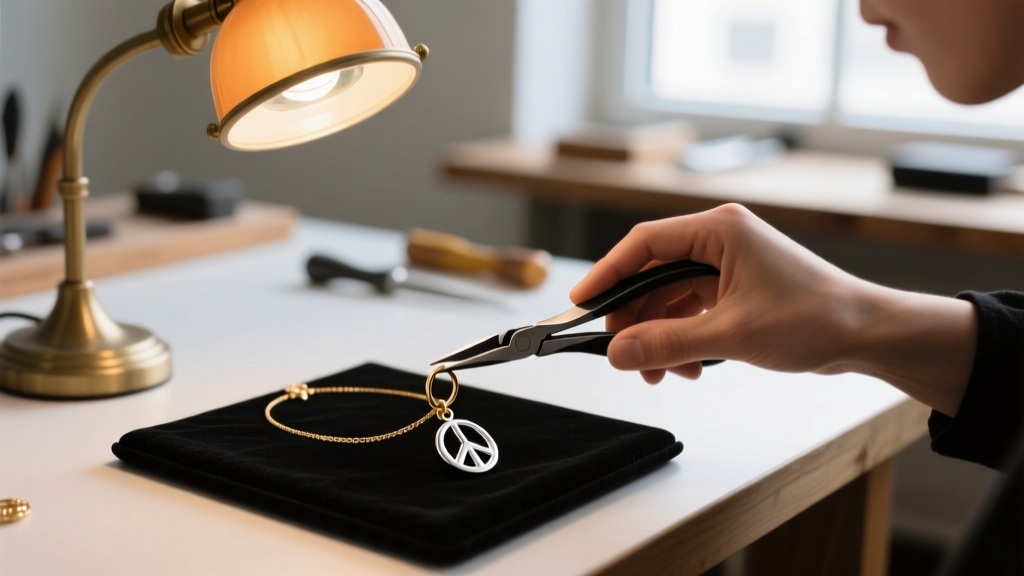
The Troubleshooting Fix: Replace the standard jump ring with a soldered jump ring. As detailed in the fabrication guides by Rio Grande, a soldered jump ring has its seam permanently fused with silver or gold solder, increasing its tensile strength to withstand over 10 pounds of force. If your pendant frequently detaches, take it to a local bench jeweler to have the connecting ring soldered shut. Alternatively, you can use a heavy-duty split ring (which looks like a miniature keychain ring) for a DIY fix that requires no torch work.
Restoring Enamel and Inlay Peace Signs
Many vintage and high-end peace sign necklaces feature black enamel filling or turquoise inlays. A common troubleshooting mistake is attempting to clean these pieces in an ultrasonic jewelry cleaner. The high-frequency sound waves and heat generated in the water bath will shatter the enamel or loosen the adhesive holding porous stone inlays in place.
To clean an enameled or inlaid peace sign pendant, use a dry, soft-bristled makeup brush to dust the crevices. For the metal portions, apply a tiny amount of silver polish to a Q-tip, carefully avoiding the enamel lines. If the enamel has chipped or cracked, do not attempt to fill it with nail polish or epoxy, as these will yellow over time and devalue the piece. Seek a professional jeweler who specializes in vitreous enamel restoration to properly fuse new glass powder into the recesses.
Final Maintenance Checklist
Keep your peace sign necklace in rotation for decades by following this rapid maintenance checklist:
- Check the bail monthly: Look for thinning metal where the chain rubs against the inside of the bail. If the metal is worn down by more than 30%, have a jeweler replace the bail before it snaps.
- Wipe down after wear: Use a microfiber cloth to remove skin oils and lotions immediately after taking the necklace off, especially if it is made of sterling silver.
- Store flat or hung: Never toss a peace sign necklace into a jewelry box where the heavy pendant can crush delicate chain links. Always hang it or lay it perfectly flat.
By understanding the mechanical forces and chemical reactions at play, you can easily troubleshoot the common annoyances of peace sign jewelry, ensuring your favorite piece remains a staple in your collection for years to come.


