Gong Necklace Troubleshooting: Fix Flipping, Tarnish & Chains
Is your gong necklace constantly flipping, tarnishing, or breaking chains? Discover expert troubleshooting tips to fix weight, wear, and styling issues.

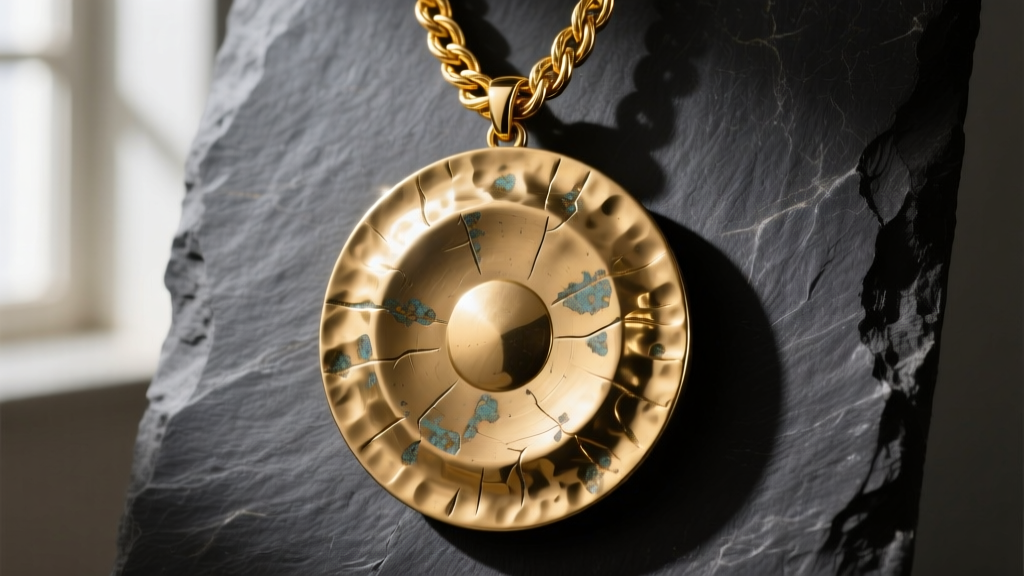
The gong necklace—characterized by its oversized, flat, disc-like pendant typically ranging from 40mm to 80mm in diameter—is a staple of bohemian, vintage, and modern minimalist styling. However, its unique geometry creates specific mechanical and chemical challenges. As oversized statement pieces continue to dominate 2026 trend forecasts, wearers are increasingly frustrated by three common issues: relentless pendant flipping, severe skin tarnishing, and catastrophic chain failures. Whether you are wearing a vintage Moroccan brass piece or a modern 14k gold minimalist disc, troubleshooting these issues requires an understanding of jewelry physics and metallurgy. Below is a comprehensive guide to engineering a better wear experience for your gong necklace.
The Physics of the Flip (And How to Stop It)
The most ubiquitous complaint regarding gong necklaces is the pendant's tendency to flip upside down, hiding the decorative face against the wearer's chest. This is not a defect; it is a matter of physics. A flat disc has a wide center of mass. When suspended from a single-point bail on a rounded chain (like a standard cable or rope chain), the chain acts as a low-friction track. Every time you move, the chain shifts, and the heavy, unbalanced disc rotates to find equilibrium, inevitably flipping over.
The Double-Bail Slider Solution
To permanently solve the flipping issue, you must widen the pendant's suspension point. A double-bail slider is a specialized finding that features two parallel loops that thread onto the chain, with a single bottom loop to attach the pendant. By widening the anchor point to roughly 10mm–15mm, you create a structural triangle that physically prevents the pendant from rotating. If your gong necklace currently has a standard soldered ring at the top, a jeweler can easily snip it off and solder a double-bail finding in its place.
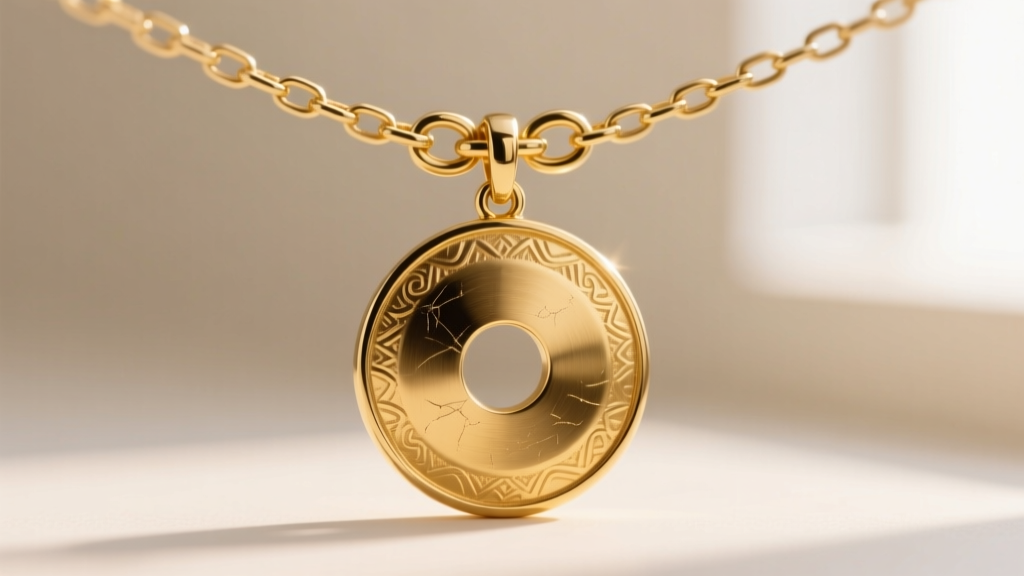
Chain Geometry: Box vs. Cable
If modifying the pendant is not an option, changing the chain geometry is your next best defense. Round chains allow for 360-degree rotation. Swapping to a Flat Box Chain or an Omega Chain introduces flat surface friction. The flat links of a box chain grip the bail, significantly increasing the rotational resistance and keeping the gong pendant facing forward.
Tarnish, Oxidation, and the "Green Skin" Dilemma
Because gong necklaces feature a massive surface area that sits flush against the sternum, they are prime candidates for causing skin discoloration. According to the American Academy of Dermatology, the "green skin" effect is not an allergic reaction, but a chemical one. Most vintage and affordable gong pendants are crafted from brass (an alloy of copper and zinc) or bronze. When the copper in these alloys reacts with the lactic acid, salt, and sebum in your sweat, it forms copper chloride—a green compound that easily transfers to the stratum corneum (the outer layer of skin).
Permanent vs. Temporary Barriers
To stop this reaction, you must create a physical barrier between the metal and your skin. Here is a breakdown of the most effective methods:
- The Temporary Fix (Clear Nail Polish): Applying a coat of clear enamel polish to the back of the pendant works in a pinch, but it degrades quickly against body heat and friction, requiring reapplication every 48 hours.
- The Semi-Permanent Fix (Renaissance Wax): Originally developed for the British Museum to protect metal antiquities, this micro-crystalline wax creates a breathable, moisture-resistant seal. It must be buffed onto the clean metal and reapplied every few weeks.
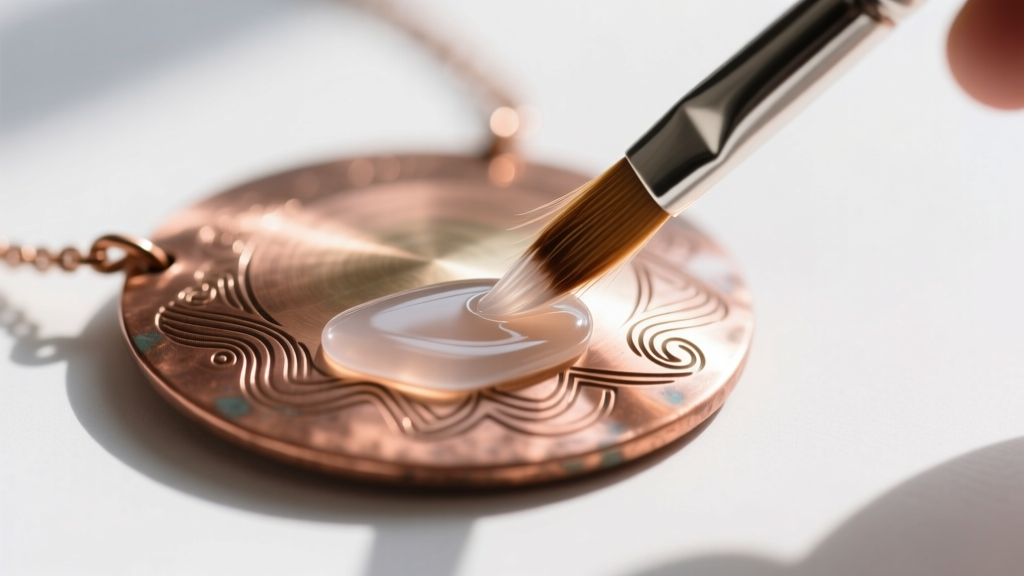
- The Permanent Fix (ProtectaClear): For a definitive solution, use a jewelry-grade clear coat like ProtectaClear. This is a tough, scratch-resistant polymer coating that cures to a hard finish. Applied with a fine brush to the back of the gong pendant, it will prevent oxidation and skin staining for years without altering the pendant's visual aesthetic.
Chain Breakage & Jump Ring Failures
A solid brass or silver gong pendant measuring 60mm in diameter can easily weigh between 35 and 55 grams. This is exceptionally heavy for standard fashion jewelry chains. The Jewelers of America frequently notes that pendant weight is the primary cause of premature chain stretching and link failure. When a heavy disc swings, it generates kinetic momentum that places immense tensile stress on the chain's weakest points: the clasp and the jump ring.
| Chain Style | Structure | Max Recommended Weight | Verdict for Gong Pendants |
|---|---|---|---|
| Cable Chain (1.5mm) | Single interlocking oval links | 10 - 15 grams | Avoid: Will stretch and snap under a 40g gong. |
| Rope Chain (2.5mm) | Twisted links mimicking a rope | 30 - 45 grams | Good: Strong, but can catch on the pendant bail. |
| Wheat/Spiga Chain (2.0mm) | Braided, multi-directional links | 50 - 70 grams | Excellent: Distributes kinetic stress evenly. |
| Flat Box Chain (3.0mm) | Interlocking square plates | 60 - 80 grams | Best: Extremely high tensile strength; prevents flipping. |
The Jump Ring Bottleneck
Even if your chain is strong enough, the jump ring connecting the pendant to the chain is often the point of failure. Standard mass-produced jewelry uses 20-gauge (0.81mm) or 22-gauge (0.64mm) wire for jump rings. For a heavy gong necklace, this is entirely insufficient. You must upgrade the connecting ring to a 16-gauge (1.29mm) or 14-gauge (1.63mm) wire thickness. Furthermore, never use a split ring (like a miniature keychain ring) for a heavy, flat pendant; the constant friction will wear down the metal of the bail. Always opt for a solid, soldered jump ring to ensure the structural integrity of the piece.
Layering and the "Wind Chime" Effect
Layering a gong necklace with other chains is a popular 2026 styling technique, but it often results in an annoying "wind chime" clanking sound and severe tangling. The large surface area of the gong acts like a sail, catching smaller chains and pulling them into a knotted mess.
The Troubleshooting Fix: Utilize a silicone necklace spacer or a multi-strand magnetic clasp. These devices anchor the chains at the nape of the neck and the sternum, keeping them separated by exactly 1 to 2 inches. If you prefer a traditional clasp, ensure the gong necklace is the longest layer (e.g., 24 inches) while the accompanying chains sit at 16 and 18 inches. This drastic length disparity prevents the heavy disc from physically overlapping and tangling with the smaller pendants.
Quick Troubleshooting Checklist
Before wearing your favorite oversized disc pendant, run through this quick diagnostic checklist to ensure optimal performance:
- Check the Bail: Is it a single ring? If yes, expect flipping. Consider a double-bail conversion.
- Inspect the Jump Ring: Try to pull the jump ring apart with your fingernails. If it yields, replace it with a 16-gauge soldered ring.
- Evaluate the Chain: If using a delicate cable chain with a pendant over 30g, swap to a wheat or flat box chain immediately.
- Seal the Back: If the pendant is brass, copper, or bronze, apply a coat of ProtectaClear to the back to save your skin and your clothing from green stains.
- Test the Clasp: Ensure the clasp is a sturdy lobster claw or a heavy-duty magnetic lock; standard spring rings will fail under the dynamic weight of a swinging gong.
By addressing the mechanical vulnerabilities and chemical realities of oversized disc jewelry, you can transform your gong necklace from a frustrating accessory into a flawless, enduring statement piece. For more insights on precious metal care and structural jewelry design, consult the educational resources provided by the Gemological Institute of America (GIA).


