How to Fix and Clean a Heart Inside a Heart Necklace
Learn how to untangle, clean, and repair a heart inside a heart necklace. Expert troubleshooting tips for nested pendants and chain maintenance.


The Engineering Challenges of Nested Heart Pendants
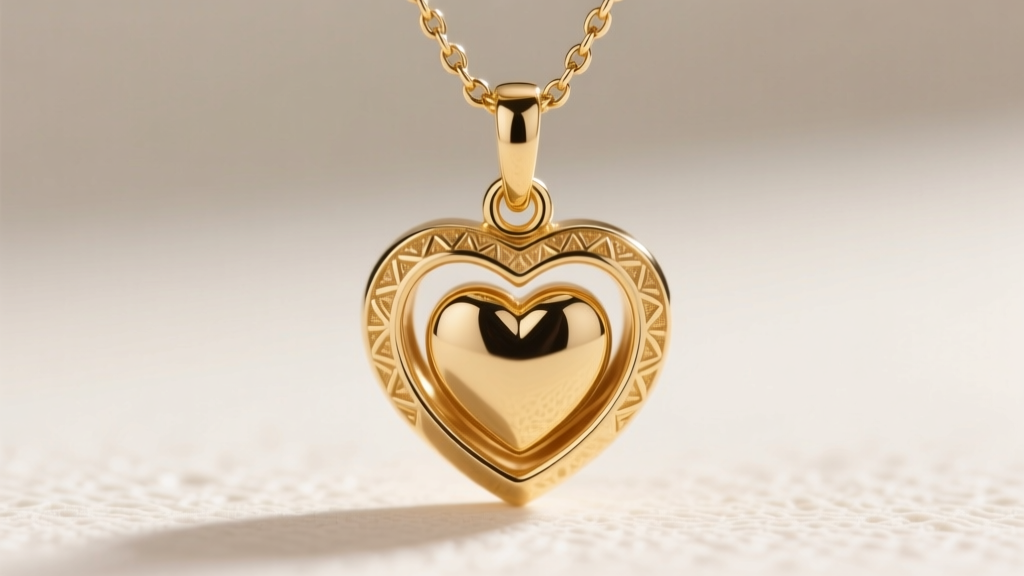
A heart inside a heart necklace—often referred to as a nested heart, double heart, or interlocking Russian heart pendant—is a beloved symbol of layered affection. However, from a jewelry engineering perspective, this design introduces a unique set of mechanical vulnerabilities. Unlike a standard flat pendant that rests flush against the sternum, a nested heart features complex geometry, shifting centers of gravity, and tight micro-crevices. These design elements make the piece highly susceptible to chain tangling, metal-on-metal galling, and stubborn debris accumulation.
Whether your pendant features a solid cutout design where the inner heart is suspended by micro-solder joints, or an interlocking design where two separate heart rings move freely, troubleshooting requires an understanding of metallurgy and kinetic stress. According to the Gemological Institute of America (GIA), intricate jewelry designs with moving parts require specialized maintenance routines to prevent structural fatigue. Below, we break down the most common issues plaguing nested heart necklaces and provide actionable, professional-grade solutions to restore your piece.
Troubleshooting Bail Friction and Chain Threading
The bail—the loop that connects the pendant to the chain—bears the brunt of the kinetic stress in a heart inside a heart necklace. Because the nested design often creates a pendulum effect, the inner heart swings independently, transferring erratic torque to the bail. Over time, this causes the chain to saw through the bail's interior, especially if you are using a soft metal like high-karat gold or sterling silver.
Upgrading the Chain and Bail Connection
If you notice micro-fraying on your chain or a flattened interior on your bail, you must address the friction immediately. The most common mistake is pairing a heavy nested pendant with a delicate 22-gauge (0.64mm) cable chain. The thin links easily warp and catch inside a standard 2mm bail.
- Switch to a Box Chain: Upgrade to a 20-gauge (0.81mm) or 18-gauge (1.02mm) box chain. The rigid, geometric links of a box chain resist twisting and distribute the pendant's weight more evenly across the bail.
- Install a Friction Insert: Take the necklace to a jeweler and request a ruby-lined or Teflon-coated bail insert. This creates a sacrificial barrier that absorbs the lateral friction, protecting the precious metal.
- Soldered Jump Rings: Ensure the jump ring connecting the bail to the chain is fully soldered shut. An open split-ring will eventually warp under the uneven weight distribution of a double heart pendant.
Solving Metal-on-Metal Galling in Interlocking Hearts
If your heart inside a heart necklace features two separate, interlocking metal loops (similar to a Russian wedding ring), you are likely dealing with metal galling. Galling occurs when two metal surfaces slide against each other under pressure, causing microscopic tearing and material transfer. This is exacerbated when the two hearts are made of different alloys or possess different hardness ratings.
The Jewelers of America notes that differential metal hardness is a primary culprit in accelerated jewelry wear. Below is a friction and hardness matrix to help you understand how your specific metal combination will behave over time:
| Metal Type | Vickers Hardness (HV) | Friction Risk | Troubleshooting Advice |
|---|---|---|---|
| 925 Sterling Silver | 60 - 75 HV | High | Prone to deep scratching; requires frequent rhodium plating to create a hard, friction-resistant barrier. |
| 14k Yellow Gold | 130 - 160 HV | Moderate | Ideal for interlocking hearts; the alloy mix provides enough rigidity to resist severe galling. |
| 18k Yellow Gold | 110 - 130 HV | High | Softer than 14k; avoid pairing an 18k inner heart with a platinum outer heart, or the gold will wear away rapidly. |
| Platinum (950) | 110 - 135 HV | Low | Highly durable but develops a patina; does not lose metal mass during friction, making it safe for nested loops. |
The Fix: If your interlocking hearts are severely galled, a jeweler can use a laser welder to build up the worn grooves without applying the broad, damaging heat of a traditional torch. Afterward, request a high-polish finish on the contact points to reduce the coefficient of friction.
The Ultrasonic Cleaner Trap: Deep Cleaning Crevices Safely
The narrow 0.5mm to 1.5mm gap between the outer and inner heart is a magnet for sebum, cosmetic lotions, and dead skin cells. Many owners make the critical mistake of dropping their nested pendant into a 40kHz ultrasonic cleaner. While ultrasonic cavitation is excellent for diamond solitaires, it is highly destructive to a heart inside a heart necklace.
The high-frequency sound waves cause the inner and outer hearts to vibrate violently against one another. If the piece is interlocking, this acts like a micro-sandblaster, accelerating metal wear and potentially snapping the delicate solder joints of a suspended cutout design. Furthermore, if your necklace features any gemstone accents (like pave diamonds or tension-set birthstones), the vibration can easily shake them loose from their settings.
Professional Manual Cleaning Protocol
- Preparation: Mix a solution of warm distilled water and a few drops of pH-neutral dish soap. Avoid harsh degreasers that can strip protective rhodium plating.
- Soaking: Submerge the pendant for exactly 10 minutes to soften the lipid buildup in the crevices. Do not exceed 15 minutes, especially for oxidized silver pieces.
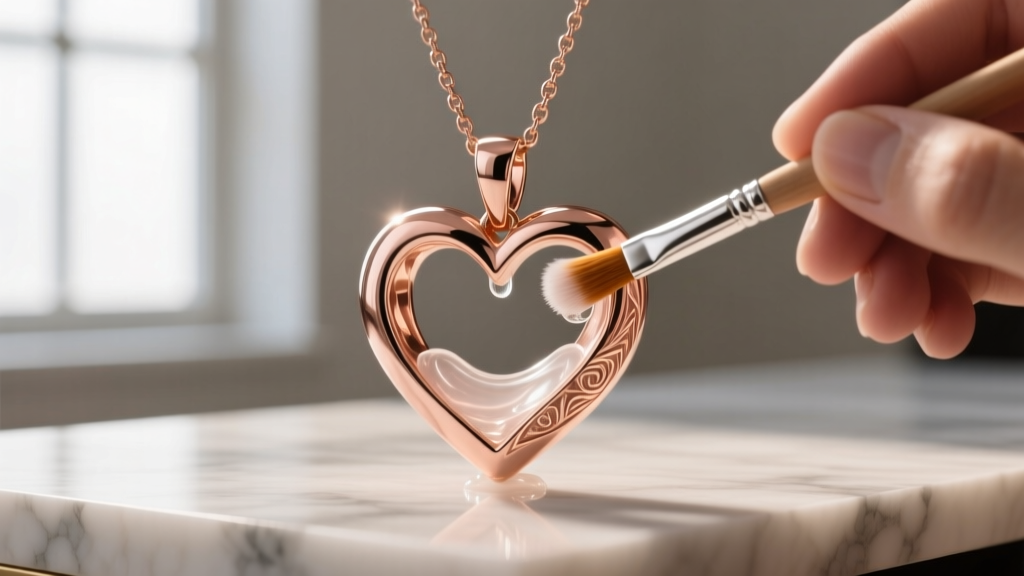
- Micro-Brushing: Use a 0.5mm bamboo interdental brush or a specialized jewelry detailing brush with ultra-soft nylon bristles. Gently trace the inner perimeter of the outer heart.
- The Skewer Technique: For stubborn grime in the tightest corners where the brush cannot reach, wrap a lint-free microfiber cloth around the tip of a wooden bamboo skewer. Never use metal needles, as they will permanently score the gold or silver.
- Drying: Use a can of compressed air to blow moisture out of the nested gaps. Air-drying leaves water spots, and towel-drying leaves lint trapped between the hearts.
Correcting Weight Imbalance and Clasp Migration
A frequent complaint with nested pendants is the 'flipping' phenomenon, where the pendant rotates upside down, or the 'migration' issue, where the chain slides through the bail, pulling the clasp to the front of the neck. This happens because a heart inside a heart necklace has an asymmetric center of mass. The top-heavy nature of the double-heart silhouette causes the chain to act like a track, sliding toward the heaviest point.
To solve clasp migration without resorting to a shorter, uncomfortable chain length, you must introduce a counterweight. You can purchase a 3mm to 4mm silicone or metal 'counterweight bead' and thread it onto the chain exactly opposite the clasp. This anchors the back of the neck, keeping the clasp hidden and the pendant perfectly oriented. Alternatively, swap out a lightweight spring-ring clasp for a heavier, solid-cast lobster clasp. The added 1.5 grams of weight at the nape of the neck is often enough to counterbalance the heavy nested pendant resting on the collarbone.
When to Seek Professional Jeweler Intervention
While chain upgrades and manual cleaning can be done at home, certain structural failures require professional intervention. If the inner heart of a cutout pendant is held by micro-solder joints and you notice a visible gap or 'clicking' sound when you tap it, the solder has fractured. Do not attempt to use superglue or epoxy; these adhesives will cloud the metal, trap moisture, and cause rapid localized tarnishing. A professional jeweler will use a precision laser welder to reattach the inner heart without melting the surrounding filigree. By understanding the unique physics and metallurgy of your nested jewelry, you can ensure your heart inside a heart necklace remains a flawless, enduring symbol for decades to come.


