How to Fix Lighted Necklaces: 2026 Troubleshooting Guide
Is your LED jewelry dead? Learn how to troubleshoot and repair lighted necklaces, from fixing micro-switches to replacing CR2032 batteries and EL wire.

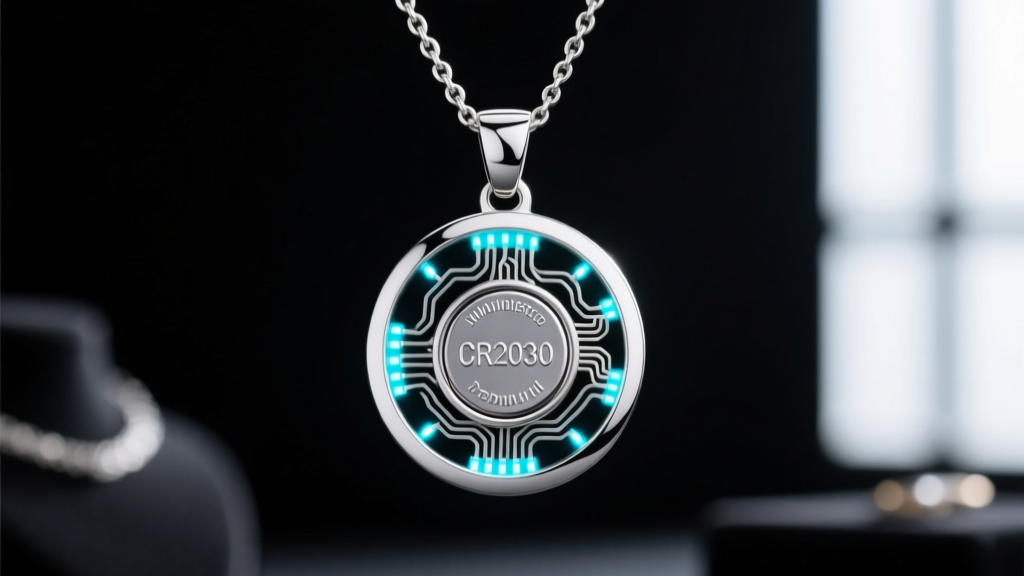
Lighted necklaces have evolved far beyond the cheap, blinking plastic novelties of the early 2000s. As of 2026, the integration of flexible printed circuit boards (PCBs), micro-surface-mount device (SMD) LEDs, and advanced electroluminescent (EL) materials has transformed illuminated jewelry into a sophisticated category of wearable tech. However, the marriage of delicate metals and microscopic electronics creates unique vulnerabilities. When your favorite glowing pendant or fiber optic choker stops working, the issue is rarely a total system failure. More often, it is a localized mechanical or chemical fault that can be repaired with the right tools and knowledge.
This comprehensive troubleshooting guide will help you diagnose, dissect, and repair the most common failures found in modern lighted necklaces, saving you from replacing expensive, sentimentally valuable, or custom-designed pieces.
The Anatomy of Modern Lighted Necklaces
Before attempting any repair, you must understand the three primary illumination technologies currently used in high-end and artisan lighted necklaces:
- SMD LED Nodes: Typically utilizing 0603 or 0805 metric-sized surface-mount LEDs. These are microscopic chips soldered directly onto flexible copper traces or ultra-thin 30 AWG magnet wire.
- Electroluminescent (EL) Wire: A copper core coated in phosphor, wrapped in a microscopic corona wire, and encased in PVC. It requires an alternating current (AC) inverter to excite the phosphor.
- Fiber Optic Strands: Polymethyl methacrylate (PMMA) threads that channel light from a single hidden LED source, often used in chokers and woven collar necklaces.
Understanding which technology your necklace employs dictates the troubleshooting path, the required voltage, and the repair methodology.
Common Failure Points in LED and Fiber Optic Jewelry
Wearable electronics face environmental stresses that stationary devices do not. The constant flexing of a necklace against the collarbone, exposure to cosmetic oils, and sudden tensile stress from snagging create specific failure modes.
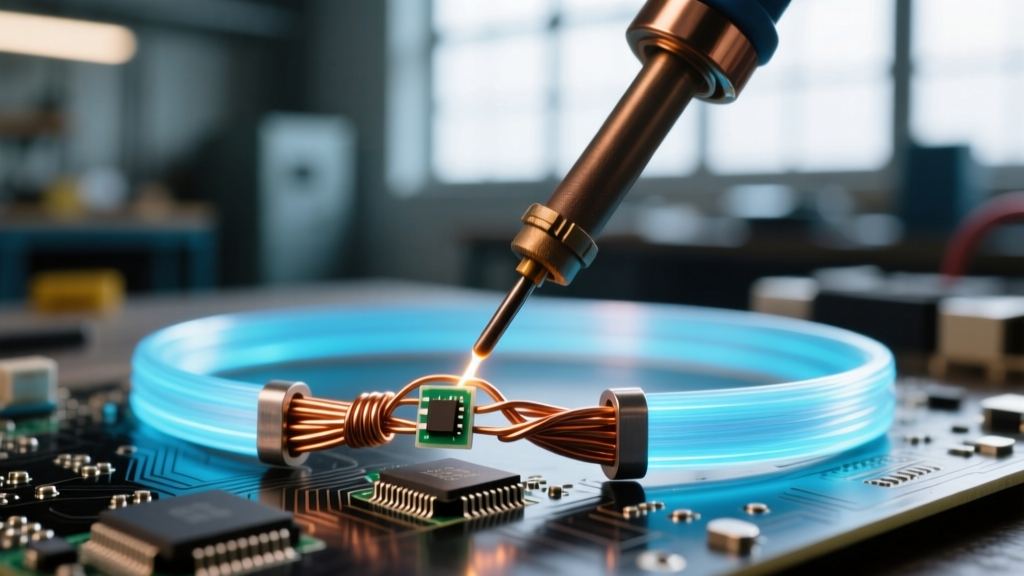
The most frequent point of failure in LED lighted necklaces is the cold solder joint at the battery terminal. Because jewelers often use low-temperature solder to avoid melting gemstones or damaging enamel, these joints are brittle. A sudden tug on the chain transfers kinetic energy directly to the rigid solder joint, causing a microscopic fracture that breaks the circuit. Another pervasive issue is galvanic corrosion on the battery contacts, accelerated by the wearer's skin pH and humidity, which creates an insulating layer of copper oxide or zinc carbonate.
Step-by-Step Troubleshooting Matrix
Use the following diagnostic matrix to identify the root cause of your necklace's malfunction. Always test with a digital multimeter before applying heat or replacing components.
| Symptom | Probable Cause | Tool Needed | Solution |
|---|---|---|---|
| LED flickers when moved | Fractured cold solder joint or broken 30 AWG wire | 30W Soldering iron, flux pen | Reflow the joint with 63/37 rosin-core solder and reinforce with UV-curable resin. |
| Light is unusually dim | Voltage drop from depleted battery or incorrect resistor | Multimeter, replacement battery | Test battery under load. If below 2.7V (for CR2032), replace. Check resistor value. |
| Completely dead (No light) | Corroded contacts, broken trace, or dead EL inverter | Isopropyl alcohol, fiberglass scratch pen | Clean contacts. If EL wire, listen for inverter hum. Replace inverter if silent. |
| Red LED burns out quickly | Missing current-limiting resistor on 3V cell | SMD resistor kitAdd a 47-ohm SMD resistor in series to prevent thermal runaway and battery drain. |
Battery and Power Supply Issues
Power delivery is the lifeblood of any lighted necklace. Misunderstanding battery chemistry and discharge curves is the leading cause of DIY repair failures.
Coin Cell vs. LiPo Rechargeable Systems
Most discrete pendants rely on CR2032 (3V, ~220mAh) or LR44 (1.5V, ~150mAh) coin cells. A critical mistake is assuming a battery is dead simply because its open-circuit voltage reads 3.0V. Coin cells suffer from high internal resistance; a depleted CR2032 might show 3.0V at rest but drop to 1.8V under the load of an LED, failing to reach the LED's forward voltage threshold. Always test the battery while it is in the circuit.
For larger statement pieces, 2026 designs frequently use 3.7V Lithium-Polymer (LiPo) pouch cells paired with a TP4056 micro-USB or USB-C charging module. If a LiPo necklace refuses to charge, the issue is often the deep discharge protection lockout. If the LiPo cell drops below 2.5V, the protection circuit permanently disables charging to prevent a fire hazard. You can sometimes 'wake' the cell by applying a regulated 4.2V bench power supply directly to the cell's raw terminals for 60 seconds before reconnecting the charging module.
Repairing Broken EL Wire and Fiber Optics
Electroluminescent wire offers 360-degree illumination, making it ideal for woven lighted necklaces. However, EL wire is notoriously fragile. The phosphor layer is brittle, and the microscopic corona wire wrapped around it can easily snap if the necklace is bent at a sharp angle (less than a 15-degree radius).
If your EL wire necklace has a dark segment but the rest is glowing, the copper core is intact, but the corona wire has broken. To repair this:
- Carefully strip back 1cm of the outer PVC jacket using a precision scalpel.
- Peel back the clear inner sleeve to expose the phosphor and the hair-thin corona wire.
- Apply a tiny strip of conductive copper tape to bridge the broken corona wire, ensuring it makes contact with the intact winding.
- Seal the repair with a drop of flexible silicone adhesive to prevent moisture ingress and mechanical stress.
For fiber optic necklaces, the strands themselves do not break electrically, but they can fray or snap optically. If a section of the choker goes dark, trace the strand back to the central LED housing. Often, the fiber has simply slipped out of the optical coupling gel. Re-seating the fiber and applying a dab of high-index optical matching gel will restore total internal reflection.
Waterproofing and Corrosion Prevention
Sweat, perfume, and rain are the natural enemies of exposed electronics. When repairing a lighted necklace, you must restore its environmental sealing. According to Adafruit's comprehensive LED guides, bare copper and silver traces will oxidize rapidly when exposed to the acidic salts found in human perspiration.
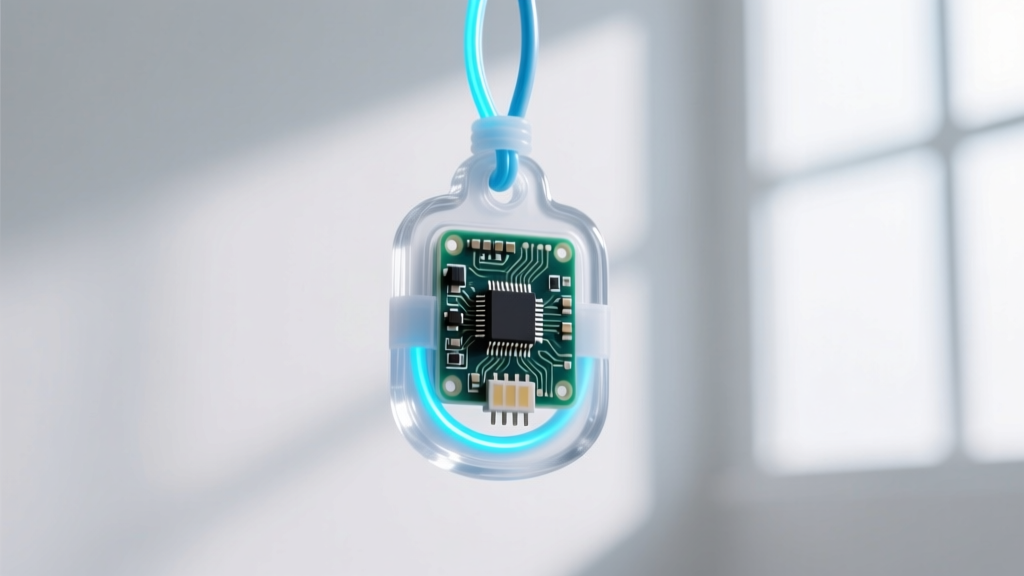
After completing any micro-soldering repair, you must apply a conformal coating. Do not use standard superglue (cyanoacrylate), as it cures brittle and will crack when the necklace flexes, allowing moisture to wick directly into the solder joint via capillary action. Instead, use a jewelry-safe, UV-curable acrylic conformal coating or a flexible silicone potting compound. Apply it with a fine-tipped brush, ensuring complete coverage over the solder joints and the battery contact springs, while carefully masking the actual light-emitting surface of the LED or the optical face of the fiber.
Magnetic Clasp Interference
A unique troubleshooting scenario in modern lighted necklaces involves magnetic clasps. Many high-end illuminated pieces use neodymium magnetic clasps for ease of wear. If your necklace features a Hall-effect sensor (used to turn the LEDs on or off when the clasp connects), a dropped or misaligned magnet can cause the sensor to remain permanently triggered or fail to engage. If your necklace turns off the moment you bring the clasp near the pendant, check the polarity of the neodymium magnet. Flipping the magnet or replacing a weakened N52-grade magnet will resolve the sensor conflict.
When to Salvage vs. Replace
While micro-soldering repair guides from iFixit prove that almost any electronic connection can be rebuilt, there are limits to jewelry repair. If the flexible PCB substrate is torn through the copper traces, or if a LiPo battery has begun to swell (delaminate), the piece must be decommissioned immediately for safety reasons. Swollen batteries in enclosed metal pendants pose a severe puncture and thermal runaway risk.
However, if the failure is limited to a disconnected wire, a dead coin cell, or a corroded switch, the piece is highly salvageable. By mastering these troubleshooting techniques, you can extend the lifespan of your lighted necklaces, ensuring your wearable technology continues to shine for years to come.


