Scissor Necklace Value Guide: Are 2026 Prices Worth It?
Discover if a scissor necklace is worth the investment in 2026. We break down material costs, brand markups, and how to spot true value in tailor jewelry.

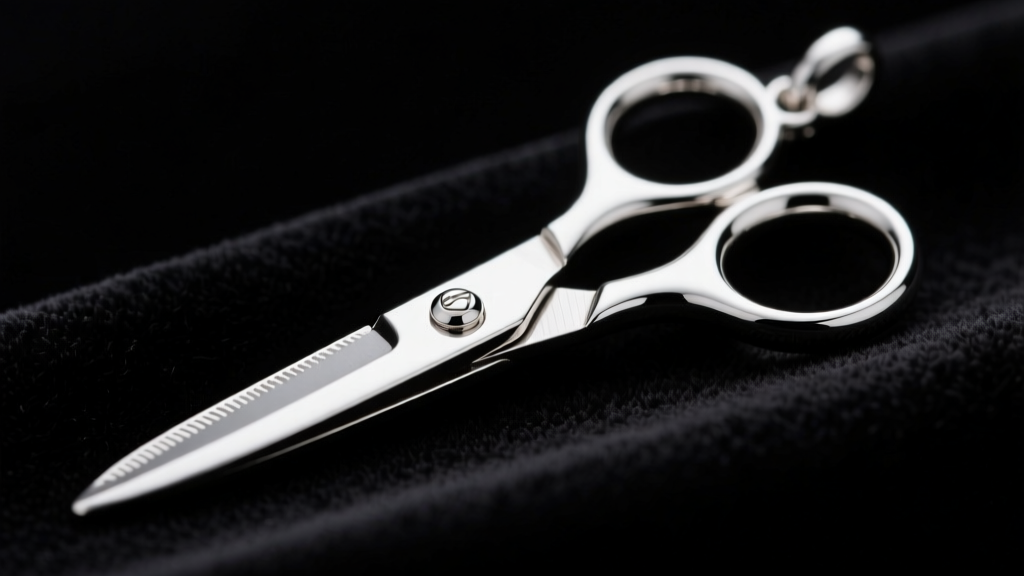
The Anatomy of a Scissor Necklace: What Are You Paying For?
The scissor necklace has evolved from a purely functional tailor's tool into a highly sought-after motif in 2026, embraced by sewists, hair stylists, and vintage fashion enthusiasts alike. However, the market is currently saturated with everything from $12 dropshipped base-metal pendants to $1,200 solid gold artisan pieces. When evaluating the budget and true value of a scissor pendant, you must look past the aesthetic and examine the structural anatomy, metal purity, and hardware mechanics.
The most common design flaw in cheap scissor jewelry is bail placement. The bail is the loop that connects the pendant to the chain. If a manufacturer simply solders a standard bail directly onto the top handle ring, the heavy bottom blades will cause the pendant to flip upside down or hang at an awkward diagonal. High-value artisan pieces feature an offset bail or a custom-soldered horizontal loop at the pivot point, ensuring the scissors hang perfectly vertical against the sternum. When assessing a piece, always check the bail engineering before looking at the metal.
Material Grades and 2026 Pricing Matrix
Precious metal markets have seen significant fluctuations over the last few years, directly impacting the baseline cost of jewelry manufacturing. Below is a realistic pricing matrix for scissor necklaces in 2026, categorized by material and functionality. Use this chart to identify if a brand is charging a fair artisan markup or simply inflating prices based on a trendy motif.
| Material Grade | Type | Estimated 2026 Price Range | Value Verdict |
|---|---|---|---|
| Brass/Zinc Alloy (Plated) | Decorative | $15 - $35 | Poor long-term value; plating will wear off in months. |
| Sterling Silver (925) | Decorative | $65 - $140 | Excellent value; durable, hypoallergenic, and holds resale value. |
| Sterling Silver (925) | Functional (Micro) | $130 - $260 | High value; requires precision CNC or hand-forging. |
| Gold Vermeil (over 925) | Decorative | $90 - $180 | Good value if verified at 2.5+ microns of 14k/18k gold. |
| Solid 14k Gold | Decorative | $450 - $850 | Premium investment; ideal for daily wear without tarnish. |
If you are looking at a piece marketed as 'gold' but priced under $100, it is almost certainly gold-plated brass or gold vermeil. According to the Federal Trade Commission Jewelry Guides, retailers must clearly disclose the base metal and the thickness of the gold layer. Always demand the micron thickness in writing before purchasing vermeil scissor pendants.
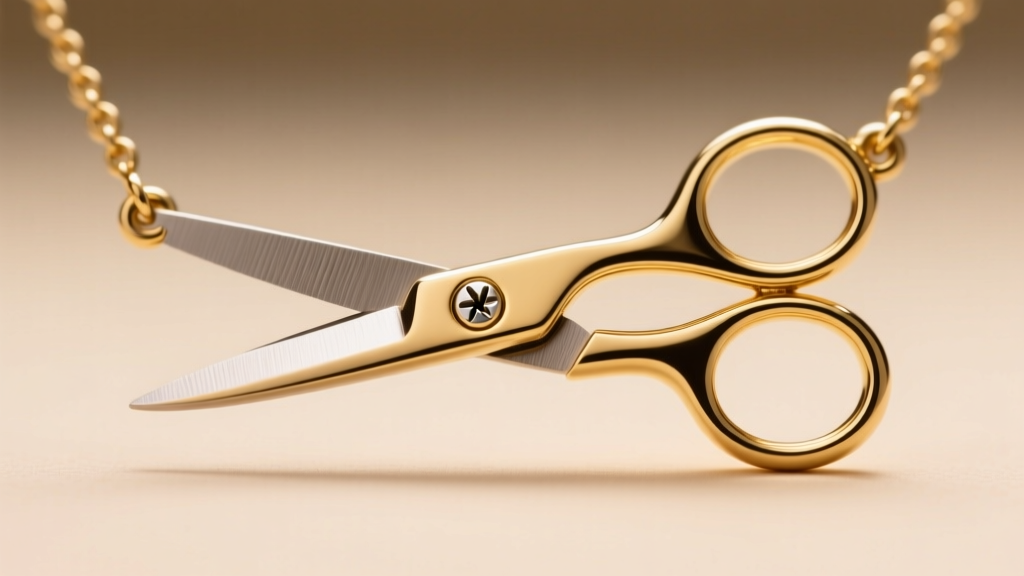
Functional vs. Decorative: The Hinge Failure Mode
One of the most critical value distinctions is whether the scissor necklace is purely decorative or actually functional (capable of cutting thread). This distinction dictates the metallurgy required and the price you should expect to pay.
The Mohs Hardness Problem
Sterling silver is a relatively soft metal, rating between 2.5 and 3 on the Mohs hardness scale, as noted by the Gemological Institute of America (GIA). If a functional scissor necklace is made entirely of sterling silver, the blades will dent, roll, and dull after cutting just a few strands of thick embroidery floss or Kevlar thread. True functional micro-scissors require high-carbon steel or hardened 440C stainless steel blades, often inlaid into a precious metal handle. If a brand charges over $150 for 'functional' silver scissors without steel inlays, you are overpaying for a decorative piece.
Hinge and Rivet Mechanics
The pivot point is the highest stress area on any scissor pendant. In budget pieces, the manufacturer uses a simple push-pin wire that is snipped and filed flat. Within three months of daily wear, the friction will cause this pin to back out, resulting in a loose, wobbly hinge that ruins the pendant. High-value pieces utilize a peened rivet (where the metal is hammered flat on both sides to lock it in place) or a microscopic screw-rivet mechanism. Always inspect the pivot point under a macro lens or jeweler's loupe before investing in a premium piece.
Chain Pairing: Avoiding the Snap
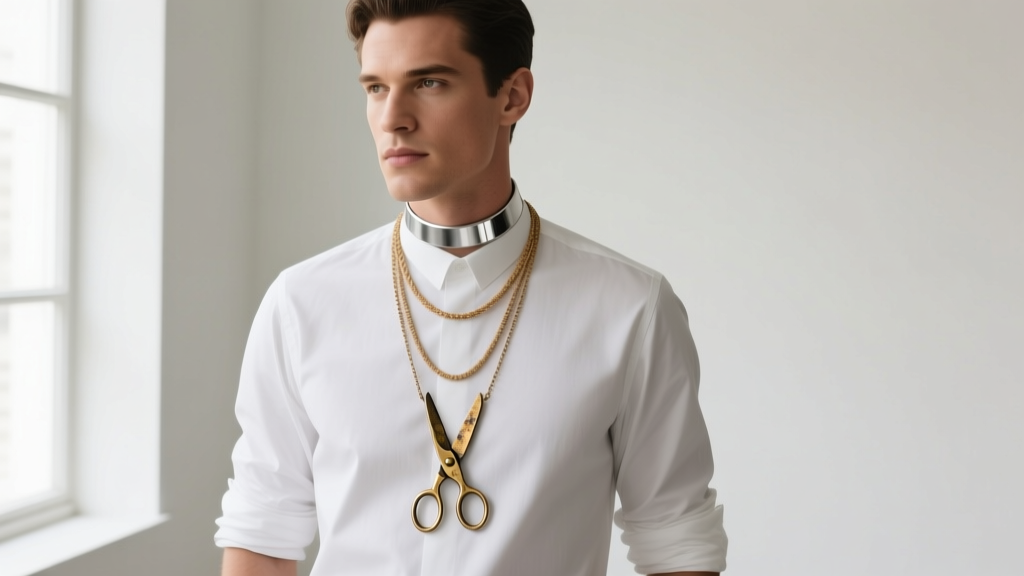
A scissor pendant is inherently bottom-heavy, creating a high dynamic load on the chain whenever you bend over or move quickly. Pairing a 20-gram solid bronze or silver scissor pendant with a delicate 1.0mm cable chain is a recipe for disaster; a standard 1.0mm cable chain has a tensile breaking strength of roughly 4 to 6 pounds, which can easily be exceeded by the sudden drop-weight of a heavy pendant.
- For Pendants Under 10g: A 1.2mm to 1.5mm cable or box chain is sufficient.
- For Pendants 10g - 25g: Upgrade to a 1.8mm wheat chain or a 2.0mm rope chain. The interlocking weave of a wheat chain distributes the sheer stress of the heavy bail evenly across multiple links.
- Clasp Hardware: Ensure the chain features a soldered jump ring and a sturdy lobster clasp. Spring-ring clasps frequently fail under the weight of heavy tailor jewelry.
Authentication and FTC Standards
When shopping for vintage or estate scissor necklaces, hallmarks are your best defense against counterfeit materials. A genuine sterling silver piece will bear a '925' stamp, usually hidden on the back of one of the scissor handles or on the inside of the bail. However, be wary of the 'Tibetan Silver' or 'Alpaca' labels often found on online marketplaces; these contain zero actual silver and are typically copper-nickel alloys that can cause severe contact dermatitis.
Expert Appraisal Tip: If you are buying a vintage gold-filled scissor pendant, look for stamps like '1/20 14K GF'. This means the gold layer makes up at least 1/20th of the total weight of the item, making it exponentially more durable and valuable than modern electroplated fashion jewelry.
Final Verdict: Budgeting for Your Scissor Pendant
So, is a scissor necklace worth the investment in 2026? If you are a professional tailor or stylist looking for a functional daily tool, budget between $130 and $250 for a sterling silver pendant with hardened steel blades and a peened rivet hinge. If you are buying purely for the vintage aesthetic or as a fashion statement, a solid 925 sterling silver decorative piece in the $70 to $120 range offers the best intersection of durability, skin safety, and long-term value. Avoid base-metal alloys entirely, as the cost of replacing tarnished, broken pieces will quickly exceed the price of a quality silver pendant.


