Troubleshooting Your 18 Inch Pearl Necklace: Restringing & Repair
Is your 18 inch pearl necklace stretching or dulling? Learn expert troubleshooting for restringing, knotting, clasp repairs, and reviving luster.

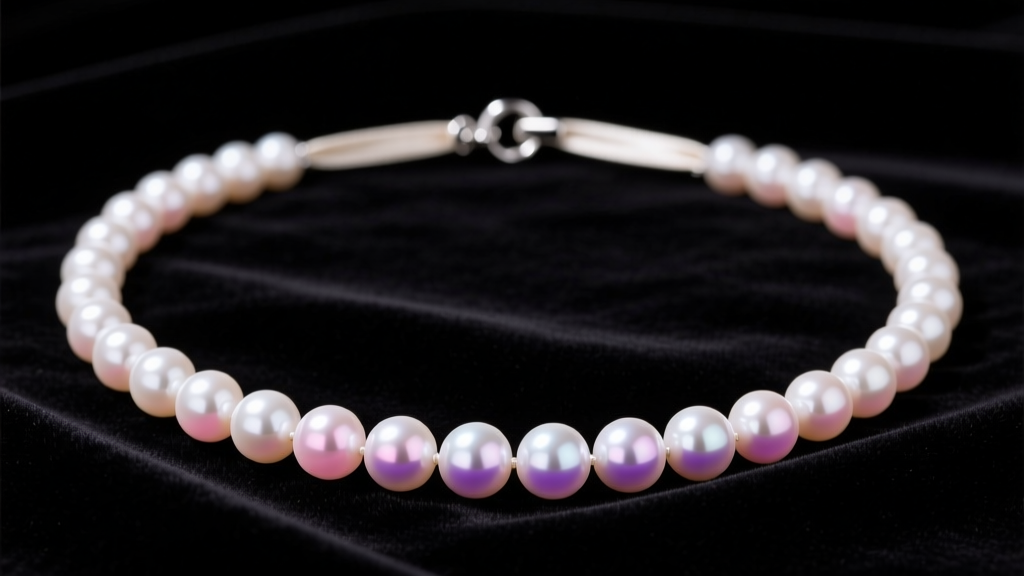
The Anatomy of a Classic 18 Inch Pearl Necklace
The 18 inch pearl necklace, universally known in the jewelry industry as the 'princess' length, is a cornerstone of fine jewelry. It is designed to rest elegantly just below the collarbone, making it the most versatile length for both crew necklines and open blouses. However, because it sits at the base of the neck, it is subjected to constant friction, skin oils, and gravitational pull. A traditional strand consists of 45 to 55 individual pearls (typically 7.0mm to 7.5mm Akoya or freshwater), hand-knotted on 100% silk thread, and finished with French wire (gimp) and a precious metal clasp. When these components begin to fail, the entire structural integrity of the necklace is compromised.
Troubleshooting Fit: Why Your 18-Inch Necklace Feels Wrong
A common complaint among jewelry owners is that their 18 inch pearl necklace suddenly feels too tight or awkwardly loose. This is rarely due to changes in your neck size, but rather a misunderstanding of how pearl strands are measured and how they drape.
The Measurement Discrepancy
In professional jewelry making, the 18-inch measurement includes the clasp. If a jeweler or hobbyist measures exactly 18 inches of pearl strand and then adds a half-inch box clasp and French wire, the final wearable length becomes 18.5 or 19 inches. Conversely, if the silk stretches over time, the necklace may measure 18.5 inches, but the heavy pearls pull the clasp forward, creating a tight, choking sensation at the nape of the neck. To fix this, always measure the entire finished piece, clasp included, on a standard velvet bead board.

The Stretching Problem: When to Restring
Silk is a natural protein fiber. While it possesses incredible tensile strength, it is highly susceptible to degradation from human sebum, sweat, and cosmetics. Over a period of 12 to 24 months of regular wear, the silk thread will stretch and weaken.
The Gap Test
To determine if your necklace requires immediate restringing, perform the 'Gap Test'. Hold the strand vertically by the clasp and let the pearls hang. Gently run your thumb down the strand. If you can see a visible gap of more than 1mm between the pearl and the knot, or if the thread feels stiff and brittle rather than supple, the silk has reached its failure point. Wearing a stretched strand risks a catastrophic break, potentially resulting in lost pearls.
Sizing the Silk Thread and French Wire
Choosing the correct thread thickness is critical. The thread must pass through the pearl's drill hole twice (if using a needle) or once with a collapsible eye needle, while still being thick enough to form a knot that cannot slip back into the hole. According to the Gemological Institute of America (GIA), matching the nacre quality with proper stringing tension preserves the drill hole edges from chipping.
| Pearl Drill Hole Size | Recommended Silk Thread Size | Thread Diameter (mm) | Best For |
|---|---|---|---|
| 0.40mm | Size A or B | 0.25mm - 0.28mm | Small seed pearls (2-4mm) |
| 0.50mm | Size D | 0.30mm | Standard Akoya (6-7mm) |
| 0.60mm | Size E | 0.35mm | Large Akoya / Freshwater (7-8mm) |
| 0.70mm+ | Size F or Doubled D | 0.40mm+ | South Sea / Tahitian (9mm+) |
Note: Always use French wire (gimp) with a 0.35mm to 0.45mm inner diameter at the clasp connection to prevent the metal clasp loop from sawing through the silk thread.
Step-by-Step Restringing & Knotting Troubleshooting
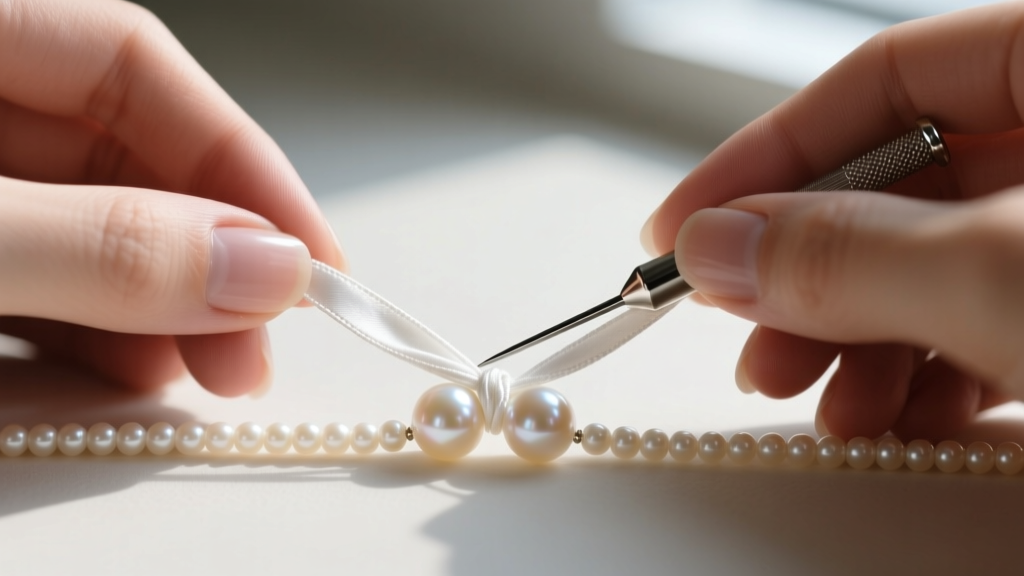
If you are restringing the necklace yourself or evaluating a jeweler's work, knotting is where most errors occur. The goal of the knot is twofold: to prevent pearl-on-pearl abrasion (which destroys nacre) and to ensure that if the strand breaks, only one pearl is lost.
- The Slipping Knot: If a knot slips into the drill hole, the pearl will eventually fall off. This happens when the thread gauge is too thin for the hole. Solution: Tie a double overhand knot or use a tiny seed bead as a spacer inside the hole.
- The Twisted Silk: Silk thread consists of multiple plies. If you pull the thread too aggressively while tightening the knot, the plies separate and twist, weakening the structural integrity. Always use a beading awl to gently coax the knot flush against the pearl without yanking the thread.
- Uneven Tension: A professional strand should be flexible but not floppy. If the necklace feels rigid, the knots were pulled too tight, which actually stretches the silk prematurely and causes the strand to kink.
Reviving Dull or Yellowed Pearls
Pearls are organic gems composed of calcium carbonate and conchiolin. They rank a mere 2.5 to 3.0 on the Mohs hardness scale and are highly sensitive to acids. When an 18 inch pearl necklace loses its luster or takes on a yellowish tint, it is usually suffering from surface etching caused by acidic sweat or prolonged exposure to perfumes and hairsprays.
Cleaning Mistakes to Avoid
Never use ultrasonic cleaners, steam cleaners, or commercial jewelry dips on pearls. These methods will strip the nacre or dissolve the adhesive inside the drill holes. According to the GIA's pearl care guidelines, the safest cleaning method is wiping the strand with a soft, lint-free microfiber cloth slightly dampened with distilled water after every wear. For deeper cleaning, use a drop of mild, phosphate-free castile soap on a damp cloth, wipe gently, and allow the strand to dry completely flat on a towel before wearing or storing. Never hang a wet pearl necklace, as the weight of the water will stretch the newly cleaned silk.
Upgrading the Clasp: Solving the Fiddly Fishhook
The traditional fishhook clasp inserted into a figure-8 safety box is highly secure but notoriously difficult to operate, especially for those with limited dexterity or long acrylic nails. When troubleshooting an 18 inch pearl necklace that is frustrating to put on, upgrading the clasp is the most effective solution.
Expert Tip: If you upgrade to a magnetic clasp for ease of use, ensure it features a secondary safety mechanism, such as a figure-8 wire catch or a locking bayonet sleeve. Rare-earth neodymium magnets are strong, but a sudden lateral tug can separate a basic magnetic clasp, dropping your pearls.
For a seamless look, consider a 14k gold bayonet clasp. It screws together with a half-turn, offering the security of a threaded mechanism with a sleek, cylindrical profile that blends perfectly into the 18-inch strand without adding bulky hardware.
Final Care and Maintenance Checklist
To maximize the lifespan of your restringing work and maintain the pristine condition of your pearls, adhere to this maintenance protocol:
- Last On, First Off: Always put your pearl necklace on after applying makeup, perfume, and lotions. Remove it before changing clothes to prevent snagging on fabrics.
- Proper Storage: Store the necklace flat in a soft cloth pouch. Never store pearls in airtight plastic bags or safety deposit boxes for long periods; pearls need ambient moisture to prevent the conchiolin from drying out and cracking.
- Annual Inspections: Have a professional jeweler inspect the French wire and clasp loop annually. The metal-on-metal friction between the clasp and the jump ring will eventually wear a groove into the gold or silver, leading to a break.
By understanding the mechanics of silk thread, drill hole tolerances, and nacre preservation, you can troubleshoot and maintain your 18 inch pearl necklace to ensure it remains a flawless, luminous staple in your jewelry collection for decades.


