How to Choose the Perfect Charm Chain Necklace: A Buyer's Guide
Discover how to choose the perfect charm chain necklace. Learn about chain styles, clasp security, metal grades, and weight limits in our expert guide.

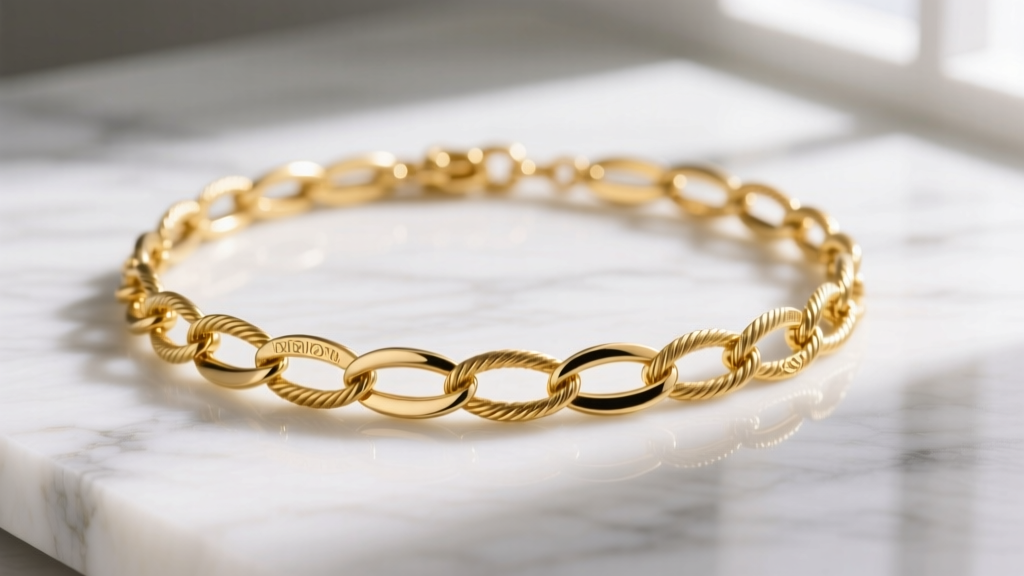
The Anatomy of a Durable Charm Chain Necklace
A charm chain necklace is far more than a simple accessory; it is a modular, evolving canvas for personal expression. However, the addition of charms introduces complex physics to your jewelry. The constant swinging, snagging, and dynamic tension placed on the chain links can quickly turn a beautiful piece into a broken one if the foundational hardware is inadequate. When shopping for a charm chain necklace in 2026, you must look beyond the aesthetic and evaluate the metallurgical strength, link geometry, and clasp security. This comprehensive buying guide strips away the marketing fluff and focuses on the exact specifications you need to ensure your necklace survives daily wear while securely holding your most precious pendants.
Chain Styles: Geometry and Tensile Strength
Not all chain links are created equal. The geometry of the link dictates how well it resists kinking, tangling, and snapping under the lateral pull of a heavy charm. Here is how the most common chain styles perform when tasked with holding charms.
| Chain Style | Min. Gauge for Charms | Kink Resistance | Durability Rating |
|---|---|---|---|
| Cable | 1.2mm | Moderate | Good (if soldered) |
| Curb | 1.5mm | High | Excellent |
| Figaro | 1.8mm | High | Excellent |
| Rope | 1.5mm | Low (Catches bails) | Fair |
| Box | 1.0mm | Moderate | Poor (Prone to denting) |
The Expert Verdict: For a charm chain necklace, the curb chain is the undisputed champion. Because the links are flattened and interlock tightly, they lay flush against the skin and resist the twisting forces that cause cable chains to kink. Rope chains, while beautiful, feature deep grooves that easily catch on the bails (the loops) of your charms, leading to premature wear on both the chain and the pendant.
Metal Grades: Hardness vs. Purity
When selecting the metal for your chain, you are making a compromise between purity and structural integrity. According to the Gemological Institute of America (GIA), the alloy mix in gold significantly impacts its Vickers hardness (HV), which measures resistance to scratching and deformation.
14k Solid Gold: The Sweet Spot
Composed of 58.5% pure gold, 14k gold boasts a Vickers hardness of roughly 125-140 HV. This makes it rigid enough to support the dynamic weight of multiple charms without stretching over time. It is the industry standard for everyday charm necklaces because it balances rich color with exceptional tensile strength.
18k Solid Gold: The Luxury Risk
At 75% pure gold, 18k chains are softer (around 110-120 HV). While they offer a deeper, more saturated yellow hue, they are highly susceptible to 'chain stretch'—a phenomenon where the links slowly elongate and thin out under the constant gravitational pull of heavy charms. If you choose 18k, opt for a thicker gauge (minimum 2.0mm) and stick to lightweight, hollow charms.
Sterling Silver and Vermeil
Sterling silver (925) is highly prone to oxidation and is inherently softer than 14k gold. If you are buying a silver charm chain necklace, ensure it is rhodium-plated to prevent tarnish. For gold vermeil, the Federal Trade Commission (FTC) strictly mandates a sterling silver base with a minimum gold plating thickness of 2.5 microns. Anything less is classified as standard 'gold plated' and will quickly wear away at the friction points where charm bails rub against the links.
The Weak Link: Clasp Security and Soldering
The most common point of failure on any charm chain necklace is not the middle of the chain, but the hardware at the ends. The clasp and the jump rings connecting it are under immense lateral stress.
- Avoid Spring Ring Clasps: These rely on a tiny internal spring mechanism that easily fails or gets stuck when subjected to the swinging weight of charms.
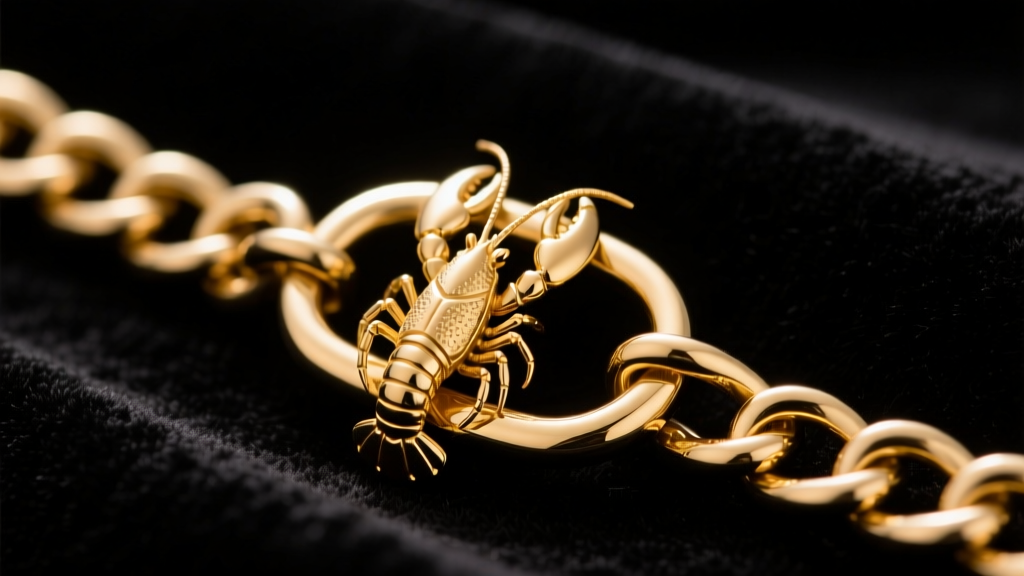
- Demand Lobster Clasps: A forged lobster clasp with a solid lever provides a secure, locking grip that will not pop open if the chain is snagged.
- The Soldered Jump Ring Rule: A standard split jump ring (the small circle connecting the clasp to the chain) can pull apart under just 2 to 3 pounds of tension. Always inspect the jump ring. It must be soldered shut, meaning the seam is fused with metal, raising its breaking threshold to match the tensile strength of the wire itself.

Weight Ratios: Matching Charm Mass to Chain Gauge
A beautiful chain will snap if it is not rated for the mass it carries. Jewelry engineers use a variation of the safety factor principle to match chains to pendants. We recommend the 1:8 Weight Rule for charm chain necklaces.
The tensile breaking strength of the chain should be at least eight times the static weight of the total charms attached. This accounts for 'dynamic loading'—the sudden spike in force when a charm snags on a sweater or when you pull the necklace over your head. For example, if your collection of solid gold charms weighs 10 grams in total, your chain must be able to withstand 80 grams of tensile pull. In practical terms, a 10-gram charm load requires a minimum 1.5mm solid cable or 1.8mm hollow curb chain in 14k gold.
Bail Sizing and Friction
Do not forget the inner diameter of the charm's bail. A 2.0mm thick curb chain requires a bail with an inner opening of at least 2.5mm to allow the charm to slide freely. If the bail is too tight, it will act like a saw blade against the chain links every time you move, slowly shaving away the metal until the link fails.
Pricing Expectations and Sourcing in 2026
With the fluctuating spot prices of precious metals tracked by organizations like the World Gold Council, pricing for solid gold charm chains has shifted. As a baseline, a high-quality, soldered 16-inch 14k solid gold curb chain (1.5mm gauge) should retail between $450 and $700, depending on the brand's markup and artisan craftsmanship. Sterling silver equivalents of the same durability should range from $80 to $150. Be highly suspicious of 14k gold chains priced under $200; they are likely heavily hollowed out, gold-filled, or plated, and will not survive the mechanical stress of holding charms.
Final Pre-Purchase Checklist
Before adding a charm chain necklace to your cart or completing a purchase at the jeweler's bench, run through this rapid diagnostic checklist:
- Is the jump ring connecting the clasp fully soldered shut?
- Does the chain style (preferably curb or figaro) resist twisting and kinking?
- Is the metal grade appropriate for the weight of my charms (14k for heavy, 18k for lightweight)?
- Does the clasp feature a forged lobster mechanism rather than a spring ring?
- Can the chain pass through the charm bails with at least 0.5mm of clearance to prevent friction sawing?
By prioritizing structural integrity and mechanical geometry over fleeting trends, you will secure a charm chain necklace that serves as a reliable, lifelong foundation for your most meaningful pendants.