Authenticating and Grading a Genuine Puka Shell Necklace
Discover how to authenticate, grade, and string a genuine puka shell necklace. Learn expert identification tests, material specs, and care tips.

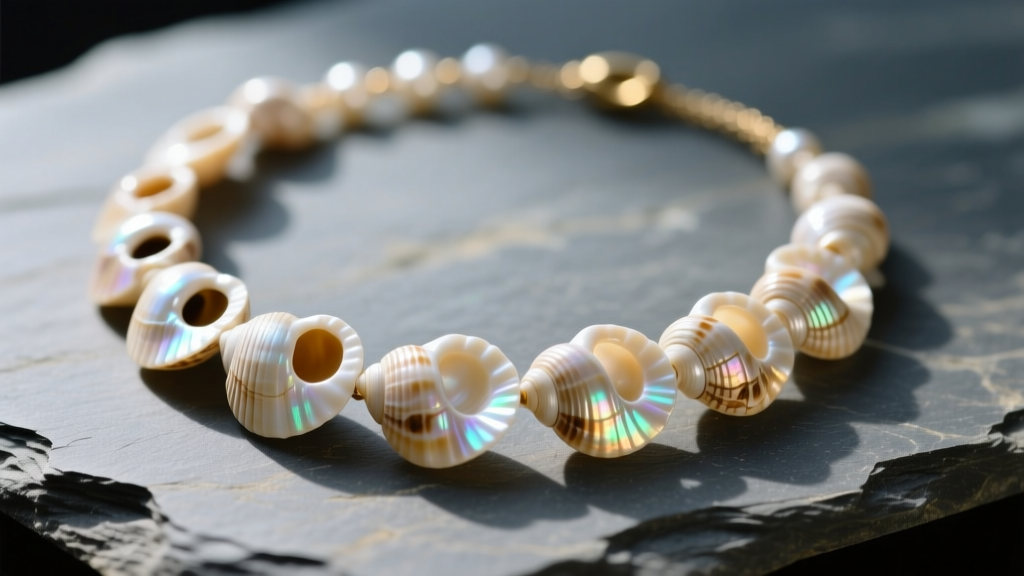
The Biology and Anatomy of True Puka
The resurgence of the puka shell necklace in contemporary jewelry has brought a wave of synthetic imitations into the market. To understand how to authenticate and grade these organic gems, one must first understand their biological origin. True puka shells are not manufactured; they are the naturally weathered apex fragments of the Conus miliaris (the millet cone snail), native to the Indo-Pacific region. The Hawaiian word "puka" translates directly to "hole," referring to the natural perforation created when the snail's spire wears away from ocean tumbling and biological degradation.
According to the National Oceanic and Atmospheric Administration (NOAA), cone snails possess complex calcium carbonate structures. The shell is composed primarily of aragonite, a crystalline form of calcium carbonate, bound together by an organic protein matrix called conchiolin. This specific micro-structure gives genuine puka its signature pearlescent luster and a Mohs hardness of roughly 3.5 to 4.0, making it softer than quartz but highly durable against saltwater corrosion.
Authentication Matrix: Natural vs. Synthetic vs. Heishi
The modern market conflates "puka" with "heishi." Heishi (meaning "shell" in Hawaiian) traditionally refers to flat, hand-cut and drilled disks of shell or stone. True puka, conversely, is naturally domed and naturally holed. Furthermore, the market is saturated with injection-molded plastics and carved howlite imitations. As an expert, you must employ a multi-sensory diagnostic approach to verify a genuine puka shell necklace.
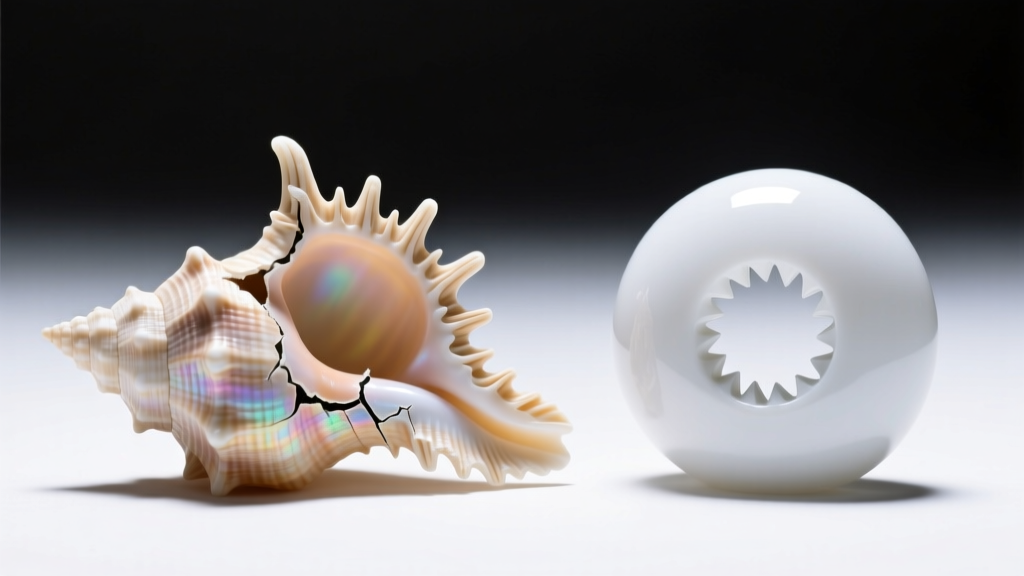
Diagnostic Testing Protocols
- Visual Inspection (The Hole): A genuine puka features an asymmetrical, slightly jagged, or conical natural hole. The interior lip often shows micro-fractures or natural wear patterns. Synthetic or drilled shells will have perfectly cylindrical, uniform holes with sharp, machine-cut edges.
- Thermal Conductivity Test: Calcium carbonate is a thermal conductor. When pressed against the lower lip or inner wrist, genuine shell will feel distinctly cool to the touch and take several seconds to absorb body heat. Plastic and resin imitations will feel neutral or warm immediately.
- UV Fluorescence: Under a 365nm ultraviolet flashlight, natural aragonite typically exhibits a mild, chalky blue-white fluorescence. Injection-molded plastics and epoxy resins often fluoresce bright green or milky yellow due to optical brighteners and curing agents.
- The Acetone Swab Test: Many low-grade shells are chemically dyed to achieve uniform colors. Rubbing a cotton swab soaked in 100% acetone over a dyed shell will lift the pigment. Natural, unbleached white or cream puka will not transfer any color.
| Feature | Genuine Conus Puka | Cut Heishi Disks | Synthetic / Plastic |
|---|---|---|---|
| Hole Structure | Asymmetrical, naturally worn | Perfectly cylindrical, drilled | Uniform, molded or drilled |
| Surface Luster | Pearlescent, micro-growth lines | Flat, polished, uniform | High-gloss, glassy, uniform |
| Thermal Feel | Cool to the touch | Cool to the touch | Room temperature / Warm |
| Weight (per bead) | 0.4g - 0.8g (dense) | Varies by material | 0.1g - 0.2g (hollow/light) |
Technical Grading Standards for Puka Shells
Once authenticity is established, gemologists and high-end jewelers grade puka shells based on three critical vectors: size symmetry, color integrity, and structural density. The Gemological Institute of America (GIA) notes that organic gems require specialized grading criteria that account for natural imperfections, which are often celebrated rather than penalized.
Size and Symmetry Tolerances
Puka shells are measured by their widest diameter in millimeters. For a premium puka shell necklace, graders look for a tight size variance. A high-grade strand will feature shells ranging between 9mm and 11mm, with no more than a 1.5mm deviation between the largest and smallest bead on the strand. "Baroque" or freeform puka strands are graded on the aesthetic flow of the asymmetry rather than strict dimensional matching.
The Bleaching Hazard
Consumers often seek blindingly white puka. However, pure white shells are frequently achieved through chlorine or hydrogen peroxide bleaching. This chemical process destroys the conchiolin protein matrix, leaving the aragonite crystals unsupported. Bleached shells will appear chalky, lack deep luster, and are highly prone to micro-fracturing and crumbling over time. Expert graders prefer "natural cream" or "ivory" puka, which indicates the shell has only been lightly tumbled in water and retains its structural integrity and deep, organic luster.
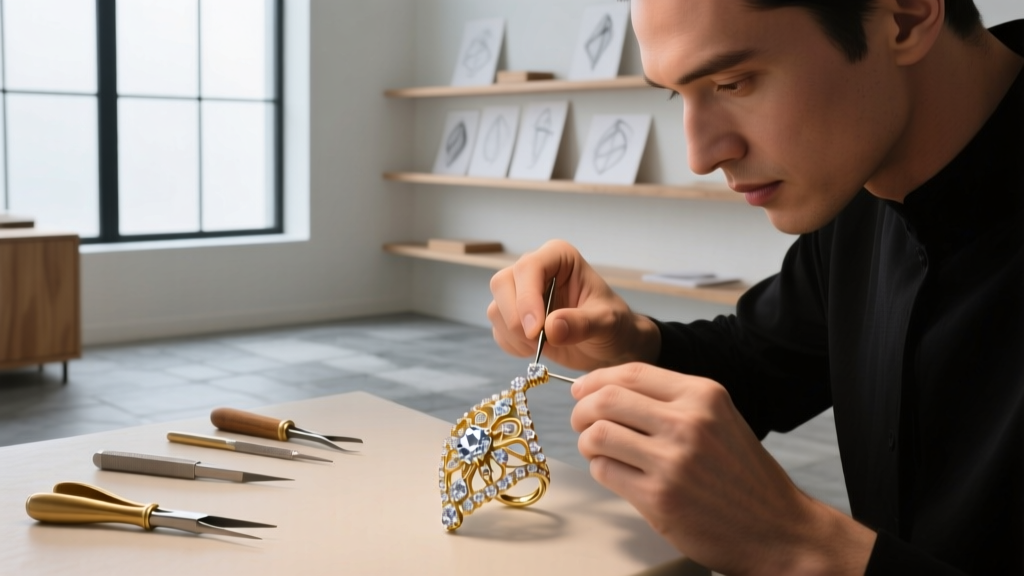
Stringing Engineering: Hardware and Thread Selection
The most common point of failure in a puka shell necklace is the stringing material. The natural hole of a Conus miliaris shell is lined with microscopic, jagged aragonite teeth. As the necklace moves, these edges act like a saw against the stringing medium.
Why Traditional Silk Fails
Historically, silk thread was the standard for knotted pearl and shell necklaces. However, silk has a low abrasion resistance and degrades rapidly when exposed to moisture, sweat, and the sharp interior lip of a natural puka hole. A silk-strung puka necklace worn regularly in marine environments will typically suffer catastrophic cord failure within 8 to 14 months.
The Modern Standard: UHMWPE Braided Line
Master stringers now utilize Ultra-High-Molecular-Weight Polyethylene (UHMWPE) braided lines, such as Dyneema or Spectra. For a standard 10mm puka shell necklace, a 20 lb. to 30 lb. test UHMWPE line (approximately 0.20mm to 0.25mm in diameter) is required. UHMWPE is entirely impervious to water, salt, and UV degradation, and possesses a tensile strength up to 15 times greater than steel on a weight-for-weight basis. It glides over the jagged shell interiors without fraying.
Metallurgy and Clasp Selection
Because puka shell necklaces are inherently "surf" or "beach" jewelry, they are frequently exposed to saltwater and human perspiration. Sterling silver (925) contains 7.5% copper, which rapidly oxidizes and forms silver sulfide (tarnish) when exposed to sulfur compounds in sweat and chlorides in ocean water. For maximum longevity, clasps and findings should be fabricated from 316L surgical stainless steel, solid titanium, or a minimum of 14k gold-filled materials, which offer superior galvanic corrosion resistance in marine environments.
Care, Degradation, and Longevity
Proper maintenance of a genuine puka shell necklace requires an understanding of calcium carbonate chemistry. Aragonite is highly susceptible to acid erosion. The natural pH of human skin ranges from 4.7 to 5.75 (mildly acidic). Over years of continuous wear, this acidity can slowly etch the surface of the shell, dulling its pearlescent finish.
To preserve the structural and aesthetic integrity of the necklace:
- Never use ultrasonic cleaners. The cavitation bubbles generated by ultrasonic frequencies will shatter the microscopic aragonite crystals, turning the shell chalky and brittle.
- Avoid chemical exposure. Sunscreens, perfumes, and hairsprays contain alcohols and volatile organic compounds (VOCs) that can break down the conchiolin matrix over time.
- Rinse after marine exposure. Always rinse the necklace in fresh, distilled water after swimming in the ocean or a chlorinated pool to halt the ion-exchange process that degrades the shell surface.
By understanding the biological origins, strict authentication protocols, and advanced stringing engineering required for these organic gems, collectors and jewelers can ensure their puka shell necklace remains a durable, high-end staple rather than a fleeting, fast-fashion casualty.


