Troubleshooting Rosary Necklace Silksong Cord Breakage
Learn how to troubleshoot, repair, and restring a delicate rosary necklace silksong cord. Expert tips on silk grades, knotting, and preventing breakage.

Understanding the Silksong Threading Technique
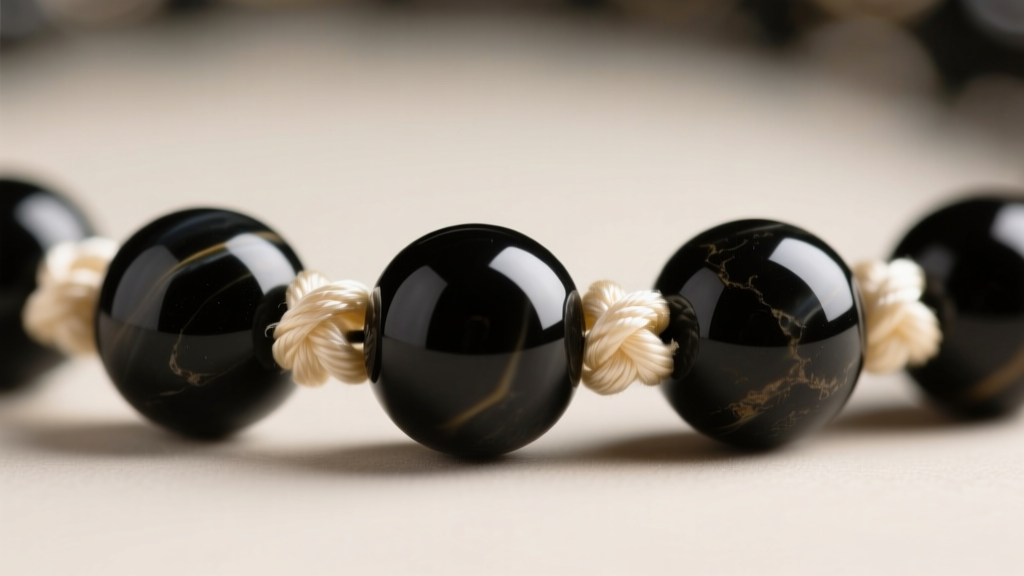
When jewelry artisans and collectors refer to a rosary necklace silksong construction, they are describing a highly specialized, continuous silk-knotting technique. Unlike standard wire-wrapping or chain-linking, the silksong method relies on high-tensile organic silk cords, punctuated by microscopic hand-tied knots between every individual bead. This technique grants the rosary an unparalleled, fluid drape—often described as moving like a 'song' of silk—while protecting delicate gemstones from grinding against one another.
However, organic fibers are inherently vulnerable. As we navigate the jewelry landscape in 2026, the resurgence of vintage and artisanal rosary styles has led to a spike in repair requests. Sweat, cosmetic oils, UV exposure, and the natural friction of sharp bead holes can compromise the silk over time. Troubleshooting a broken or fraying silksong cord requires a deep understanding of material grades, micro-knotting mechanics, and preventative care.
Common Failure Points in Silk-Corded Rosaries
Before attempting a repair, you must diagnose why the silksong cord failed. Silk is a protein fiber, and its degradation is rarely random. According to the Gemological Institute of America (GIA), organic fibers used in jewelry are highly susceptible to acidic environments and mechanical abrasion.
- The Clasp Friction Zone: The metal jump ring connecting the silk to the clasp is the most common failure point. If the rosary lacks a protective wire guardian (French wire/gimp), the silk will saw against the metal edge during daily wear.
- Sharp Bead Holes: Gemstones like lapis lazuli, turquoise, and certain quartz varieties are often drilled with cheap, abrasive bits that leave microscopic glass-like shards inside the hole. These act like tiny saw blades against the silk cord.
- Chemical Degradation: Perfumes, lotions, and human sweat contain acids and alcohols that break down the sericin (the natural gum binding silk filaments), leading to localized rot.

Step-by-Step Restringing and Repair Guide
Restringing a rosary necklace silksong design is not a task for standard craft string. It requires precision tools and specific jewelry-grade silk. Below is the professional framework for executing a flawless repair.
Materials and Tools Required
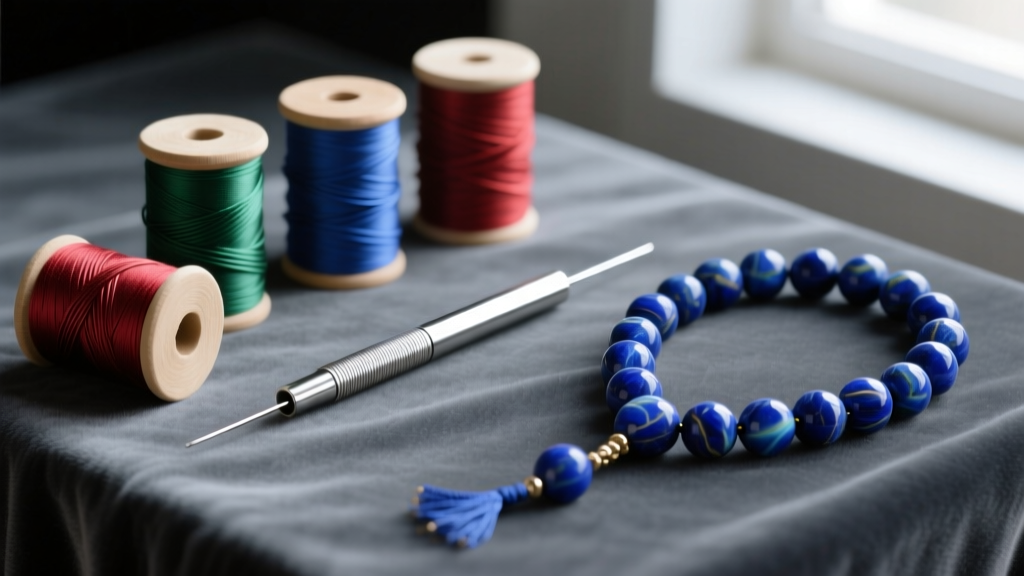
Do not use standard sewing silk. You must source Size 1 or Size 2 Japanese silk cord (typically 0.4mm to 0.6mm thick for 4mm-6mm rosary beads). Japanese silk is preferred over Chinese silk due to its higher twist-per-inch (TPI), which provides superior tensile strength and knot security. While 2026 has seen the introduction of bio-engineered spider-silk blends offering triple the tensile strength, traditional Japanese silk remains the gold standard for authentic vintage repairs. You will also need:
- Collapsible eye beading needles (Size 10 or 12)
- A fine-tipped bead awl (0.4mm stainless steel tip)
- G-S Hypo Cement (a flexible, non-brittle jewelry adhesive)
- Sterling silver or gold-filled wire guardians
- Sharp embroidery scissors
The Micro-Knotting Process
The defining feature of the silksong technique is the spacing of the knots. Each knot must sit flush against the bead hole without pulling so tightly that it stresses the fiber, nor so loosely that the bead slides.
- Thread the Needle: Pass the silk through the collapsible eye needle. Never use cyanoacrylate (Super Glue) to stiffen the needle eye, as it will wick into the silk and create a brittle snap point.
- String and Space: Thread your first bead. Using a bead awl, push the knot down to the base of the bead. The awl allows you to apply downward pressure while the adhesive cures slightly.
- Secure the Clasp: Always use a wire guardian at the clasp loop. Thread the silk through the guardian, through the jump ring, and back through the first three beads, knotting between each to distribute the tension.
For more comprehensive knotting techniques, Fire Mountain Gems offers excellent visual guides on managing silk tension.
Silk Cord Grades and Tensile Strength
Choosing the correct cord thickness is critical. A cord that is too thick will cause the beads to sit rigidly, destroying the signature silksong drape. A cord that is too thin will snap under the weight of the gemstones.
| Cord Size | Diameter (mm) | Best For Bead Size | Tensile Strength | Recommended Needle |
|---|---|---|---|---|
| Size 0 | 0.30mm | 2mm - 3mm (Seed beads, tiny pearls) | Low (approx. 1.5 lbs) | Size 12-14 |
| Size 1 | 0.40mm | 4mm - 5mm (Standard rosary beads) | Medium (approx. 3.0 lbs) | Size 10-12 |
| Size 2 | 0.50mm | 5mm - 7mm (Heavy gemstones) | High (approx. 4.5 lbs) | Size 8-10 |
| Size 4 | 0.70mm | 8mm+ (Large statement beads) | Very High (approx. 7.0 lbs) | Size 6-8 |
Preventative Maintenance for Longevity
Even the most meticulously knotted rosary necklace silksong piece will fail if subjected to poor environmental conditions. To maximize the lifespan of your silk-corded jewelry, implement the following maintenance protocols:
The Annual 'Pull Test'
Once a year, gently grasp the silk cord on either side of a bead and pull outward. If you see more than 1mm of space opening between the knot and the bead, the silk has stretched beyond its elastic recovery point and must be restringed immediately. Do not wait for it to snap.
Storage and Climate Control
Silk requires a specific humidity level to maintain its structural integrity. Storing a rosary in a highly desiccated environment (like a safety deposit box or a room with aggressive dehumidifiers) will dry out the natural proteins, making the cord brittle. Store your necklace flat in a soft, unbleached cotton pouch. Never hang a heavy gemstone rosary by its clasp, as the sustained gravitational pull will permanently stretch the silk fibers over time.
Cleaning Protocols
Never submerge a silksong rosary in water or ultrasonic cleaners. Water causes the silk to swell and then shrink as it dries, which can crack delicate gemstones like opals or turquoise from the inside out. Instead, wipe the beads individually with a dry, lint-free microfiber cloth, taking care to avoid dragging the cloth across the exposed silk knots.
By understanding the mechanics of the silksong technique and respecting the organic nature of the materials, you can preserve these intricate, deeply personal pieces for decades to come.


