Rose Gold Butterfly Necklace: Troubleshooting Tarnish & Breaks
Is your rose gold butterfly necklace tarnishing or breaking? Learn expert troubleshooting tips to clean copper oxidation and fix clasps.

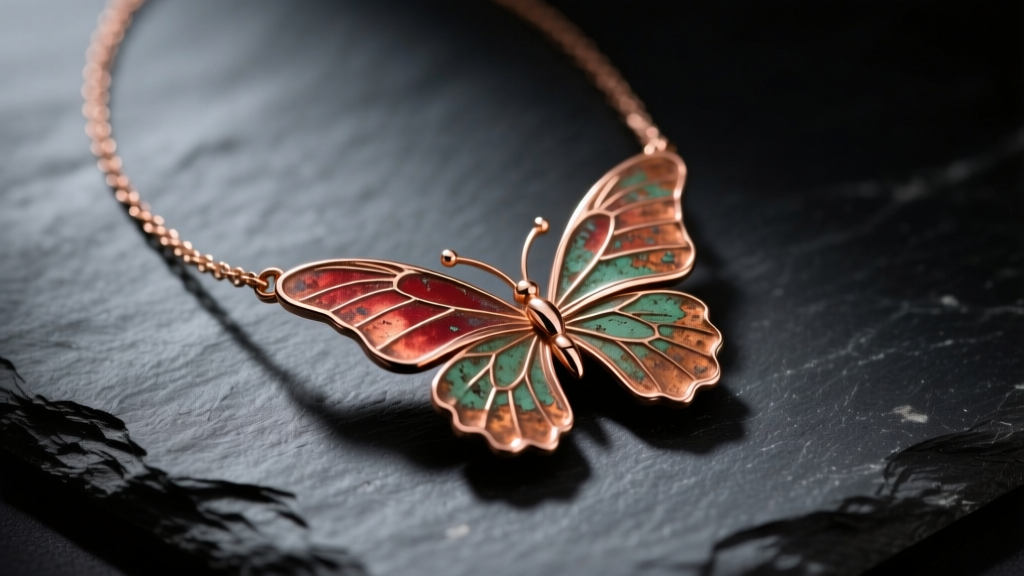
The Metallurgy of Rose Gold: Why Your Butterfly Pendant Tarnishes
To effectively troubleshoot a rose gold butterfly necklace, you must first understand its metallurgical composition. Unlike yellow gold, which relies heavily on silver and zinc alloys, rose gold derives its signature pinkish-red hue from a high concentration of copper. According to the Gemological Institute of America (GIA), standard 14k rose gold consists of approximately 58.3% pure gold, 38.4% copper, and 3.3% silver. In 18k rose gold, the copper content drops to around 22.2% to accommodate the higher 75% pure gold content.
While copper provides the beautiful blush tone and increases the tensile strength of the alloy, it is also highly reactive. When exposed to oxygen, sulfur, and the natural chlorides found in human sweat, the copper atoms oxidize. This chemical reaction manifests as a dark brown or black film, often settling deep into the intricate filigree, milgrain edges, and underbelly of a butterfly pendant. Because butterfly designs feature complex, layered wings and delicate antennae, they trap dead skin cells, lotions, and perfumes far more easily than solid, flat pendants, accelerating the oxidation process.
Expert Insight: If your rose gold jewelry is leaving a green or black mark on your skin, it is not a sign of "fake" gold. It is a natural chemical reaction between the copper alloy and your skin's acidity. Upgrading to 18k rose gold or applying a microscopic barrier can solve this.
Diagnostic Troubleshooting Chart: Common Rose Gold Failures
Before applying any cleaning solutions or attempting physical repairs, accurately diagnose the specific failure mode of your necklace. Use the table below to identify your issue and apply the correct metallurgical or mechanical fix.
| Symptom | Root Cause | Expert Fix |
|---|---|---|
| Dark brown smudges on butterfly wings | Copper oxidation accelerated by trapped cosmetics and sweat. | Polish gently with a treated jeweler's cloth; avoid liquid dips. |
| Green or black skin discoloration | Copper chlorides reacting to high skin acidity or humidity. | Apply a micro-thin layer of clear enamel to the pendant bail and back. |
| Chain kinking near the clasp | Friction, sleep-wear tension, and weak jump ring alignment. | Untangle using the baby oil method; upgrade to a 9mm lobster clasp. |
| Dull, cloudy gemstone or enamel accents | Trapped oils and hard water deposits in the prong settings. | Soak in pH-neutral soap; agitate with a soft baby toothbrush. |
| Pendant bail feels loose or wobbly | Wear and tear on the soldered loop from chain friction. | Have a jeweler re-solder the bail or replace it with a heavier gauge. |
Step-by-Step Deep Cleaning for Intricate Butterfly Wings
When your rose gold butterfly necklace loses its luster, the instinct is often to reach for commercial jewelry dips or ultrasonic cleaners. Do not do this. Many butterfly pendants feature delicate enamel work, tension-set micro-pavé diamonds, or soft gemstones like opals and pearls. Ultrasonic vibrations can shatter enamel and fracture soft stones, while harsh chemical dips (which often contain thiourea) can strip the copper alloy, leaving the gold looking pale and brassy.
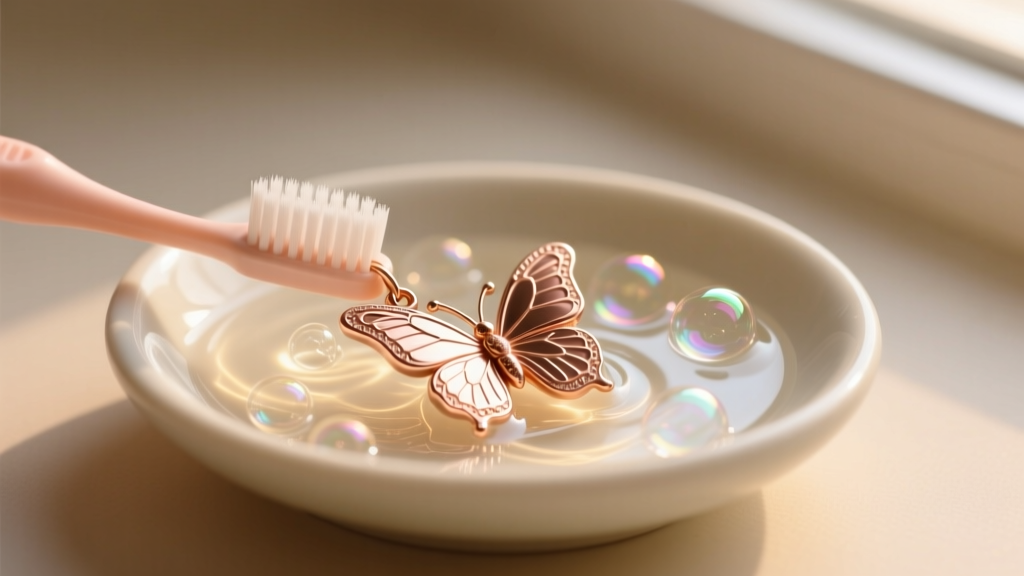
Instead, utilize a gentle, pH-neutral mechanical cleaning method recommended by Jewelers of America for intricate alloy pieces:
- Prepare the Solution: Mix three drops of a mild, pH-neutral dish soap (like original Dawn) into a bowl of lukewarm distilled water. Avoid tap water, as the chlorine and heavy minerals can react with the copper.
- Soak: Submerge the butterfly pendant and chain for exactly 10 to 15 minutes. This softens hardened sebum and cosmetic buildup without stressing the metal.
- Agitate: Using an extra-soft baby toothbrush, gently brush the crevices of the butterfly wings. Always brush in the direction of the metal's grain or filigree pattern to avoid micro-scratches.
- Rinse and Dry: Rinse thoroughly under lukewarm distilled water. Pat dry with a lint-free microfiber cloth, and use a hairdryer on the "cool" setting to blow moisture out of the tiny crevices where the wings overlap.
Chain & Clasp Repairs: Fixing Delicate Cable and Box Chains
Rose gold butterfly necklaces are typically paired with delicate 0.9mm to 1.2mm box or cable chains to maintain a feminine, lightweight aesthetic. However, these thin gauges are highly susceptible to kinking and clasp failure.
The Baby Oil Untangling Method
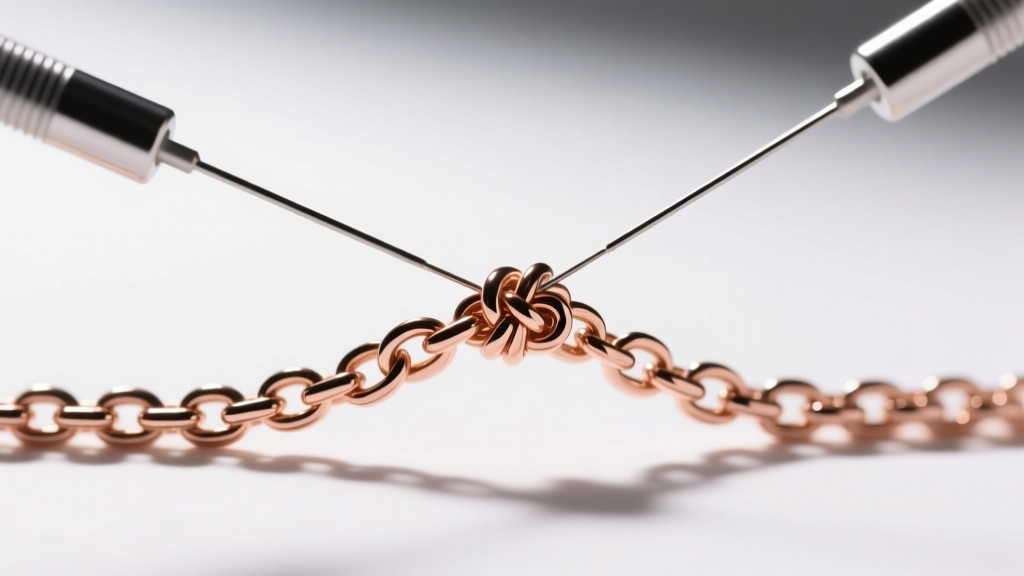
If your thin box chain has developed a severe knot, pulling it will permanently deform the links, weakening the structural integrity of the rose gold alloy. Instead, lay the chain flat on a piece of parchment paper. Apply a single drop of baby oil or mineral oil directly to the knot. Using two fine sewing needles, gently work the center link of the knot outward. The oil reduces friction, allowing the microscopic links to slide past one another without bending. Once untangled, wash the chain using the soapy water method outlined above to remove the oil residue.
Upgrading the Clasp
Most delicate rose gold necklaces come standard with a 5mm spring-ring clasp. These are notorious for failing because the internal microscopic spring loses tension over time, or the tiny lever becomes stuck. If your necklace frequently unclasps or the jump ring pulls open, take it to a bench jeweler and request an upgrade to a 9mm lobster clasp. The lobster clasp features a heavier internal spring and a solid cast body, providing vastly superior security for a valuable rose gold pendant without adding noticeable weight.
Preventative Care: Storing and Wearing Your 14k Rose Gold
Troubleshooting is only half the battle; preventing copper oxidation and mechanical stress is the key to longevity. Rose gold requires specific storage conditions to maintain its blush tone.
- Anti-Tarnish Strips: Store your necklace in an airtight polyethylene bag alongside a 3M anti-tarnish strip. These strips absorb ambient sulfur and hydrogen sulfide gases before they can react with the copper in your necklace.
- The "Last On, First Off" Rule: Always put your butterfly necklace on after applying perfume, hairspray, and lotion. The alcohol and aerosolized chemicals in cosmetics are highly corrosive to copper alloys. Remove it first when undressing to prevent the delicate wings from snagging on fabrics.
- Friction Storage: Never store your necklace in a communal jewelry box where it can rub against harder metals or diamonds. Diamond is a 10 on the Mohs hardness scale and will easily scratch the relatively soft 14k rose gold (which sits around 2.5 to 3 on the scale). Hang it on a padded velvet hook or lay it flat in a dedicated, fabric-lined compartment.
When to See a Professional Jeweler
While home troubleshooting can resolve surface tarnish and minor tangles, certain structural failures require professional bench work. If the bail (the loop connecting the butterfly to the chain) is worn more than 50% through, it is a critical failure point waiting to snap. Similarly, if the rose gold plating on a vermeil piece has worn away to reveal the base brass or silver underneath, a professional must electroplate the piece to restore the copper-gold alloy finish. Attempting to polish through a worn vermeil layer will permanently ruin the necklace. By understanding the unique metallurgy and mechanical vulnerabilities of your rose gold butterfly necklace, you can ensure it remains a pristine, cherished accessory for decades.


