Sophie Buhai Necklace Care: Cleaning & Maintenance Guide
Learn expert cleaning and maintenance tips for your Sophie Buhai necklace. Discover how to care for recycled silver, gold vermeil, and pearl inlays.

The Metallurgy and Architecture of Sophie Buhai Designs
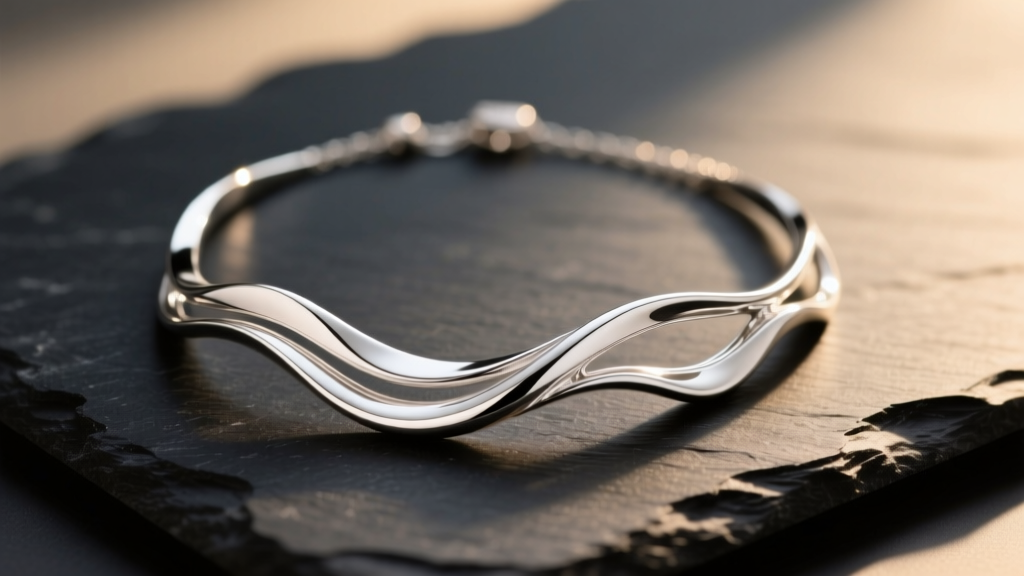
Sophie Buhai jewelry is celebrated for its modernist, sculptural silhouettes and substantial volume. However, the very characteristics that make a Sophie Buhai necklace a statement piece—its heavy recycled sterling silver domes, thick 14k gold paperclip chains, and organic baroque pearl accents—also dictate a highly specific approach to care and maintenance. Unlike delicate, mass-produced chains, these pieces possess significant mass, meaning gravity and friction exert unique stresses on jump rings, clasps, and metal finishes.
Understanding the exact metallurgy of your piece is the first step in preservation. Buhai primarily utilizes recycled 925 sterling silver (an alloy of 92.5% silver and 7.5% copper) and 14k solid gold or heavy gold vermeil. The copper in sterling silver is highly reactive to sulfur and moisture in the environment, leading to silver sulfide formation (tarnish). Furthermore, many of her designs feature contrasting finishes—such as high-polish mirrors adjacent to brushed or matte textures. Using the wrong abrasive on a matte finish will permanently alter its light-diffusing properties, turning a deliberate satin texture into an uneven, shiny patch.
Step-by-Step Cleaning Protocols by Material
Commercial jewelry dips and ultrasonic cleaners are the enemies of nuanced, artisan-crafted jewelry. Below are the bench-approved methods for cleaning specific materials found in Buhai's collections.
Recycled Sterling Silver (High-Polish vs. Matte)
For high-polish silver pieces without gemstone inlays, the safest chemical reaction to remove tarnish is the aluminum foil method. Line a glass bowl with aluminum foil (shiny side up), add a tablespoon of baking soda, and pour in boiling water. Submerge the silver necklace for exactly 60 to 90 seconds. The ion exchange transfers the sulfur from the silver to the aluminum. Remove with wooden tongs, rinse in distilled water, and pat dry with a microfiber cloth.
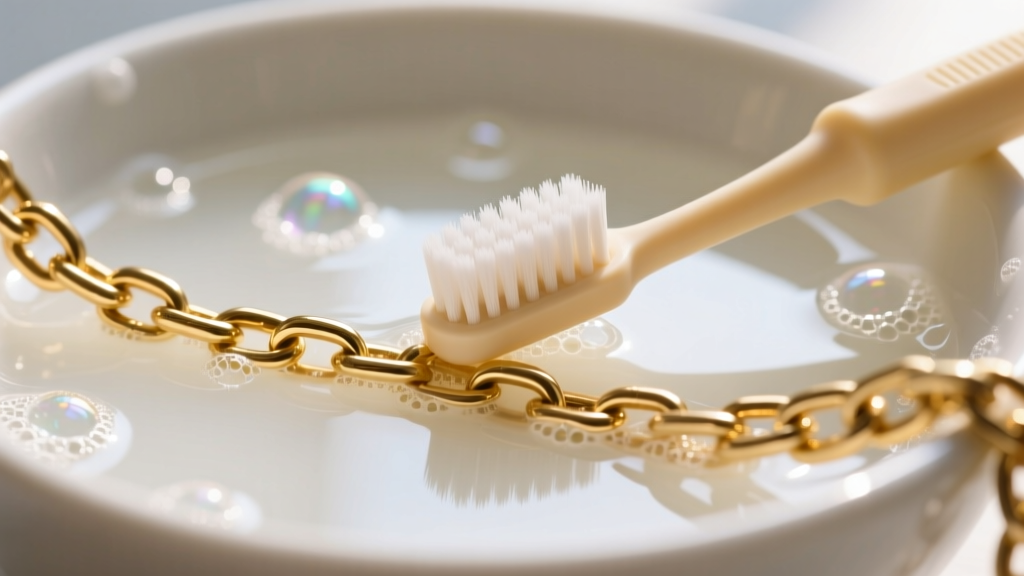
Crucial Warning for Matte/Satin Finishes: Never use treated polishing cloths (impregnated with jeweler's rouge or micro-abrasives) on brushed or sandblasted silver. The abrasives will catch in the microscopic grooves of the matte finish, leaving dark, stubborn streaks and polishing the high points. Instead, use a few drops of phosphate-free dish soap (like Dawn), warm water, and an extra-soft baby toothbrush to gently lift sebum and dust from the textured crevices.
14k Solid Gold and Gold Vermeil
Gold vermeil consists of a thick layer of gold (legally required to be at least 2.5 microns) bonded to a sterling silver base. While Buhai's vermeil is exceptionally high quality, aggressive polishing will eventually wear through the gold layer, exposing the silver beneath. Clean gold and vermeil necklaces using only a mild, non-detergent soap and lukewarm water. Avoid any products containing ammonia, chlorine, or harsh surfactants, which can degrade the alloyed metals (like copper and zinc) mixed into the 14k gold for durability.
Baroque Pearls and Semi-Precious Stone Inlays
Sophie Buhai frequently incorporates baroque freshwater pearls and stones like onyx or lapis lazuli. According to the Gemological Institute of America (GIA), pearls are exceptionally soft (2.5 to 4.5 on the Mohs scale) and highly porous. They are easily etched by the acids in human sweat and the chemicals in perfumes. Never submerge a pearl-strung or pearl-inlay necklace in water, as this can degrade the silk thread or the epoxy used in bezel settings. Wipe pearls gently with a damp, lint-free cloth immediately after wearing them to remove acidic body oils before they can dull the nacre's luster.
Storage Architecture: Preventing Micro-Scratches and Tarnish
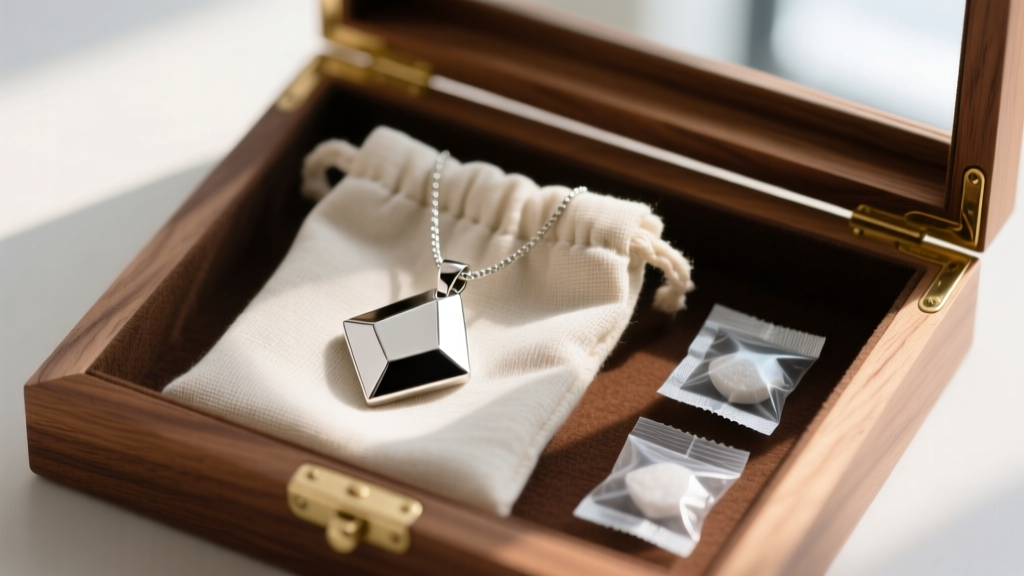
Proper storage is not merely about organization; it is about controlling the micro-climate around your jewelry. Because Buhai pieces are heavy and sculptural, tossing them into a communal jewelry box guarantees micro-scratches and kinked chains. The heavy pendants will crush lighter chains, and the silver will accelerate its oxidation process if exposed to ambient humidity.
| Material / Component | Primary Environmental Threat | Ideal Storage Protocol | What to Avoid |
|---|---|---|---|
| Recycled 925 Silver | Ambient sulfur, high humidity | Sealed anti-tarnish zip bags with activated charcoal strips | Open-air display stands, cardboard boxes (contains sulfur) |
| 14k Gold / Vermeil | Friction, micro-scratches | Individual soft flannel pouches, laid flat | Hanging on hooks (causes chain stretch over time) |
| Baroque Pearls | Dehydration, chemical off-gassing | Soft cloth pouch, stored away from direct heat sources | Airtight plastic bags (pearls need trace moisture) |
| Lobster / Spring Clasps | Dust accumulation, spring fatigue | Stored unclasped to prevent tension on the internal spring | Storing clasped tightly around thick fabric or displays |
Troubleshooting Common Wear Issues
Even with meticulous care, the mechanical components of a heavy necklace will experience wear. Here is how to address the most common issues without causing further damage.
- Stiff or Sticky Lobster Clasps: The heavy weight of sculptural pendants can cause microscopic metal dust to accumulate inside the clasp mechanism, or the internal spring can become sluggish. Never use WD-40 or commercial lubricants, as they contain solvents that will strip the metal's natural patina and attract more dirt. Instead, apply a microscopic amount of graphite powder (from a pencil lead) or a single drop of synthetic watch oil to the hinge using a needle.
- Chain Kinking in Cable and Paperclip Chains: Thick, heavy chains are prone to folding over themselves and kinking when taken off hastily. To remove a kink, lay the chain flat on a glass surface. Use two fine sewing needles to gently tease the overlapping links apart. Pulling a kinked chain will permanently deform the oval links into twisted figure-eights.
- Jump Ring Separation: The jump ring connecting the heavy pendant bail to the chain bears the brunt of the necklace's kinetic energy. Inspect the solder seam on the jump ring every six months. If you see a hairline gap, stop wearing the piece immediately and take it to a bench jeweler for laser soldering.
Professional Servicing and The Ultrasonic Warning
While at-home maintenance keeps your Sophie Buhai necklace clean, professional servicing is required for deep restoration. Over years of wear, high-polish silver and gold domes will accumulate a web of micro-scratches that dull the mirror finish. A professional jeweler can use a series of progressively finer polishing compounds (like tripoli followed by red rouge) on a muslin buffing wheel to restore the factory luster. However, this process removes a microscopic layer of metal each time; therefore, professional polishing should be limited to once every two to three years.
The Ultrasonic Cleaner Trap: Many high-end jewelers, including experts cited by Jewelers Mutual, warn against using ultrasonic cleaners for designer jewelry unless you are certain of the internal structural integrity. The high-frequency sound waves (typically 40,000 Hz) create microscopic cavitation bubbles that implode with immense force. While excellent for cleaning solid diamond and platinum, this violent agitation can shatter porous stones like lapis lazuli, fracture internal flaws in onyx, and completely shake gemstones loose from their bezel or prong settings. When in doubt, stick to manual, gentle cleaning methods.
By treating your Sophie Buhai necklace not just as an accessory, but as a piece of wearable metallurgical sculpture, you ensure that its organic forms and brilliant finishes will endure for decades. Consistent, gentle cleaning and climate-controlled storage are the ultimate investments in the longevity of your fine jewelry.


