Why Your S Steel Necklace Turns Skin Green: Troubleshooting
Discover why your s steel necklace turns skin green. Learn the differences between 316L and 304 grades, plus expert cleaning fixes.

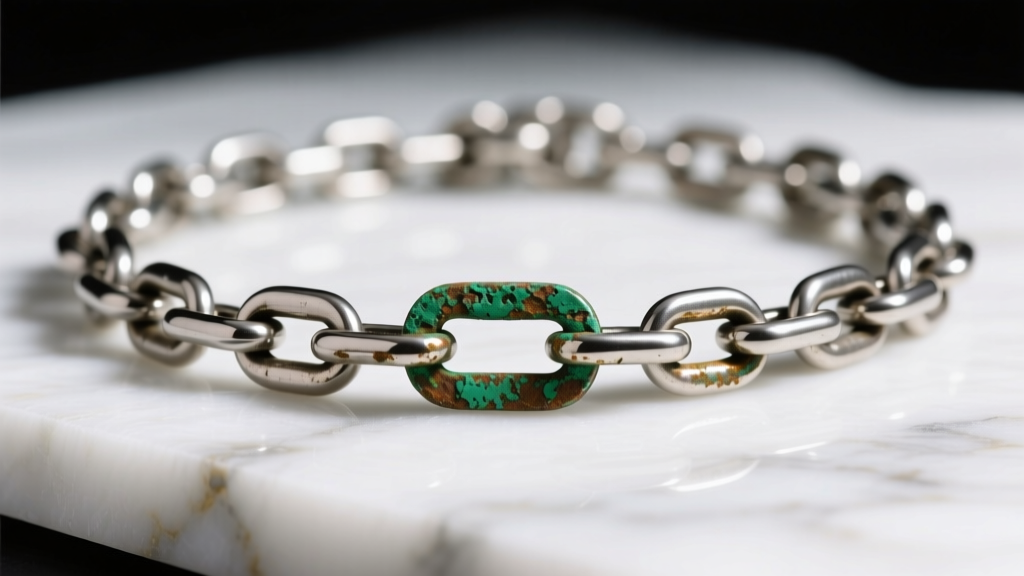
There are few things more frustrating in jewelry care than taking off your favorite chain and finding a stubborn, dark green ring stained around your neck. When you purchase an s steel necklace—often marketed as surgical or stainless steel—you expect a lifetime of tarnish-free wear. Stainless steel is renowned for its durability, hypoallergenic properties, and sleek, modern aesthetic. However, not all steel alloys are created equal, and environmental factors, body chemistry, and manufacturing shortcuts can compromise even the most robust metals. If your s steel necklace is leaving green or black marks on your skin, or if the chain itself is developing microscopic pits and dull spots, you are experiencing a breakdown of the metal's passivation layer. In this comprehensive troubleshooting guide, we will break down the exact metallurgical reasons behind this discoloration, analyze the chemical reactions occurring against your skin, and provide a professional-grade restoration protocol to bring your jewelry back to life.
The Metallurgy Behind the Green: 316L vs. 304 Alloys
To understand why your s steel necklace is failing, we must first look at its atomic structure. Stainless steel owes its corrosion resistance to a microscopic, invisible layer of chromium oxide that forms on its surface when chromium reacts with oxygen. This is known as the passivation layer. When this layer is intact, the steel is impervious to water, sweat, and oxygen. When it is compromised, the underlying iron and nickel are exposed, leading to oxidation (rust) and the release of metallic salts that stain the skin green.
The jewelry industry primarily uses two grades of stainless steel: 304 and 316L. The 304 grade contains 18% chromium and 8% nickel. While excellent for kitchen appliances, 304 steel lacks the elemental defenses required to withstand the high chloride environment of human sweat. Conversely, genuine surgical-grade 316L stainless steel contains an additional 2-3% molybdenum. Molybdenum is a crucial alloying element that specifically guards against pitting and crevice corrosion caused by chlorides. If your s steel necklace is turning your skin green, it is highly likely that the manufacturer utilized a cheaper 304 alloy, or worse, a 200-series scrap alloy that substitutes manganese for nickel, which rapidly degrades upon contact with skin acids.
Top 4 Reasons Your S Steel Necklace is Discoloring
Identifying the exact catalyst for the corrosion is the first step in our troubleshooting framework. Review the following failure modes to diagnose your specific issue:
- Chloride Attack from Perspiration: Human sweat contains high levels of sodium chloride (salt). If you wear your s steel necklace during workouts or in high-humidity environments, the chloride ions actively penetrate the chromium oxide layer of lower-grade steels, creating microscopic pits. As the iron inside these pits oxidizes, it mixes with sweat to form iron chloride, which transfers to your skin as a greenish-black smudge.
- Nickel Leaching and Contact Dermatitis: While true 316L steel traps nickel within its crystalline matrix, lower-quality alloys leach nickel when exposed to acidic skin pH. According to research published in the National Institutes of Health, prolonged nickel release not only causes allergic contact dermatitis (red, itchy skin) but also results in dark, localized hyperpigmentation that mimics a green tarnish stain.
- Crevice Corrosion in Chain Links: Chain necklaces consist of hundreds of interlocking loops. The tight gaps where these links connect create "crevices" where oxygen cannot reach. Without oxygen, the passivation layer cannot repair itself. Dirt, dead skin cells, and lotion accumulate in these crevices, creating a highly acidic microenvironment that eats away at the metal from the inside out.
- Galvanic Corrosion from Layering: If you layer your s steel necklace with sterling silver, copper, or brass pendants, you create a galvanic cell. When sweat acts as an electrolyte, the more reactive metal (like copper or silver) will sacrifice its electrons to the stainless steel. This rapid electrochemical reaction causes the secondary metals to oxidize aggressively, coating your steel chain in green copper salts.
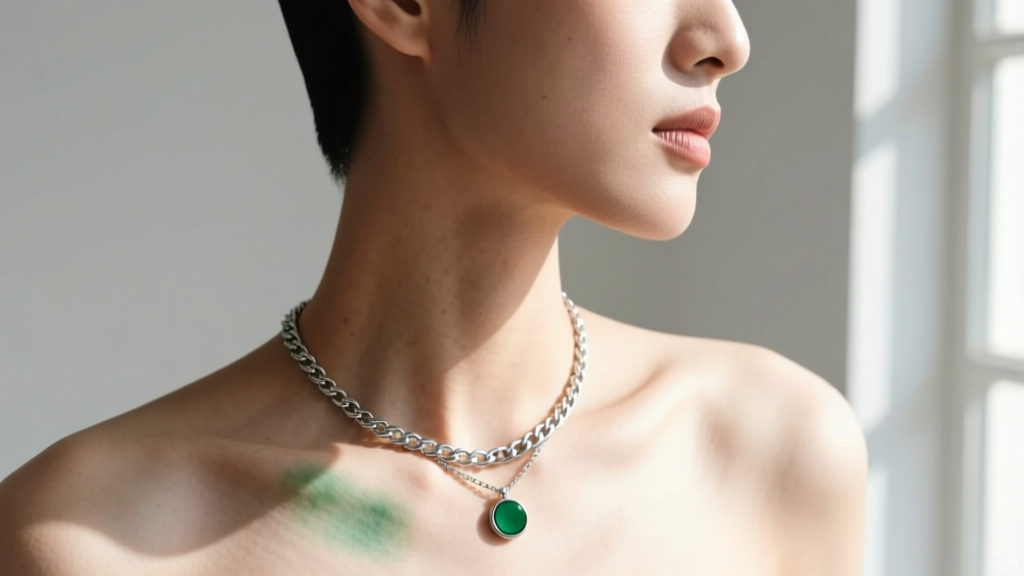
The pH and Chloride Factor: A Data Breakdown
The severity of the discoloration is directly tied to the wearer's unique body chemistry and the specific alloy composition of the necklace. The British Stainless Steel Association notes that localized corrosion accelerates exponentially when pH drops below 4.0. Below is a diagnostic matrix to help you understand how your environment interacts with different steel grades.
| Sweat / Environment Type | Average pH Level | Chloride Concentration | Effect on 304 Steel | Effect on 316L Steel |
|---|---|---|---|---|
| Normal Resting Sweat | 5.5 - 6.5 | Low | Minor surface dulling | No reaction |
| Heavy Athletic Sweat | 4.5 - 5.0 | High | Severe pitting & green transfer | Passivation layer holds |
| Swimming Pool (Chlorinated) | 7.2 - 7.8 | Extreme | Rapid crevice corrosion | Moderate pitting risk |
| Ocean Water (Salt) | 8.0 - 8.3 | Extreme | Immediate structural failure | High pitting risk |
Step-by-Step Troubleshooting & Restoration Protocol
If your s steel necklace has already succumbed to oxidation and is staining your skin, do not throw it away. You can restore the passivation layer and strip the metallic salts using a precise, three-step chemical and mechanical cleaning process.
- Chemical Stripping (The Vinegar Soak): Fill a glass bowl with equal parts distilled white vinegar (5% acetic acid) and warm distilled water. Submerge the necklace for exactly 5 to 7 minutes. The mild acid will dissolve the copper and iron salts causing the green tarnish without eating into the healthy chromium matrix. Do not exceed 10 minutes, as prolonged acid exposure can etch the steel. Rinse thoroughly with distilled water.
- Ultrasonic Cavitation (Deep Crevice Cleaning): To remove the compacted sebum and oxidized debris trapped between the chain links, use an ultrasonic jewelry cleaner set to a 40kHz frequency. Fill the tank with warm water and two drops of mild, ammonia-free dish soap. Run the cycle for 3 minutes. The microscopic cavitation bubbles will implode against the steel links, blasting out the corrosive agents hiding in the crevices. Dry the chain immediately with a microfiber cloth.
- Passivation Restoration (The Citric Bath): To rebuild the invisible chromium oxide shield, you must passivate the metal. Dissolve one tablespoon of food-grade citric acid powder in a cup of warm distilled water. Submerge the clean, dry s steel necklace for 15 minutes. The citric acid removes any free iron on the surface and encourages the chromium to react with oxygen, forming a fresh, impenetrable passivation layer. Rinse and dry completely.
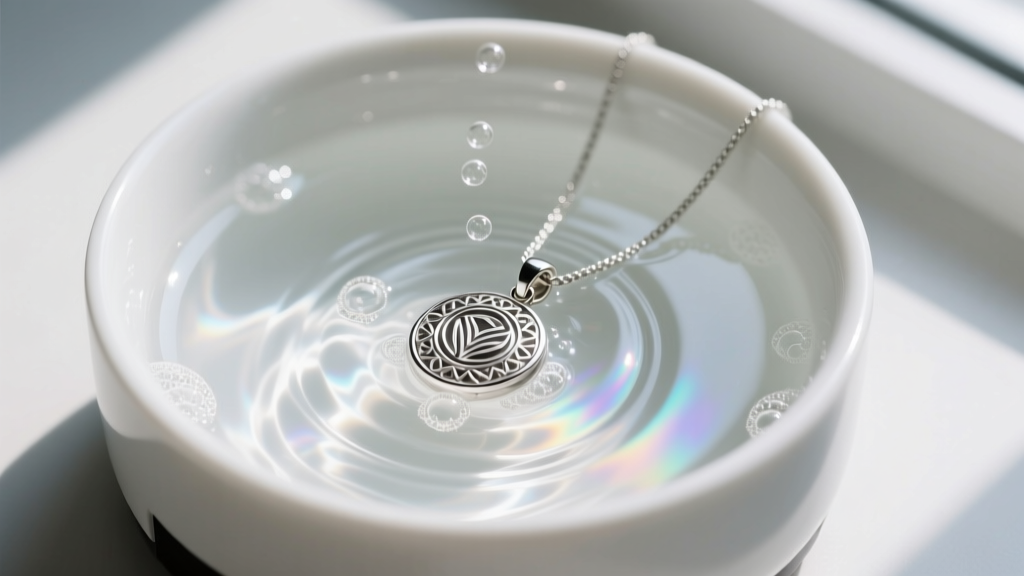
Preventative Maintenance and Structural Diagnostics
Once your s steel necklace is restored, implementing a strict maintenance routine will prevent the green stains from returning. The golden rule of stainless steel jewelry care is to avoid prolonged exposure to halogens. This means removing your necklace before entering chlorinated pools, hot tubs, or the ocean. Furthermore, apply all perfumes, lotions, and chemical sunscreens at least 15 minutes before putting on your chain; the alcohols and organic compounds in cosmetics can slowly degrade the surface polish, making it more susceptible to trapping sweat and dirt.
Finally, you must know when a piece has suffered irreversible structural failure. Inspect the clasp mechanism and the jump rings under a magnifying glass. If you observe deep, dark craters in the metal (crevice corrosion) or if the spring mechanism inside the lobster clasp feels gritty and stiff, the structural integrity of the alloy is compromised. At this stage, the metal will continue to leach nickel and iron, and the piece should be retired to prevent severe allergic reactions. By understanding the exact grade of your steel and respecting its chemical boundaries, you can ensure your s steel necklace remains a permanent, pristine fixture in your jewelry collection.


