Is a Gold and Silver Heart Necklace Worth It? 2026 Value Guide
Assess the true value of a gold and silver heart necklace in 2026. We break down metal grades, pricing tiers, and durability to help you buy smart.

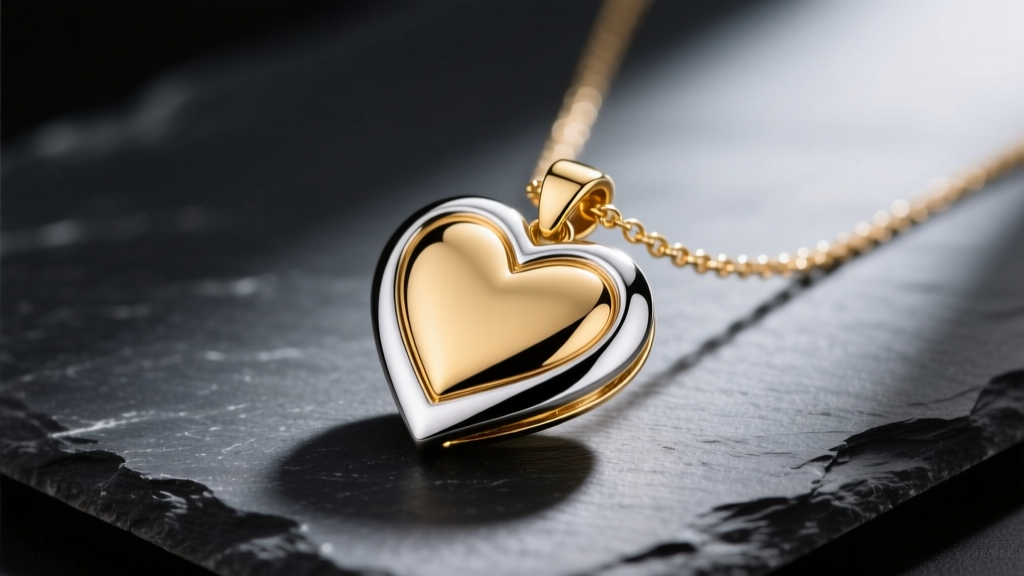
The Allure of Mixed Metals: Why Two-Tone Hearts?
The mixed-metal trend has completely dominated the fine jewelry market in 2026, moving past a fleeting fad into a permanent staple of modern wardrobes. Among the most sought-after pieces in this category is the classic gold and silver heart necklace. Historically viewed as a nostalgic or vintage-inspired motif, the two-tone heart pendant has been re-engineered by contemporary jewelers to offer a versatile, high-contrast aesthetic that bridges the gap between warm and cool skin undertones. But beyond the visual appeal, does a gold and silver heart necklace hold genuine financial and material value?
When assessing the budget and long-term ROI of mixed-metal jewelry, consumers must look past the initial price tag. The true value lies in the metallurgical composition, the manufacturing techniques used to join disparate metals, and the structural integrity of the chain. In this comprehensive 2026 value assessment, we break down exactly what you are paying for, how to identify superior craftsmanship, and which pricing tiers offer the best longevity for your investment.
Decoding Metal Grades: What Are You Actually Paying For?
The term 'gold and silver' is frequently exploited in fast-fashion jewelry marketing. To accurately assess value, you must understand the precise alloy standards and plating thicknesses that dictate a piece's lifespan and resale potential. The Federal Trade Commission (FTC) Jewelry Guides strictly regulate how these metals can be labeled, yet ambiguous marketing still confuses many buyers.
Silver Standards: Sterling vs. Argentium
The silver half of your pendant will typically be one of two alloys:
- Sterling Silver (925): Composed of 92.5% pure silver and 7.5% copper. While it is the industry standard, the copper content makes it highly susceptible to oxidation and tarnishing, especially when exposed to the sulfur compounds in everyday environments.
- Argentium Silver (935 or 960): A premium, modern alloy where a portion of the copper is replaced with germanium. Argentium is highly tarnish-resistant, harder than traditional sterling, and can be fusion-welded without leaving visible firescale. A gold and silver heart necklace crafted with Argentium commands a 20-30% premium but drastically reduces long-term maintenance costs.
Gold Standards: Vermeil, Gold-Filled, and Solid
If the gold portion of the heart is not solid, the value drops exponentially based on the application method:
- Gold Vermeil: By FTC definition, vermeil must be a minimum of 2.5 microns of 10k, 14k, or 18k gold plated directly over sterling silver. It offers a luxurious look but will eventually wear down to the silver base at high-friction points.
- Gold-Filled: Mechanically bonded to a brass or silver core, gold-filled metal must contain at least 1/20th (5%) of its total weight in solid gold. It is vastly superior to vermeil in durability and is often used for the chain rather than the cast pendant.
- Solid 14k or 18k Gold: The gold section is cast or fabricated entirely from solid gold alloy. 14k (58.5% gold) is preferred for two-tone pieces due to its superior tensile strength and scratch resistance compared to the softer 18k.
2026 Pricing Matrix: Budget vs. Investment Tiers
To determine if a gold and silver heart necklace is 'worth it,' we must map current 2026 market pricing against expected lifespans. The following table illustrates the three primary market tiers for a standard 15mm x 15mm two-tone heart pendant on an 18-inch chain.
| Market Tier | Material Composition | 2026 Price Range | Expected Lifespan | Resale / Intrinsic Value |
|---|---|---|---|---|
| Fashion / Plated | Brass base, silver wash, 0.5-micron gold flash | $45 - $120 | 1 - 3 Years | Negligible ($0) |
| Demi-Fine / Vermeil | 925 Sterling Silver base, 2.5-micron 14k Vermeil | $150 - $350 | 5 - 10 Years (with care) | Low (Melt value of silver only) |
| Fine / Solid Two-Tone | Solid 925/935 Silver + Solid 14k Gold (Cast or Soldered) | $450 - $950+ | Lifetime (Generational) | Moderate to High (Intrinsic metal weight) |
According to market analyses by the World Gold Council, the intrinsic value of gold has continued its upward trajectory through 2026. Consequently, purchasing solid two-tone pieces is increasingly viewed not just as an accessory acquisition, but as a micro-hedge against precious metal inflation.
Durability and Failure Modes: The Tarnish and Wear Factor
Mixed-metal jewelry presents unique engineering challenges. When gold and silver are combined in a single heart pendant, the point where they meet becomes a critical vulnerability. Understanding these failure modes is essential for budget-conscious buyers who want to avoid replacing their jewelry every few years.
1. Solder Joint Fatigue
In high-quality two-tone hearts, the gold and silver halves are cast separately and then joined. If a jeweler uses a low-temperature, lead-bearing solder to save time, the seam will eventually oxidize, turning black and becoming brittle. Premium manufacturers use laser welding or high-karat hard solder that matches the structural integrity of the 14k gold, ensuring the seam is virtually invisible and impervious to snapping under tension.
2. Galvanic Corrosion
When two dissimilar metals (like silver and gold alloys containing copper) are exposed to an electrolyte (like sweat or saltwater) while in physical contact, a micro-galvanic cell can form. This accelerates the corrosion of the more anodic metal—usually the silver or the copper within the gold alloy. To prevent this, top-tier jewelers often apply a microscopic rhodium barrier at the junction or ensure the metals are mechanically interlocked rather than just surface-soldered.
3. Chain Gauge Mismatch
A common budget trap is purchasing a heavy, solid two-tone heart pendant paired with a flimsy chain to keep the overall retail price down. A solid 15mm two-tone heart weighs roughly 3.5 to 5 grams. If it is hung on a 0.8mm cable chain, the jump ring will warp, and the chain will snap at the clasp within months. Always verify that the chain gauge is at least 1.2mm (preferably a box or rope chain) to support the pendant's pendulum motion.
How to Spot a High-Quality Two-Tone Heart Pendant
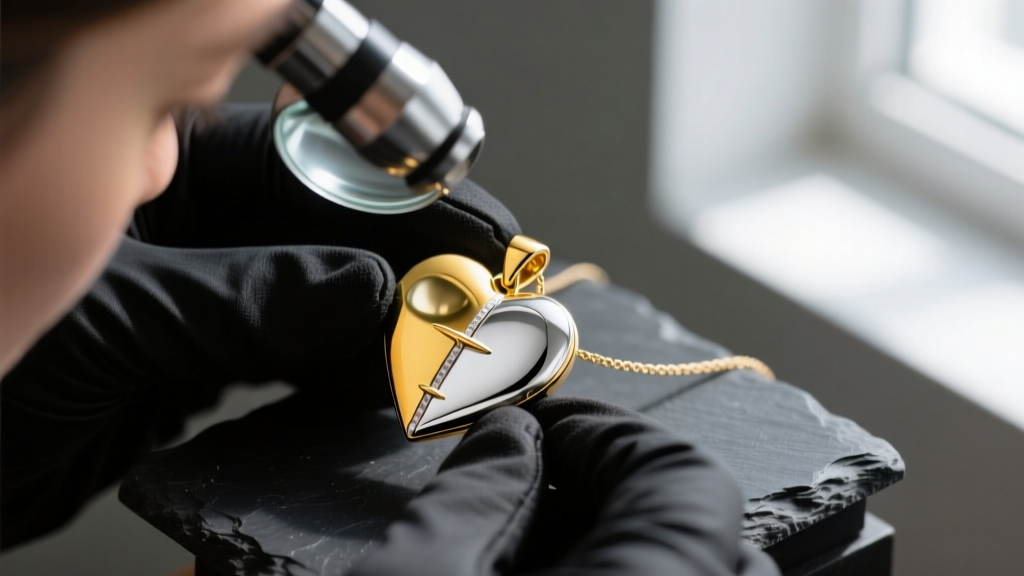
When evaluating a gold and silver heart necklace in person or via high-resolution online listings, use this expert checklist to verify the craftsmanship and justify the price point:
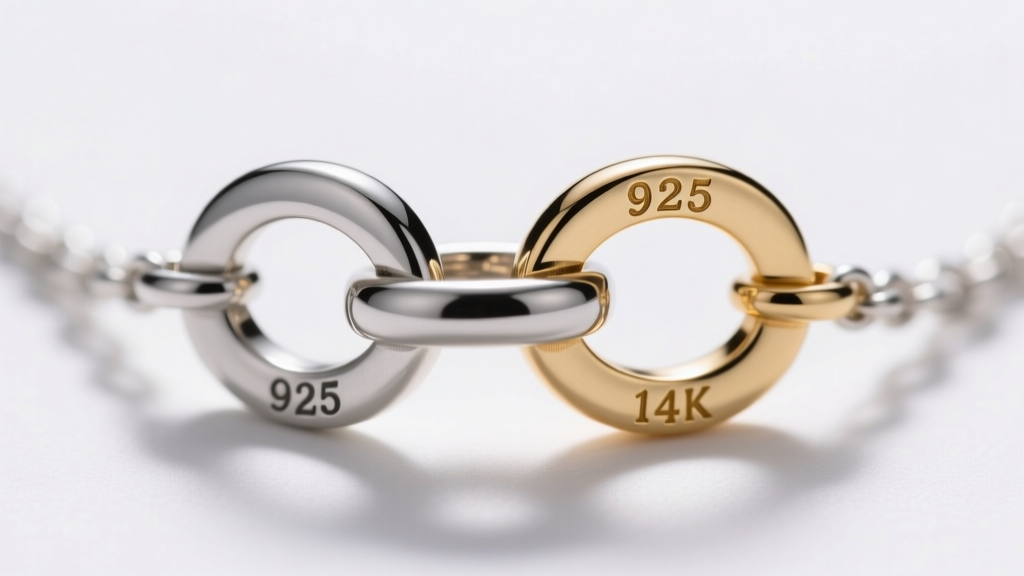
- Check the Hallmarks: Legitimate pieces will feature dual stamps. Look for '925' or '935' on the silver jump ring or pendant bail, and '14k' or '585' on the gold section. The Gemological Institute of America (GIA) emphasizes that proper hallmarking is the first line of defense against counterfeit alloys.
- Examine the Bail: The bail (the loop that holds the pendant on the chain) should be solid, not hollow. A two-tone piece should ideally have a silver bail if the pendant is predominantly silver, or a gold bail if the gold section bears the brunt of the chain's friction.
- Assess the Polish Transition: Run your fingernail lightly over the seam where the gold meets the silver. It should be perfectly flush. Any catching, ridges, or visible pitting indicates poor casting porosity or rushed hand-finishing.
- Clasp Quality: A high-value necklace will never use a cheap spring-ring clasp. Insist on a solid lobster claw clasp with a sturdy, soldered jump ring. The internal spring mechanism should offer firm resistance, not a mushy click.
Final Verdict: Maximizing Your ROI on Heart Jewelry
Is a gold and silver heart necklace worth the investment in 2026? The answer depends entirely on which tier you choose to fund. Fashion-plated iterations offer zero long-term value and will inevitably end up in a landfill once the gold flash wears off the silver base.
However, investing in the 'Fine / Solid Two-Tone' tier—specifically pieces utilizing Argentium silver and solid 14k gold joined via laser welding—offers exceptional value. You acquire a highly versatile, trend-proof accessory that bridges warm and cool color palettes, backed by the intrinsic melt value of precious metals. By prioritizing chain gauge, verifying FTC-compliant hallmarks, and understanding the metallurgy of the solder joints, you can confidently purchase a mixed-metal heart pendant that will retain its structural integrity and emotional resonance for decades.


