How to Pack Necklaces for Moving Without Tangles or Damage
Learn exactly how to pack necklaces for moving without tangles or damage. Expert tips on securing delicate chains, pearls, and pendants.

The Hidden Physics of Jewelry Transit
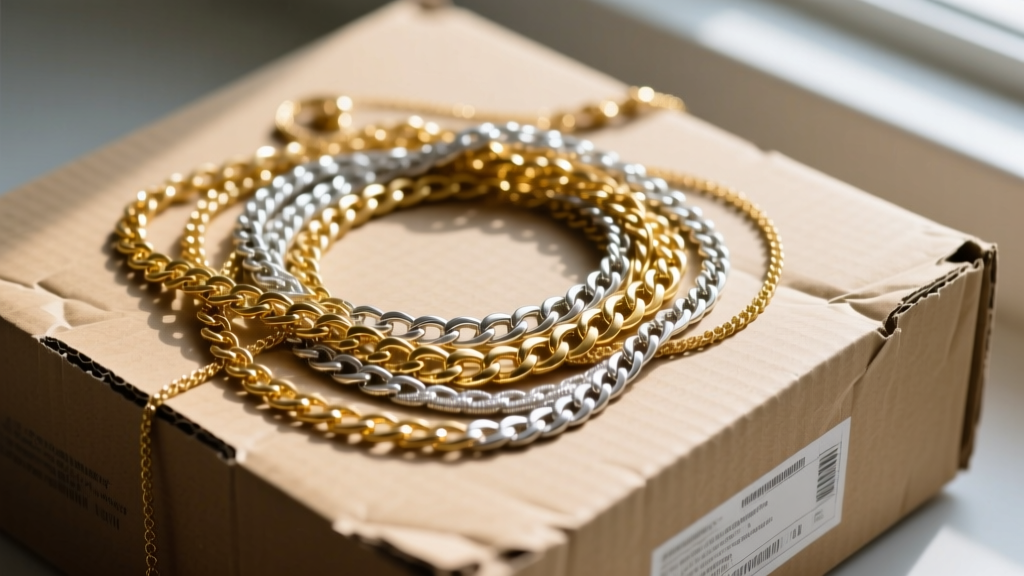
Learning how to pack necklaces for moving requires more than just tossing your jewelry box into a cardboard carton. When a moving truck travels down the highway, it generates constant micro-vibrations. Inside a cramped jewelry box, these vibrations cause delicate chains to act like mechanical ratchets. The links slide against one another, progressively weaving together into dense, frustrating knots. Furthermore, sudden stops and shifts in cargo can crush hollow chains or snap fragile silk threads. To protect your collection, you must abandon the traditional jewelry box approach and adopt a systematic, material-specific packing strategy that neutralizes friction and physical shock.
Step 1: Audit Your Chains by Vulnerability
Before you pack a single piece, lay your entire necklace collection out on a clean, microfiber-lined surface. You must separate your items not just by metal type, but by chain architecture. Different chain weaves possess vastly different structural vulnerabilities when subjected to the compressive forces of a move.
Chain Vulnerability and Packing Chart
| Chain Type | Structure | Primary Transit Risk | Best Packing Strategy |
|---|---|---|---|
| Herringbone | Flat, interlocking links lacking a core | Permanent kinking and bending | Lay perfectly flat in a rigid, padded envelope |
| Snake | Tightly joined wavy rings forming a tube | Snagging, stretching, and hair-catching | Individual soft pouch, isolated from fabrics |
| Cable / Curb | Uniform oval or round interlocking links | Mild to severe tangling via vibration | Straw threading method or Press'n Seal |
| Silk-Strung Pearls | Knotted silk thread between gemstones | Silk stretching, snapping, or moisture rot | Acid-free tissue wrapping, climate-controlled box |
Step 2: The Straw and Press'n Seal Anti-Tangle Methods
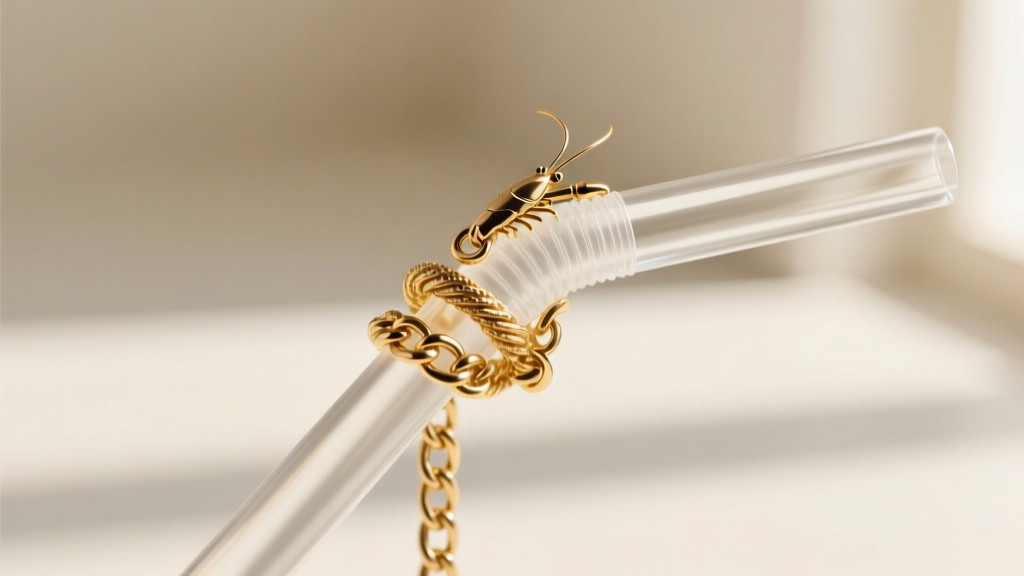
For standard cable, box, and curb chains (typically ranging from 14k gold to sterling silver), the goal is to immobilize the chain while keeping the clasp accessible. You have two highly effective, beginner-friendly options:
- The Straw Method: Take a standard plastic or paper drinking straw and cut it to match the length of your necklace's thinnest section. Unclasp the necklace, thread the chain completely through the straw, and re-clasp it on the outside. This creates a rigid barrier that makes tangling physically impossible, regardless of how much the moving truck shakes.
- The Press'n Seal Method: For layered necklaces or chains with fixed pendants that won't fit through a straw, use kitchen cling film (like Glad Press'n Seal). Lay the necklace flat on a sheet of the wrap, leaving a two-inch border. Press the wrap gently over the chain to lock it in place, then fold the border over to seal it. This creates a custom, vacuum-like pouch that prevents the pendant from scratching the chain.
Step 3: Protecting High-Value Pendants and Gemstones
Pendants introduce concentrated weight and varying degrees of hardness to your packing equation. If a heavy diamond pendant swings freely during transit, it can easily scratch a softer gold chain or chip an adjacent gemstone. Always consider the Mohs Hardness Scale when packing pendants alongside other jewelry.
Never pack porous or fragile gemstones like opals (Mohs 5.5-6.5), emeralds, or turquoise in the same compartment as diamonds or sapphires. The micro-vibrations of a move will cause the harder stones to act like sandpaper against the softer ones.
For high-value pendants, wrap the gemstone and its setting individually in acid-free archival tissue paper. Standard gift-wrapping tissue contains acidic sizing agents that can degrade porous stones and dull the luster of pearls over time. Once wrapped in acid-free tissue, place the pendant in a small, sealable polyethylene bag, pressing out all excess air before sealing to minimize oxidation.
Step 4: Climate Control and Anti-Tarnish Protocols
Moving often exposes your jewelry to extreme temperature fluctuations and humidity spikes, especially if your items are stored in the cargo hold of a truck or a non-climate-controlled storage unit. Sterling silver (.925) is particularly vulnerable. The copper alloyed with the silver reacts with sulfur compounds and moisture in the air, resulting in rapid, heavy black tarnishing.
To combat this, place 3M Anti-Tarnish strips inside the ziplock bags or small boxes containing your silver necklaces. These strips absorb airborne sulfides and prevent the chemical reaction that causes tarnish. According to the Jewelers of America, storing silver in airtight environments with anti-tarnish agents is the most effective way to preserve its finish during long-term transit. For pearl necklaces, the Gemological Institute of America (GIA) advises against airtight plastic storage for long periods, as pearls require a slight amount of ambient moisture to prevent their nacre from drying out and cracking. Pack pearls in soft, breathable cotton pouches instead of sealed plastic bags.
What NOT to Do: Common Beginner Mistakes
When figuring out how to pack necklaces for moving, avoiding critical errors is just as important as following best practices. Never make these common beginner mistakes:
- Do NOT use bubble wrap directly on silver: Bubble wrap traps moisture against the metal and can leave permanent, circular water spots or accelerate localized tarnishing.
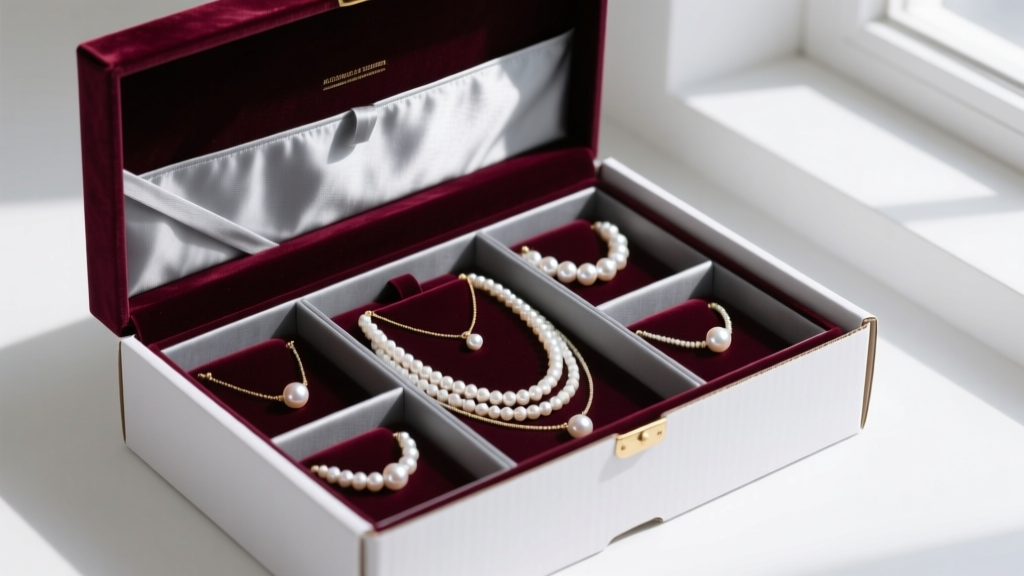
- Do NOT leave necklaces clasped inside a standard velvet jewelry box: The velvet lining creates high friction. When the box shifts, the chains will bunch up and knot tightly against the fabric.
- Do NOT pack jewelry in checked luggage or the back of a hot car: Extreme heat can warp certain synthetic gemstones, melt adhesives in costume jewelry, and cause thermal shock to treated diamonds.
Unpacking and Restoring Your Collection
Once you arrive at your new home, unpack your necklaces in a well-lit, climate-controlled room. If you skipped the straw method and find a stubborn knot in a fine cable chain, do not pull at it. Lay the chain flat on a smooth surface, apply a tiny amount of baby powder or talc to the knot to reduce friction, and use two straight sewing pins to gently work the links apart from the center outward. Finally, wipe down your gold and platinum pieces with a clean, lint-free jeweler's cloth to remove any oils or packing dust before hanging them in your new jewelry armoire. By respecting the structural integrity of your chains and the chemical sensitivities of your metals, your collection will arrive at your new home in pristine, wearable condition.


