The Jane Wynn Necklace: An Expert Guide to Vintage Enamel & Gold
Discover the technical mastery behind the Jane Wynn necklace. Explore 18k gold modular links, vitreous enamel techniques, and estate valuation.

The Architecture of a Jane Wynn Necklace
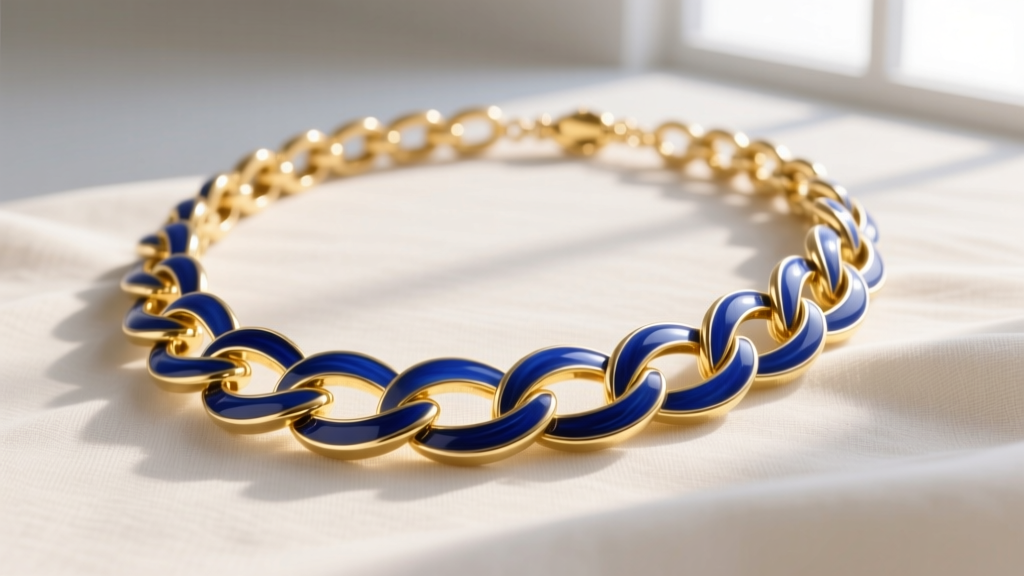
When evaluating high-end contemporary estate jewelry, the Jane Wynn necklace stands as a masterclass in modular engineering and vitreous enamel artistry. Active primarily from the 1980s through the early 2000s, Wynn carved out a highly specific niche: creating substantial, interchangeable 18k gold and enamel suites that function as much as mechanical marvels as they do wearable art. For collectors and jewelry historians in 2026, understanding the technical depth of her work is essential for authentication, valuation, and proper curation.
Unlike mass-produced chain necklaces that rely on uniform, machine-stamped links, a genuine Jane Wynn necklace is built around a proprietary articulation system. The foundational chains often feature custom-designed, interlocking geometric links that provide a fluid drape while maintaining immense structural integrity. This is not merely an aesthetic choice; it is a structural necessity to support the significant weight of her enamel pendants and gemstone drops.
18k Gold Articulation and Weight Distribution
The metallurgical foundation of Wynn’s work is 18k yellow gold. However, the specific alloy composition she favored typically leaned toward a higher copper content (roughly 75% gold, 15% copper, 10% silver) compared to standard European 18k alloys. This specific ratio yields a warmer, richer yellow hue while increasing the Vickers hardness of the metal. This added tensile strength is critical. A standard 18-inch Jane Wynn modular chain can weigh between 65 and 95 grams on its own. When fully loaded with enamel plaques and cabochon drops, the total mass can easily exceed 150 grams. The precision-milled loops and reinforced jump rings are engineered to bear this load without warping or stretching over decades of wear.
Masterclass in Vitreous Enamel
The defining characteristic of the Jane Wynn necklace is its breathtaking use of vitreous enamel. Unlike cold enamel (epoxy resin) found in lower-tier contemporary jewelry, Wynn utilized traditional kiln-fired glass enamel. According to the Victoria & Albert Museum's archive on vitreous enamel, true enameling requires fusing powdered silica to a metal substrate at temperatures exceeding 1,450°F (788°C).
Champlevé vs. Guilloché Techniques
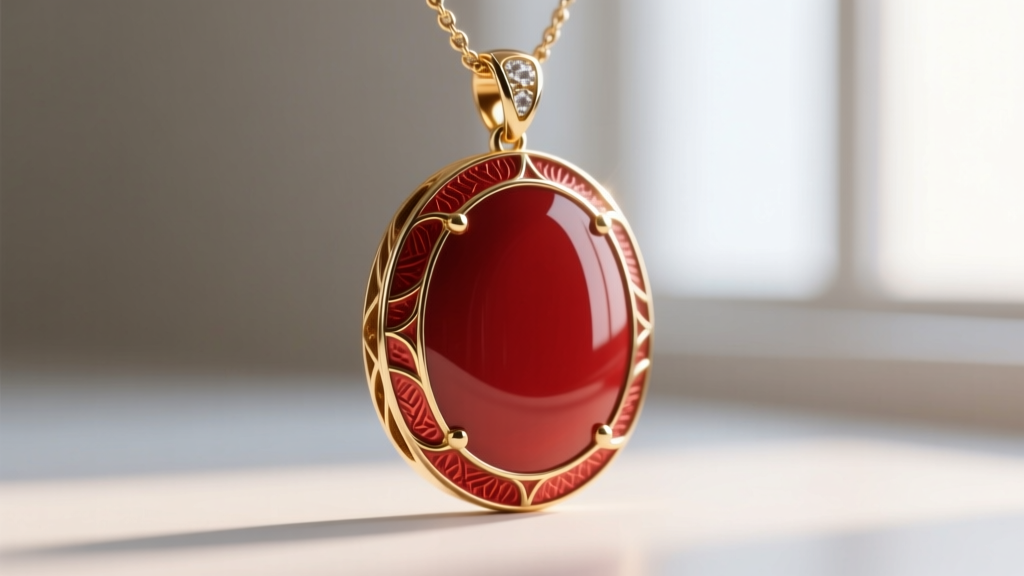
Wynn was a master of both champlevé and guilloché techniques, often combining them within a single modular suite. In her champlevé pieces, thick 18k gold plates were meticulously carved or etched to create deep, recessed cells. These cells were then packed with wet enamel powder and fired. Because glass shrinks upon cooling, this process had to be repeated three to five times per cell to achieve a perfectly flush, domed surface.
Her guilloché work, on the other hand, involved engine-turning intricate geometric patterns directly into the gold substrate before applying translucent enamel. The light catches the machined gold ripples beneath the glass, creating a mesmerizing, three-dimensional moiré effect. The technical difficulty here lies in thermal shock management; if the gold base is too thin or the cooling process too rapid, the glass will craze or pop off the metal. Wynn’s pieces rarely exhibit this crazing, a testament to her strict temperature control and proper counter-enameling techniques.
Authentication and Hallmark Identification
As the secondary market for 1980s and 1990s designer jewelry surges, so does the prevalence of misattributed pieces. Authenticating a Jane Wynn necklace requires looking past the general aesthetic and examining the micro-details of her hallmarking and clasp mechanics. According to the Lang Antiques hallmark database, designer marks must be evaluated alongside metal purity stamps and construction quality.
| Authentication Marker | Technical Specification | Common Flaws in Fakes |
|---|---|---|
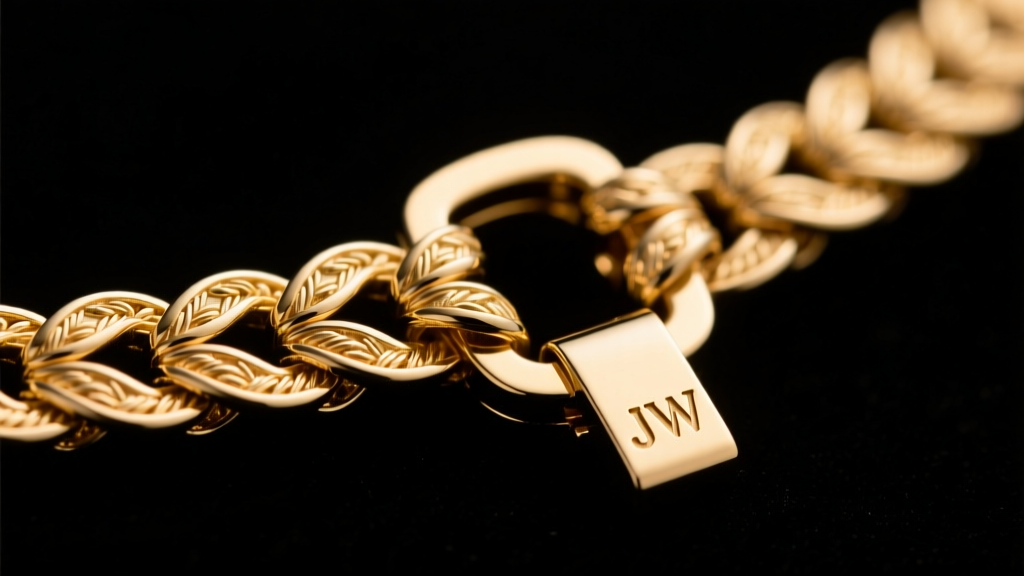
| Maker's Mark | "JW" or "JANE WYNN" stamped in a clean, sans-serif font, often inside a rectangular cartouche. | Blurry stamping, incorrect font, or missing cartouche border. |
| Purity Stamp | "18K" or "750" stamped adjacent to the maker's mark. | "14K" or "925" (Wynn almost exclusively worked in 18k gold). |
| Clasp Mechanism | Custom bayonet or threaded screw clasps with micro-knurled grips. | Standard lobster clasps or poorly fitted push-tabs. |
| Enamel Flush | Enamel sits perfectly flush or slightly domed above the gold bezel. | Enamel sits below the bezel or shows visible glue lines (epoxy). |
2026 Estate Market Valuation
The market for modular designer jewelry has matured significantly. Collectors now view a Jane Wynn necklace not just as an accessory, but as a tangible asset. Based on recent auction data and private sale metrics tracked by platforms like Sotheby's Fine Jewelry archive, the valuation of these pieces is highly dependent on modularity and color rarity.
Pricing Tiers and Collector Demand
- Base Chains (No Enamel): $3,500 – $6,000. Valued primarily on gold weight and the condition of the threaded links.
- Standard Enamel Links: $800 – $1,500 per individual link. Common colors like cobalt blue, opaque white, and forest green fall in this range.
- Rare / Gem-Set Drops: $2,500 – $5,000+. Pendants featuring cabochon rubies, sapphires, or rare translucent guilloché enamels command premium pricing.
- Full Collector Suites: $18,000 – $35,000. A complete necklace with matching bracelet, multiple interchangeable drops, and original signed presentation boxes.
The true value of a Jane Wynn necklace lies in its modular ecosystem. A collector who possesses the base chain but lacks the original enamel drops is missing out on the core interactive experience Wynn designed. Consequently, complete, unaltered suites with intact threading and zero enamel chips are aggressively pursued by serious estate jewelry investors.
Care and Maintenance of Vintage Enamel
Owning a piece of this caliber requires strict adherence to specialized maintenance protocols. The most common point of failure for vintage enamel jewelry is improper cleaning. Vitreous glass is highly susceptible to thermal shock and chemical degradation.
Expert Warning: Never place a Jane Wynn necklace in an ultrasonic cleaner. The high-frequency vibrations can cause microscopic fractures in the glass, leading to catastrophic crazing. Furthermore, steam cleaners can force moisture into the microscopic seams between the gold bezel and the enamel, eventually causing the glass to pop out of its setting.
For routine maintenance, use a soft, untreated microfiber cloth to gently buff the 18k gold links. If the enamel becomes smudged with skin oils, wipe it gently with a barely damp cloth and dry it immediately. For deep cleaning or if a link becomes stiff, the piece must be sent to a master jeweler who specializes in vintage enameling. They will disassemble the modular links, clean the gold components in specialized solutions, and carefully polish the glass without compromising the structural integrity of the bayonet clasps.
Ultimately, the Jane Wynn necklace represents a golden era of American jewelry design where mechanical precision met artistic brilliance. By understanding the metallurgical choices, the firing techniques, and the proper valuation metrics, collectors can confidently navigate the estate market and preserve these mechanical marvels for future generations.


