Fixing a Sagging Big Pearl Necklace: Restringing & Clasp Solutions
Is your big pearl necklace sagging or breaking? Learn expert troubleshooting for heavy pearl restringing, clasp upgrades, and silk thread sizing.

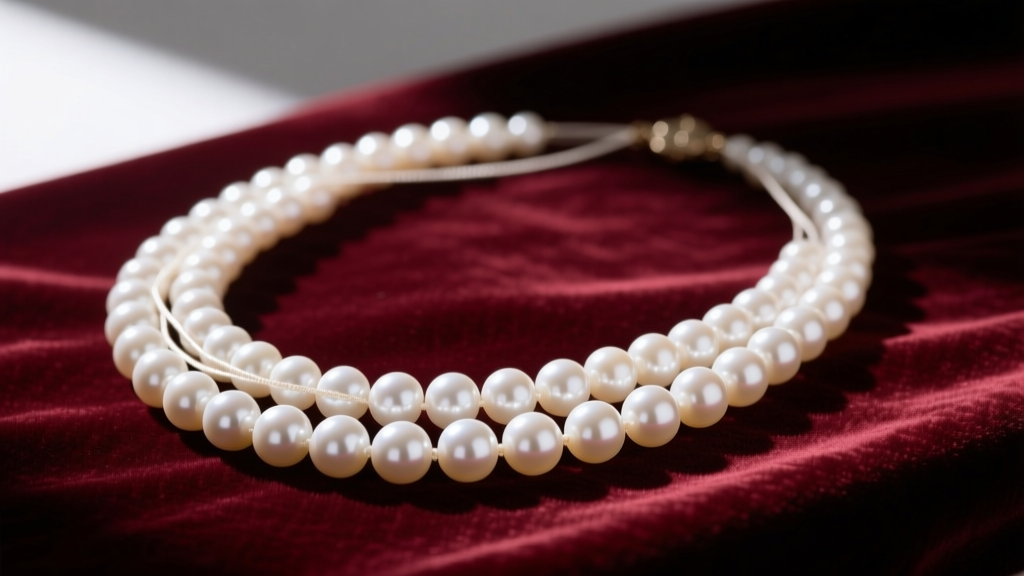
A big pearl necklace is a statement of undeniable luxury, but the very traits that make large pearls desirable—their substantial size, thick nacre, and solid weight—are exactly what cause them to fail mechanically over time. Whether you are wearing a strand of 14mm South Sea pearls or a heavy Edison freshwater piece, the physics of wearing large gemstones requires specialized jewelry engineering. If your strand is sagging, the knots are slipping, or the clasp is warping, you are experiencing a structural failure common to heavyweight jewelry.
The Physics of Heavy Pearls: Why Standard Stringing Fails
To understand why your necklace is failing, we must look at the tensile limits of traditional jewelry materials. A standard 18-inch strand of 7mm Akoya pearls weighs approximately 25 to 30 grams. In contrast, a strand of 13mm to 15mm pearls can easily exceed 90 to 120 grams. This 300% increase in mass places exponential stress on the stringing medium.
When a heavy pearl strand is worn, the natural pendulum motion of walking and moving transfers kinetic energy directly to the silk thread and the clasp jump ring. Over time, this causes creep—the slow, permanent deformation of the silk under constant tension. Standard Griffin size 4 or 6 silk, which is perfect for lightweight Akoyas, will stretch, thin out, and eventually snap under the dynamic load of large pearls. According to the Gemological Institute of America (GIA), proper maintenance and appropriate stringing materials are critical to preserving both the structural integrity and the nacre of high-value pearls.
Diagnosing Your Heavy Pearl Strand
Before attempting a repair or taking your piece to a bench jeweler, perform this diagnostic checklist to identify the exact failure mode:
- The Gap Test: Lay the necklace flat on a table. Gently pull a section of pearls apart. If you see more than 1mm of exposed thread between the pearl and the knot, the silk has suffered from tensile creep and requires immediate restringing.
- The Clasp Lever Check: Inspect your lobster or spring-ring clasp. If the lever mechanism feels loose, or if the small jump ring connecting the clasp to the pearls is slightly oval rather than perfectly round, the clasp assembly has been compromised by the necklace's weight.
- Nacre Abrasion: Examine the drill holes of the pearls under a 10x jeweler's loupe. If the silk is too loose, the heavy pearls will grind against one another, chewing through the nacre near the drill hole. This is an irreversible form of damage.
- French Wire (Gimp) Fraying: Check the tiny coiled metal wire that protects the silk where it loops through the clasp. Heavy pearls cause severe friction here; if the metal coil is flattened or the silk is visible, a break is imminent.
The Restringing Blueprint for 12mm+ Pearls
Restringing a big pearl necklace is not simply a matter of using thicker thread; it requires matching the thread diameter to the pearl's drill hole and weight. Large pearls are typically drilled with 0.8mm to 1.2mm holes to accommodate thicker cords, but drilling too wide can compromise the pearl's structural core.
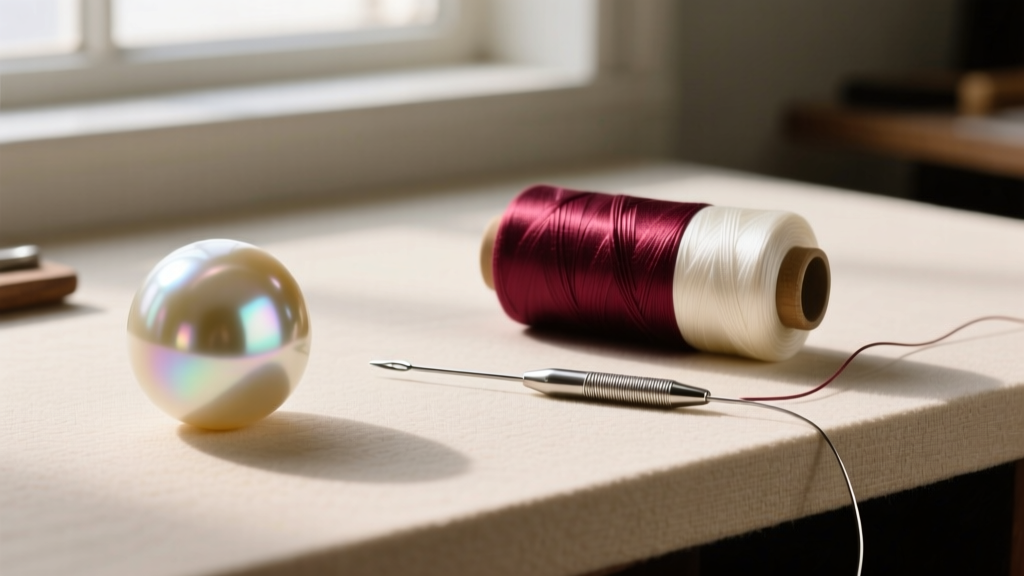
| Pearl Size / Weight | Recommended Thread | Min. Drill Hole | Knotting Technique |
|---|---|---|---|
| 10mm - 12mm (60-80g) | Griffin Size F (0.90mm) 100% Silk | 1.0mm | Standard Overhand Knot |
| 13mm - 15mm (90-120g) | Griffin Size G (1.00mm) or Power Pro | 1.2mm | Double French Knot |
| 16mm+ (130g+) | Power Pro Braided Gel-Spun (Size G) | 1.5mm | Double Knot w/ Adhesive |
For extreme weights (16mm+), master stringers increasingly turn to high-tech synthetics like braided gel-spun polyethylene (e.g., Power Pro). While traditionalists prefer the drape of natural silk, synthetic threads offer zero creep and a tensile strength that can hold over 30 pounds, completely eliminating the sagging issue inherent to heavyweight strands.
Upgrading the Clasp: Supporting 100+ Grams of Pearls
The clasp is the most common point of catastrophic failure on a big pearl necklace. A heavy strand acts like a wrecking ball if dropped or yanked, and standard clasps cannot absorb this shock.
Why Standard Lobster Clasps Fail
Lobster clasps rely on a tiny internal spring. When a 120-gram necklace swings forward and the wearer suddenly stops, the inertia pulls the clasp lever outward, inadvertently popping it open. Furthermore, the soldered seam on a standard lobster clasp will easily split under the sheer static weight of large South Sea pearls.
The Box Clasp & French Wire Solution
To properly secure a heavyweight strand, you must upgrade to a box clasp with a figure-8 safety catch. The box mechanism locks the tongue into a rigid metal housing, distributing the tension across the entire clasp body rather than a single spring. The figure-8 safety wire acts as a secondary fail-safe; if the primary tongue dislodges, the safety wire catches on the opposite jump ring, preventing the necklace from falling to the floor.
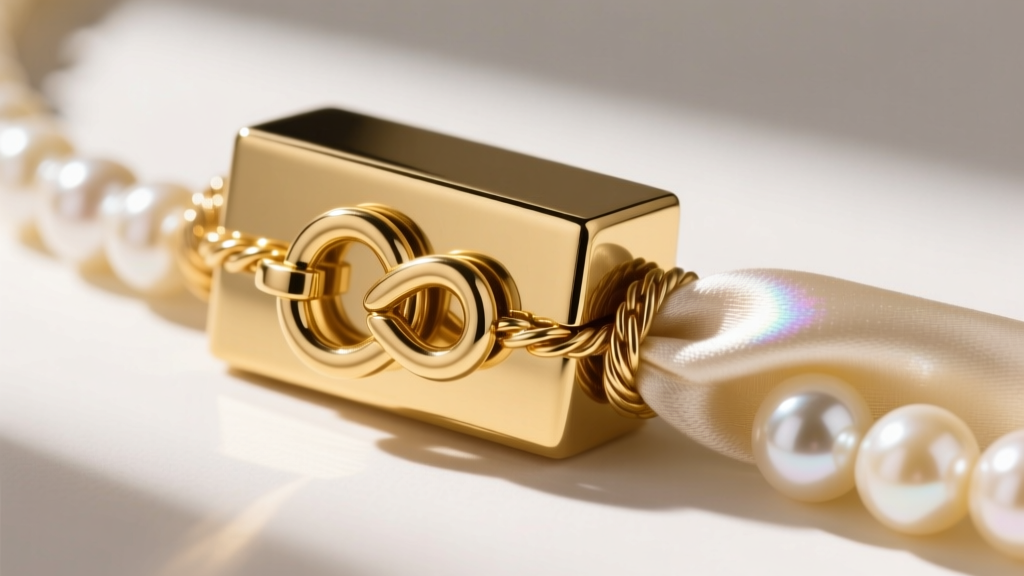
Crucially, the silk must never touch the metal clasp directly. You must use French wire (gimp)—a tightly coiled, hollow tube of fine gold or silver. The silk passes through the coil, which bends with the thread but absorbs the abrasive friction of the metal clasp ring. For heavy pearls, use a heavier gauge French wire (0.8mm or 0.9mm outer diameter) to prevent the coil from crushing under the necklace's weight.
Drill Hole Friction & Nacre Protection
A frequently overlooked issue with large pearls is the sharpness of the drill hole edges. When pearls are mass-drilled, the exit point of the drill bit often leaves a microscopic burr or sharp edge inside the nacre. On a lightweight necklace, this is negligible. On a big pearl necklace, the immense downward force pulls the silk tightly against this sharp inner edge, acting like a microscopic knife that slowly saws through the thread.
"Always request that your jeweler perform a 'countersink' or 'chamfer' on the drill holes of large pearls. Using a tiny diamond-tipped burr to slightly bevel the inside edge of the hole removes sharp nacre burrs and extends the life of your silk thread by years." — Master Bench Jeweler
Maintenance: Preventing Stretch and Damage
Even with the correct materials, a big pearl necklace requires specific maintenance protocols to prevent premature failure:
- The Annual Flex Test: Once a year, wrap the necklace around your hand and gently flex it. If the knots feel rigid and the thread is visibly tight against the pearl, the silk is healthy. If it feels mushy or gaps appear, it is time to restring.
- Avoid Ultrasonic & Steam Cleaners: According to GIA's pearl care guidelines, heat and ultrasonic vibrations can cause the organic conchiolin inside the pearl to dry out or crack, especially in large pearls with thick nacre layers. Clean only with a damp, lint-free microfiber cloth.
- Flat Storage: Never hang a big pearl necklace on a jewelry tree or hook. Hanging a 100-gram strand vertically places constant, unyielding tension on the bottom knots and the clasp ring, guaranteeing premature silk stretch. Always store the piece flat in a soft, acid-free tissue pouch.
By understanding the unique mechanical demands of heavyweight pearls and upgrading your stringing materials and clasp hardware accordingly, you can ensure your statement piece remains secure, beautiful, and structurally sound for generations.


