Troubleshooting Your Sparkling Infinity Heart Collier Necklace
Is your sparkling infinity heart collier necklace tarnishing or losing stones? Discover expert troubleshooting tips to restore your jewelry.

Introduction to Common Collier Necklace Failures
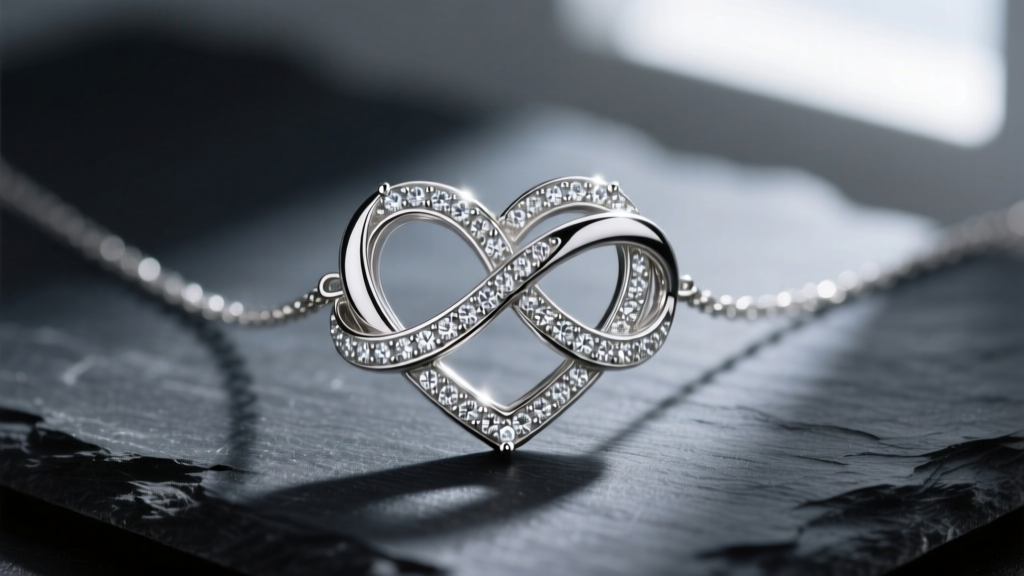
The sparkling infinity heart collier necklace is a masterclass in sentimental jewelry design, merging the continuous loop of the infinity symbol with the romantic silhouette of a heart. Typically crafted from 925 sterling silver and adorned with micro-pave cubic zirconia (CZ), these pieces are beloved for their brilliant light return and elegant draping. However, the intricate architecture that makes this necklace so visually striking also introduces specific structural vulnerabilities. As of 2026, while many manufacturers have shifted to recycled sterling silver and advanced eco-friendly rhodium plating processes, the fundamental physics of daily wear remain unchanged.
Whether you are dealing with stubborn tarnish creeping into the pave crevices, a cloudy center stone, or a kinked cable chain, diagnosing the root cause is the first step toward restoration. This comprehensive troubleshooting guide dives deep into the metallurgy and gemology of your collier necklace, providing actionable, bench-jeweler-approved solutions to bring your piece back to its original brilliance.
Troubleshooting Tarnish and Rhodium Degradation
The Chemistry of Sterling Silver Tarnish
Sterling silver is an alloy consisting of 92.5% pure silver and 7.5% copper. It is the copper content that makes the metal susceptible to tarnishing. When exposed to hydrogen sulfide in the air, or sulfur compounds in sweat and cosmetics, the copper reacts to form silver sulfide ($Ag_2S$), which manifests as a yellowish or black film. To combat this, high-quality sparkling infinity heart collier necklaces are flash-plated with rhodium, a platinum-group metal that is highly inert and naturally bright white.
However, rhodium plating on high-friction areas—such as the bail (where the pendant meets the chain) and the clasp mechanism—typically measures only 0.1 to 0.2 microns thick. Over months of daily wear, this microscopic layer wears away, exposing the reactive 925 core beneath. According to The Silver Institute, once the rhodium barrier is compromised, tarnish can develop in as little as 48 hours in high-humidity environments.
Step-by-Step Cleaning Protocol
Do not use abrasive silver dips or harsh chemical baths on your collier necklace. These solutions can strip the remaining rhodium plating and leave a chemical residue that dulls the CZ stones. Instead, follow this safe protocol:
- Prepare a mild solution: Mix three drops of phosphate-free dish soap (like Dawn) into a bowl of lukewarm distilled water.
- Agitate gently: Submerge the necklace for exactly five minutes to loosen surface oils.
- Brush the crevices: Use an extra-soft baby toothbrush to gently sweep the bristles over the micro-pave settings. Brush in a circular motion to dislodge trapped dead skin cells and lotion.
- Rinse and dry: Rinse under distilled water and pat dry with a lint-free microfiber cloth. Never air-dry, as water spots will form on the silver.
Fixing Loose or Missing Pave Stones
Why Micro-Pave Settings Fail
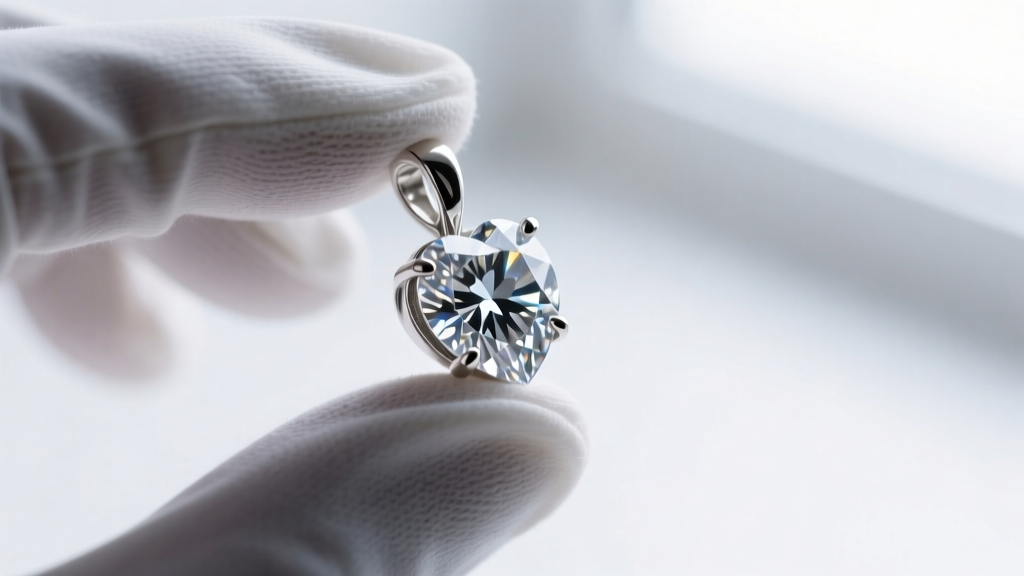
The 'sparkling' aspect of your infinity heart pendant relies on dozens of tiny cubic zirconia stones held in place by micro-prongs. In a standard collier design, these prongs are incredibly small, often measuring less than 0.8mm in width and 0.5mm in thickness. Because CZ has a Mohs hardness of 8.0 to 8.5, it is quite hard, but the sterling silver holding it is much softer (Mohs 2.5 to 3). When the necklace snags on knitwear, lace, or even hair, the lateral force can easily bend a micro-prong away from the stone's girdle.
Furthermore, repeated exposure to ultrasonic cleaners can vibrate the metal at a frequency that fatigues the silver, causing the prongs to loosen over time. If you notice a stone rattling when you tap the pendant, the prong has lost its tension.
DIY Temporary Fixes vs. Professional Intervention
If a stone is loose but still in its setting, stop wearing the necklace immediately. As a temporary emergency measure to prevent the stone from falling out before you can reach a jeweler, place a small piece of clear Scotch tape over the affected area. Do not attempt to push the prong back yourself with a needle or tweezers; silver is malleable, but without a proper punch tool and magnification, you are highly likely to scratch the rhodium plating or chip the CZ stone. A professional bench jeweler will use a micro-burnisher to smoothly push the silver prong back over the stone's edge, a repair that typically costs between $15 and $35 per stone.
Resolving Cloudy Cubic Zirconia
Unlike diamonds, which are completely non-porous, cubic zirconia has a microscopic porosity that makes it a magnet for oils, lotions, and soap scum. When these substances build up on the pavilion (the bottom facets) of the stone, they disrupt the path of light, causing the stone to look cloudy, gray, or 'dead'. The Gemological Institute of America (GIA) notes that regular exposure to cosmetics is the primary culprit behind diminished brilliance in simulant stones.
To restore the fire and brilliance, you must clean the underside of the stones. Turn the pendant over and use a cotton swab dipped in a 50/50 mixture of isopropyl alcohol and water to gently wipe the back of the infinity heart. The alcohol cuts through the lipid buildup without harming the sterling silver. Follow up with a dry, soft brush to restore the optical clarity.
Chain Kinks and Lobster Clasp Malfunctions
Untangling the Cable Chain
The sparkling infinity heart collier necklace usually features a delicate 0.9mm to 1.1mm cable chain. Because the links are so fine, they easily fold in on themselves, creating tight, stubborn kinks. Pulling on a kinked chain will permanently deform the circular links into ovals, weakening the structural integrity of the necklace.
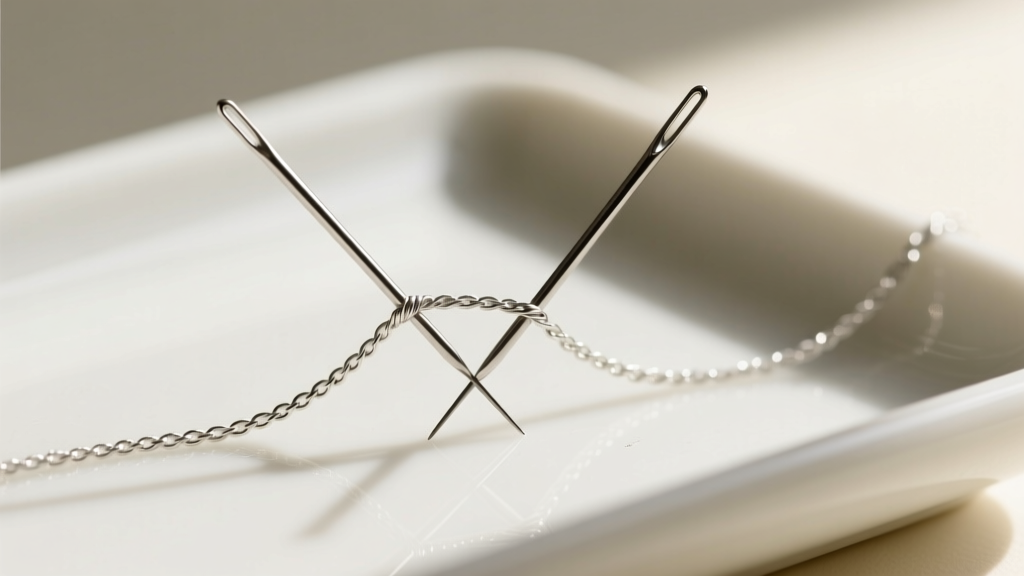
The Needle Method: Lay the kinked section flat on a hard, smooth surface like a glass or ceramic tray. Apply a microscopic drop of baby oil or mineral oil directly to the knot. Take two fine sewing needles and gently work the points into the center of the knot, pushing outward to loosen the links. Never use your fingernails, as the oils and dirt will transfer to the silver, and the pressure can snap the delicate jump rings.
Fixing a Sticky Lobster Clasp
If the lobster clasp feels stiff or fails to snap shut completely, the internal spring mechanism is likely clogged with debris or skin oils. Do not use WD-40 or standard lubricants, as they contain solvents that will degrade the metal finish. Instead, dip the tip of a wooden toothpick into food-grade mineral oil and apply a tiny amount directly to the hinge of the clasp. Pump the lever a few times to work the oil into the spring, then wipe away any excess with a microfiber cloth.
Troubleshooting Matrix: Quick Reference Guide
| Symptom | Root Cause | DIY Fix | Professional Fix |
|---|---|---|---|
| Yellow/Black spots on silver | Rhodium wear exposing 925 core to sulfur | Polish gently with a treated silver cloth | Re-rhodium plating (dipping) |
| Stones look gray or cloudy | Lotion/oil buildup on the pavilion facets | Wipe underside with isopropyl alcohol | Professional steam cleaning |
| Rattling sound in pendant | Micro-prong bent away from CZ girdle | Apply clear tape to secure temporarily | Prong burnishing and tightening |
| Clasp lever is stiff/sticky | Debris in the hinge mechanism | Apply mineral oil via toothpick | Clasp replacement or ultrasonic flush |
Preventative Maintenance Framework
To ensure your sparkling infinity heart collier necklace remains pristine for years to come, adopt the 'Last On, First Off' rule. Your jewelry should be the very last thing you put on after applying perfumes, hairsprays, and lotions, and the very first thing you take off when you return home. Store the necklace flat in an anti-tarnish pouch lined with treated flannel, which actively absorbs ambient sulfur compounds. By understanding the specific material science behind your necklace, you can troubleshoot issues effectively and preserve the sentimental and aesthetic value of your favorite piece.


