Solving the Jellyfish Necklace Calamity: Tangles, Breaks & Fixes
Is your favorite pendant a tangled mess? Learn how to solve the jellyfish necklace calamity with expert untangling, repair, and metal upgrade tips.

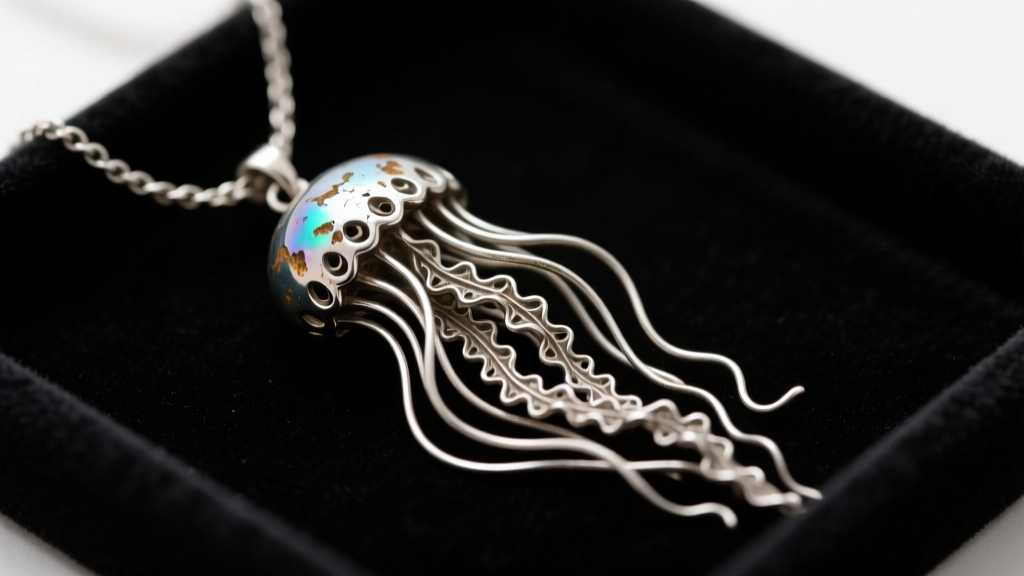
The "jellyfish necklace calamity" is a well-known frustration in the jewelry community. These striking pendants, featuring a domed bell and multiple flowing tentacles, are visually stunning but mechanically prone to disaster. By the time a wearer realizes the delicate dangles have woven themselves into an impenetrable bird's nest, the piece often seems beyond salvation. As we navigate the 2026 jewelry market, where intricate micro-cast designs are more popular than ever, understanding the structural vulnerabilities of these necklaces is essential for both collectors and everyday wearers.
The Physics of the Tangle: Why Jellyfish Pendants Fail
To solve the calamity, we must first understand the physics driving it. A jellyfish pendant typically consists of a central bail, a weighted dome (the bell), and anywhere from five to fifteen dangling chains (the tentacles). The kinetic friction generated by walking causes these independent chains to swing, cross, and weave together.
The primary culprit is the chain type. Many mass-market jellyfish necklaces utilize snake chains or herringbone chains for the tentacles due to their fluid, fabric-like drape. However, the smooth, interlocking metal plates of a snake chain act almost like Velcro when pressed against another snake chain. Once the microscopic gaps between the links catch one another, body heat and movement tighten the knot. Conversely, rolo or cable chains (typically 0.8mm to 1.2mm in thickness) feature open, rounded links that are far less likely to interlock, making them the superior choice for long-term wearability.
The 3-Step Rescue Protocol for Tangled Tentacles
When the calamity strikes, pulling the chains will only deform the links and work-harden the metal, leading to permanent kinks or snaps. Professional jewelers use a specific, methodical approach to rescue these pieces.
Tools Required
- A completely flat, non-porous surface (a glass pane or ceramic tile is ideal)
- Highly refined mineral oil or specialized jewelry untangling spray
- Pattern 5 or Pattern 7 Dumont fine-tipped titanium tweezers
- A standard sewing needle or 0.3mm brass wire
The Execution
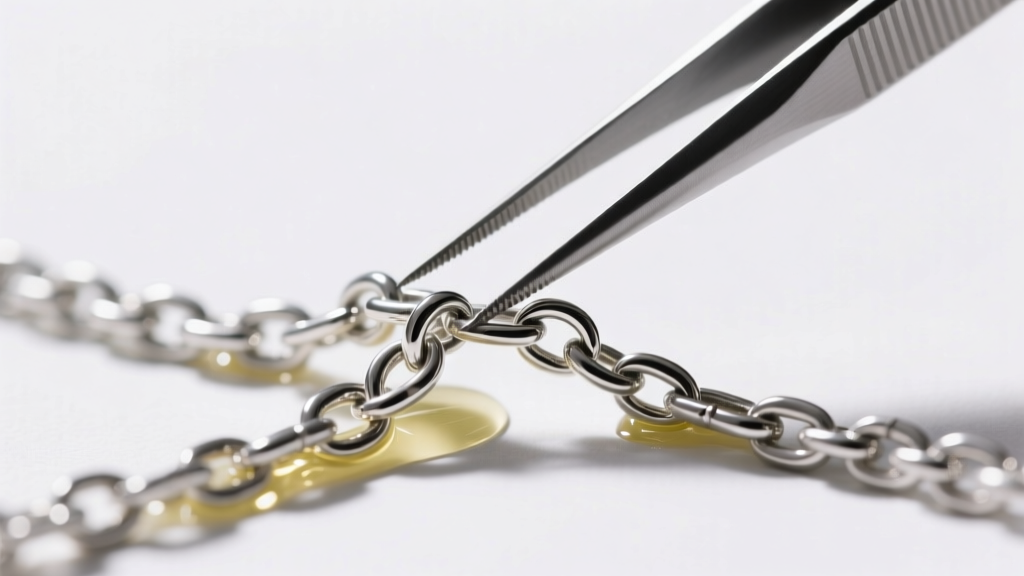
Step 1: Lubrication and Flattening. Lay the tangled mass flat on the glass. Apply three to four drops of mineral oil directly to the center of the knot. The oil reduces the surface friction coefficient between the metal links, allowing them to slide rather than catch.
Step 2: Peripheral Loosening. Never attack the center of the knot first. Use your fine-tipped tweezers to gently push the outermost loops inward, creating slack. According to master jewelers at Rio Grande, pushing metal rather than pulling it prevents the links from stretching and distorting.
Step 3: The Needle Technique. Once slack is introduced, slide the sewing needle or brass wire through the loosest outer loop. Gently wiggle the needle to widen the gap, then use the tweezers to pull the adjacent chain through the opening. Repeat this process, working your way inward until the bell is freed.
Structural Reinforcement: Fixing Broken Dangles
The second half of the jellyfish necklace calamity involves structural failure. The tentacles bear dynamic stress every time the wearer moves. Over time, the micro-jump rings connecting the tentacles to the base of the bell can fatigue and snap.
If a tentacle breaks off, do not attempt to solder it with a standard butane torch. The heat required to flow silver or gold solder will easily melt the ultra-fine 0.8mm chain links, fusing the tentacle into a solid, immobile wire. Instead, the repair requires either laser welding or micro-TIG welding, which localize the heat to a fraction of a millimeter. If you are performing a DIY repair, replace the failed connection point with a 2mm, 20-gauge open jump ring made of matching metal, using two pairs of flat-nose pliers to twist the ring open laterally rather than pulling it apart, which compromises the circular tension.
Material Upgrades to Prevent Skin Irritation
The calamity isn't always mechanical; it is often chemical. Many affordable jellyfish pendants are cast from Zamak (a zinc alloy) and plated with a microscopic layer of silver or gold. Once body oils and friction wear through the plating, the underlying zinc and nickel are exposed to the skin, causing severe contact dermatitis. The American Academy of Dermatology notes that nickel is the most common cause of allergic contact dermatitis, affecting millions of jewelry wearers globally.
When replacing or upgrading your jellyfish necklace, refer to this material matrix to ensure longevity and biocompatibility:
| Material Grade | Nickel Content | Tensile Strength | Price Range (Pendant) |
|---|---|---|---|
| Zinc Alloy (Zamak) | High (Trace to 5%) | Low (Brittle, ~200 MPa) | $15 - $35 |
| 316L Surgical Steel | Trace (Tightly Bound) | High (515 MPa) | $40 - $75 |
| ASTM F136 Titanium | 0% (Hypoallergenic) | Very High (860 MPa) | $90 - $160 |
| Solid 14k Gold (Nickel-Free) | 0% | Medium (300 MPa) | $280 - $650+ |
Note: Always verify with the manufacturer that white gold alloys are palladium-based rather than nickel-based to avoid allergic reactions.
Preventative Storage and Wear Rules
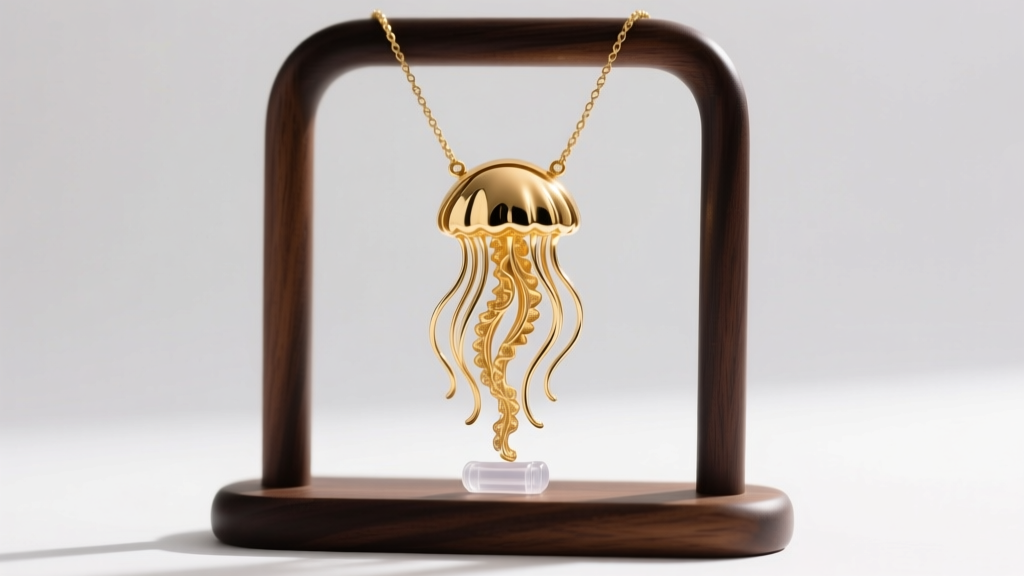
Preventing the jellyfish necklace calamity is vastly superior to curing it. The golden rule of storage for multi-dangle pendants is vertical suspension. Never throw a jellyfish necklace into a drawer or a communal jewelry box. The lateral pressure and movement of a drawer will guarantee a knot within hours.
Invest in a velvet-lined jewelry stand with individual hooks. Hang the necklace by its primary clasp, allowing gravity to pull the tentacles straight down. For travel, utilize the "straw trick": thread the delicate tentacles through a standard plastic drinking straw, then clasp the necklace. The rigid straw acts as a protective sheath, preventing the chains from crossing or catching on other items in your luggage.
Furthermore, be mindful of your wardrobe. Jellyfish necklaces with elongated tentacles (exceeding 2.5 inches in length) will inevitably catch on coarse knits, lace, and terry cloth towels. Reserve these intricate pieces for wear with smooth fabrics like silk, satin, or tightly woven cotton, and always remove the necklace before bathing or swimming to prevent chemical degradation of the metal links.
Expert Insight: "If you are purchasing a vintage or antique jellyfish locket from the early 20th century, inspect the bail closely. The constant swinging of heavy silver tentacles often causes the top bail ring to wear completely through, leading to sudden loss of the entire piece. Have a jeweler reinforce the bail with a modern, hard-soldered platinum or white gold loop."
By understanding the mechanical flaws inherent in multi-dangle designs and applying proper maintenance protocols, you can rescue your favorite pieces from the jellyfish necklace calamity and ensure they remain a staple in your collection for years to come.