How to Stop an Upside Down Crucifix Necklace Spinning
Stop your upside down crucifix necklace from flipping. Expert troubleshooting for bail types, chain weights, and metal allergies in alt jewelry.

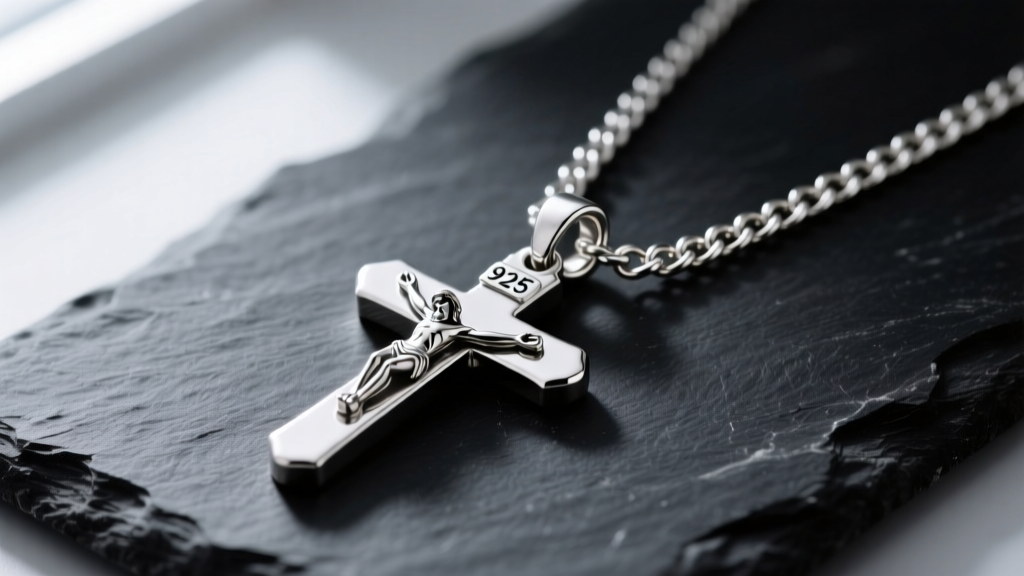
The Physics of the Flip: Why Inverted Pendants Spin
The upside down crucifix necklace is a staple in alternative, gothic, and high-fashion streetwear aesthetics. Whether chosen for its historical ties to the Papal Cross or its edgy pop-culture associations, the inverted cross makes a bold statement. However, wearers frequently encounter a frustrating functional flaw: the pendant refuses to hang straight. Instead of resting perfectly inverted, it constantly flips, spins, and tangles on the chain.
To troubleshoot this issue, we must first understand the physics of the pendant's center of mass. A standard Latin cross features a horizontal intersection near the top, creating a bottom-heavy pendulum effect that naturally keeps it upright. An inverted cross, by contrast, suspends from the shorter bottom arm, leaving the longer arm pointing upward. This creates a top-heavy center of gravity. The slightest movement from the wearer causes the bail to rotate around the chain, resulting in a perpetual flipping motion that ruins the aesthetic and tangles the jewelry.
Bail Orientation vs. Gravity
The primary culprit is the traditional vertical loop bail. When a top-heavy pendant hangs from a vertical loop, the chain acts as a pivot point. Because the long arm of the cross wants to fall downward due to gravity, it will constantly torque the bail until the pendant flips entirely upside down (which, ironically, means it is now hanging right-side up). Solving this requires altering the friction, the pivot point, or the bail geometry itself.
Troubleshooting Guide: 4 Fixes for a Flipping Cross
If your upside down crucifix necklace won't stay in place, use these bench-jeweler-approved troubleshooting methods to stabilize the pendant.
1. The Silicone O-Ring Friction Hack
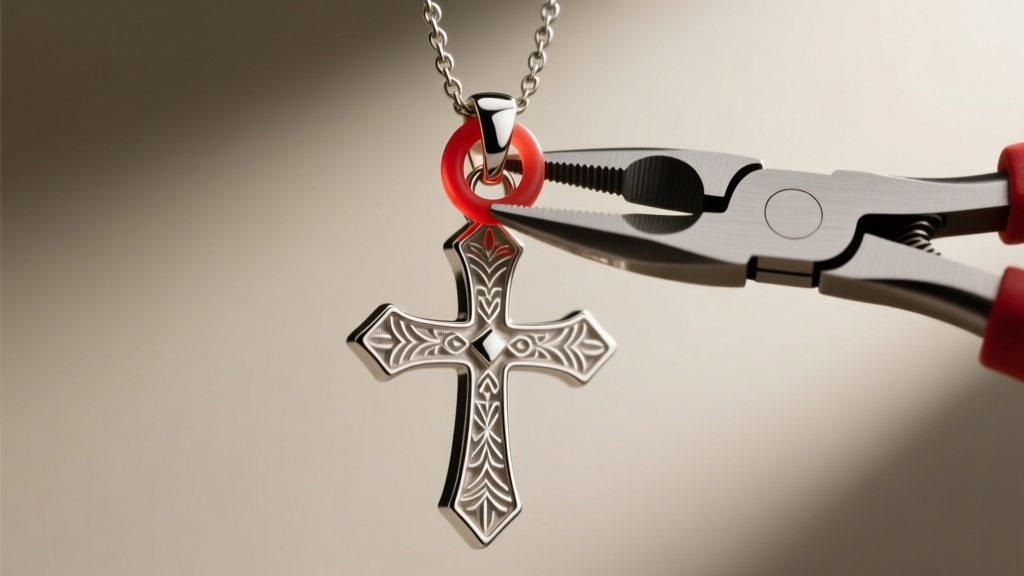
The most accessible, non-destructive fix involves adding microscopic friction to the jump ring. Purchase a pack of 2mm inner-diameter silicone O-rings (commonly used for jewelry making or small plumbing). Using two pairs of flat-nose pliers, gently open the jump ring connecting the pendant to the chain, slide the silicone O-ring over the wire, and close the jump ring. The silicone grips the chain links, drastically increasing the rotational force required to flip the pendant. This allows the cross to hang inverted without restricting the natural drape of the necklace.
2. Jump Ring Proportion Sizing
A spinning pendant is often exacerbated by an oversized jump ring. If the inner diameter of the jump ring is too large, the pendant has too much 'play' to build up rotational momentum. The golden rule of jewelry fabrication is that the jump ring's inner diameter should never exceed 1.5 times the thickness of the chain wire. If you are wearing a 2mm box chain, your jump ring should have a maximum inner diameter of 3mm. Downsizing the jump ring limits the pivot angle, physically preventing the top-heavy cross from completing a full rotation.
3. The Horizontal Tube Bail Conversion
For a permanent, professional-grade solution, take the necklace to a bench jeweler to have the traditional vertical loop removed and replaced with a horizontal tube bail. A tube bail (typically 3mm to 4mm in diameter) is soldered horizontally across the back of the pendant's long arm. The chain threads directly through the tube. This completely eliminates the vertical pivot point, locking the upside down crucifix necklace into its intended inverted orientation regardless of the wearer's movements.
4. The Counterweight Method
If you prefer not to alter the metalwork, you can manipulate the center of gravity by adding a discreet counterweight. Threading a small, dense metal bead (such as a 4mm tungsten or sterling silver round bead) onto the chain directly above the bail adds just enough downward drag on the top side of the pivot to neutralize the top-heavy torque of the long cross arm.
Material & Gauge Matrix: Preventing Bail Breakage
Because inverted crosses are often cast as heavy, solid statement pieces, pairing them with the wrong chain gauge is a common mistake that leads to bail breakage or chain snapping. The top-heavy nature of the upside down crucifix necklace puts uneven lateral stress on the jump ring and the top link of the chain. Refer to the matrix below to ensure your chain can support the pendant's weight and leverage.
| Chain Style | Wire Thickness (Gauge) | Recommended Jump Ring ID | Max Pendant Weight | Best For |
|---|---|---|---|---|
| Cable Chain | 0.8mm (20g) | 3.0mm | 5g | Small, lightweight minimalist crosses |
| Box Chain | 1.5mm (16g) | 4.0mm | 12g | Standard everyday alt-goth pendants |
| Curb Chain | 2.5mm (12g) | 5.5mm | 25g | Heavy, solid cast statement pieces |
| Rope Chain | 3.0mm (10g) | 6.0mm | 35g+ | Oversized, chunky streetwear crosses |
Bench Jeweler Tip: 'When soldering a jump ring on an inverted cross, always use a laser welder or high-temperature silver solder. The leverage of the long arm acts like a crowbar on the jump ring seam every time the wearer leans forward, easily prying open poorly soldered or laser-flash-plated base metal rings.'
Solving the Green Skin Problem in Alt-Goth Jewelry
A secondary, yet highly prevalent, issue with upside down crucifix necklaces is contact dermatitis and the dreaded 'green skin' effect. Because the inverted cross is heavily associated with alternative and punk subcultures, many fast-fashion retailers mass-produce these pendants using cheap zinc alloys or 'pot metal,' finished with a microscopically thin flash plating of silver or black ruthenium.
Upgrading from Zinc Alloy to 316L Steel
Zinc alloys are highly reactive to the acidity in human sweat. Once the thin plating wears off at the bail or the back of the pendant, the raw zinc and copper underneath oxidize rapidly, leaving a dark green or black residue on the chest. Furthermore, these cheap castings often contain unregulated levels of nickel, a primary allergen that causes severe contact dermatitis. According to the Gemological Institute of America (GIA), nickel allergies affect roughly 10% to 20% of the population, making hypoallergenic metals essential for heavy pendants that rest against the sternum.
The Fix: If your current pendant is causing irritation, it cannot be salvaged. You must upgrade to a pendant cast in 316L surgical stainless steel, 925 sterling silver, or solid 14k gold. 316L steel is the industry standard for alternative body jewelry because it contains molybdenum, which drastically reduces nickel leaching, making it highly biocompatible and resistant to sweat-induced corrosion.
Cultural Context: St. Peter vs. Pop Culture Stigma
Wearers of the upside down crucifix necklace often face a different kind of troubleshooting: social friction. In modern horror cinema and heavy metal iconography, the inverted cross is frequently utilized as a symbol of the occult or anti-religious sentiment. This pop-culture stigma can lead to misunderstandings in professional or conservative environments.
However, from a historical and theological perspective, the inverted cross is known as the Cross of St. Peter. According to Christian tradition and historical texts documented by institutions like Britannica, Saint Peter requested to be crucified upside down because he felt unworthy to die in the exact same manner as Jesus Christ. Consequently, the inverted cross has been used for centuries by the Catholic Church as a symbol of profound humility and papal authority. In fact, the Papal Cross features the inverted design, and it is carved into the very architecture of St. Peter's Basilica.
Understanding this duality allows wearers to confidently navigate social inquiries. Whether you are drawn to the piece for its gothic aesthetic, its streetwear edge, or its deep historical roots of humility, knowing the factual background provides a definitive answer to unsolicited questions about your jewelry.
Final Thoughts on Pendant Stability
An upside down crucifix necklace should be a striking focal point, not a constant source of fidgeting and readjustment. By addressing the physics of the pendant's center of gravity, right-sizing your jump rings, utilizing silicone friction stops, and investing in high-grade 316L steel or 925 silver, you can ensure your jewelry hangs perfectly and comfortably. For further education on chain fabrication and metal stress points, consult the technical guides provided by jewelry supply experts like Rio Grande. With the right bench-jeweler adjustments, your inverted cross will stay exactly where it belongs.


