Stomach Necklace Troubleshooting: Fix Tangling, Snags, and Breakage
Solve common stomach necklace problems. Learn how to prevent tangling, fix broken torso chains, and choose hypoallergenic materials for sensitive skin.


The Rise of the Stomach Necklace: Beauty Meets Biomechanical Stress
The stomach necklace—often referred to as a torso chain, body drape, or extended lariat—has cemented its place in contemporary fashion. Unlike standard 16-to-18-inch collarbone necklaces, a stomach necklace typically measures between 30 and 45 inches, designed to cascade down the sternum and rest across the midriff or waist. As of 2026, the torso-layering trend has evolved from festival wear to high-fashion everyday styling, often paired with deep-V tailoring, cutout dresses, and structured crop tops.
However, this extreme length introduces unique biomechanical challenges. The torso is a high-mobility zone that expands, bends, and experiences constant friction from clothing. If you are dealing with a stomach necklace that constantly tangles, snags on your waistbands, irritates your skin, or snaps at the clasp, you are experiencing structural failure, not just bad luck. This troubleshooting guide provides expert-level solutions to engineer your torso jewelry for durability and comfort.
Problem 1: Chronic Tangling and Knotting
The most frequent complaint regarding long body chains is tangling. When a chain exceeds 30 inches, the kinetic energy from walking causes the links to rotate and weave into complex knots, particularly at the navel drape point.
The Fix: Strategic Weave Selection
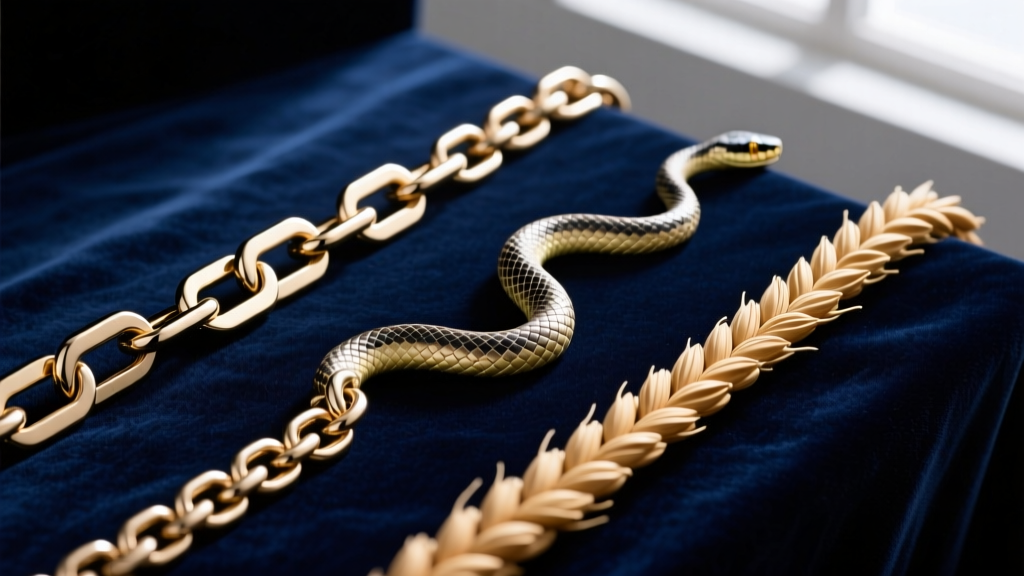
The architecture of the chain link dictates its tangling profile. If your current stomach necklace is a snake chain or a herringbone chain, it is structurally doomed to tangle and kink. These weaves lay flat initially but act like a hinge when bent, trapping body hair and folding in on themselves.
- Box Chains: The optimal choice for stomach necklaces. The square, interlocking links distribute weight evenly and resist rotational twisting.
- Wheat Chains: Excellent for a woven, textured look. The braided links move in a single directional plane, making them highly tangle-resistant, though they can occasionally catch fine body hair.
- Cable Chains: Classic but problematic. The uniform oval links easily slip through one another, creating severe knots if the gauge is too thin.
Problem 2: Snagging on Waistbands, Zippers, and Belts
A stomach necklace rests precisely in the danger zone: the waistline. Protruding links easily catch on denim button-fly closures, leather belt loops, and zipper teeth, leading to stretched links or sudden snapping.
The Fix: Gauge Optimization and Flush Clasps
Many mass-market body chains are manufactured at a delicate 1.0mm or 1.2mm gauge to save on metal costs. For a torso-length piece, this is insufficient. You must upgrade your gauge thickness to withstand the friction of the waistline.
The 1.6mm to 2.0mm Rule: For a stomach necklace meant to be worn daily or layered over clothing, a minimum wire thickness of 1.6mm is required. This provides enough structural integrity to resist bending when caught on a belt loop. Furthermore, inspect the clasp. Traditional spring-ring clasps have a protruding lever that acts as a hook for fabric. Switch to a flush magnetic clasp or a hidden box clasp with a safety figure-eight to eliminate snag points entirely.
Problem 3: Contact Dermatitis and Sweat-Induced Tarnish
The midriff and lower sternum possess a high concentration of eccrine sweat glands. When trapped beneath a chain or against tight clothing, sweat creates a highly corrosive, saline environment. If your stomach necklace leaves a green or black stain on your skin, or triggers an itchy, red rash, you are experiencing galvanic corrosion or nickel-induced contact dermatitis.
According to the American Academy of Dermatology, nickel allergy is one of the most common causes of allergic contact dermatitis, frequently triggered by jewelry resting directly against sweat-prone skin for extended periods.
Material Comparison for Torso Wear
| Material Grade | Nickel Risk | Sweat & Corrosion Resistance | Verdict for Stomach Necklaces |
|---|---|---|---|
| Brass / Copper Base (Plated) | High (as plating wears) | Poor (tarnishes rapidly) | Avoid for direct skin contact |
| 316L Surgical Stainless Steel | Moderate (contains 8-10% nickel) | Good | Acceptable if no known allergy |
| ASTM F136 Implant-Grade Titanium | Zero (100% nickel-free) | Exceptional (immune to sweat) | Best for sensitive skin & daily wear |
| Solid 14k / 18k Gold | Low (depends on alloy mix) | Excellent | Ideal for luxury, requires polishing |
For definitive peace of mind, the Gemological Institute of America (GIA) notes that understanding the specific alloy composition of your gold or steel jewelry is critical, as lower-karat golds and cheaper steels often use nickel or copper as hardening agents, which react aggressively with the acidic pH of human sweat.
Problem 4: Clasp Failure and Tension Breakage
Your torso is not a static cylinder. When you sit down, bend over, or take a deep breath, your ribcage expands and your stomach compresses, altering your torso circumference by up to 3 inches. A fixed-length 36-inch stomach necklace might fit perfectly while standing, but act as a restrictive tourniquet when sitting, placing immense tensile stress on the jump rings and clasp.
The Fix: Dynamic Sizing and Slider Clasps
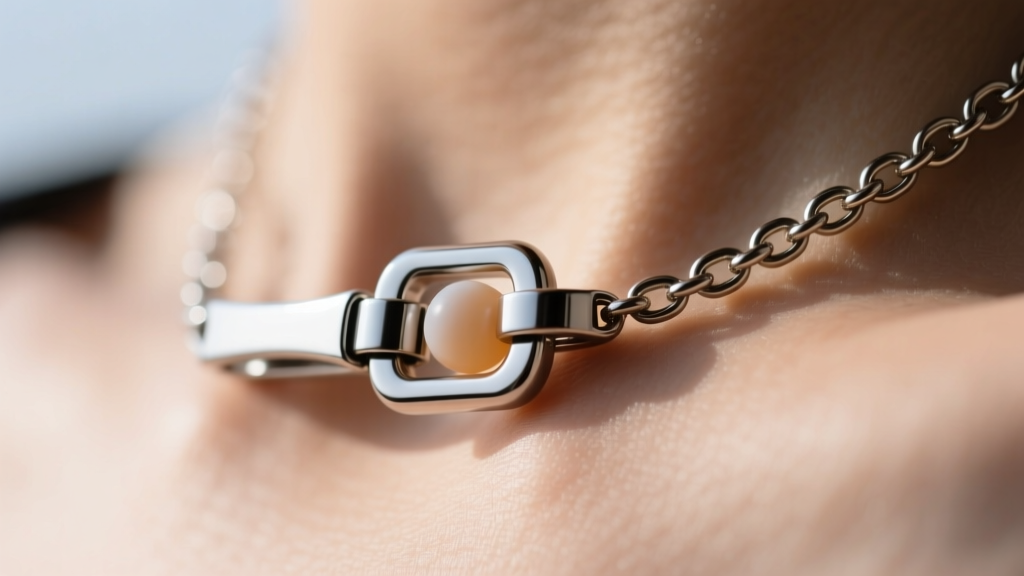
To prevent tension breakage, abandon fixed-length lobster clasps for torso jewelry. Instead, utilize an adjustable silicone-lined slider bead. This mechanism allows the chain to act as a continuous lariat loop. As your body moves and expands, the chain naturally glides through the silicone bead, self-adjusting to your body's kinetic shifts without placing stress on the metal links. If you prefer a fixed clasp, you must incorporate a minimum 3-inch extender chain to accommodate the seated position.
Emergency Protocol: Detangling a Severe Knot
If your delicate cable stomach necklace has already formed a dense knot at the navel drape, do not pull the ends. Pulling tightens the links, causing metal fatigue and permanent deformation.
- Lubricate: Lay the necklace on a flat, hard surface (glass or marble). Apply a generous dusting of talcum powder or cornstarch directly into the knot to reduce metal-on-metal friction.
- Pinpoint: Take two fine sewing needles or safety pins. Insert them into the exact center of the knot.
- Expand: Gently wiggle the needles in opposite directions to loosen the central link. Never pull the outer chain.
- Work Outward: Once the center link is loose, use the needles to push the surrounding links outward until the knot unravels.
The Expert Sizing Framework: The Sit-Stand Test
To ensure your stomach necklace never chokes you or snaps, you must measure using the Sit-Stand Test. Take a soft measuring tape and drape it from the nape of your neck, down your sternum, to your desired resting point on the stomach.
Pro Tip: Measure this length while standing up straight, then sit down in a slouched position and measure again. The difference between these two numbers is your required 'dynamic allowance.' If your standing measurement is 34 inches and your seated measurement is 36.5 inches, your necklace must feature a slider mechanism or an extender chain that accommodates at least 37 inches to ensure lifelong durability.
By treating your stomach necklace not just as an accessory, but as a piece of kinetic engineering, you can eliminate the frustrations of tangling, skin irritation, and breakage, ensuring your torso layers remain flawless in any scenario.


