Beating Heart Necklace Troubleshooting: Fix Stuck Pendants
Is your beating heart necklace stuck or erratic? Learn expert troubleshooting steps for battery, mechanical, and magnetic pendant issues.

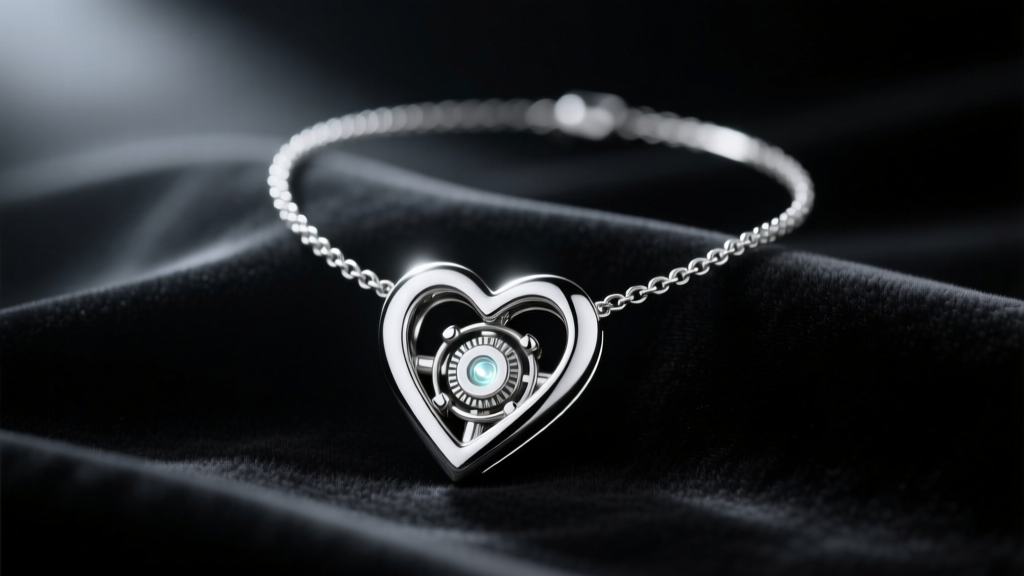
The Engineering Behind the Pulse
Kinetic jewelry has seen a massive resurgence, and the beating heart necklace remains one of the most captivating pieces in the 2026 market. Unlike static pendants, these pieces rely on internal micro-mechanics to simulate a rhythmic pulse, typically oscillating between 60 and 100 RPM to mimic a human heartbeat. However, introducing moving parts to a high-wear environment like the human neckline inevitably leads to mechanical and electrical failures. Whether your pendant relies on a micro-rotor, magnetic resonance, or a wind-up mainspring, troubleshooting requires a horological approach rather than standard jewelry care.
Before attempting any repairs, it is crucial to identify your necklace's specific drive mechanism. Misdiagnosing the power source is the leading cause of irreversible damage to kinetic pendants. According to master jewelers and technical guides from Rio Grande, treating a magnetic-resonance pendant with liquid lubricants will instantly ruin the neodymium components, while ignoring the voltage curve of a micro-motor battery will lead to premature stalling.
Issue 1: The 'Heart' Stops Beating (Power Failures)
The most common complaint with battery-operated beating heart necklaces is a gradual slowing of the pulse before it stops entirely. Most owners assume the battery is dead, but the issue is often a mismatch in battery chemistry.
The Silver Oxide vs. Alkaline Trap
Micro-motors in kinetic pendants require a highly consistent voltage to maintain the specific RPM needed for the heartbeat illusion. Many manufacturers ship these necklaces with cheap alkaline button cells (like the LR44). Alkaline batteries have a sloping discharge curve; as they deplete, their voltage drops steadily. This causes the micro-motor to lose torque, resulting in a sluggish, erratic pulse long before the battery is technically empty.
- The Fix: Replace alkaline cells with Silver Oxide equivalents (such as the 377 or SR626SW). Silver oxide batteries provide a flat discharge curve, delivering a steady 1.55V until the very end of their lifespan, ensuring your pendant's pulse remains strong and consistent.
- Contact Corrosion: If a new silver oxide battery doesn't revive the pendant, inspect the micro-contacts. Skin oils and humidity cause galvanic corrosion on the copper prongs. Dip a cotton swab in 99% isopropyl alcohol and gently scrub the contacts. Never use abrasive files, as you risk stripping the gold or nickel plating off the micro-contacts.
Issue 2: Erratic Pulsing and Mechanical Jamming
If your necklace uses a mechanical wind-up mechanism or a micro-gear system, environmental debris is your primary enemy. The tiny gaps between the pendant's chassis plates easily trap lint, dead skin cells, and cosmetic powders.

The Lubrication Myth
When a mechanical heart pendant begins to grind or skip beats, the instinct is to apply oil. Do not use standard lubricants like WD-40 or household oils. These are too viscous and will attract more dust, creating a sludge that seizes the micro-gears entirely.
Furthermore, many modern kinetic pendants use gears made from POM (polyoxymethylene), a high-performance thermoplastic. POM is inherently self-lubricating. Applying petroleum-based oils to POM gears causes the plastic to swell and warp, permanently destroying the gear train. If lubrication is absolutely necessary for metal-on-metal pivot points, use a synthetic watch oil like Moebius 9010, applied with a 0.1mm oiler pin in microscopic quantities.
Issue 3: Chain Tangling and Torsional Friction
A frequently overlooked issue with beating heart necklaces is severe chain tangling. The oscillating weight of the kinetic pendant creates constant rotational friction against the chain. If you are using a standard cable chain or a delicate rope chain, the pendant's movement will twist the links until they knot tightly against the bail.
Upgrading Your Chain for Kinetic Loads
To solve this, you must pair your beating heart pendant with a chain that offers high torsional rigidity. The Gemological Institute of America (GIA) notes that matching the structural integrity of the chain to the weight and movement of the pendant is essential for longevity.
| Chain Type | Torsional Rigidity | Suitability for Kinetic Pendants |
|---|---|---|
| Cable Chain | Low | Poor (Highly prone to kinetic tangling) |
| Box Chain | High | Excellent (Resists twisting from pendant oscillation) |
| Snake Chain | Very High | Excellent (Smooth surface prevents rotational friction) |
| Wheat Chain | Medium-High | Good (Braided structure limits individual link rotation) |
Water Damage Protocols: What to Do After a Drop
Most beating heart necklaces carry an IPX3 or IPX4 rating, meaning they can withstand light splashes or sweat. They are not waterproof. If your pendant is submerged in water, the micro-motor's copper windings will short out, and internal steel components will flash-rust within hours.
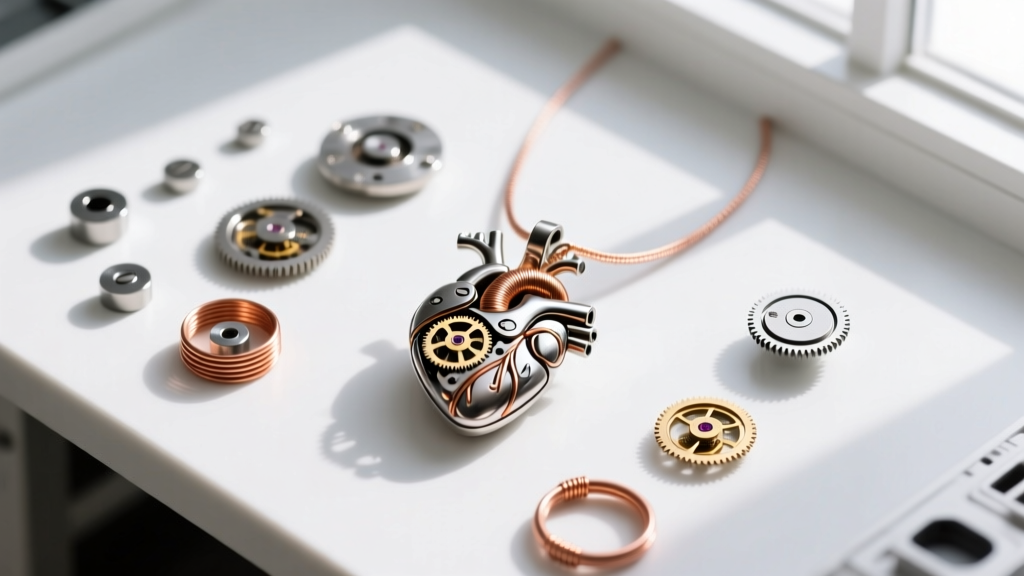
Emergency Drying Steps
- Immediate Removal: Take the necklace off and dry the exterior with a microfiber cloth.
- Open the Chassis: If your pendant has a screw-down backplate (common in higher-end mechanical models), use a precision jeweler's screwdriver to open it. If it is a sealed magnetic-resonance model, do not attempt to pry it open.
- Displace the Water: Submerge the open pendant (or the sealed unit, if unavoidable) in a bath of 99% isopropyl alcohol for 60 seconds. The alcohol will bind with the trapped water and evaporate rapidly.
- Air Dry: Let the piece dry in a low-humidity environment for 24 hours. Avoid using high-heat hair dryers, as excessive heat can demagnetize the internal neodymium (NdFeB) magnets responsible for the kinetic movement.
When to Seek Professional Jewelry Repair
While battery swaps and exterior cleaning are safe for at-home troubleshooting, certain failures require a professional bench jeweler. If you hear a high-pitched whining noise without any corresponding movement, the micro-motor's pinion gear has likely stripped. Similarly, if the pendant has suffered a hard drop and the internal magnetic counterweight has dislodged from its epoxy mount, the piece must be opened in a dust-controlled environment and re-seated using UV-curing jewelry adhesive. Attempting to force a misaligned kinetic mechanism will burn out the micro-motor's copper coils, turning a minor repair into a total replacement.
Final Thoughts on Kinetic Jewelry Care
A beating heart necklace is a marvel of miniature engineering, blending metallurgy with micro-mechanics. By treating it with the same respect you would afford a fine mechanical watch—upgrading to silver oxide batteries, avoiding liquid lubricants on plastic gears, and pairing it with a torsionally rigid box chain—you can ensure your pendant keeps its rhythmic pulse for years to come.


