Slip Knot Necklace Troubleshooting: Fix Stuck & Frayed Cords
Is your adjustable slip knot necklace stuck or fraying? Learn expert troubleshooting tips to fix stiff cords, secure loose ends, and restore smooth sliding.

The Anatomy of a Sliding Knot: Why They Fail
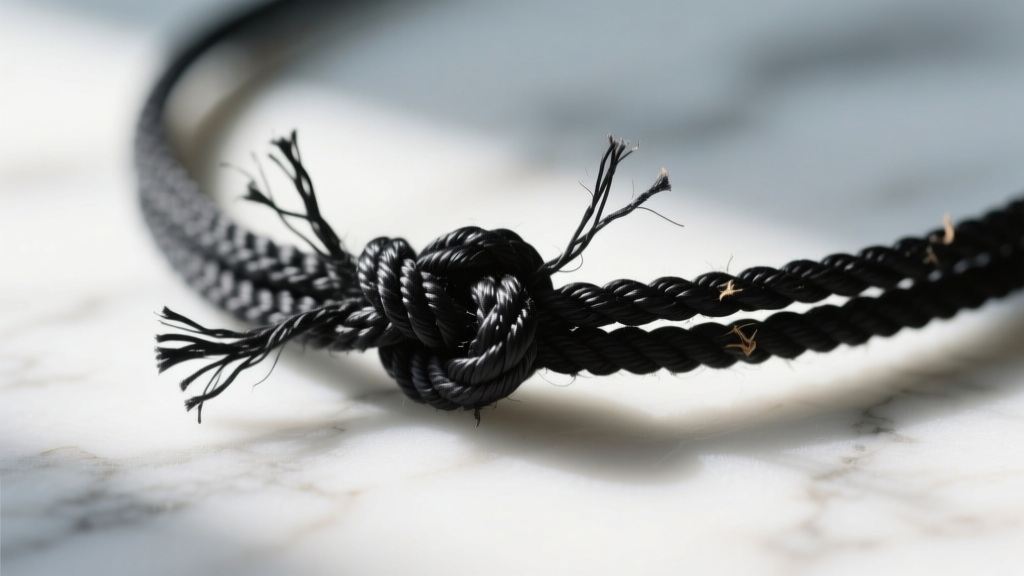
Adjustable jewelry is a staple of modern accessorizing, but few things are as frustrating as a slip knot necklace that refuses to slide. Whether it is a delicate macrame slider or a robust leather square knot, the underlying physics remain the same: the knot relies on a precise coefficient of friction between the core cord and the wrapping cord. When this balance is disrupted, the knot either jams completely or slips open under the weight of the pendant.
To troubleshoot effectively, you must understand the anatomy of the knot. A standard sliding square knot uses a core cord (the part that goes around your neck) and a working cord (the shorter piece that wraps around the core). According to jewelry fabrication standards documented by Fire Mountain Gems, the ideal ratio for a smooth-sliding knot is a 1.0mm core cord paired with a 0.8mm or 1.0mm working cord. If the working cord is too thick (e.g., 1.5mm or 2.0mm), the radial pressure inside the knot increases exponentially, causing a permanent jam. Conversely, if the working cord is too thin (0.5mm), it fails to grip the core, resulting in a necklace that constantly loosens.
Troubleshooting Matrix: Common Slip Knot Issues & Solutions
Before attempting any repairs, diagnose the specific failure mode of your necklace. Use the matrix below to identify the root cause and apply the correct material-specific fix.
| Issue | Root Cause | Material-Specific Fix |
|---|---|---|
| Knot won't slide (Jammed) | Friction spike from dirt, skin oils, or wax buildup | Clean with 91% isopropyl alcohol; apply micro-crystalline wax |
| Knot slides too loose | Working cord is too thin or core cord is compressed | Retie using a thicker working cord (add 0.2mm to gauge) |
| Cord ends are fraying | Improper sealing or mechanical abrasion | Trim and seal with heat (nylon) or G-S Hypo Cement (cotton) |
| Cord snapped inside knot | UV degradation or tensile overload | Extract broken core using a needle; restring with S-Lon nylon |
Deep Dive: Unsticking a Jammed Macrame Slider
When a slip knot necklace jams, the instinctive reaction is to pull the ends harder. This is a critical mistake. Pulling the core cords tightens the wrapping cord's grip, increasing the friction and effectively locking the knot in place.
To unstick a jammed slider, you must relieve the tension. Push the two core ends toward each other to create slack inside the knot. Next, use a blunt jeweler's needle or the flat edge of a pair of tweezers to gently massage and roll the wrapping cord. This breaks the static friction bond.
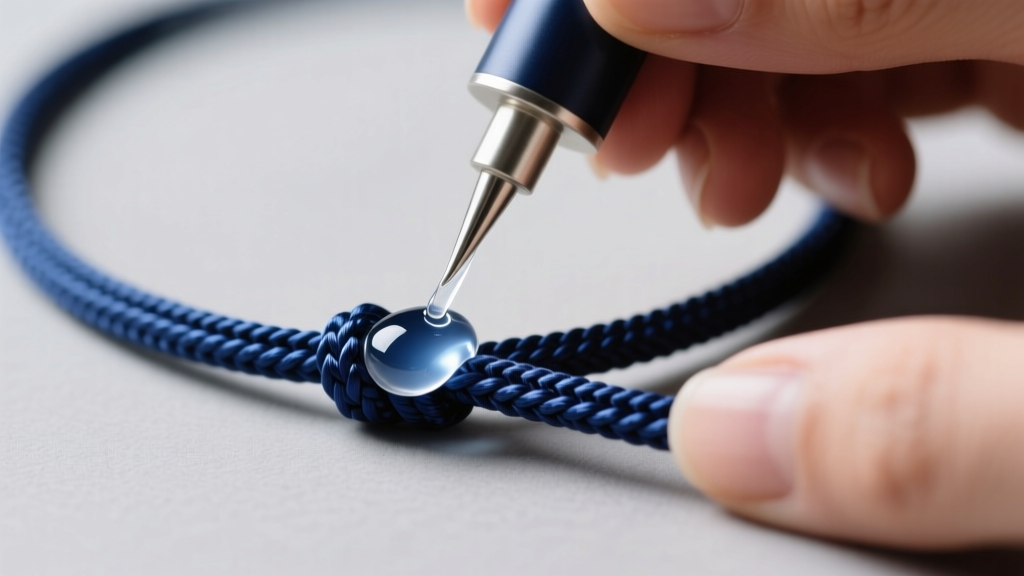
If the knot is jammed due to accumulated skin oils and environmental dirt, apply a single drop of 91% or higher isopropyl alcohol directly to the knot. The alcohol will break down the sebum without degrading most jewelry cords. Once dry, rub a minuscule amount of beeswax or specialized cord wax (like Thread Heaven) onto the core cord to restore a smooth glide. Avoid silicone-based lubricants, as they can degrade certain synthetic nylons over time and attract more dust.
The Heat vs. Glue Debate for Cord Ends
Frayed ends are the most common reason a slip knot necklace fails to slide smoothly, as the unraveled fibers catch inside the tight weave of the slider. The fix depends entirely on your cord's material composition.
- Nylon and Polyester (S-Lon, C-Lon): These thermoplastics melt cleanly. Use a butane lighter and hold the flame exactly one inch away from the cord end. Let the radiant heat melt the fibers into a small bead, then press the bead flat using the metal side of the lighter or a brass stamping tool. Do not let the flame touch the cord directly, as this will cause black soot and weaken the tensile strength.
- Waxed Cotton and Leather: These organic materials will burn, not melt. You must use a flexible jeweler's adhesive. G-S Hypo Cement (retailing around $6 per tube) features a precision needle tip perfect for 1.0mm cords. Avoid cyanoacrylate (Super Glue), as it cures brittle and will crack when the knot flexes, creating sharp edges that will eventually cut the core cord from the inside.
Material Matters: Cord Types and Their Failure Modes
Understanding the material science of your necklace cord is essential for long-term troubleshooting. According to crafting authorities like The Spruce Crafts, different fibers react uniquely to environmental stressors.
Waxed Cotton: While beautiful and eco-friendly, waxed cotton is highly susceptible to moisture. When worn in the shower or exposed to high humidity, the cotton fibers swell. This swelling increases the diameter of the core cord, causing the slip knot to jam. Furthermore, the factory-applied wax coating wears off over time, leading to sudden friction spikes. If your cotton cord necklace frequently sticks after a few months of wear, it needs to be re-waxed or replaced.
Nylon (S-Lon or C-Lon): Nylon offers superior tensile strength and does not absorb water, making it ideal for everyday wear. However, nylon is vulnerable to UV degradation. If left on a sunny dashboard for months, the polymer chains break down, and the cord will snap unexpectedly inside the knot under the weight of a heavy stone pendant.
Leather: Leather cords are notorious for stretching. When a leather cord is pulled tight to adjust the necklace, it elongates and thins out. When the tension is released, it bunches up. This constant deformation ruins the uniform cylindrical shape required for a smooth slip knot, eventually causing permanent jams. For leather, a lark's head or wrap knot is often a better structural choice than a sliding square knot.
Step-by-Step: Retying a Broken Adjustable Slip Knot
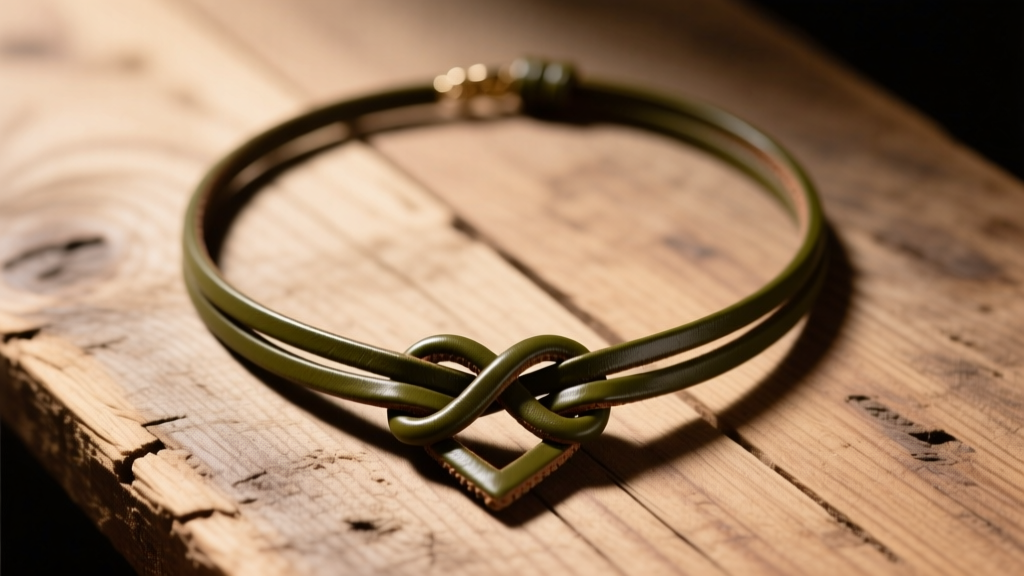
If your cord has snapped or frayed beyond repair, you will need to rethread the pendant and tie a new knot. Professional restringing typically costs between $15 and $30, but you can easily do it at home with the right technique.
- Prep the Cords: Cut a new piece of core cord (approx. 40 inches) and a working cord (approx. 10 inches). Melt or glue one end of the core cord to create a stiff needle-like tip for easy threading through the pendant bail.
- Thread and Align: Pass the core cord through the pendant and overlap the two ends by about 4 inches, laying them parallel to each other.
- The First Wrap: Take the working cord and place it over the parallel core cords, leaving a 2-inch tail. Wrap the long end of the working cord over the core cords and under the tail. Repeat this 4 to 6 times, keeping the wraps tight and perfectly adjacent to one another. Do not let them overlap.
- Lock the Knot: Pass the long end of the working cord through the loop created by the short tail on the opposite side. Pull the tail to snap the loop shut, locking the wraps in place.
- Seal and Trim: Apply your chosen sealing method (heat for nylon, glue for cotton) to the working cord ends, and trim them flush against the knot.
Preventative Maintenance for Longevity
The Gemological Institute of America (GIA) frequently notes that improper storage and care are the leading causes of jewelry degradation. To keep your slip knot necklace functioning perfectly for years, avoid tossing it into a cluttered jewelry box where the cords can become kinked or crushed. Kinks in the core cord create physical bumps that will catch inside the slider.
Instead, hang your adjustable necklaces on a multi-tiered jewelry stand or a simple wall hook. This allows gravity to keep the cords straight and prevents the sliding knot from being compressed. Finally, make it a habit to slide the knot back and forth a few times every month, even when you aren't wearing it. This simple mechanical action redistributes the natural oils and waxes along the cord, preventing the static friction buildup that leads to stubborn jams.


