How to Untangle & Fix a Chunky Gold Coin Necklace
Learn how to untangle, clean, and repair your chunky gold coin necklace. Expert troubleshooting tips for heavy chains, clasps, and coin pendants.

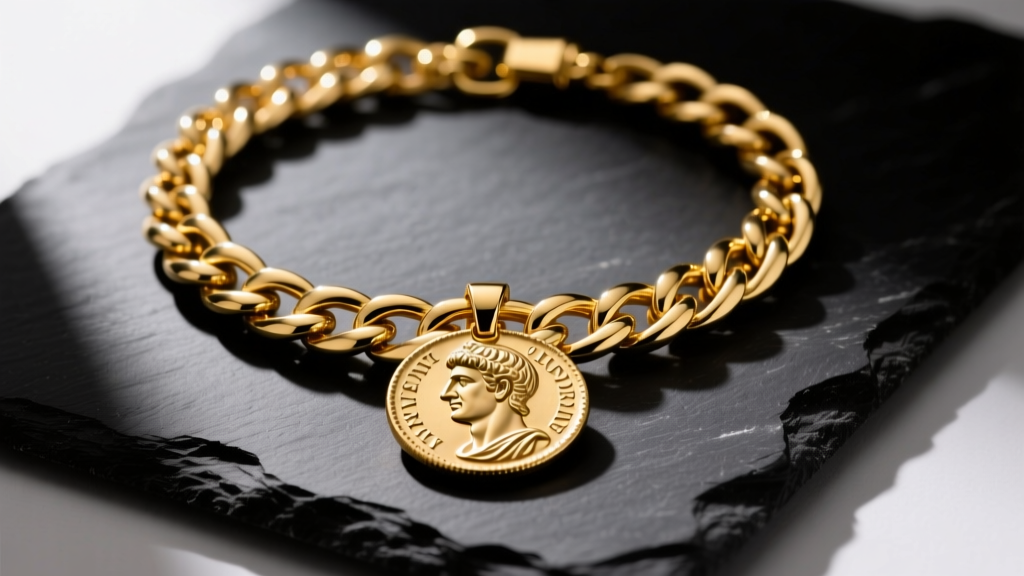
There are few things more frustrating in jewelry care than pulling a beloved piece from your vault, only to find it transformed into a chaotic, metallic bird's nest. In 2026, the maximalist revival has cemented the chunky gold coin necklace as a wardrobe staple, with collectors and stylists alike favoring heavy vintage replicas, thick bezel settings, and substantial chain widths. However, this bold aesthetic comes with a unique set of mechanical challenges. The sheer weight of the coin pendant, combined with the friction of thick chain links, creates a perfect storm for severe tangling, warped jump rings, and stressed clasps.
"A heavy coin pendant doesn't just hang; it acts as a kinetic pendulum. When stored improperly, that kinetic energy translates into complex, multi-layered knots that can permanently stretch delicate gold links if forced."
This comprehensive troubleshooting guide will walk you through the physics of why your necklace tangles, provide a professional bench-jeweler method for untangling it without damaging the gold, and show you how to upgrade your hardware to prevent future failures.
The Physics of the Knot: Why Heavy Coins Tangle
To solve the problem, you must first understand the mechanics of the tangle. A standard lightweight chain tangles due to static friction and random movement. A chunky gold coin necklace, however, tangles due to the pendulum effect and link geometry.
The Pendulum Effect
When a heavy coin (typically weighing between 10 and 25 grams) is attached to a flexible chain, it acts as a plumb bob. If the necklace is tossed into a drawer or jewelry box, the heavy coin swings and pulls the chain through its own loops. The coin essentially acts as a wedge, forcing the chain links to fold back on themselves and lock into place under the pendant's own weight.
Chain Profile and Micro-Friction
The weave of your chain dictates its tangling susceptibility:
- Cuban & Curb Links: These feature flat, interlocking surfaces. They are the least prone to tangling because the flat edges resist folding into tight, acute angles.
- Rope & Franco Chains: These have a high surface-area-to-volume ratio with deep grooves. When a heavy coin forces a rope chain to fold, the grooved links interlock like Velcro, creating severe micro-friction points that are incredibly difficult to separate.
The Dry Lubricant Method for Stubborn Knots
The most common mistake consumers make when trying to fix a tangled chunky gold coin necklace is applying oil (like baby oil or olive oil). While oil reduces friction, it also attracts microscopic dust and dead skin cells, creating an abrasive grinding paste that can dull the gold's polish and lodge itself deep within the chain links.
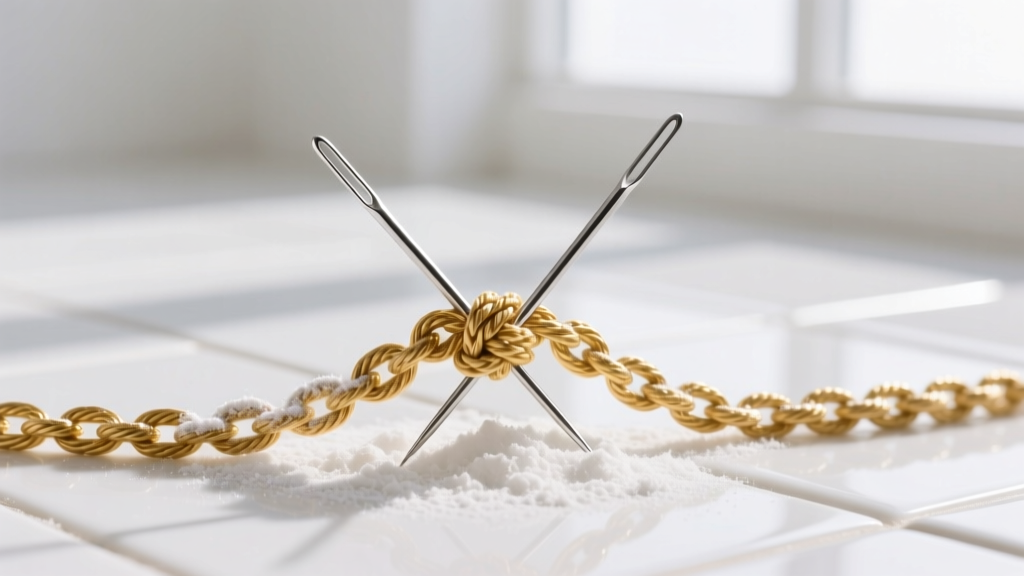
Instead, professional jewelers use a dry lubricant. Here is the step-by-step process to safely untangle your necklace:
- Prepare the Workspace: Place the tangled necklace on a hard, flat, white surface (like a ceramic tile or glass tray). The white background provides contrast, and the hard surface prevents the pins from catching on fabric.
- Apply Dry Lubricant: Generously dust the knot with talc-free baby powder or pure cornstarch. Gently tap the surface to work the powder deep into the links. This eliminates the static friction between the gold surfaces.
- Use the Right Tools: Discard tweezers, which can crush or scratch soft 14k or 18k gold. Instead, use two fine-point sewing needles or specialized jewelry knot-picks.
- Work from the Outside In: Insert the needles into the outermost loops of the knot. Gently wiggle the needles to loosen the tension. Never pull the chain ends; this tightens the core of the knot. Focus on creating a single millimeter of slack, then use the needles to push the links outward.
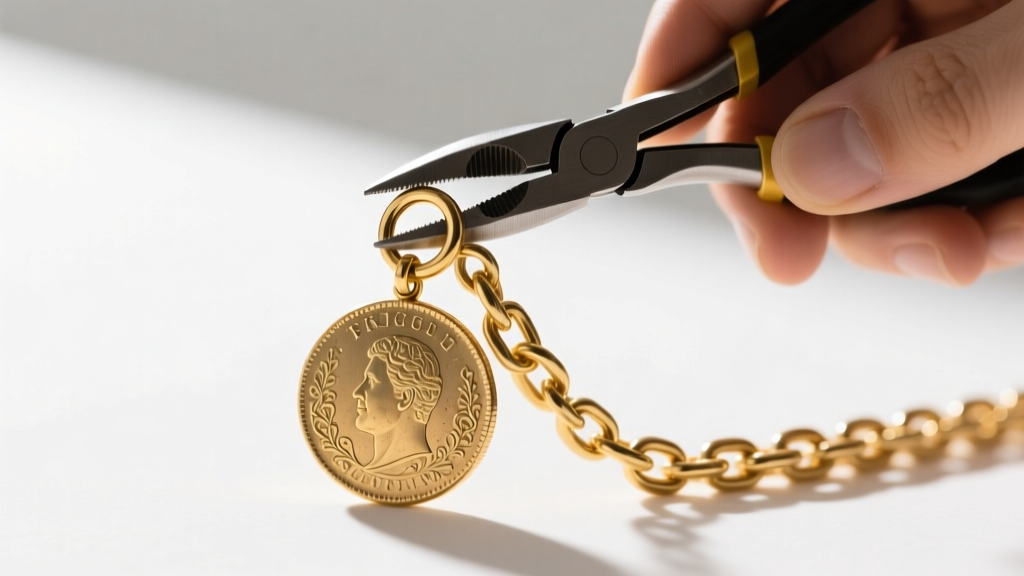
- Remove the Pendant: If the knot is centered around the coin pendant's bail, use a pair of nylon-jawed pliers to gently open the jump ring and remove the coin entirely before continuing. This removes the 'wedge' causing the tension.
Hardware Failure: Troubleshooting Jump Rings and Clasps
The most frequent point of catastrophic failure on a chunky gold coin necklace is the jump ring connecting the coin to the chain. Standard jewelry is often assembled with 20-gauge (0.81mm) open jump rings. When subjected to the daily pendulum stress of a 15-gram coin, a 20-gauge ring will slowly warp open, eventually dropping and losing the pendant.
If your coin pendant has detached or the clasp feels loose, you need to evaluate your hardware tolerances. Refer to the benchmark table below to ensure your necklace is structurally sound:
| Chain Style | Chain Width | Min. Jump Ring Gauge | Max Safe Pendant Weight |
|---|---|---|---|
| Cuban Link | 5mm | 14-Gauge (1.6mm) | 25 grams |
| Rope Chain | 4mm | 16-Gauge (1.3mm) | 15 grams |
| Figaro | 6mm | 12-Gauge (2.0mm) | 35 grams |
| Box Chain | 3mm | 18-Gauge (1.0mm) | 8 grams |
Soldered vs. Open Jump Rings
For any coin pendant exceeding 10 grams, an open jump ring is a liability. You must upgrade to a soldered jump ring. A soldered ring has its seam fused shut with a torch, making it structurally continuous. If you are purchasing a custom piece or having a bench jeweler repair your necklace, explicitly request a 14-gauge or 12-gauge soldered ring for the pendant bail. For the clasp connection, use a heavy-duty lobster clasp with an internal steel spring, rather than a hollow cast gold spring ring, which will easily crush under the weight of a chunky chain.
Cleaning and Restoring the Gold Luster Safely
Once untangled and structurally verified, your necklace likely needs cleaning. The oils from your skin, combined with environmental pollutants, can leave a heavy gold chain looking dull and the coin details obscured.
According to the Gemological Institute of America (GIA), the safest and most effective way to clean gold jewelry at home is using a mild, phosphate-free dish soap and warm water. However, there is a critical caveat regarding the coin itself.
The Numismatic Warning
If your chunky gold coin necklace features a genuine historical coin (such as a Roman Aureus or a vintage British Sovereign) set in a bezel, do not use ultrasonic cleaners or harsh chemical dips. Ultrasonic vibrations can shatter older, brittle metals or loosen the epoxy used in some bezel settings. Furthermore, cleaning the patina off a genuine historical coin can destroy its numismatic value instantly.
Safe Cleaning Protocol:
- Mix a few drops of Dawn dish soap into a bowl of lukewarm water.
- Submerge the necklace for 10 minutes to loosen sebum and lotions.
- Use an extra-soft baby toothbrush to gently agitate the chain links and the textured surface of the coin.
- Rinse thoroughly under a gentle stream of warm water (ensure your drain is plugged!).
- Pat dry with a microfiber cloth. Avoid air-drying, as water spots can temporarily dull high-polish gold.
Preventative Storage: The Straw and Hang Techniques
As noted by Jewelers of America, proper storage is the cornerstone of jewelry longevity. To ensure your chunky gold coin necklace never requires the needle-and-powder method again, implement these two storage rules:
1. The Hanging Method
Never store a heavy coin necklace in a drawer. Gravity and movement will guarantee a tangle. Invest in a jewelry armoire or install small brass hooks inside your closet door. Hang the necklace by its clasp, allowing the heavy coin to pull the chain perfectly taut. The pendulum effect works in your favor here, keeping the links aligned and straight.
2. The Straw Trick for Travel
When traveling, hanging isn't always an option. To prevent the clasp from slipping through the links and creating a knot in your luggage, thread one end of the chain through a plastic drinking straw, and then clasp it. The rigid straw prevents the chain from folding back on itself, while the heavy coin rests securely at the opposite end. For added protection against tarnish and humidity, seal the entire assembly in a Ziploc bag with an anti-tarnish silica strip.
When to See a Professional Bench Jeweler
While most tangles and hardware issues can be solved at home, there are scenarios where professional intervention is mandatory. If you notice any of the following, stop handling the necklace and take it to a certified jeweler:
- Stretched Links: If the links near the clasp appear oval rather than round, the gold has been work-hardened and stretched. A jeweler can compress and reshape these links before they snap.
- Cracked Solder Points: If you see a dark, hairline fracture on a chain link or jump ring, the structural integrity is compromised. Laser welding is required to fuse the gold without melting the surrounding delicate textures.
- Loose Bezels: If the coin rattles or shifts inside its gold frame, the bezel wire has pulled away. A jeweler must use a bezel pusher to burnish the gold tightly back against the coin's edge.
By understanding the unique mechanical stresses that a chunky gold coin necklace endures, you can transition from reactive frustration to proactive care. Armed with the right tools, proper hardware tolerances, and smart storage techniques, your statement piece will remain a flawless, tangle-free staple in your collection for decades to come.


