Multi Strand Silver Necklace: Troubleshooting Tangles & Tarnish
Learn how to untangle, clean, and repair your multi strand silver necklace. Expert troubleshooting tips for tarnish, clasp failure, and uneven draping.

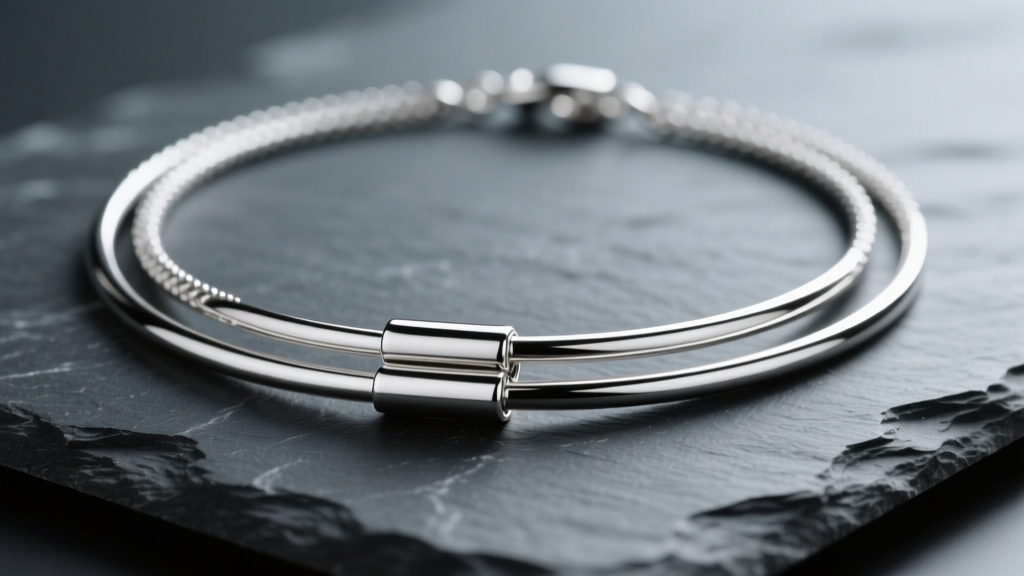
A multi strand silver necklace is a masterpiece of layered elegance, but it is also a notorious magnet for frustration. The very design that makes these pieces so visually striking—multiple delicate chains resting in close proximity—creates a perfect storm for tangling, uneven draping, and accelerated tarnishing. As we move through 2026, jewelers and conservationists continue to emphasize that solving these issues requires an understanding of silver’s metallurgical properties and the physics of chain friction.
If your favorite piece has devolved into a snarled, blackened mess, do not pull it apart with your fingers or dip it in harsh chemicals. This comprehensive troubleshooting guide will walk you through the exact protocols for detangling, repairing hardware failures, and restoring the luster of your sterling silver layers without causing micro-scratches or structural damage.
The Metallurgy of Tangling: Why Sterling Silver Snarls
To troubleshoot a multi strand silver necklace, you must first understand the material. Standard sterling silver is an alloy composed of 92.5% pure silver and 7.5% copper. Pure silver is exceptionally soft, but the addition of copper increases its durability to a Mohs hardness of roughly 2.5 to 3. While this makes it suitable for jewelry, it remains highly susceptible to bending, kinking, and deformation under pressure.
When multiple strands are worn, they undergo constant micro-friction against one another. The copper content also reacts with ambient sulfur and moisture, creating copper sulfide—the black compound we recognize as tarnish. As tarnish builds up in the microscopic crevices of chain links, it increases the surface roughness of the metal. This added friction acts like tiny hooks, causing adjacent strands to catch, braid, and ultimately knot together.
The 5-Step Detangling Protocol for Multi-Strand Chains
Never use steel needles or safety pins to untangle sterling silver. Steel is significantly harder than silver and will leave permanent, deep gouges in your chain links. Instead, follow this professional conservationist approach.
Tools Required
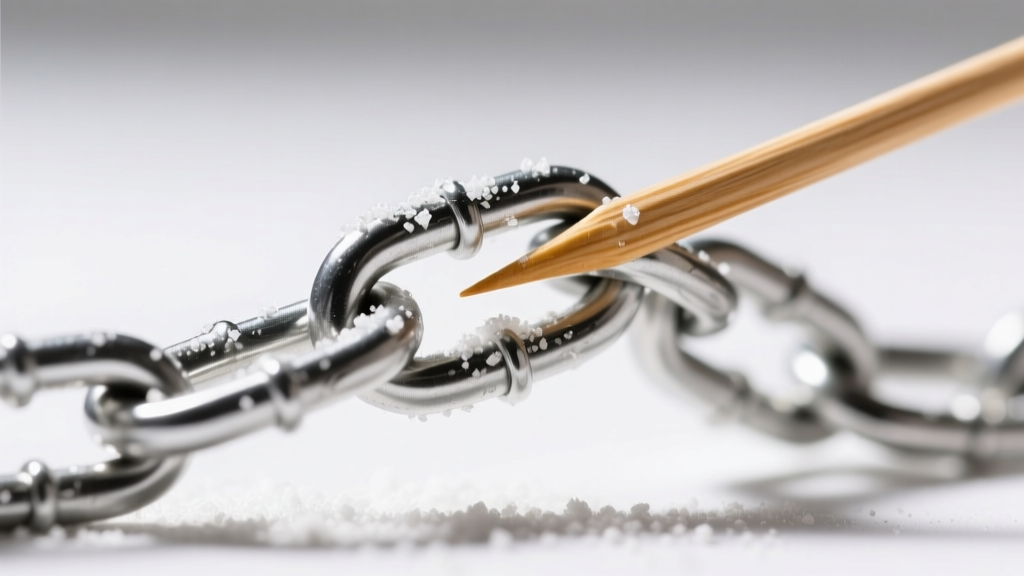
- Bamboo skewers or wooden toothpicks: Hard enough to manipulate links, but softer than silver, preventing scratches.
- Cornstarch or unscented talc-free baby powder: Acts as a dry lubricant to reduce inter-link friction.
- A magnifying visor or jeweler's loupe (10x magnification): Essential for identifying the central knot.
- A flat, dark velvet or microfiber pad: Provides contrast and prevents the necklace from sliding.
Execution Strategy
- Isolate the Knot: Lay the necklace flat. Use your loupe to find the absolute center of the tangle. Do not pull on the outer strands; this tightens the central core.
- Apply Dry Lubricant: Generously dust the knot with cornstarch. Tap the pad to work the powder deep into the links. This eliminates the friction caused by tarnish and skin oils.
- Loosen the Core: Insert two bamboo skewers into the center of the knot and gently push them in opposite directions to create slack.
- Work Outward: Once the core is loose, use a single skewer to hook individual links and pull them through the slack. Always work from the center outward.
- Remove Residue: Once fully detangled, use a soft, clean makeup brush to sweep away the cornstarch before storing or wearing.
Troubleshooting Clasp and Jump Ring Failures
Multi-strand necklaces place disproportionate stress on their findings. A standard single-strand lobster clasp is entirely insufficient for a three- or four-strand piece, often leading to bent jump rings and catastrophic drops. Below is a diagnostic breakdown of common multi-strand clasps and their specific failure modes.
| Clasp Type | Best For | Common Failure Mode | Troubleshooting Fix |
|---|---|---|---|
| Multi-Strand Tube Clasp | 2 to 4 strands, formal wear | Internal magnets weaken; friction sleeves wear down, causing the tube to slide open. | Replace the internal rare-earth magnet or have a jeweler slightly crimp the outer sleeve to restore friction. |
| Slide / Interlocking Clasp | Heavy, chunky chain strands | The interlocking loops bend out of shape under the weight of heavy silver chains. | Have a jeweler solder the loops or upgrade to 18-gauge (1.02mm) heavy-duty sterling findings. |
| Magnetic Multi-Strand Barrel | Lightweight, delicate strands | Jump rings connecting the strands to the barrel snap or pull open due to lateral pulling. | Replace all open jump rings with soldered jump rings to prevent lateral spreading. |
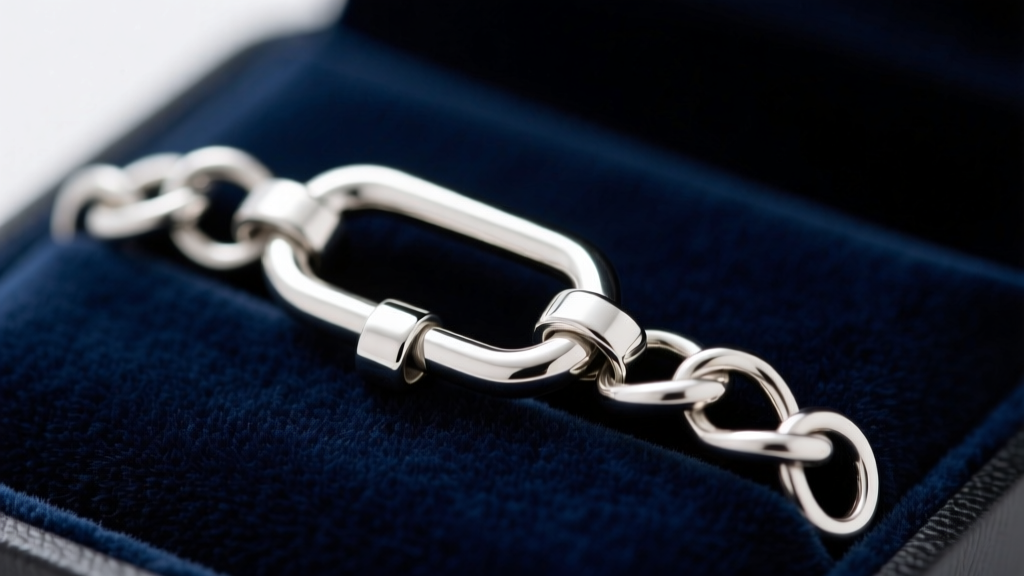
The Jump Ring Rule: The most frequent point of failure in a multi strand silver necklace is the jump ring connecting the chain to the clasp. If your necklace uses 22-gauge (0.64mm) or thinner open jump rings, they will inevitably pull apart. According to structural jewelry standards, multi-strand connections should utilize a minimum of 20-gauge (0.81mm) wire, and ideally, these rings should be laser-soldered shut to eliminate the gap entirely.
Fixing Uneven Draping: The Gradation and Spacer Framework
A common complaint with multi-strand necklaces is that the strands constantly flip over one another, creating a twisted, chaotic look rather than a smooth, cascading drape. This is rarely a defect in the silver itself, but rather a failure in the necklace's geometric design.
To achieve a flawless cascade, jewelers rely on the Gradation Rule. Each successive strand must be exactly 1.5 to 2 inches longer than the strand above it. If the length differential is less than 1 inch, the chains will occupy the same physical space on the collarbone, forcing them to braid themselves. If the differential exceeds 2.5 inches, the neckline will look disjointed and unbalanced.
"If your strands are correctly graduated but still tangling, the issue is a lack of lateral stability. Integrating sterling silver spacer bars at the midpoint of the necklace's curve forces the strands to maintain their parallel geometry, completely eliminating mid-chest flipping." — Bench Jeweler Structural Guidelines
Advanced Tarnish Removal Without Compromising Chain Integrity
When a multi strand silver necklace is heavily tarnished, the instinct is to use commercial silver dip solutions. These chemical baths typically contain thiourea, a toxic compound that strips tarnish instantly but leaves behind a micro-porous surface on the silver. This porous surface actually accelerates future tarnishing and can degrade the structural integrity of delicate chain links over time.
Instead, utilize an electrochemical reduction bath, a method highly recommended by conservation experts at the Victoria and Albert Museum. This process reverses the chemical reaction, converting copper sulfide back into silver without removing any base metal.
The Electrochemical Reduction Protocol
- Line a glass baking dish with heavy-duty aluminum foil, shiny side up.
- Place the tangled-free silver necklace flat on the foil, ensuring the silver touches the aluminum.
- Sprinkle 2 tablespoons of baking soda and 1 tablespoon of non-iodized salt over the piece.
- Pour boiling water into the dish until the necklace is fully submerged. You will immediately see bubbling and smell a faint sulfur (rotten egg) odor.
- Let it sit for 3 to 5 minutes. Use a wooden spoon to gently flip the necklace, ensuring all sides contact the foil.
- Remove with wooden tongs, rinse thoroughly in distilled water, and pat dry with a microfiber cloth.
Note: Never use this method if your multi-strand necklace contains porous gemstones like turquoise, opals, or pearls, as the heat and alkalinity will destroy them. For gem-set pieces, rely on the gentle polishing methods endorsed by The Silver Institute.
Preventative Storage Architecture
Troubleshooting is only half the battle; preventing the tangles and tarnish from returning is where true expertise lies. Multi-strand necklaces should never be tossed into a communal jewelry box. The ambient humidity and sulfur from the air, combined with the friction of other pieces, guarantee a snarled mess.
Implement this three-tier storage framework:
- Barrier Layer: Wrap the necklace in untreated, acid-free Pacific cloth (anti-tarnish flannel). This fabric is embedded with microscopic silver particles that intercept sulfur gases before they reach your jewelry.
- Structural Support: Fasten the clasp securely. Lay the necklace flat in a rigid, velvet-lined tray, or hang it on a specialized multi-hook jewelry stand that keeps the strands separated by at least half an inch.
- Atmospheric Seal: Place the wrapped necklace inside a ziplock bag made of polyethylene. Avoid PVC plastics (often found in cheap vinyl pouches), as PVC off-gasses chemicals that cause rapid, severe silver tarnishing. Drop a 3M anti-tarnish strip into the bag before sealing it to absorb any residual sulfur.
By respecting the metallurgy of sterling silver and applying these precise troubleshooting frameworks, your multi strand silver necklace will remain a flawless, cascading statement piece for decades, entirely free of knots and oxidation.


