Fixing a Tangled Samantha Necklace: Chain Kinks & Clasp Repairs
Learn how to untangle, un-kink, and repair the delicate chain and clasp of your Samantha necklace. Expert troubleshooting for lasting wear.

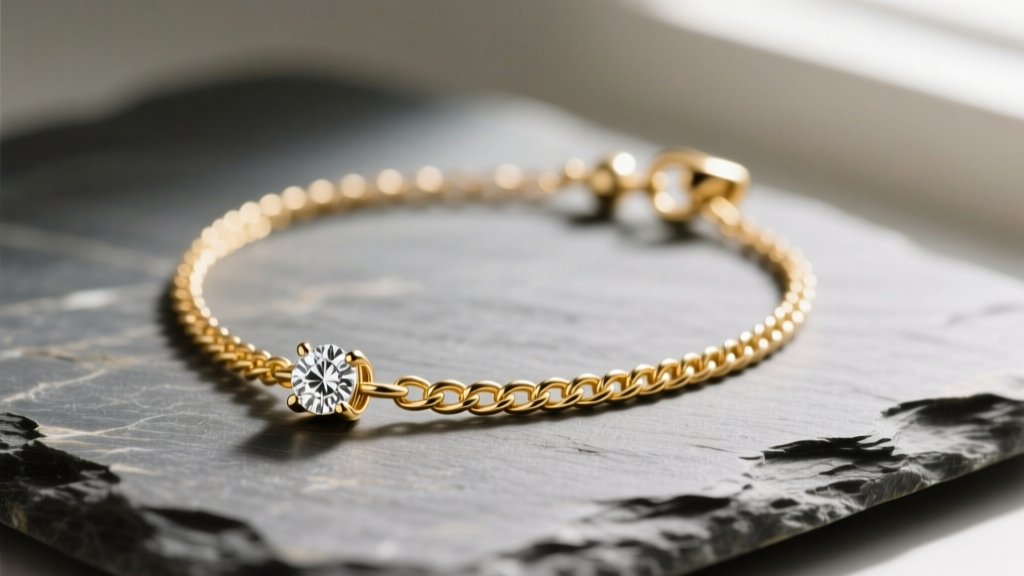
The "Samantha" style necklace—characterized by its ultra-delicate 0.8mm to 1.0mm twisted rope or box chain and a floating solitaire or initial pendant—remains one of the most coveted layering pieces in 2026. However, its elegant, minimalist profile comes with inherent mechanical vulnerabilities. Because the chain links are microscopic and the clasp hardware is lightweight, owners frequently encounter micro-tangling, severe chain kinking, and clasp slippage.
If your favorite piece is currently a knotted mess or refuses to stay fastened, do not throw it in a drawer. This comprehensive troubleshooting guide will walk you through the exact metallurgical and mechanical fixes required to restore your Samantha necklace to its original glory.
The Anatomy of the Samantha Necklace: Why It Fails
To troubleshoot effectively, you must understand the physics of the chain. Most authentic Samantha necklaces are crafted from 14k gold (either solid or vermeil). According to the Gemological Institute of America (GIA), 14k gold has a Vickers hardness of approximately 140. While this provides enough durability for rings, a 0.9mm gauge chain lacks the structural mass to resist torsional stress.
When a Samantha necklace is worn, the twisted links constantly rotate against one another. If the necklace catches on a sweater or hair, the kinetic energy transfers to the weakest point—usually the link adjacent to the clasp or the bail—causing the metal to yield and kink. Furthermore, if your piece is gold vermeil (a 2.5-micron gold plating over sterling silver), the friction at these stress points can wear away the plating, exposing the silver core to rapid oxidation and subsequent brittleness.
Troubleshooting Issue 1: Micro-Tangles and Chain Kinking
The most common complaint is the dreaded "bird's nest" tangle. Because the links are under 1mm, they easily slip through one another when stored loose. Worse, pulling a tangled box or rope chain will cause the links to fold in on themselves, creating a hard kink that compromises the solder joints.
The Baby Powder and Beading Awl Method
Never use your fingers to pull a tight knot; the oils from your skin increase the friction coefficient between the gold links. Instead, use this professional jeweler technique:
- Step 1: Lay the necklace flat on a dark, non-porous surface (like a slate coaster or glass pane).
- Step 2: Generously dust the knot with talc-free baby powder or cornstarch. This acts as a dry lubricant, reducing friction between the microscopic metal links.
- Step 3: Using a 0.3mm beading awl or a fine sewing needle, gently tap the center of the knot to loosen the tension. Do not pry or pull.
- Step 4: Once the core is loose, use two needles to gently wiggle the outer links outward until the chain lays flat.
- Step 5: Clean the chain with a soft microfiber cloth and a few drops of mild dish soap to remove the powder residue.
"A hard kink in a 0.8mm box chain cannot simply be bent back into shape. The crystalline structure of the gold has been stretched. It requires gentle rolling on a steel mandrel to reshape the links without snapping the laser-welded seams." — Master Bench Jeweler
Troubleshooting Issue 2: The Slipping Spring-Ring Clasp
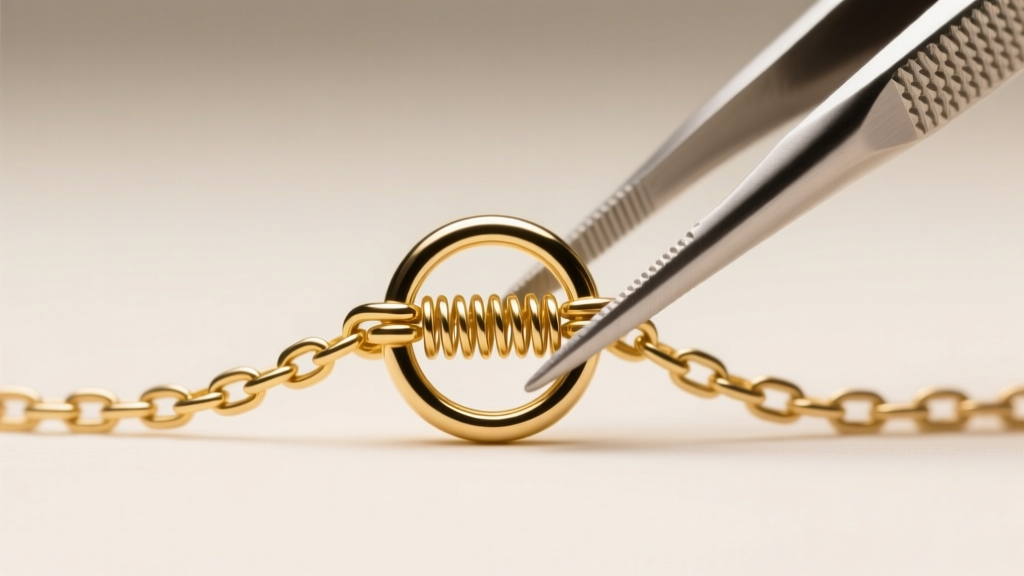
The Samantha necklace typically utilizes a 5mm spring-ring clasp to maintain its delicate aesthetic. However, these clasps are notorious for failing. The internal tension spring loses elasticity over time, or the tiny lever used to open the clasp becomes bent, preventing the ring from closing flush against the jump ring.
Diagnostic Test: Close the clasp and hold it up to a bright light. If you see a gap of even 0.2mm between the closing mechanism and the body of the ring, it will eventually slip off your neck.
The Fix: If the lever is simply bent, you can use precision flat-nose pliers to gently push it back into alignment. However, if the internal spring has lost its tension (the lever feels "mushy" when pressed), the clasp must be replaced. Upgrading to a 6mm lobster clasp or a modern magnetic neodymium clasp will drastically improve security without ruining the visual balance of the necklace.
Troubleshooting Issue 3: Pendant Bail Wear and Chain Sawing
The bail is the loop that connects the pendant to the chain. In many Samantha-style necklaces, the pendant features a rigid "U-bail" or a soldered O-ring. As you move, the chain slides back and forth through this bail. If the interior of the bail has a rough casting seam or is made of a harder metal than the chain, it acts like a microscopic saw, slowly cutting through the 0.9mm chain links.
Inspect the inside of the bail with a jeweler's loupe (10x magnification). If you feel ridges, use a piece of 1200-grit sanding paper folded into a tight point to polish the interior of the bail until it is completely smooth. Applying a microscopic drop of PTFE-based jewelry lubricant to the chain where it meets the bail will also eliminate friction-induced wear.
Chain Gauge vs. Vulnerability Matrix
Understanding your specific chain gauge is critical for predicting failure modes and determining repair feasibility. Refer to the table below to assess your Samantha necklace's risk profile:
| Chain Gauge | Link Style | Primary Failure Mode | Repair Feasibility |
|---|---|---|---|
| 0.8mm | Box / Rope | Severe kinking, link snapping | Difficult (Requires laser welding) |
| 1.0mm | Twisted Cable | Micro-tangling, bail friction wear | Moderate (Standard soldering possible) |
| 1.2mm | Wheat / Franco | Clasp jump-ring deformation | Easy (Standard bench repair) |
Long-Term Maintenance and Storage Hacks

Prevention is vastly superior to repair. The way you store your Samantha necklace dictates its lifespan. Tossing it into a communal jewelry box guarantees tangling and exposure to airborne sulfur, which tarnishes the silver core of vermeil pieces.
- The T-Bar Method: Hang the necklace on an acrylic T-bar stand. Gravity keeps the delicate links aligned and prevents them from folding into one another.
- The Straw Trick for Travel: Thread one end of the chain through a plastic drinking straw and fasten the clasp. The rigid straw prevents the chain from curling and tangling in your suitcase.
- Anti-Tarnish Strips: If storing in a drawer, place a 3M anti-tarnish strip in the compartment. These strips absorb sulfur compounds and can extend the life of gold vermeil plating by up to three years.
When to Seek Professional Jeweler Intervention
While minor tangles and clasp adjustments can be handled at home, certain issues require professional equipment. According to Jewelers of America, attempting to solder a 0.8mm chain with a traditional jeweler's torch will melt the surrounding links due to the high thermal conductivity of gold.
You must take your Samantha necklace to a bench jeweler equipped with a laser welder. Laser welding uses a highly focused beam of light to fuse metal at a microscopic level without transferring heat to the adjacent links. If your chain has snapped, or if the jump ring connecting the clasp has pulled open, laser welding is the only safe method to restore the structural integrity of the delicate gauge. Expect to pay between $35 and $65 for a professional laser-welded chain repair in 2026.


