Arcane Rose Necklace Troubleshooting: Fix Tarnish & Clasps
Fix common arcane rose necklace issues. Learn expert troubleshooting for enamel chips, heavy clasp failure, thorny chain tangles, and pewter tarnish.

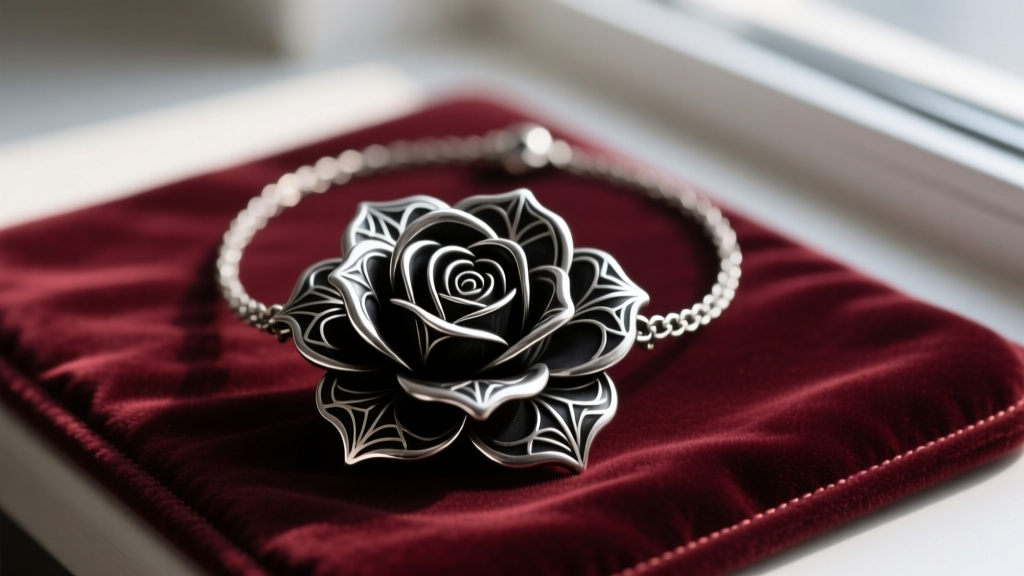
The Anatomy of an Arcane Rose Necklace (And Why It Fails)
The arcane rose necklace has cemented its place as a staple in dark academia, gothic, and fantasy-inspired fashion. As we navigate the jewelry trends of 2026, the demand for intricate, moody, and heavily detailed pendants continues to surge. However, the very design elements that make these pieces captivating—deeply recessed enamel, thorny vine motifs, and antiqued metal finishes—are also their greatest structural vulnerabilities.
Unlike minimalist gold chains or solitaire diamond pendants, an arcane rose necklace is typically a complex assembly of mixed media. The pendant itself often weighs between 35 and 60 grams, cast in Britannia pewter, oxidized 925 sterling silver, or antiqued brass. The "rose" centerpiece is frequently filled with cold enamel (an epoxy-based resin) or vitreous enamel to achieve deep crimson, black, or iridescent hues. When these materials interact with human skin chemistry, environmental humidity, and the mechanical stress of daily wear, specific failure modes emerge. Understanding these failure points is the first step in effective troubleshooting and long-term preservation.
Troubleshooting Guide: 4 Common Arcane Rose Necklace Failures
1. Enamel Chipping and Cracking on Rose Petals
The most frequent aesthetic complaint involves the rose petals. Most mass-market and artisan fantasy jewelry utilizes cold enamel (a two-part epoxy resin tinted with pigments) rather than kiln-fired vitreous enamel. Cold enamel is prone to micro-fractures when exposed to sudden temperature changes or mechanical impacts. Over time, the edges of the petals may begin to flake or turn yellow due to UV exposure.
The Fix: Do not attempt to glue the flakes back with standard cyanoacrylate (Super Glue), as it will cloud the resin and leave a white, frosty residue. Instead, carefully remove loose debris with a wooden toothpick. Clean the recessed area with 90% isopropyl alcohol. For a professional-grade repair, source a jewelry-grade UV-curing resin. Apply a micro-drop using a fine-tipped needle, cure it under a 36W UV lamp for 60 seconds, and gently buff the surface with a microfiber cloth. According to the GIA Gem Encyclopedia, maintaining stable temperatures is crucial for preserving resin-based jewelry components.
2. The "Green Neck" Effect (Base Metal Oxidation)
If your arcane rose necklace leaves a dark green or black smudge on your sternum, you are experiencing a galvanic reaction. This is not necessarily a sign of "fake" jewelry; it is a chemical reaction between the copper or zinc alloys in the base metal and the natural acids in your sweat (which typically has a pH between 5.5 and 6.5). This is especially common with antiqued brass or lower-grade pewter alloys.
The Fix: The internet often suggests painting the back of the pendant with clear nail polish. Do not do this. Nail polish yellows, chips into the intricate crevices of the rose design, and is nearly impossible to remove without damaging the metal's patina. Instead, apply a thin, even coat of microcrystalline wax (such as Renaissance Wax) to the skin-facing side of the pendant. This museum-grade wax creates a breathable, invisible barrier that neutralizes the acid-metal reaction without altering the necklace's dark aesthetic.
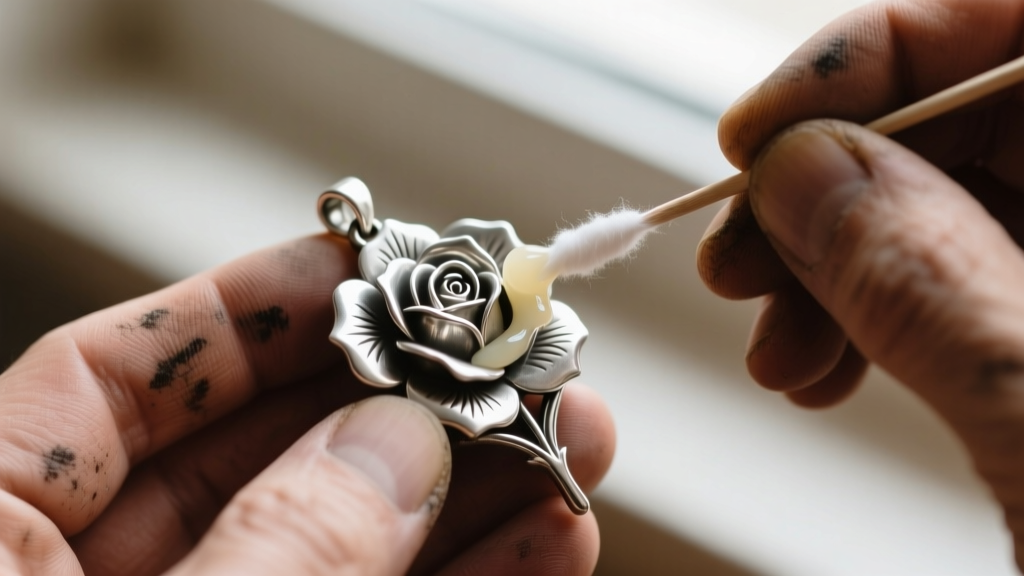
3. Chain Tangling in Thorny Vine Motifs
An arcane rose necklace often features a bail (the loop that holds the chain) that is integrated into a thorny vine or cage design. When paired with standard cable or rolo chains, the protruding thorns act as hooks, constantly catching on the individual links. This leads to frustrating tangles and, eventually, structural stress on the chain links.
The Fix: The issue is a mismatch of chain geometry. Swap the standard cable chain for a 2.5mm snake chain, box chain, or omega chain. These chain styles feature flush, continuous surfaces with no protruding links, allowing them to glide smoothly over the thorny bail without snagging. If you prefer the look of a link chain, upgrade to a thicker 4mm Cuban link chain, as the larger, heavier links are less likely to wedge into the small crevices of the pendant's thorns.
4. Lobster Clasp Fatigue on Heavy Pendants
A standard 5x10mm brass lobster clasp is engineered to hold lightweight pendants (under 15 grams). When subjected to the 40+ gram weight of a solid pewter arcane rose pendant, the tiny internal spring mechanism experiences rapid fatigue. The clasp will eventually fail to close completely, or the lever arm will snap off entirely, resulting in a lost necklace.
The Fix: Upgrade the hardware. Visit a local jeweler or use jewelry pliers to replace the stock clasp with a 12mm or 15mm stainless steel swivel lobster clasp. The swivel mechanism is critical; it prevents the heavy pendant from twisting the chain and applying lateral torque to the clasp's lever. For an even more secure and user-friendly option, install a neodymium magnetic tube clasp rated for at least 5 lbs of tensile strength.
Material-Specific Cleaning Matrix
Cleaning an arcane rose necklace requires a tailored approach. Using the wrong chemical agent can strip the intentional oxidation (the dark black/brown finish in the crevices) or melt the cold enamel. Refer to the matrix below before applying any cleaning solution.
| Material Component | Tarnish / Soil Type | Approved Cleaner | Strictly Avoid |
|---|---|---|---|
| Oxidized 925 Silver | Skin oils, light sulfur tarnish | Soft polishing cloth (untreated side only) | Silver dip liquids, ultrasonic cleaners |
| Britannia Pewter | Dullness, water spots | Mild dish soap, warm water, soft toothbrush | Abrasive pastes, baking soda, bleach |
| Cold Enamel (Resin) | Fingerprint smudges, dust | Damp microfiber cloth, mild glass cleaner | Acetone, alcohol soaking, heat |
| Antiqued Brass | Verdigris (green crust) | Lemon juice and salt paste (rinse immediately) | Ammonia-based cleaners |
Expert Warning: Never place an arcane rose necklace in an ultrasonic cleaner. The high-frequency vibrations will shatter cold enamel, loosen glued-in gemstone accents, and strip the liver-of-sulfur oxidation that gives the piece its gothic depth.
Advanced Restoration: When to Seek a Professional Jeweler
Some structural failures cannot be solved with DIY troubleshooting. The most catastrophic failure point on a heavy fantasy pendant is the bail snapping off at the solder joint. Because many of these pieces are cast in pewter—a low-melting-point alloy that liquefies between 170°C and 230°C—traditional torch soldering is incredibly risky. A jeweler using a standard butane torch can easily melt the intricate rose details in seconds.
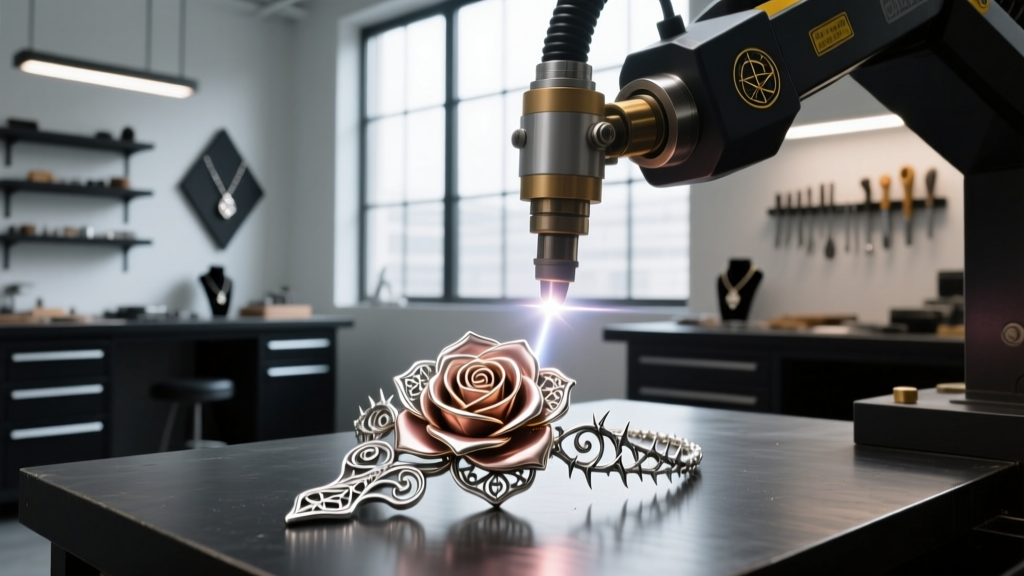
If your bail has detached, you must seek a jeweler equipped with a laser welding machine. Laser welders use highly focused pulses of light to fuse metal in a fraction of a second, generating virtually no ambient heat. This allows the jeweler to reattach a sterling silver or brass bail to a pewter arcane rose pendant without melting the surrounding thorny vines or damaging the enamel. According to Rio Grande Jewelry Supply, laser welding has become the industry standard for repairing heat-sensitive fantasy and mixed-media jewelry.
Preventative Storage Protocols for Dark Fantasy Jewelry
Troubleshooting is reactive; proper storage is proactive. The sulfides in the air are the primary enemy of the antiqued finishes found on arcane rose jewelry. To preserve the structural integrity and aesthetic darkness of your necklace, implement the following storage protocol:
- Isolate the Piece: The thorns and vines of an arcane rose necklace will scratch softer gemstones and tangle with other chains. Store it in its own individual polyethylene zip bag. Avoid PVC plastics, which can trap moisture and emit gases that accelerate tarnishing.
- Control the Microclimate: Drop a 3M anti-tarnish strip and a small silica gel desiccant packet into the polyethylene bag. The strip absorbs airborne sulfides, while the silica gel neutralizes humidity.
- Hang or Lay Flat: If you prefer to display your jewelry, hang the necklace on a padded, velvet-lined hook. Never drape it over a bare metal or wooden jewelry tree, as the friction will wear away the dark patina on the back of the pendant over time.
By understanding the unique material science behind your favorite dark fantasy pieces, you can ensure your arcane rose necklace remains a striking, trouble-free staple in your collection for decades to come.


