Thanos Cross Necklace: Metallurgy, Gemstones & Chain Pairing Guide
Explore the technical details of the Thanos cross necklace, from 925 silver casting methods to Infinity stone gemstone grading and chain weight ratios.

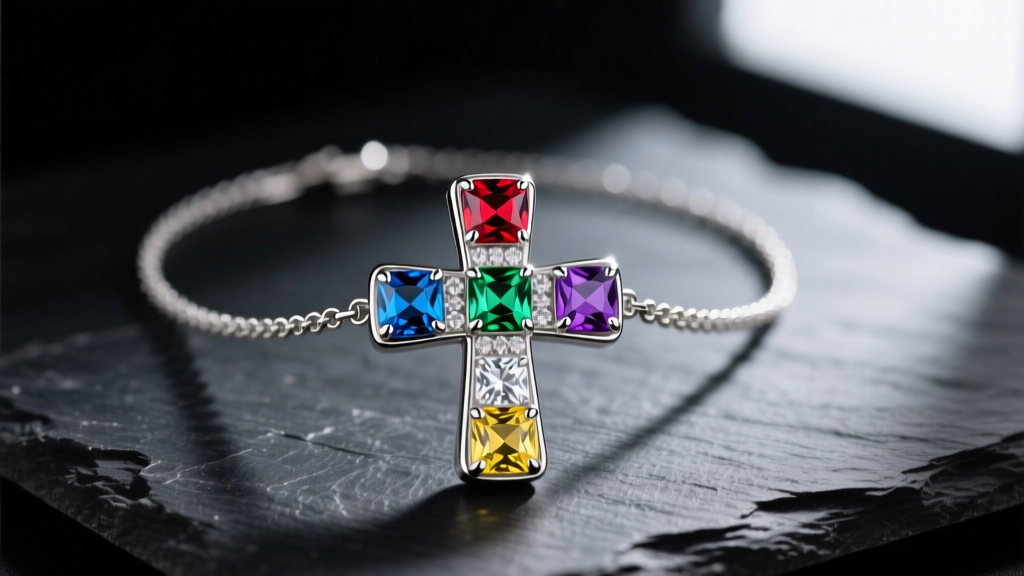
The modern streetwear and bespoke pop-culture jewelry market has seen a massive surge in narrative-driven statement pieces. Among the most technically demanding of these is the Thanos cross necklace—a hybrid design that merges the traditional gothic cross silhouette with the iconic six-stone motif of the Infinity Gauntlet. Creating a piece that is both visually striking and structurally sound requires a deep understanding of jewelry metallurgy, gemstone optics, and kinetic weight distribution. This expert deep dive breaks down the precise manufacturing specifications, material grades, and pairing mechanics required to produce or purchase a high-quality Thanos cross pendant in 2026.
The Anatomy of a Statement Cross: CAD vs. Lost-Wax Casting
A standard Thanos cross necklace pendant typically measures between 45mm and 65mm in height, with a substantial depth of 8mm to 12mm to accommodate the six inset gemstones. At this scale, the casting method dictates the structural integrity of the final piece. Historically, hand-carved wax models were used, but as of 2026, high-resolution DLP (Digital Light Processing) 3D printing resins dominate custom streetwear jewelry manufacturing.
When utilizing CAD/CAM workflows, the sprue design is critical. A pendant weighing over 40 grams requires a thick, Y-shaped sprue base to ensure a continuous flow of molten metal and to prevent shrinkage porosity in the dense lower arms of the cross. According to manufacturing guidelines from the Manufacturing Jewelers and Suppliers of America (MJSA), burnout cycles for modern castable resins must include a prolonged hold at 1350°F (732°C) for at least two hours to completely vaporize the resin residue, preventing carbon inclusions that weaken the silver or gold matrix.
Metallurgy & Material Grades: What Holds the Weight?
The choice of base metal directly impacts the Vickers hardness (HV) and long-term wearability of the pendant. Most commercial-grade Thanos cross necklaces are cast in 925 Sterling Silver. While 925 silver offers excellent detail reproduction, its hardness sits at roughly 65-70 HV in its annealed state. For a heavy, 50-gram pendant, this relative softness means the bail (the loop connecting the pendant to the chain) is highly susceptible to bending and shear stress.
To combat this, expert bench jewelers recommend work-hardening the bail or casting the pendant in a high-tarnish-resistant silver alloy like Argentium (which contains germanium and boasts a higher HV when heat-treated). For luxury-tier commissions, 14k yellow or white gold is the standard. 14k gold alloys typically range from 130 to 150 HV, providing more than double the structural rigidity of sterling silver. If opting for white gold, ensure the piece features a rhodium flash plating of at least 0.15 microns to achieve the bright, modern streetwear aesthetic without rapid wear-through on the high-relief edges of the cross.

The Infinity Stones: Gemstone Simulants vs. Lab-Grown Specs
The defining feature of the Thanos cross necklace is the six colored stones representing the Infinity Stones (Power, Space, Reality, Soul, Time, and Mind). Selecting the right gemstone material requires balancing refractive index (RI), Mohs hardness, and budget. While cheap mass-market pendants use molded glass or low-grade acrylic, serious collectors and custom jewelers rely on precision-cut simulants or lab-grown corundum.
The GIA Gem Encyclopedia notes that optical performance in colored stones is heavily dependent on the cut and the material's natural dispersion. Below is a technical comparison of the most common materials used for the six stone settings in high-end custom crosses.
| Stone Motif | Material Option A (Simulant) | Material Option B (Lab-Grown) | Mohs Hardness | Refractive Index (RI) |
|---|---|---|---|---|
| Power (Purple) | Cubic Zirconia (Amethyst sim) | Lab-Grown Amethyst | 8.5 (CZ) / 7 (Quartz) | 2.15 / 1.54 |
| Space (Blue) | Nano-Simerald / Spinel Sim | Lab-Grown Sapphire | 8.0 / 9.0 | 1.72 / 1.76 |
| Reality (Red) | Synthetic Corundum | Lab-Grown Ruby | 9.0 | 1.76 |
| Soul (Orange) | Coated CZ / Citrine Sim | Lab-Grown Padparadscha | 8.5 / 9.0 | 2.15 / 1.76 |
| Time (Green) | Nano-Emerald Simulant | Lab-Grown Emerald | 7.5 / 7.5 | 1.70 / 1.57 |
| Mind (Yellow) | Yellow CZ | Lab-Grown Yellow Sapphire | 8.5 / 9.0 | 2.15 / 1.76 |
Expert Note: Avoid fracture-filled lab emeralds for the 'Time' stone if you plan to clean the necklace in an ultrasonic cleaner, as the high-frequency vibrations will shatter the filler and ruin the stone's optical clarity.
Chain Pairing: Weight Ratios and Clasp Mechanics
A 45mm Thanos cross pendant cast in solid 925 silver will weigh between 35 and 55 grams. Pairing this with an inadequate chain is the most common point of failure in streetwear jewelry. The golden rule of pendant-to-chain weight ratios is 1:3. This means a 50-gram pendant requires a chain that weighs a minimum of 150 grams to properly balance the kinetic load and prevent the chain from snapping or warping at the clasp.
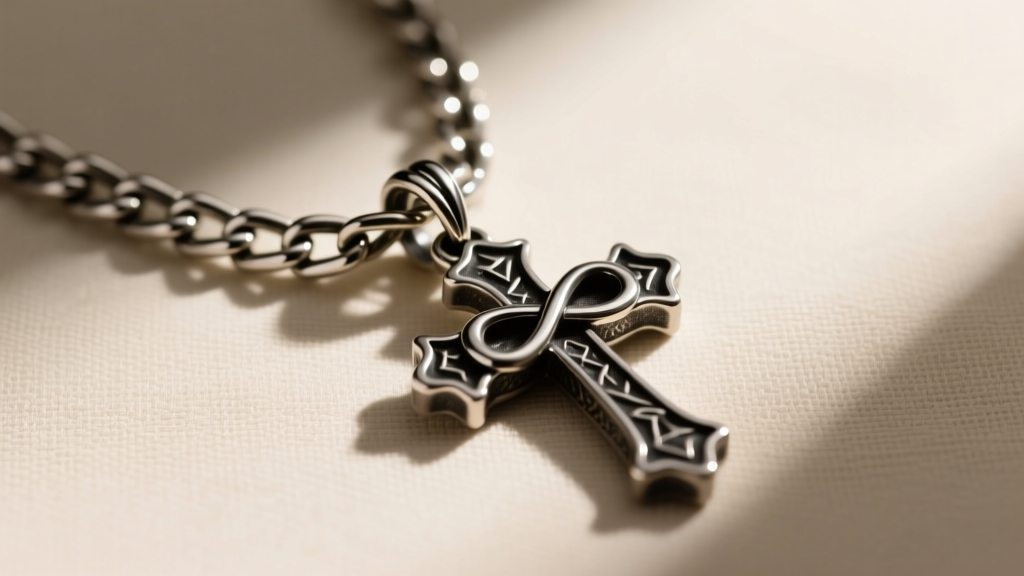
- Chain Style: A 5mm to 8mm solid Cuban link or Figaro chain provides the necessary visual weight and tensile strength. Avoid hollow-rope or herringbone chains, which will kink and crush under the dynamic load of a heavy cross.
- Bail Engineering: Do not use a standard soldered loop bail. The Thanos cross requires a 5mm or 6mm 'hidden bail' (a tube soldered to the back of the pendant) with reinforced shoulders. This distributes the shear stress across a wider surface area of the silver backing.
- Clasp Mechanics: A standard lobster clasp is insufficient for a 150g+ chain. You must utilize a heavy-duty box clasp with a secondary safety figure-8 latch, or a custom-machined screw-lock barrel clasp to ensure the piece remains secure during active wear.
Maintenance & Tarnish Prevention for Heavy Pendants
Heavy statement pieces like the Thanos cross necklace sit flush against the sternum, an area prone to high perspiration and body heat. This environment accelerates the oxidation of copper alloys present in both sterling silver and 14k gold.
Expert Troubleshooting: Bail Wear and Prong Snagging
Over time, the friction between the steel or gold chain and the inside of the pendant's bail will create a wear groove. Inspect the bail's interior every six months. If the metal thickness drops below 1mm, the piece must be taken to a bench jeweler for a laser-welded reinforcement patch. Additionally, because the six Infinity stones are typically set in shared-prong or bezel settings to maximize surface area, snagging on heavy cotton streetwear hoodies can lift the prongs. Use a jeweler's loupe to check that the prong tips remain flush against the gemstone girdles, and never use ultrasonic cleaners on pieces featuring nano-simulants or epoxy-set stones, as the heat and vibration will compromise the adhesive bonds.
'A narrative pendant is only as good as its structural engineering. The Thanos cross is a masterclass in balancing pop-culture aesthetics with the unforgiving physics of heavy metallurgy.' — Master Bench Jeweler, 2026 Streetwear Symposium.


