How to Research What the Necklace Is About: Expert Guide
Learn how to research what the necklace is about with our expert step-by-step guide to decoding hallmarks, clasps, and vintage jewelry history.

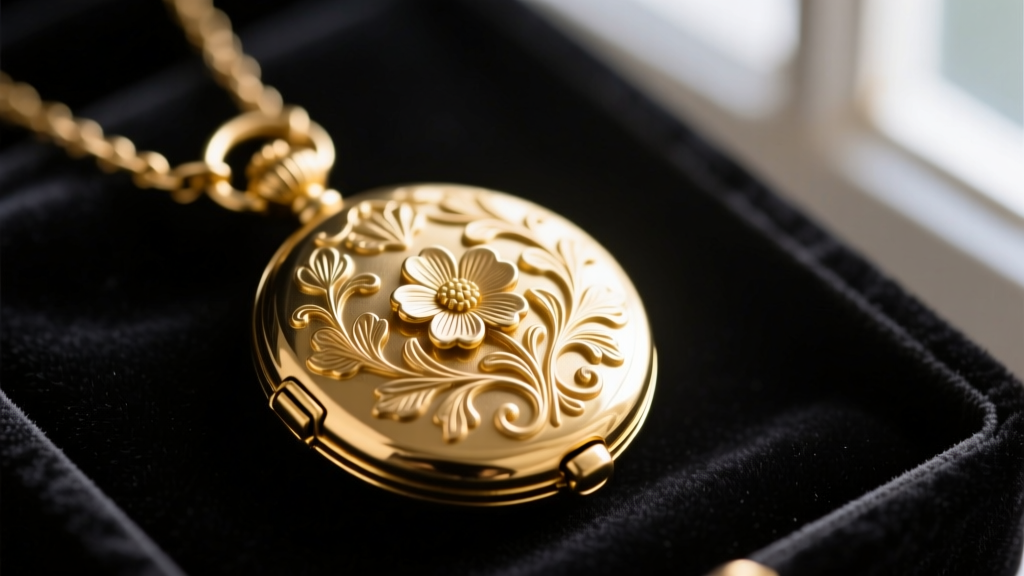
When you inherit a vintage piece, find a unique treasure at an estate sale, or spot a mysterious pendant in an archive, the immediate question is often: what is the necklace about? Jewelry is rarely just decorative; it is a wearable historical document. Whether it is a Victorian mourning piece, an Art Deco geometric statement, or a mid-century modernist sculpture, every necklace holds a coded narrative waiting to be deciphered.
As a jewelry historian and appraiser, I approach every unknown piece as a forensic investigation. Answering the question of what a necklace is truly about requires moving past surface-level aesthetics and examining the metallurgy, mechanics, and cultural motifs of the era. Below is a comprehensive, step-by-step guide to decoding the hidden history, provenance, and material truth of any necklace.
Step 1: Interrogate the Hallmarks and Maker's Marks
The fastest way to anchor a necklace in time and geography is by examining its stamps. Using a 10x triplet jeweler's loupe, inspect the clasp, the jump rings, and the back of the pendant bail. Hallmarks are legally mandated in many countries and act as a fingerprint of the piece's origin.
Decoding International Assay Marks
Different nations utilize entirely different hallmarking systems. Understanding these is crucial when you are trying to figure out what the necklace is about regarding its geographical roots and metal purity.
| Country | Common Mark | Meaning & Era |
|---|---|---|
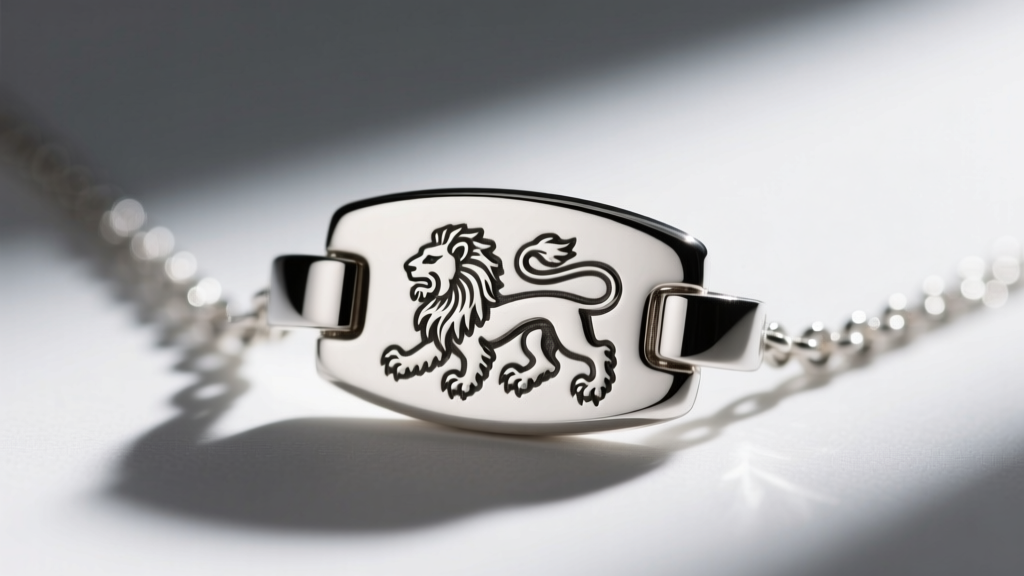
| United Kingdom | Lion Passant | Sterling Silver (925), used since 1544 |
| France | Eagle's Head | Minimum 18k Gold, introduced in 1838 |
| France | Boar's Head | Silver (800+), used from 1838 to 1962 |
| Italy | Numbers + Province | e.g., '750' with a star and province code |
For a deep dive into British standards, the British Hallmarking Council provides extensive historical archives on how assay office marks (like the London leopard's head or the Birmingham anchor) evolved over centuries. If your necklace lacks hallmarks entirely, it may be American (which historically relied on maker's marks rather than government assay stamps) or it may be a later reproduction.
Step 2: Analyze the Clasp Mechanics and Findings
If hallmarks tell you where a necklace was made, the clasp tells you when it was made. Jewelry findings—the functional components like clasps, hinges, and jump rings—evolved rapidly alongside industrial manufacturing. When asking what the necklace is about chronologically, the clasp is your most reliable timeline indicator.
- The C-Clasp (Pre-1900s): A simple 'C' shaped wire catch with no locking mechanism. If your necklace features a basic C-clasp and a tube hinge, it is highly likely a 19th-century piece.
- The Early Safety Clasp (1900–1920s): This features a C-clasp with a small rolling wire safety catch. It bridges the gap between antique and vintage.
- The Spring Ring (1920s–1970s): A circular clasp with a spring-loaded mechanism. Early versions were often larger and lacked the tiny lever found on modern iterations.
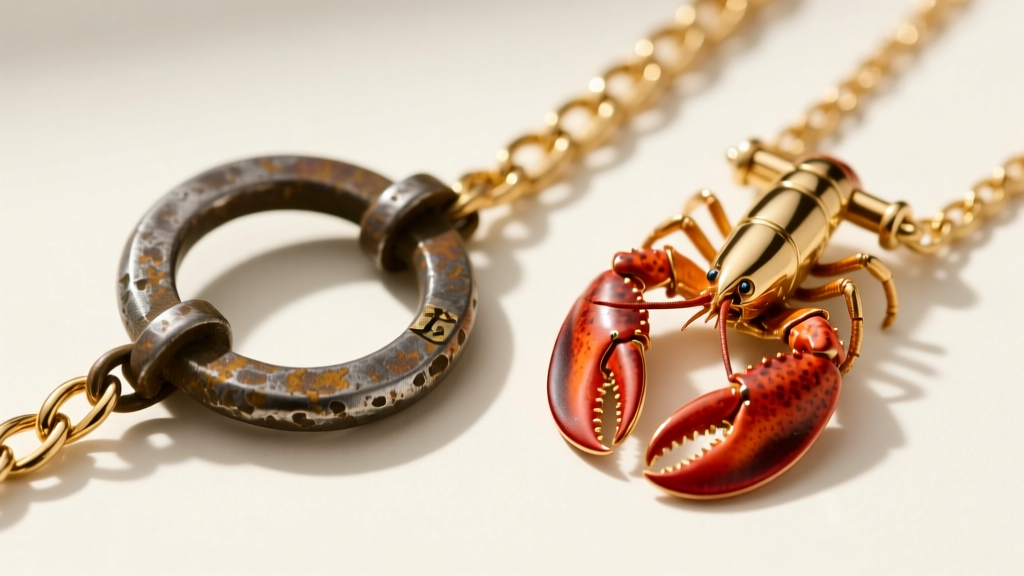
- The Lobster Claw (Post-1970s): If your necklace has a modern lobster clasp, but the pendant looks Victorian, you are likely looking at a piece that has been retrofitted with modern findings for security.
According to the Lang Antique Jewelry University, examining the solder points on jump rings is equally vital. Open, unsoldered jump rings indicate modern mass production or repair, while perfectly soldered, closed rings suggest high-quality historical craftsmanship.
Step 3: Identify the Materials Through Non-Destructive Testing
Understanding the material composition is essential to answering what the necklace is about culturally. Nowhere is this more apparent than in Victorian mourning jewelry or Art Deco plastics.
Mourning Materials: Jet vs. Vulcanite vs. French Jet
In the mid-to-late 19th century, Queen Victoria's prolonged mourning popularized dark, somber jewelry. However, not all black necklaces are created equal:
Pro Tip: True Whitby Jet is fossilized wood and feels incredibly light and warm to the touch. Vulcanite (vulcanized rubber) smells faintly of sulfur when rubbed vigorously. 'French Jet' is actually black glass, which feels heavy, cold, and will clink against your teeth if tapped gently.
Art Deco Plastics: Bakelite vs. Lucite
If your necklace features chunky, carved geometric beads from the 1920s or 30s, you must determine if it is Bakelite (phenolic resin) or later Lucite (acrylic). To test Bakelite without damaging the piece, apply a tiny drop of Simichrome metal polish to a cotton swab and rub an inconspicuous area. If the swab turns yellow, you have genuine Bakelite. Never use the 'hot pin' test, as it will permanently melt the plastic and ruin the historical integrity of the necklace.
Step 4: Decode the Motifs and Cultural Symbolism
Once the era and materials are established, you can finally interpret the artistic motifs. The visual language of jewelry is deeply tied to the socio-political climate of its time.
Victorian Sentimentalism (1837–1901)
Victorian necklaces were heavily encoded with the 'Language of Flowers' (floriography). A pendant featuring ivy symbolizes fidelity and eternity, while a forget-me-not motif signifies true love and remembrance. Furthermore, hairwork jewelry—necklaces woven from the hair of a loved one—was a deeply intimate practice. If you are examining a woven hair necklace, it is fundamentally about grief, memory, and physical connection to the absent or deceased.
Art Nouveau Rebellion (1890–1910)
Art Nouveau necklaces rejected the rigid symmetry of the Victorian era. They featured sinuous, whiplash curves, enameling techniques like plique-à-jour (stained glass effect), and motifs of dragonflies, serpents, and ethereal female figures. A necklace from this period is about the rebellion against industrialization and a return to organic, untamed nature.
Art Deco Modernism (1920–1939)
Following World War I, jewelry reflected the machine age, Cubism, and the discovery of King Tutankhamun's tomb. Deco necklaces feature stark geometric contrasts, calibre-cut sapphires, rock crystal, and black onyx. The narrative here is about female liberation (the flapper era), speed, and global archaeological fascination.
Step 5: Trace the Provenance and Archive the Findings
The final step in your investigation is contextualizing the piece within broader historical archives. If you have identified a maker's mark, cross-reference it with specialized databases. The Victoria and Albert Museum offers extensive digital catalogs of historical jewelry that can help you match obscure maker's marks or regional styles.
Document your findings by photographing the necklace under natural daylight, taking macro shots of the hallmarks, and recording the exact weight in grams. By systematically working through metallurgy, mechanics, materials, and motifs, you transform a simple accessory into a documented artifact. The next time someone asks you what the necklace is about, you will not just have an opinion—you will have the historical evidence to prove it.


