Y Chain Necklace Care: Cleaning & Maintenance Guide
Master the care of your y chain necklace. Learn expert cleaning methods, sliding bead fixes, and storage hacks to prevent tangling and breakage.

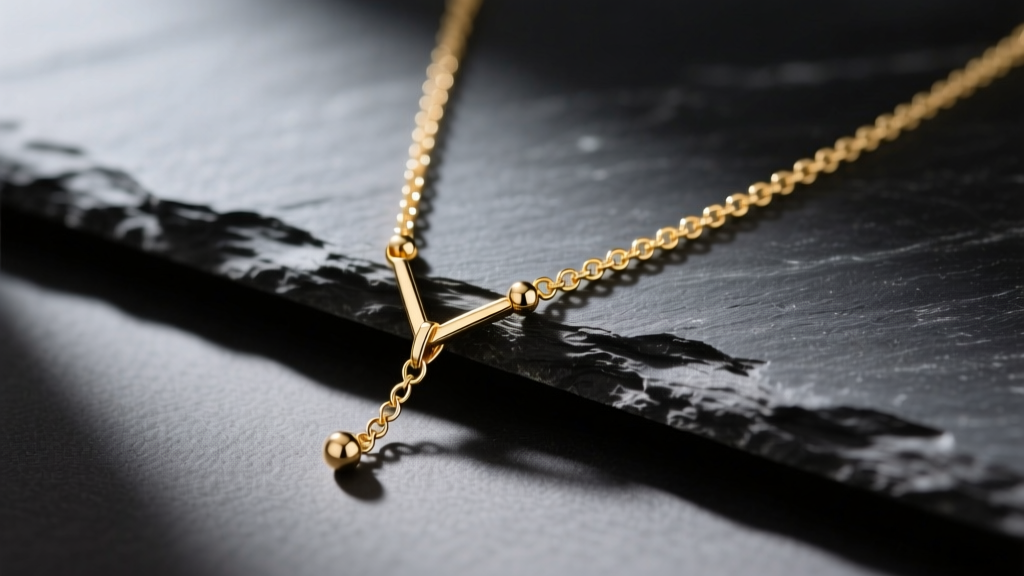
The y chain necklace—often referred to as a lariat or Y-necklace—remains a staple in both minimalist and layered jewelry aesthetics. However, its unique structural design presents specific maintenance challenges that standard necklaces simply do not face. As we navigate the jewelry trends of 2026, the market has seen a massive surge in ultra-fine, micro-link Y chains (often measuring 0.5mm or thinner). While visually stunning, these delicate gauges require meticulous care to prevent structural failure, severe tangling, and plating degradation.
Whether you own a $65 gold vermeil piece or a $600 solid 14k gold lariat, understanding the mechanics of your y chain necklace is the first step toward preserving its lifespan. This comprehensive guide covers metallurgy-specific cleaning protocols, sliding bead restoration, and advanced storage techniques to keep your lariat looking pristine.
The Unique Anatomy of a Y Chain Necklace
Unlike a standard continuous loop, a y chain necklace features a primary collarbone chain (typically 16 to 18 inches) and a secondary drop chain (usually 2 to 6 inches) that descends from a central junction. This junction is the most critical point of the entire piece and generally takes one of two forms:
- The Soldered T-Ring: A tiny metal ring is soldered to the main chain, and the drop chain passes through it. This is common in solid gold pieces priced between $250 and $600.
- The Sliding Bead (Friction Clasp): A hollow metal bead lined with a silicone or textured metal insert allows the wearer to adjust the drop length. This is highly prevalent in sterling silver and vermeil designs ($45–$150 price range).
Because the drop chain acts as a pendulum against your sternum, it is subjected to constant friction, skin oils, and environmental pollutants. According to the Gemological Institute of America (GIA), localized friction accelerates the breakdown of porous metal alloys and plated surfaces, making the drop chain the first area to show wear.
Step-by-Step Cleaning Protocols by Metal Type
Using the wrong chemical agent on a y chain necklace can cause irreversible damage, particularly to the sliding mechanisms and delicate solder points. Below is a breakdown of how to clean your piece based on its specific material grade.
| Metal Type | Recommended Solution | Ultrasonic Safe? | Specific Warnings |
|---|---|---|---|
| 925 Sterling Silver | Warm water, phosphate-free dish soap, microfiber cloth | Yes (if no oxidized details) | Avoid silver dip liquids; they strip anti-tarnish rhodium plating often found on modern chains. |
| Gold Vermeil (2.5μm over Silver) | Mild soapy water, soft baby toothbrush | No | Never use polishing cloths on vermeil; the mild abrasives will strip the gold layer off the drop chain. |
| Solid 14k / 18k Gold | Ammonia-based jewelry cleaner or mild soap | Yes | Check the sliding bead insert before ultrasonic cleaning; high-frequency vibrations can dislodge silicone grips. |
| Platinum | Commercial platinum cleaner or mild soap | Yes | Extremely durable, but micro-scratches on the drop chain will develop a natural patina over time. |
The Proper Washing Technique
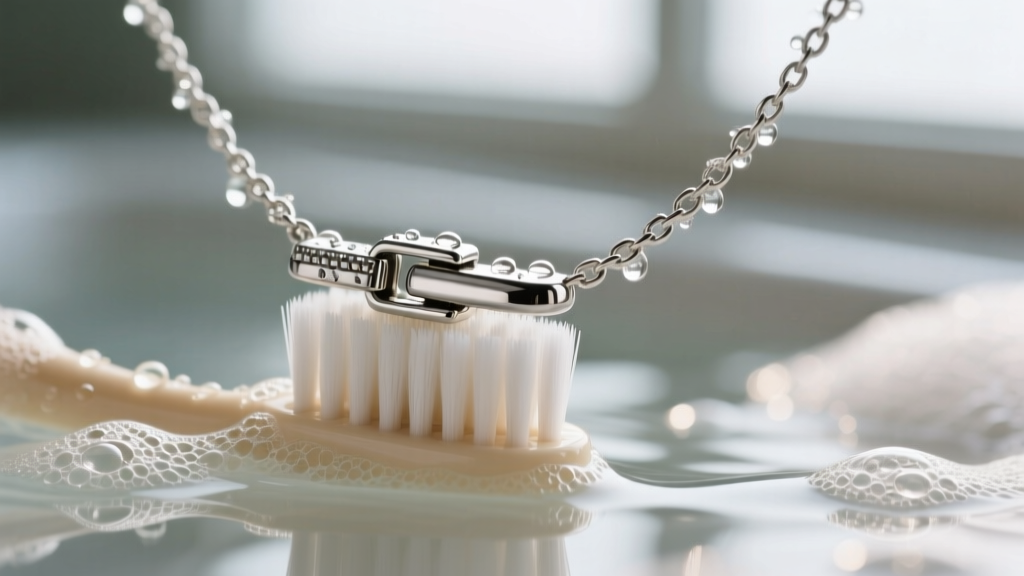
When washing your y chain necklace, always plug the drain or use a silicone basin. Lay the necklace flat on a clean microfiber towel. Dip a soft-bristled baby toothbrush into your cleaning solution and gently agitate the links, paying special attention to the junction where the drop chain meets the main chain. Rinse with distilled water (to avoid hard water spots) and pat dry. Never pull or stretch the wet chain, as water acts as a temporary lubricant that can mask the snapping of a weak solder point.
Fixing the Sliding Bead: Restoring Tension in Adjustable Y Necklaces
The most common complaint with adjustable y chain necklaces is the sliding bead losing its grip, causing the drop chain to continuously slide down and loosen throughout the day. This is rarely a mechanical defect; it is almost always a buildup issue.
Inside the sliding bead is a tiny friction insert (usually medical-grade silicone or a textured metal spring). Over time, body lotions, dead skin cells, and sebum pack into the microscopic crevices of this insert, creating a slick surface that eliminates friction.
How to Restore the Grip
- Identify the Insert: Look closely inside the bead. If you see a dark grey or black ring, it is silicone. If it is entirely gold or silver, it is a metal-on-metal tension spring.
- For Silicone Inserts: Dip a cotton swab in warm, soapy water and gently swab the inside of the bead. Never use isopropyl alcohol or harsh chemicals on silicone, as this will dry out the material, causing it to crack and fail completely.
- For Metal Tension Springs: Use a drop of 90% isopropyl alcohol on a cotton swab to dissolve the sebum buildup. Allow it to evaporate completely (about 60 seconds) before sliding it along the chain.
- Chain Lubrication Warning: Never apply jewelry polish or oil to the section of the chain that passes through the bead. The chain must remain entirely dry and free of residue for the friction clasp to work.
The "Straw Method" for Tangle-Free Storage
Tangling is the nemesis of the y chain necklace. When tossed into a jewelry box, the drop chain naturally wraps around the main collarbone chain, creating complex knots that can permanently stretch micro-links (especially those under 0.8mm in gauge).
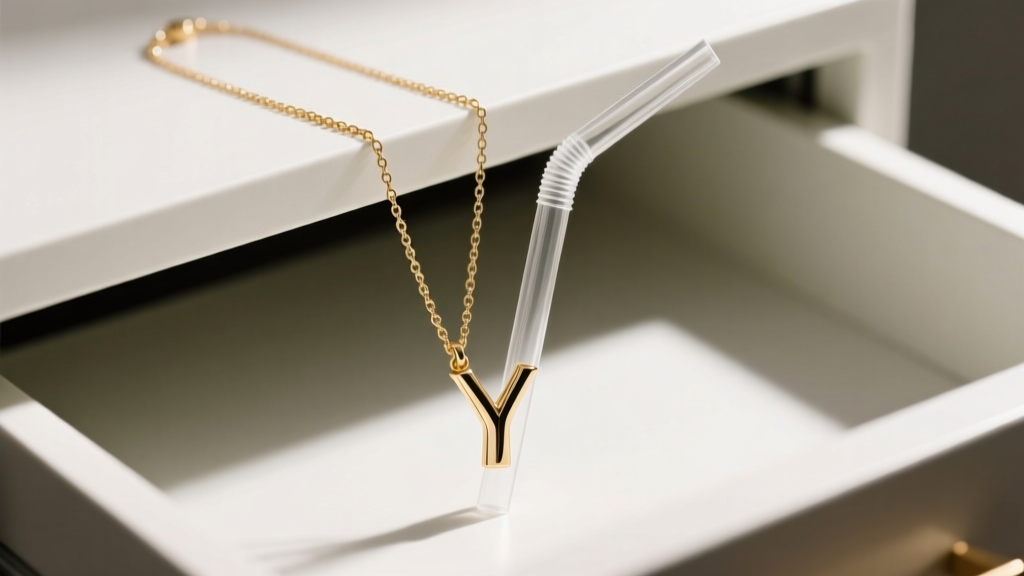
To solve this, master jewelers and archivists recommend the "Straw Method" for long-term storage and travel:
- Cut a clean plastic or silicone drinking straw to match the length of your drop chain (usually 2 to 4 inches).
- Unclasp the main necklace and thread the entire drop chain through the straw.
- Clasp the main chain and lay it flat, or hang it vertically from a jewelry stand.
The straw acts as a rigid exoskeleton, physically preventing the drop chain from bending, looping, or wrapping around the primary links. This simple, zero-cost hack eliminates 99% of lariat tangling incidents.
Solder Point Inspection and Preventative Maintenance
If your y chain necklace features a soldered T-ring rather than a sliding bead, you must routinely inspect the solder joints. The junction bears the entire tensile load of the drop chain and any attached pendants or gemstones.
"A micro-solder joint on a 0.6mm chain has a tensile failure point of less than 3 pounds of pressure. Snagging the drop chain on a sweater or towel can easily exceed this threshold, resulting in a clean break at the T-junction." — Master Bench Jeweler Insights, JCK Industry Reports
Every three months, hold your necklace taut under a bright LED light or a jeweler's loupe (10x magnification). Inspect the tiny ring connecting the two chains. If you see a dark hairline fracture, or if the ring appears slightly oval rather than perfectly round, the solder is failing. Stop wearing the piece immediately and take it to a bench jeweler for a laser weld repair, which typically costs between $35 and $60.
Daily Wear Rules: Last On, First Off
To minimize chemical exposure and physical snagging, adopt the "Last On, First Off" rule. Your y chain necklace should be the final item you put on after applying perfume, hairspray, and lotions. The alcohol and volatile organic compounds (VOCs) in cosmetics can rapidly degrade gold vermeil plating and accelerate the tarnishing of sterling silver.
Furthermore, because the drop chain rests directly against the sternum—a high-sweat zone—it is highly susceptible to acidic degradation. If you are exercising or spending extended time in high humidity, remove the necklace. The Federal Trade Commission (FTC) Jewelry Guides note that human sweat, which contains urea and lactic acid, is a primary catalyst for the corrosion of lower-karat gold alloys and silver-copper mixtures.
By understanding the specific mechanical and metallurgical vulnerabilities of your y chain necklace, you can transition from reactive repairs to proactive preservation. Treat the sliding bead with care, store the drop chain with rigid support, and your lariat will remain a flawless, tangle-free centerpiece in your collection for years to come.


