Technical Guide to Choosing the Perfect Big Chain Gold Necklace
Master the technical details of buying a big chain gold necklace. Learn about link integrity, karat durability, clasp mechanics, and weight pricing.

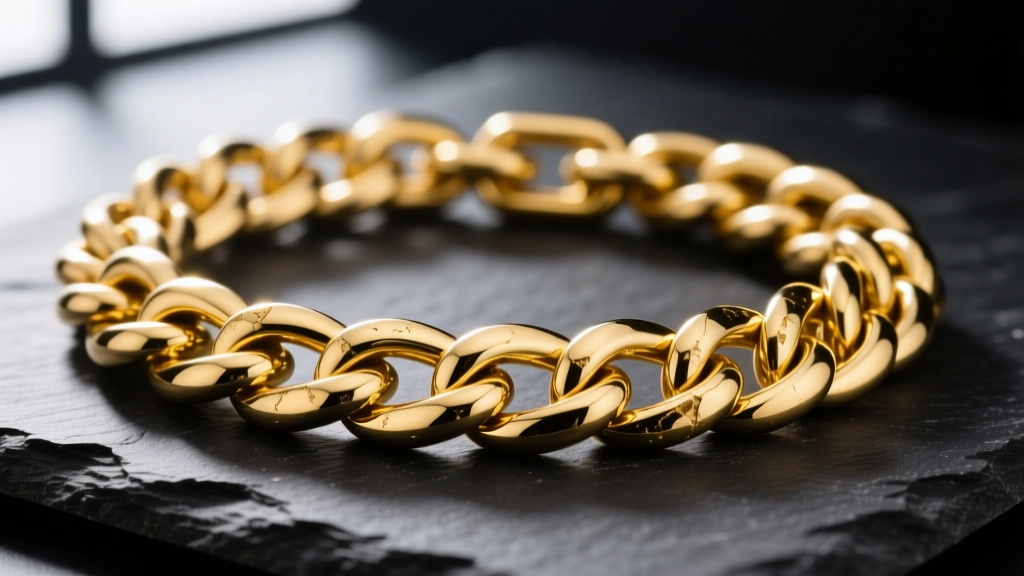
The Anatomy of a Heavy Gold Chain: Beyond the Karat
When evaluating a big chain gold necklace, amateur buyers focus almost exclusively on visual width and karat purity. However, from a metallurgical and structural engineering perspective, the true value and longevity of a heavy chain—typically defined as anything exceeding 50 grams and ranging up to 250+ grams—rely on link geometry, tensile strength, and clasp mechanics. In 2026, with gold spot prices remaining historically high, the market has seen a definitive shift away from fragile hollow chains toward solid, semi-solid, and tube-linked architectures. Understanding the physics of how these chains bear their own weight is critical to making a sound investment.
Link Geometry and Tensile Strength
Not all links are created equal. The structural integrity of a chain is dictated by how the links distribute kinetic energy when subjected to sudden tension (such as a snag or a sharp head turn).
- Cuban Links: Characterized by their flat, interlocking oval links. The flat surface area allows for tight compression, making them highly resistant to pulling apart. However, the soldering points on machine-made Cubans can be a vulnerability if the wire gauge is too thin relative to the link size.
- Franco Links: Featuring a four-way interlocking weave, Franco chains offer the highest tensile strength among popular styles. The V-shaped links distribute weight multidirectionally, making them nearly impossible to snap under normal wear conditions.
- Rope Links: Created by twisting oval links into a helix. While incredibly dense and heavy, the twisted geometry creates microscopic catch-points that can fray clothing or pull hair. They possess high shear strength but lower flexibility.
Gold Purity vs. Daily Wear: The Metallurgical Reality
The Gemological Institute of America (GIA) notes that pure 24-karat gold is exceptionally malleable, possessing a Vickers hardness of roughly 25 HV. For a heavy necklace, this softness is a catastrophic flaw; a 150-gram 24K chain will stretch and deform under its own weight within weeks. Therefore, alloying is not just about color—it is a structural necessity.
| Karat | Gold Content | Vickers Hardness (Approx.) | Stretch Risk (Heavy Chains) | Best Use Case |
|---|---|---|---|---|
| 24K | 99.9% | 25 HV | Extreme | Investment bars, light pendants only |
| 22K | 91.6% | 70 HV | High | Cultural jewelry, low-tension wear |
| 18K | 75.0% | 125 HV | Moderate | Luxury daily wear, requires thicker links |
| 14K | 58.5% | 135-150 HV | Low | Heavy daily wear, high-tension chains |
| 10K | 41.7% | 160+ HV | Very Low | Budget heavy chains, high abrasion |
For a big chain gold necklace intended for daily wear, 14K gold remains the engineering sweet spot. The addition of copper, silver, and zinc increases the yield strength, ensuring that the links retain their factory-calibrated geometry even when subjected to the dynamic loads of a 100-gram piece resting against the collarbone.
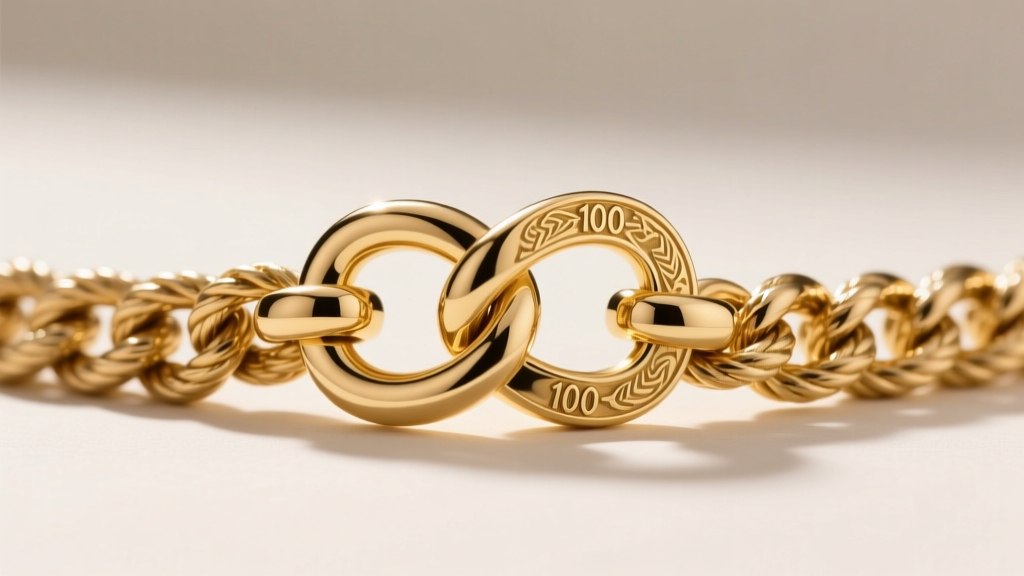
Clasp Mechanics: Engineering the Weakest Link
The most common failure point in any heavy necklace is the clasp assembly. A standard 15mm lobster clasp, perfectly adequate for a 10-gram pendant chain, has a shear strength of roughly 30 to 40 pounds. When supporting a 120-gram chain, a sudden jerk can generate enough kinetic force to snap the jump ring or bend the clasp lever, resulting in catastrophic loss.
Required Clasp Configurations for Heavy Chains
According to manufacturing standards cited by Jewelers of America, chains exceeding 80 grams must utilize specialized locking mechanisms:
- Box Clasps (Tongue and Groove): The industry standard for heavy chains. A folded piece of metal (the tongue) is compressed and inserted into a square box, expanding to lock into place. For chains over 100g, a dual box clasp (one on each side of the chain) is recommended to distribute the sheer load.
- Figure-8 Safety Catches: A mandatory secondary wire that loops over a small peg on the opposite side of the clasp. On a premium big chain gold necklace, you should demand double figure-8 safeties—one on each side of the box clasp.
- Barrel Clasps (Screw): While secure, these are generally discouraged for heavy, thick chains because the threading can strip over time due to the rotational torque applied by the heavy links.
Calculating Melt Value vs. Retail Markup in 2026
Buying a big chain gold necklace requires a firm grasp of precious metals pricing. Unlike diamond jewelry, where pricing is highly subjective, heavy gold chains are priced using a transparent formula: Melt Value + Manufacturing Premium.
The 2026 Pricing Formula:
(Chain Weight in Grams) × (Karat Purity Multiplier) × (Current Spot Price) = Base Melt Value.
Example: A 100g 14K chain. 100 × 0.585 × $70/g (hypothetical 24K spot) = $4,102.50 Melt Value.
Once you have the melt value, you must evaluate the retail markup, which compensates for labor, soldering, and retail overhead. In the current market, expect the following premiums:
- Machine-Made (Cuban, Figaro): 15% to 25% over melt.
- Semi-Handcrafted (Rope, complex Mariner): 30% to 45% over melt.
- Artisan/Hand-Soldered (Custom links, diamond-cut): 50% to 100%+ over melt.
If a retailer is attempting to sell a basic machine-made 14K Cuban chain at a 300% markup over melt, you are paying for brand hype rather than metallurgical value. Always ask the jeweler for the exact gram weight and calculate the baseline before negotiating.
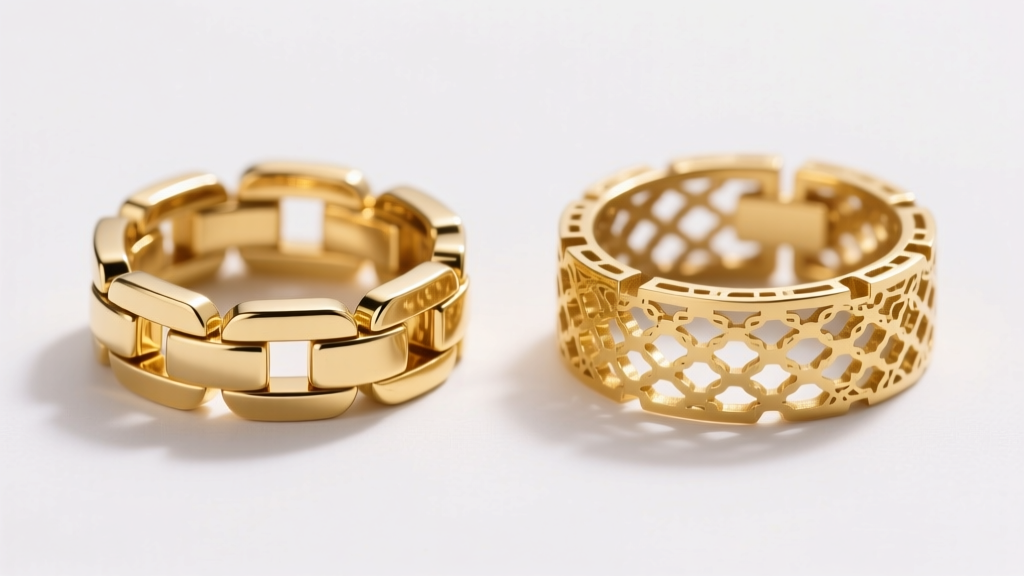
The Hollow Chain Trap: Electromforming vs. Solid Links
A persistent issue in the heavy chain market is the use of electromforming to create 'hollow' chains. This electrochemical process allows manufacturers to create massive, visually imposing links that weigh a fraction of their solid counterparts (e.g., a chain that looks like it weighs 150 grams but actually weighs 18 grams).
While hollow chains offer a lower entry price, they are a technical nightmare for longevity. The gold walls are often less than 0.2mm thick. They dent upon impact, cannot be repaired or soldered if a link snaps, and will eventually crack due to metal fatigue from repeated bending. As World Gold Council market reports have indicated, consumer preference in the mid-2020s has heavily pivoted back to solid and semi-solid (tube-linked) chains, as the cost of repairing hollow chains frequently exceeds their intrinsic gold value. When evaluating a big chain gold necklace, always perform the 'heft test'—the physical weight in your hand should align logically with the visual volume of the links.
Maintenance and Ultrasonic Risks
Heavy chains accumulate sebum, dead skin cells, and environmental dust deep within the interlocking joints. While ultrasonic cleaners are standard for solid gold, they can be destructive to certain big chains. If your chain features diamond-cut facets or is a hollow electroformed piece, the high-frequency cavitation bubbles can cause micro-fractures or trap moisture inside the hollow links, leading to internal corrosion of the base metal alloys. For solid, heavy chains, a simple soak in warm water with a few drops of mild dish soap, followed by agitation with a soft-bristled brush, remains the safest and most effective maintenance protocol to preserve the structural polish of the links.


