Styling A Gold Necklace With Jesus On Cross: 2026 Trends
Discover 2026 styling trends for the gold necklace with Jesus on cross. Expert insights on karat weights, chain pairings, and layering techniques.

The 2026 Cultural Convergence: Streetwear Meets High Jewelry
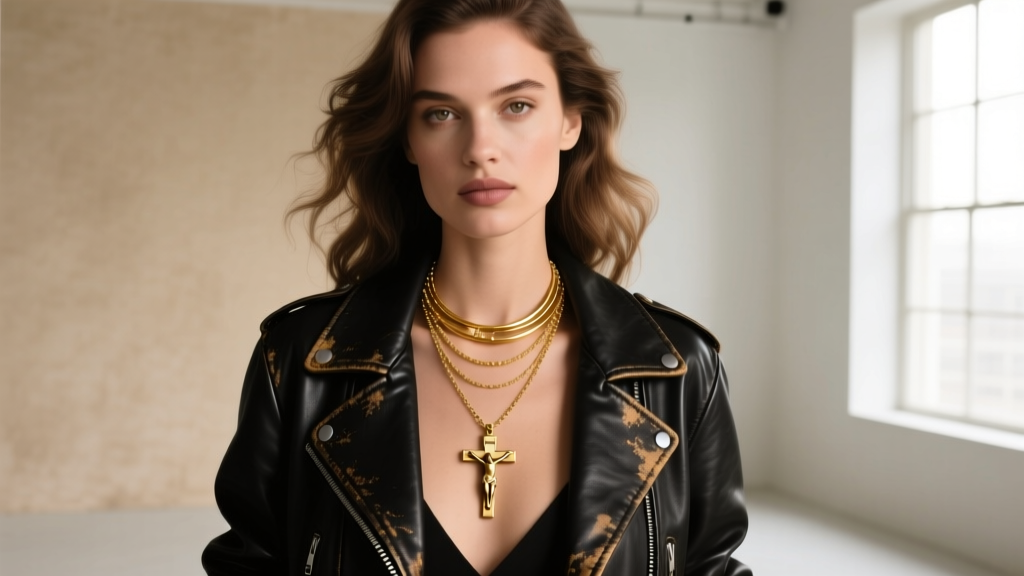
The intersection of faith-based iconography and contemporary streetwear has cemented the crucifix pendant as a cornerstone of modern jewelry styling. No longer confined strictly to traditional religious contexts, the gold necklace with Jesus on cross has been reclaimed by high-fashion houses and independent bespoke jewelers alike. In 2026, the trend has shifted away from the hyper-iced, diamond-encrusted statement pieces of the early 2020s toward a renewed appreciation for raw metallurgy, intricate lost-wax casting, and deliberate proportion scaling. Whether styled over a vintage leather jacket or layered beneath an unbuttoned silk camp-collar shirt, the modern crucifix demands a nuanced understanding of material weight, chain gauge, and spatial layering.
According to market analyses reported by National Jeweler, consumer demand for symbolic, heritage-driven pendants has surged, with buyers prioritizing solid gold alloys over heavy plating. This shift reflects a broader industry movement toward 'quiet luxury' and investment-grade daily wearables. To master this aesthetic, one must understand the engineering and styling frameworks that elevate a simple pendant into a curated sartorial anchor.
Metallurgy and Karatage: Selecting the Right Gold Alloy
The structural integrity and visual warmth of your pendant are entirely dictated by its karatage. Pure 24k gold is entirely unsuitable for detailed crucifix pendants; its high malleability means that the delicate features of the casting will warp, bend, or lose definition under the tension of a daily-wear chain. The Gemological Institute of America (GIA) notes that alloying gold with metals like copper, silver, and zinc is essential for jewelry that requires tensile strength and detail retention.
Material Breakdown and Pricing Tiers
| Karatage | Gold Purity | Durability & Detail Retention | Est. Price Range (25mm Solid Pendant) | Best Use Case |
|---|---|---|---|---|
| 10k Gold | 41.7% | Extremely High (Stiff, prone to tarnish) | $180 - $250 | Budget-friendly, high-impact streetwear |
| 14k Gold | 58.5% | High (Ideal balance of strength & color) | $300 - $550 | Daily wear, showering, active lifestyles |
| 18k Gold | 75.0% | Moderate (Rich yellow, softer edges) | $600 - $1,100 | High jewelry, occasional wear, luxury layering |
| 22k Gold | 91.6% | Low (Deep orange hue, highly malleable) | $1,200+ | Investment pieces, display, heirloom casting |
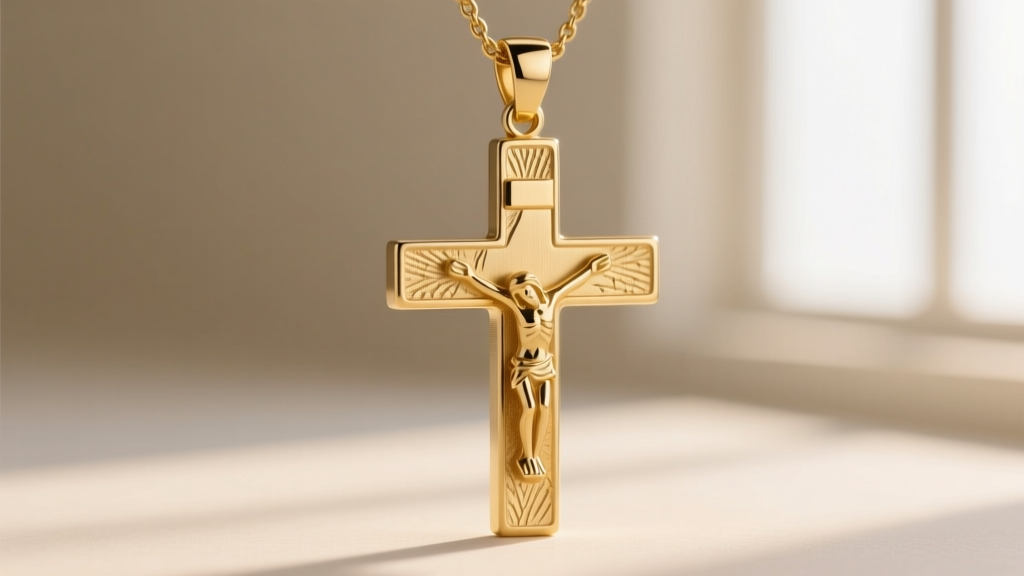
For the quintessential 2026 aesthetic, 14k yellow gold remains the undisputed champion. It offers the necessary rigidity to maintain the micro-textures of the crown of thorns and the drapery of the loincloth, while providing a warm, classic hue that complements a wide spectrum of skin tones and fabric dyes.
Proportion and Scale: Sizing the Crucifix Pendant
A common failure point in styling faith-based jewelry is a mismatch between the pendant's scale and the wearer's physique or neckline. The market currently segments crucifix pendants into three distinct dimensional categories, measured by the vertical drop (excluding the bail):
- Micro-Pendants (10mm - 18mm): Designed for ultra-delicate chains (1.0mm - 1.5mm box or cable chains). These sit flush against the collarbone and are primarily used as the foundational layer in a complex, multi-chain stack. They offer a subtle, minimalist nod to the iconography.
- Standard Proportions (25mm - 35mm): The versatile sweet spot. A 30mm pendant paired with a 2.5mm to 3.5mm chain provides enough visual weight to stand alone on a crew-neck t-shirt but remains streamlined enough to tuck under an open flannel or linen shirt.
- Statement Silhouettes (50mm - 75mm+): Reserved for outerwear styling. These heavy, solid-cast pieces require robust chains (5mm+ Cuban or Figaro links) and are meant to rest over hoodies, denim jackets, or knitwear. The sheer gram weight of a 60mm solid 14k gold pendant often exceeds 15 grams, necessitating a chain with a high tensile clasp, such as a lobster or custom box lock.
Chain Pairings and Bail Mechanics
The relationship between the pendant's bail (the loop connecting the piece to the chain) and the chain itself is a critical, often overlooked element of jewelry engineering. A mismatched bail and chain will cause excessive friction, leading to premature wear on the gold and an unnatural drape.
The Hidden Bail vs. Standard Loop
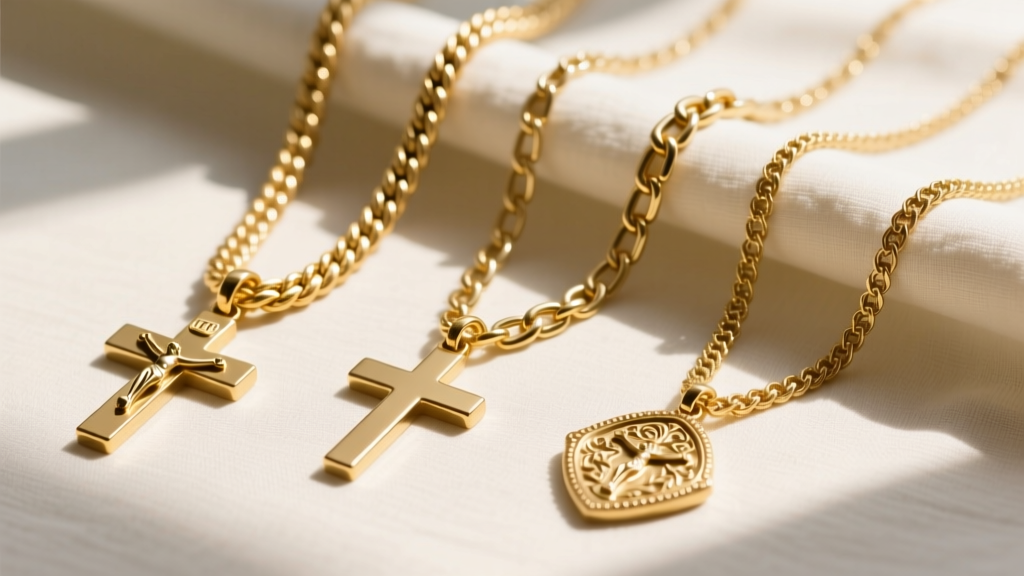
Traditional crucifixes feature a standard loop bail, which works seamlessly with flexible chains like the Rope or Box chain. However, the 2026 trend heavily favors the hidden bail—a hollowed-out channel cast directly into the back or top of the pendant. This allows rigid, high-profile chains like the Cuban Link or Wheat chain to pass directly through the body of the pendant, creating the illusion that the chain is seamlessly piercing the gold. This technique reduces the overall vertical drop by 5-8mm, keeping the pendant anchored closer to the sternum and preventing it from flipping over during movement.
Advanced Layering Frameworks
Layering a gold necklace with Jesus on cross requires adherence to the 'Rule of Thirds' to avoid visual clutter. The goal is to create distinct spatial zones on the chest. Here is a master framework for a three-piece stack:
- The Anchor (16 - 18 inches): A 2mm solid gold herringbone or snake chain sitting tight against the base of the neck. This provides a continuous line of metallic reflection without competing for attention.
- The Focal Point (20 - 22 inches): Your primary crucifix pendant (25mm-35mm) suspended on a 3mm rope chain. The rope chain's twisted facets catch the light differently than the herringbone, creating textural contrast.
- The Terminator (26 - 28 inches): A heavier, unadorned chain (like a 5mm Figaro) or a secondary, larger medallion (such as a Saint Christopher or a plain gold signet pendant). This draws the eye downward and elongates the torso.
'The modern approach to religious jewelry is about integration, not isolation. A crucifix shouldn't look like it was an afterthought; it should be engineered into the architecture of the entire outfit's layering system.' — Contemporary Jewelry Styling Directive, 2026
Manufacturing Methods: Lost-Wax Casting vs. Die-Striking
When evaluating the quality and pricing of a crucifix pendant, understanding the manufacturing origin is paramount. Mass-market, fast-fashion jewelers typically utilize die-striking. This involves stamping a sheet of gold alloy between two high-pressure steel molds. While cost-effective, die-struck pendants are inherently two-dimensional, featuring flat backs and shallow, machine-cut details that lack depth and shadow.
Conversely, high-end and independent jewelers employ lost-wax casting. An artisan first sculpts the crucifix in wax, capturing microscopic details like the texture of the wood grain and the anatomy of the figure. This wax model is encased in plaster, burned out in a kiln, and replaced with molten gold. The resulting piece is fully three-dimensional, often featuring a hollowed back to reduce gram weight without sacrificing structural volume, and possesses a level of artistic nuance that stamped jewelry simply cannot replicate. When investing upwards of $500 in a solid gold piece, always verify that the pendant is cast, not stamped.
Final Considerations for the Modern Collector
Ultimately, selecting the right gold necklace with Jesus on cross in 2026 is an exercise in balancing heritage with contemporary design language. By prioritizing 14k lost-wax castings, respecting the mechanical relationship between the bail and the chain gauge, and employing deliberate spatial layering, you transform a traditional symbol into a sophisticated, enduring pillar of your personal style archive. Avoid the trap of gold-plated or vermeil alternatives for daily-wear pendants; the friction against the chain will inevitably wear through the microscopic gold layer, exposing the brass or silver core beneath and compromising the piece's longevity.


