Expert Care Guide: Cleaning Your Twisted Cross Necklace
Learn expert techniques to clean, polish, and maintain your twisted cross necklace. Remove tarnish and grime from intricate rope chains safely.


The Hidden Maintenance Challenge of Twisted Jewelry
The twisted cross necklace has cemented its place as a staple in both vintage-inspired and modern gothic jewelry collections. Whether crafted from heavy sterling silver, delicate gold vermeil, or surgical stainless steel, the juxtaposition of a textured helical chain with a detailed cross pendant creates a striking visual impact. However, this specific architectural design introduces a unique maintenance challenge. The spiraling grooves of a twisted rope chain and the deep, recessed crevices of a cast cross pendant act as microscopic traps for sebum, dead skin cells, cosmetic residues, and environmental pollutants.
Unlike flat cable chains or smooth bezel pendants, a twisted cross necklace possesses a significantly higher surface area. According to the Gemological Institute of America (GIA), increased surface area accelerates the oxidation process in reactive metals. If you own a sterling silver piece, this means your necklace will tarnish much faster than a simple band ring. To preserve the structural integrity and aesthetic brilliance of your jewelry, you must abandon generic cleaning methods and adopt a specialized, material-specific protocol.
The Science of Tarnish and Grime Accumulation
Before reaching for a polishing cloth, it is crucial to understand what is actually dulling your necklace. Tarnish on silver is not dirt; it is a chemical reaction. When silver is exposed to hydrogen sulfide in the air, it forms silver sulfide (Ag2S), a black or yellowish compound that clings to the metal. In a twisted chain, these compounds settle deep into the spirals where standard polishing cloths cannot reach.
Furthermore, the cross pendant itself often features oxidized detailing or gemstone settings (such as small black onyx or cubic zirconia accents). Aggressive cleaning can strip intentional oxidation or loosen the adhesive securing these stones. The London Assay Office frequently warns against using abrasive chemical dips on hallmarked silver jewelry with textured or mixed-metal finishes, as these chemicals can permanently alter the metal's patina and degrade solder points.
Material-Specific Cleaning Matrix
Not all twisted cross necklaces are created equal. The core metal and its plating dictate the exact cleaning agents you can safely use. Refer to the matrix below before beginning your maintenance routine.
| Material Grade | Primary Vulnerability | Recommended Cleaning Agent | Tool Requirement | Drying Protocol |
|---|---|---|---|---|
| 925 Sterling Silver | Sulfur tarnish, scratching | pH-neutral dish soap, aluminum foil/baking soda bath (for chain only) | Extra-soft baby toothbrush | Cool air blow-dry, microfiber |
| Gold Vermeil (2.5µm+) | Plating degradation, abrasion | Mild liquid castile soap, distilled water | Cotton swabs, soft bristle brush | Pat dry, air dry flat |
| 316L Stainless Steel | Grease buildup, water spots | Dish soap or 70% Isopropyl Alcohol | Stiff nylon brush | Lint-free cloth, immediate buff |
| Oxidized Silver | Stripping of dark patina | Warm water only, minimal soap | Microfiber cloth (no brushing) | Cool air blow-dry |
The 5-Step Deep Cleaning Protocol
For standard 925 sterling silver or stainless steel twisted cross necklaces, follow this precise five-step methodology to extract grime from the deepest grooves without stressing the metal links.
1. Preparation and Soaking
Fill a small glass bowl with warm (not hot) distilled water. Hot water can shock certain gemstone inlays or weaken jewelry adhesives. Add three drops of a pH-neutral, dye-free dish soap (such as Dawn Free & Clear). Submerge the necklace and let it soak for exactly 5 to 10 minutes. This window is sufficient to emulsify body oils without risking water damage to any porous stone accents on the cross.
2. Targeted Agitation

Remove the necklace from the bath. Using an extra-soft baby toothbrush, gently work the bristles into the spirals of the twisted chain and the crevices of the cross pendant. Critical Technique: Do not scrub in harsh circular motions. Instead, use a gentle "flicking" motion parallel to the chain's twist. This dislodges debris without bending the delicate interlocking links or causing the chain to kink.
3. The Electrochemical Lift (Solid Silver Only)
If your solid sterling silver chain remains heavily tarnished after brushing, utilize an electrochemical reaction. Line a glass bowl with aluminum foil (shiny side up). Place the necklace on the foil, add a tablespoon of baking soda, and pour boiling water over it. The resulting ion exchange transfers the silver sulfide from the necklace to the aluminum foil. Note: Never use this method on gold vermeil, oxidized silver, or necklaces with glued-in gemstones.
4. Precision Rinsing
Rinse the piece thoroughly under a gentle stream of distilled water. Avoid tap water, as the chlorine and dissolved minerals can leave microscopic hard water spots that dull the high-polish areas of the cross pendant.
5. Advanced Drying Techniques
The most common mistake in jewelry care is improper drying. Water trapped inside the tight spirals of a twisted chain will lead to localized corrosion and accelerated tarnishing. Lay the necklace flat on a clean, lint-free microfiber cloth. Use a hairdryer on the cool, low-speed setting to blow the trapped moisture out of the crevices. Never use paper towels or tissue paper; the wood pulp fibers will tear and lodge themselves permanently into the metal grooves.
Critical Maintenance Mistakes to Avoid
Even well-intentioned cleaning can destroy a delicate twisted chain if you rely on outdated or overly aggressive methods. Avoid these common pitfalls:
- Ultrasonic Cleaners: While excellent for solid diamond rings, the high-frequency cavitation bubbles generated by ultrasonic machines can easily snap the fragile solder points on twisted rope chains and strip gold vermeil plating down to the base metal.
- Commercial Silver Dips: Many commercial dips contain thiourea, a highly toxic and corrosive chemical that forces tarnish off instantly. While effective on flat surfaces, these dips leave a chalky, white residue deep inside the twists of your chain that is nearly impossible to rinse out, ultimately causing worse corrosion over time.
- Tugging and Pulling: Twisted chains are prone to kinking. When cleaning or drying, never pull the chain taut. Always support the weight of the cross pendant with your free hand to prevent stress on the bail and the top chain links.
"The structural integrity of a twisted rope chain relies entirely on the micro-solder points where the links interlock. Aggressive brushing or ultrasonic vibrations introduce metal fatigue, leading to sudden, irreparable snapping. Treat the chain like spun glass." — Master Bench Jeweler Insights
Long-Term Storage and Preventative Care
Proper storage is arguably more important than the cleaning process itself. Because twisted cross necklaces feature deep grooves, they are highly susceptible to atmospheric humidity and sulfur exposure when left out on a vanity or dresser.
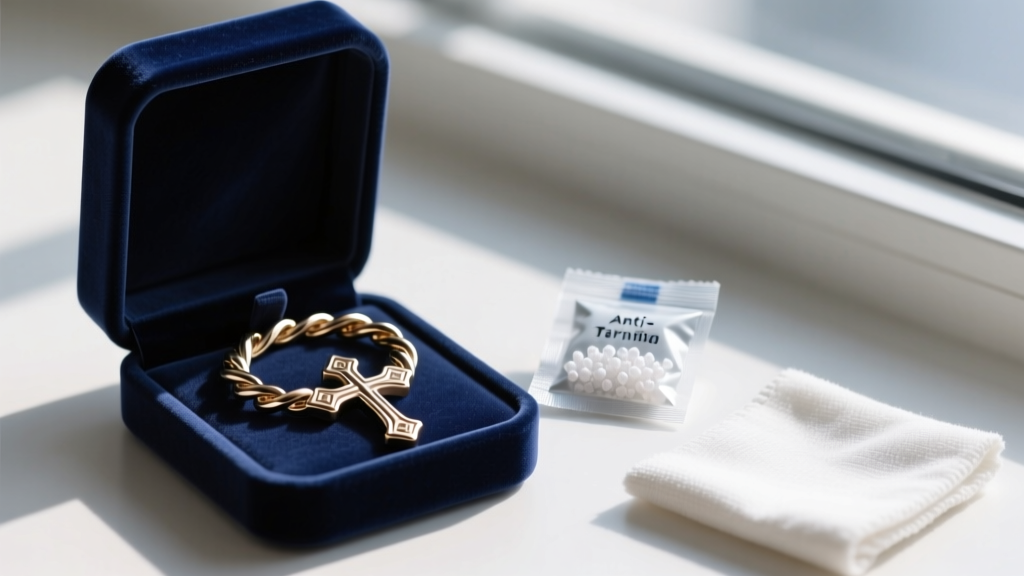
Implement the following storage framework to extend the time between deep cleanings:
- Climate Control: Store your necklace in an environment with a relative humidity (RH) below 50%. High humidity acts as a catalyst for the silver sulfide reaction.
- Chemical Interception: Place the necklace inside an airtight, food-grade ziplock bag alongside a 3M Anti-Tarnish Strip. These strips absorb airborne sulfur compounds before they can reach your jewelry.
- Physical Protection: Never toss a twisted cross necklace into a communal jewelry box. The heavy metal cross pendant will act as a pendulum, scratching the chain and tangling the twists. Store it flat in a dedicated velvet pouch, or hang it on a wide, padded jewelry hook to maintain the chain's natural drape.
- The Selvyt Cloth Routine: After every wear, gently wipe the high-relief (raised) areas of the cross pendant with a genuine Selvyt polishing cloth. This removes acidic skin oils and fingerprints before they have the opportunity to etch into the metal or degrade gold plating.
Final Thoughts on Preservation
A twisted cross necklace is an investment in intricate craftsmanship. By understanding the specific vulnerabilities of helical chains and recessed pendants, you can maintain the piece's striking contrast and brilliant shine for decades. Ditch the harsh chemicals and abrasive tools, embrace the gentle chemistry of pH-neutral soaps, and prioritize thorough, lint-free drying. Your jewelry will reward your meticulous care with enduring beauty and structural longevity.


