Fixing a Tarnished Disney Parks Icon Necklace: Troubleshooting Guide
Is your Disney Parks icon necklace turning green or breaking? Learn expert troubleshooting for tarnish, clasp repairs, and chain fixes.

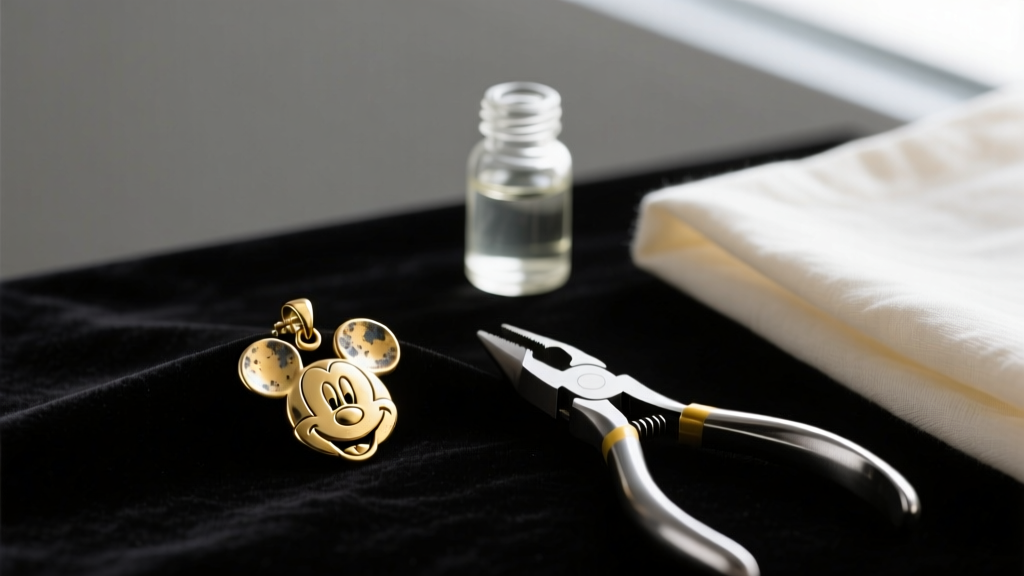
A Disney Parks icon necklace is more than just a piece of jewelry; it is a wearable memory of a magical vacation. Whether it features the classic Mickey silhouette, the Cinderella Castle, or the Epcot sphere, these pendants hold immense sentimental value. However, souvenir jewelry is often manufactured for mass appeal and immediate wear rather than generational longevity. Over time, you may notice the gold plating rubbing off, the chain snapping, or the pendant leaving a green stain on your skin.
As jewelry metallurgy and repair specialists, we see these specific failure modes constantly. In this comprehensive troubleshooting guide, we will break down the exact material science behind why your necklace is failing and provide professional, actionable solutions to restore and protect your cherished keepsake.
The Metallurgy of Souvenir Jewelry: Why Your Necklace Fails
To effectively troubleshoot your necklace, you must first understand what it is actually made of. Disney Parks sells jewelry across several pricing tiers, and the metal composition dictates the repair strategy.
- Tier 1: Base Metal with Flash Plating ($20 - $50) The most common icon necklaces are cast from zinc alloy or brass, then coated in a 'flash plating' of gold or rhodium. This plating is incredibly thin—often less than 0.1 microns. It provides a brilliant initial shine but wears away rapidly against the friction of clothing and skin.
- Tier 2: Sterling Silver with Enamel ($60 - $120) These pieces are stamped '925' and feature vitreous or cold enamel. They are more durable but are prone to silver sulfide tarnish and enamel chipping.
- Tier 3: Solid Gold or Gold Vermeil ($150+) Found in high-end park boutiques, these require standard precious metal care and rarely suffer from base-metal oxidation.
According to the GIA Gem Encyclopedia, understanding the base metal is critical before applying any chemical cleaners, as harsh dips can instantly strip flash plating and expose the porous zinc beneath.
Troubleshooting Green Skin and Copper Oxidation
The dreaded 'green neck' is the most common complaint with base-metal souvenir jewelry. This is not an allergic reaction; it is a simple chemical reaction. The brass alloy beneath the plating contains copper. When the thin plating wears off, the copper reacts with the chlorides and lactic acid in your sweat to create copper chloride—a green salt that transfers to your skin.
Step 1: Removing Existing Oxidation
Do not use commercial silver polishes, as they are too abrasive for thin plating. Instead, create a gentle chemical bath:
- Mix equal parts white vinegar and water in a glass bowl.
- Submerge the pendant (avoiding any glued-in stones) for exactly 3 to 5 minutes.
- Remove and gently scrub with a soft-bristled baby toothbrush.
- Neutralize the acid by rinsing thoroughly in a baking soda and water solution.
- Dry completely with a microfiber cloth.
Step 2: Sealing the Metal
Many online forums suggest painting the back of the pendant with clear nail polish. Do not do this. Nail polish yellows over time, becomes brittle, and peels off in unsightly flakes. Instead, use a polyurethane-based jewelry sealant like ProtectaClear or Everbrite. These coatings are specifically formulated for metal adhesion, dry completely clear, and provide a durable, skin-safe barrier that prevents copper oxidation for up to two years.
Fixing Broken Jump Rings and Clasp Failures
If your Disney Parks icon necklace has snapped, the failure almost certainly occurred at the jump ring—the small circular link connecting the pendant to the chain or the clasp to the chain. Mass-produced jewelry typically uses open jump rings that are simply pinched shut, not soldered. When caught on a sweater or towel, the ring pulls open, and the necklace is lost.
| Component | Standard Souvenir Gauge | Recommended Upgrade | Failure Rate |
|---|---|---|---|
| Pendant Jump Ring | 22g or 20g (Open) | 18g (Soldered/Closed) | High |
| Lobster Clasp | Zinc Alloy (10mm) | Stainless Steel (12mm) | Medium |
| Cable Chain | 20g (0.8mm) | 18g (1.0mm) Box Chain | Low |
How to Properly Replace a Jump Ring
If you are replacing a lost pendant or upgrading a weak link, you must use the correct technique. Never pull a jump ring apart outward like a door; this warps the circle and prevents it from closing flush.
Using two pairs of chain-nose pliers, grip the jump ring on either side of the split. Twist one hand toward you and the other away from you. Thread the chain and pendant onto the ring, then twist the ends back together until you hear a faint 'click' or feel the metal snap flush. For a permanent fix, take the necklace to a local jeweler and ask them to laser-weld or solder the jump ring shut. As noted by the jewelry supply experts at Rio Grande, a soldered jump ring increases the structural integrity of the connection point by over 400%.
Restoring Cloudy Cubic Zirconia and Enamel Damage
Many icon necklaces feature sparkling accents. It is vital to identify whether these are prong-set or glue-set. The vast majority of souvenir cubic zirconia (CZ) stones are set using a two-part epoxy adhesive rather than metal prongs.
CRITICAL WARNING: Never place a glue-set CZ necklace in an ultrasonic jewelry cleaner. The high-frequency acoustic cavitation will shatter the epoxy bond, causing the stones to fall out and be lost in the machine's tank.
To clean cloudy, lotion-clogged CZ stones, use a drop of mild dish soap (like Dawn) in lukewarm water. Gently agitate the water, let the pendant soak for ten minutes, and carefully brush the back of the stones (the pavilion) where skin oils accumulate. Rinse with distilled water to prevent hard water spots and dry with a lint-free cloth.
Repairing Chipped Cold Enamel
If your castle or icon pendant features painted 'cold enamel' (which is actually a hardened jeweler's resin) and it has chipped, you can perform a DIY color-match repair. Purchase a two-part clear jeweler's epoxy and a small amount of mica powder in the matching color. Mix the epoxy, stir in the mica powder until opaque, and use a toothpick to carefully fill the chipped divot. Let it cure for 24 hours, then gently buff it flush with a high-grit (2000+) sanding sponge.
When to Seek Professional Jeweler Intervention
While home troubleshooting can solve 90% of issues with a Disney Parks icon necklace, some damage requires professional bench equipment. You should take your piece to a certified bench jeweler if:
- The base metal is pitted: If the zinc alloy beneath the plating has developed deep, crater-like pits (a phenomenon known as dezincification), no amount of polishing will smooth it. A jeweler can cast a mold and recreate the pendant in solid sterling silver.
- The chain is kinked: Delicate cable chains easily kink and snap when pulled. A jeweler can use specialized chain-straightening pliers to realign the links without weakening the metal.
- You want permanent replating: If the gold flash plating has entirely worn off the high-friction areas, a professional electroplater can strip the piece and apply a heavy 2.5-micron layer of 14k gold, effectively turning your souvenir into a permanent, tarnish-resistant keepsake.
By understanding the metallurgy and structural weak points of your jewelry, you can easily troubleshoot and preserve your favorite vacation memories for decades to come.


