Louvre Necklace Troubleshooting: Cleaning & Repair Guide
Is your Louvre necklace tarnished or tangling? Learn expert troubleshooting tips to clean intricate museum pendants and fix geometric chain snags.

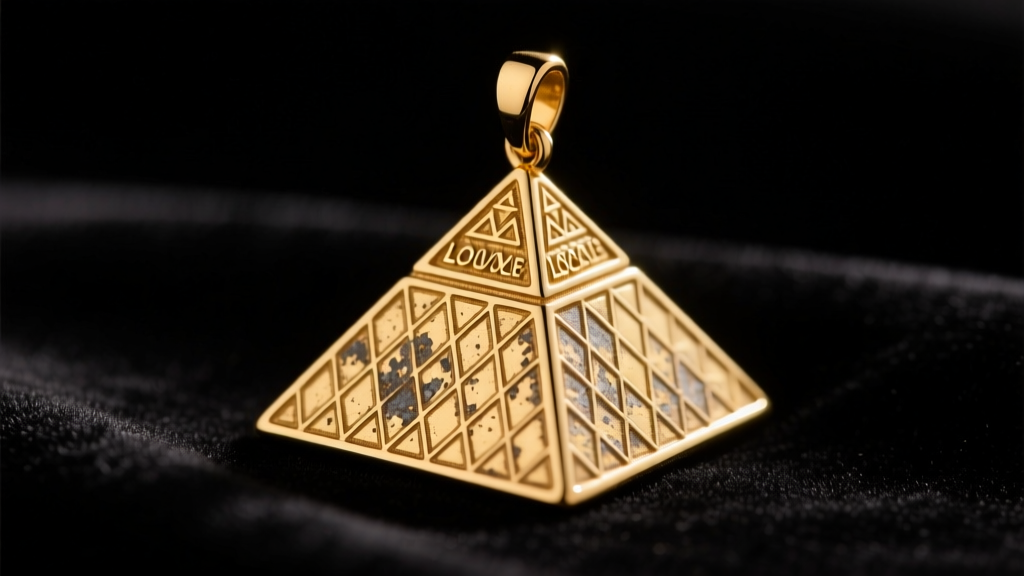
Owning a Louvre necklace—whether it is a sleek homage to I.M. Pei’s iconic glass pyramid or an intricate museum-replica of an Egyptian scarab or Greek cameo—comes with unique maintenance hurdles. Unlike standard minimalist pendants, these architectural and historically inspired pieces feature deep crevices, sharp geometric angles, and specialized metal finishes. As of 2026, while modern 3D-printed resin molds used in lost-wax casting have improved the surface smoothness of museum-grade replicas, the fundamental physics of wearing heavy, multi-faceted pendants remains unchanged.
If your favorite piece is suffering from trapped tarnish, constant chain snagging, or failing jump rings, you are not alone. This comprehensive troubleshooting guide dives deep into the metallurgy and mechanics of Louvre-inspired jewelry, providing actionable, expert-level solutions to restore and protect your investment.
The Unique Structural Challenges of Louvre Necklaces
Before applying any polish or pliers, it is crucial to understand why Louvre necklaces fail differently than standard jewelry. The challenges generally fall into two categories based on the pendant's design inspiration:
- The Pyramid Motif: Pendants modeled after the Louvre Pyramid feature sharp 45-degree and 90-degree angles. These geometric edges act like micro-blades against softer chain links, leading to accelerated wear and frequent snagging.
- Antiquity Replicas: Necklaces replicating artifacts from the Louvre’s Egyptian or Greco-Roman collections often utilize deliberate oxidation (blackening) to highlight engraved hieroglyphs or filigree. They also frequently incorporate cold enamel or porous semi-precious stones like lapis lazuli, which are highly sensitive to modern chemical dips.
Understanding your specific pendant's architecture is the first step in targeted troubleshooting.
Troubleshooting Tarnish in Intricate Crevices
The most common complaint with museum-cast replicas is tarnish accumulating in deep, recessed areas where a standard polishing cloth cannot reach. When sterling silver (925) reacts with ambient sulfur and sebum, it forms silver sulfide—a black, crusty compound that lodges tightly into cast porosity and engraved lines.
According to the Gemological Institute of America (GIA), abrasive pastes and harsh chemical dips can strip intentional patinas and damage delicate gemstone inlays. Instead, use a targeted, non-destructive approach.
The Horsehair and Surfactant Method
For oxidized silver or gold vermeil Louvre pendants, avoid ultrasonic cleaners. The high-frequency cavitation can fracture cold enamel and loosen bezel-set stones. Instead, create a mild surfactant bath using warm distilled water and a drop of pH-neutral dish soap (like Dawn). Submerge the pendant for exactly three minutes to soften the sebum bonds.
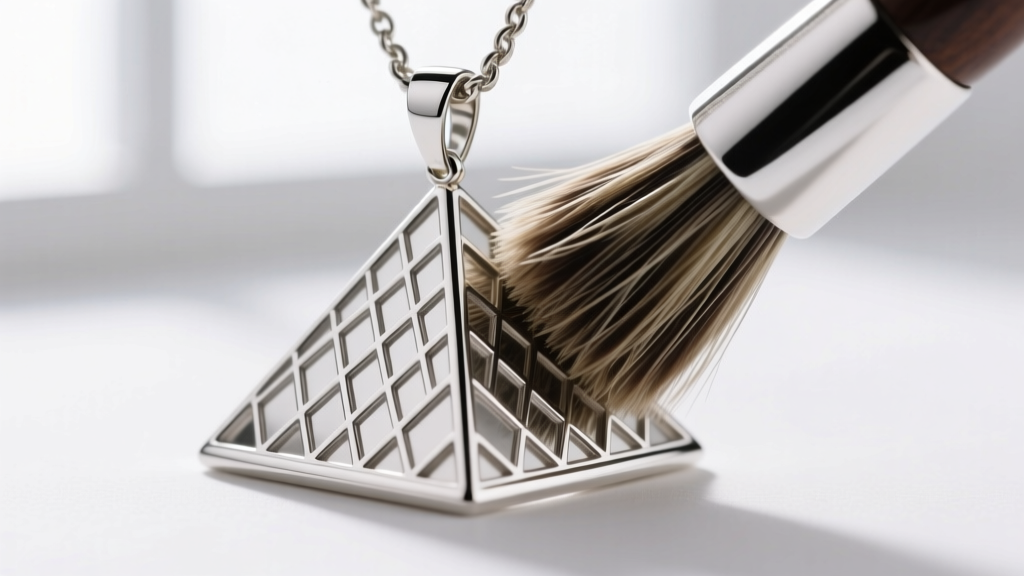
Next, use a soft horsehair detailing brush (not a toothbrush, as nylon bristles are often too stiff and can micro-scratch high-polish gold vermeil). Gently agitate the bristles into the crevices in a circular motion. Rinse with distilled water to prevent hard water spots, and dry immediately with a microfiber cloth.
Cleaning Protocol Matrix by Finish
| Pendant Finish | Primary Tarnish Issue | Recommended Cleaning Agent | Tools to Avoid |
|---|---|---|---|
| Antiqued/Oxidized Silver | Loss of dark contrast in crevices | Mild dish soap & horsehair brush | Silver dip solutions, polishing wheels |
| 18k Gold Vermeil | Dulling of the surface luster | Dedicated gold polishing cloth | Ultrasonic cleaners, baking soda paste |
| Enamel Inlay (Egyptian) | Grime buildup at the metal-enamel seam | Distilled water & wooden toothpick | Metal needles, ammonia-based cleaners |
| Rhodium-Plated Silver | Wear spots exposing yellow silver | Soap bath (requires re-plating) | Abrasive pastes, polishing cloths |
Fixing Chain Snags on Geometric Pyramid Pendants
If your Louvre pyramid necklace constantly catches on your clothing or the chain links bind against the pendant bail, you are experiencing the 'Pyramid Catch.' This occurs when the interior of the bail (the loop connecting the pendant to the chain) retains a microscopic ridge from the casting sprue or polishing wheel.
Deburring the Bail
To fix this, you need to smooth the interior channel of the bail. If you are comfortable with basic jewelry maintenance, use a Swiss cut #4 needle file or a rubber cup bur attached to a rotary flex shaft. Gently pass the tool through the bail's opening to round off the sharp interior edges. Finish by running a piece of unflavored dental floss through the bail; if the floss snags or shreds, the edge is still too sharp and requires further smoothing.
Upgrading the Chain Architecture
The type of chain you pair with a geometric Louvre pendant drastically affects its longevity. Standard cable chains and snake chains are highly susceptible to kinking and catching on sharp pyramid bails.
- Opt for Wheat (Spiga) Chains: The woven, directional links of a wheat chain glide smoothly over angular metal edges without binding.
- Choose Box Chains: The flat, 90-degree faces of a box chain mirror the geometry of the pyramid pendant, allowing the metal surfaces to slide against one another with minimal friction.
- Avoid Herringbone and Snake Chains: These fluid-style chains bend laterally but lack torsional strength, making them prone to permanent kinking when caught on a heavy, angular pendant.
Resolving Clasp and Jump Ring Failures
Museum-grade Louvre replicas cast in solid bronze, brass, or heavy sterling silver often weigh between 15 and 25 grams. This pendulum weight places immense sheer stress on the jump ring connecting the pendant to the chain, and the jump ring connecting the chain to the clasp.

Standard jewelry manufacturing typically uses 20-gauge (0.81mm) unsoldered jump rings. Under the dynamic weight of a heavy Louvre pendant, a 20-gauge ring will slowly pull apart, resulting in a lost pendant. According to Jewelers of America, regular inspection of these stress points is critical for heavy statement pieces.
The Soldered Ring Upgrade
To permanently solve this failure point, replace the pendant's connecting jump ring with a 14-gauge or 16-gauge soldered jump ring. A soldered ring has no seam, meaning it is physically impossible to pull apart under normal wearing conditions. If your chain links are too thick to pass through a soldered ring, use a heavy-duty lobster clasp equipped with a reinforced, welded O-ring at the terminal end. Ensure the clasp itself is cast or die-struck rather than hollow-formed, as hollow clasps routinely fail under the 20+ gram load of museum replicas.
When to Seek Professional Museum-Grade Restoration
While home troubleshooting can resolve mechanical snags and surface tarnish, certain issues require a professional bench jeweler. You should seek expert restoration in the following scenarios:
- Rhodium Depletion on Pyramid Facets: If the sharp facets of your silver pyramid pendant are turning yellow or black, the rhodium plating has worn away. A jeweler must re-polish the geometric angles (taking care not to round the crisp edges) and re-plate the piece. Expect to pay between $45 and $85 for this specialized service.
- Enamel Chipping on Antiquity Replicas: If the black or lapis-colored enamel in your Egyptian-inspired Louvre necklace chips, a professional can perform 'cold enamel' resin filling, color-matched to the original museum artifact specifications.
- Micro-Porosity Leaching: If a bronze or brass replica continues to turn your skin green despite cleaning, the alloy has high copper porosity. A jeweler can apply a micro-thin layer of clear electrophoretic e-coating to seal the metal without altering its antique luster.
By understanding the specific metallurgical and structural demands of your Louvre necklace, you can move beyond generic jewelry care and implement targeted troubleshooting that preserves both the historical artistry and the structural integrity of your favorite pieces.


