How to Fix a Tarnished Michael Kors Heart Necklace
Learn how to safely clean, restore, and troubleshoot common issues with your Michael Kors heart necklace, from tarnish to missing pave stones.

The Metallurgy of Fashion Jewelry: Why Your Necklace Tarnishes
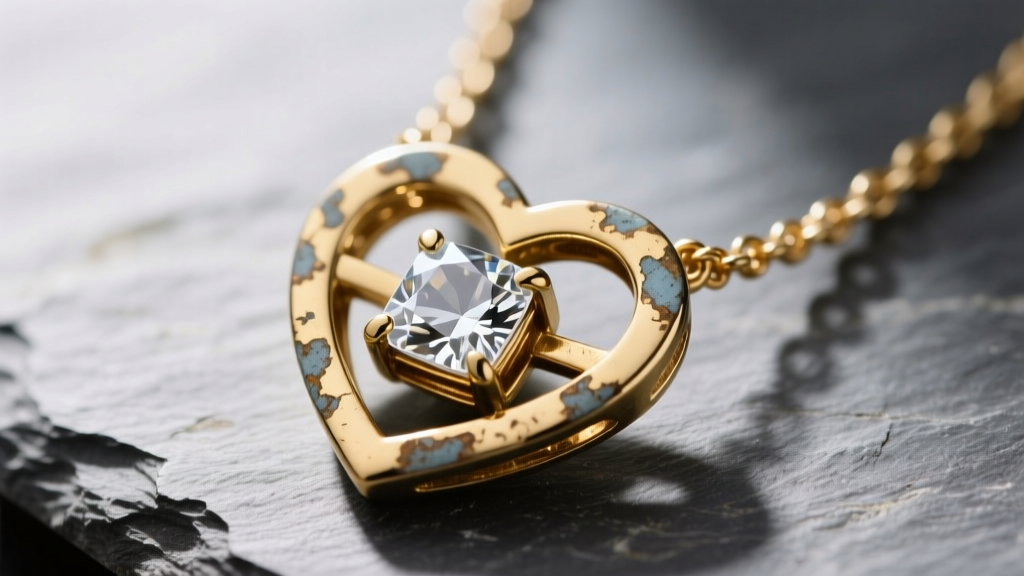
To effectively troubleshoot a tarnished Michael Kors heart necklace, you first need to understand the materials sitting against your skin. Unlike fine jewelry crafted from solid 14k or 18k gold, Michael Kors fashion jewelry typically utilizes a base metal core—most commonly brass or a zinc alloy—coated with a thin layer of gold-tone or rose gold-tone plating. According to the Gemological Institute of America (GIA), base metals like copper and zinc are highly reactive to environmental factors.
The plating on these pieces is usually applied via electroplating, with a thickness ranging from a mere 0.1 to 0.5 microns. Some premium rose gold-tone MK pieces utilize Physical Vapor Deposition (PVD), which offers slightly better durability, but the underlying vulnerability remains. When this microscopically thin barrier is compromised by friction, sweat, or cosmetics, the underlying brass is exposed. The copper within the brass reacts with the chlorides and lactic acid in your sweat, resulting in the dreaded dark tarnish on the metal and the green residue left on your collarbone.
What NOT to Do: Cleaning Mistakes That Strip Plating
When a beloved pendant loses its luster, the instinct is often to reach for aggressive DIY cleaning hacks. However, treating gold-plated brass like solid sterling silver will permanently ruin your necklace. Here are the most common mistakes that destroy fashion jewelry:
- The Baking Soda and Aluminum Foil Bath: This creates an electrochemical reaction that is brilliant for removing silver sulfide from solid sterling silver. However, on gold-plated brass, this alkaline solution can strip the gold-tone finish entirely, leaving you with a dull, pinkish-copper pendant.
- Whitening Toothpaste: Toothpaste contains abrasive silica particles designed to scrub enamel. On a 0.5-micron gold plating, these micro-abrasives act like sandpaper, scratching through the gold layer and exposing the base metal beneath.
- Ultrasonic Cleaners: While ultrasonic waves are excellent for deep-cleaning solid metal, the high-frequency vibrations will easily shake loose the delicate adhesive holding the micro-pave cubic zirconia (CZ) stones in your Michael Kors heart pendant.
- Commercial Silver Dips: These contain harsh thiourea and sulfuric acid derivatives that will instantly dissolve the gold-tone plating.
The Safe Cleaning Protocol for Gold-Tone and Rose Gold-Tone Pendants
If your necklace is simply dull from accumulated body oils, lotions, and environmental dust, a gentle manual cleaning is all that is required to restore its brilliance. The Jewelers of America recommends mild, non-detergent soaps for plated jewelry.
Step 1: The Lukewarm Bath
Fill a small glass bowl with distilled water (tap water contains chlorine and minerals that can accelerate tarnishing) heated to a lukewarm temperature. Add two drops of a pH-neutral, fragrance-free dish soap. Submerge the necklace for exactly three to five minutes to loosen debris. Do not exceed five minutes, as prolonged water exposure can seep into the stone settings and weaken the jeweler's epoxy.
Step 2: The Soft Bristle Approach
Remove the necklace from the bath. Using a brand-new, extra-soft baby toothbrush, gently sweep the bristles over the surface of the heart pendant and the chain links. Pay special attention to the bail (the loop connecting the pendant to the chain) and the back of the heart, where skin oils accumulate. Brush in one direction to avoid catching the prongs of the CZ stones.
Step 3: The Pat Dry
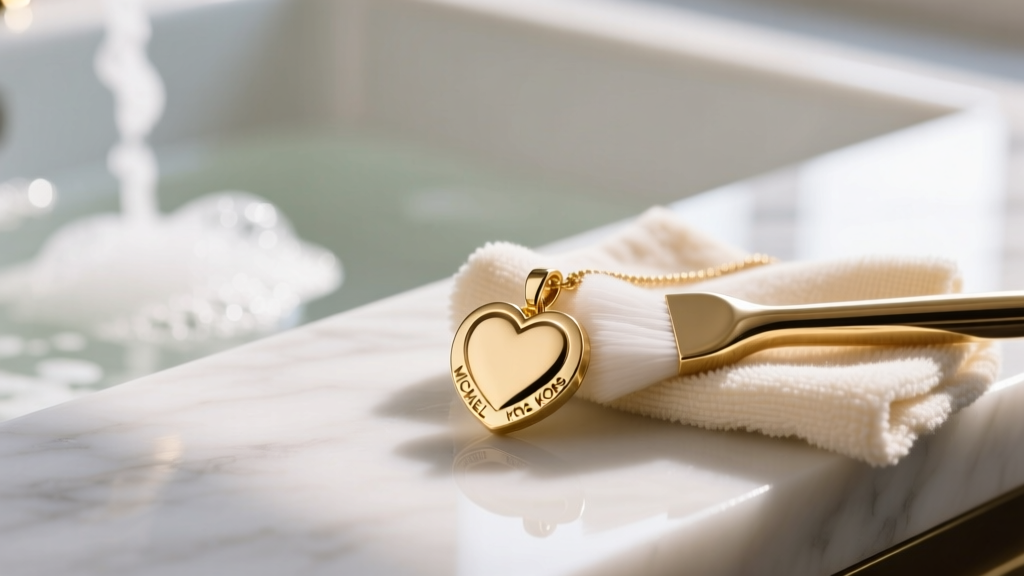 Rinse the necklace briefly under a slow stream of distilled water. Lay it flat on a clean, lint-free microfiber cloth. Gently pat the metal dry. Never rub or pull the chain through the cloth, as this can cause the delicate box chain links to kink or snap.
Troubleshooting Hardware and Stone Failures
Beyond tarnish, daily wear introduces mechanical failures. Below is a diagnostic chart for the most common issues plaguing the Michael Kors heart necklace collection, along with actionable solutions.
| Issue | Root Cause | DIY Troubleshooting | Professional Fix |
|---|---|---|---|
| Lobster Clasp Won't Snap Shut | The internal steel spring has corroded or lost tension due to hairspray/lotion buildup. | Apply a microscopic drop of sewing machine oil to the clasp hinge. Pump the lever 10 times to distribute. | A jeweler can replace the 8mm lobster clasp and 1.5mm jump ring for roughly $15-$25. |
| Missing Pave CZ Stones | Impact damage or adhesive degradation from heat and cosmetics. | Do not use superglue (cyanoacrylate), which will fog the surrounding stones and melt the plating. | A bench jeweler can source 1.0mm-1.5mm round CZs and reset them using jeweler's epoxy ($20+). |
| Box Chain Kinking | The chain was folded sharply during storage, bending the interlocking 0.8mm box links. | Lay flat on a mousepad. Use two wooden toothpicks to gently coax the bent link back into a 90-degree angle. | If the link is creased, a jeweler must snip the damaged section and solder in a new jump ring. |
| Pendant Bail Separation | The solder point connecting the bail loop to the top of the heart has fractured. | Stop wearing it immediately to prevent losing the pendant. | Laser welding is required to reattach the bail without melting the surrounding gold-tone plating ($30-$45). |
The 'Green Neck' Phenomenon: Causes and Prevention
Waking up with a green ring around your neck is a hallmark of fashion jewelry wear. This is not an allergic reaction, nor does it mean the jewelry is 'fake'—it is a simple chemical equation. The copper in the brass core reacts with the acids in your skin to form copper chloride, a green salt that transfers to your epidermis.
To solve this without sacrificing your Michael Kors heart necklace, you must create a physical barrier between the metal and your skin. While the internet often suggests clear nail polish, standard nail enamel contains acetates and solvents that can actually degrade certain types of PVD coatings over time. Instead, invest in a specialized jewelry coating like ProtectaClear or a water-based polyurethane sealant. Apply a single, ultra-thin coat to the back of the heart pendant and the interior of the clasp using a fine artist's brush. Allow it to cure for 24 hours. This invisible shield will prevent the copper chloride reaction and typically lasts for three to six months of regular wear before requiring reapplication.
Replating vs. Replacing: A Cost-Benefit Analysis for 2026
 Eventually, the gold-tone plating on any fashion jewelry piece will wear through to the brass core, particularly on the high-friction edges of the heart silhouette. When this happens, you are faced with a decision: replate or replace?
As of 2026, the cost of professional gold or rose gold electroplating for a small pendant and 18-inch chain typically ranges from $55 to $95 at a specialized plating facility. A brand-new Michael Kors heart necklace retails between $75 and $150, depending on the specific collection (e.g., the Parker, Mercer, or Selma lines) and current seasonal promotions.
From a purely financial standpoint, replacing the necklace is often the more economical choice. However, replating becomes the superior option if the piece holds deep sentimental value, such as a gift from a loved one, or if it features a discontinued design that is no longer available in boutiques. If you choose to replate, request a minimum thickness of 1.0 microns and ask the plater to apply a clear e-coat (electrophoretic coating) over the gold. This final clear layer will triple the lifespan of the new plating, protecting your restored pendant from future tarnish and friction wear.


