How to Troubleshoot and Restore a Prince Sign Necklace
Learn how to troubleshoot common issues with your prince sign necklace, from fixing green skin and tarnished signets to repairing broken jump rings.

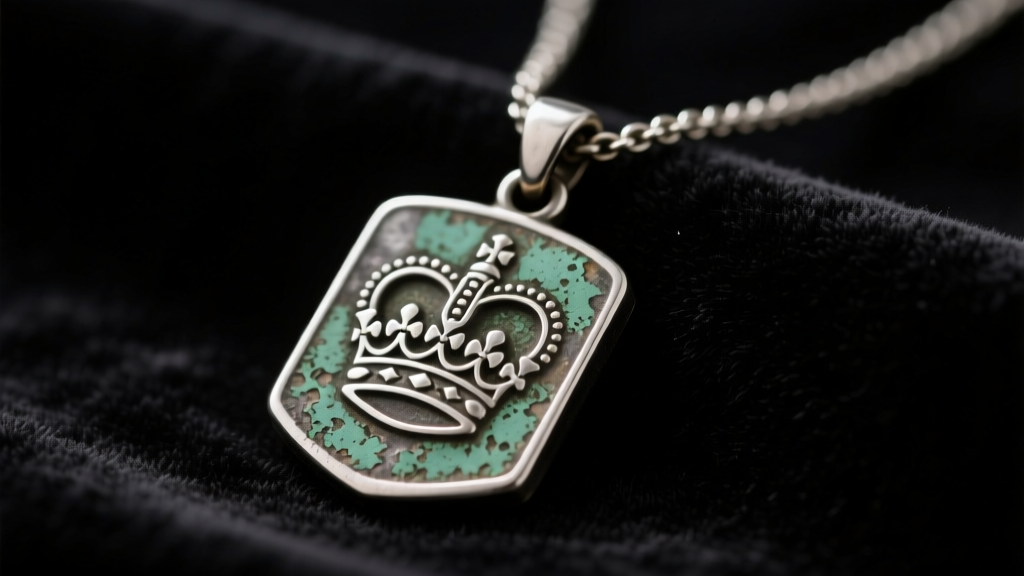
The Anatomy of a Prince Sign Necklace and Common Failure Points
When investing in a prince sign necklace—typically characterized by a bold, heraldic, or iconic signet-style pendant—you are acquiring a piece of jewelry that carries significant visual weight. Unlike delicate minimalist pendants, a signet-style necklace features a dense metal face, deep engravings, and often a substantial bail. While aesthetically striking, this specific architecture introduces unique mechanical and chemical vulnerabilities. The heavy pendulum effect of the signet face places immense stress on the chain's weakest links, while the deep crevices of the engraved 'sign' trap moisture, oils, and environmental pollutants, accelerating oxidation.
Before attempting any repairs or cleaning, it is crucial to identify the exact metal composition of your piece. According to the Gemological Institute of America (GIA), sterling silver (925) contains 7.5% copper, which is the primary culprit behind both tarnishing and skin discoloration. If your necklace is gold vermeil, it consists of a sterling silver base plated with at least 2.5 microns of gold. Understanding these metallurgical facts is the first step in effective troubleshooting.
Troubleshooting Tarnish and Metal Oxidation on the Signet Face
The deep grooves of a prince sign necklace are notorious for accumulating black or brown oxidation. This is not merely surface dirt; it is silver sulfide forming a chemical bond with the copper alloy. Attempting to scrub this away with abrasive brushes will ruin the crisp edges of the engraving and, in the case of vermeil, strip the gold plating entirely.
The Electrochemical Reversal Method (For Solid Sterling Silver)
If your signet pendant is solid 925 sterling silver (no gold plating, no porous gemstones like turquoise or opals), you can reverse the tarnish chemically without removing any base metal.
- Step 1: Line a glass bowl with aluminum foil, shiny side up.
- Step 2: Add 1 tablespoon of baking soda and 1 tablespoon of sea salt.
- Step 3: Pour boiling water into the bowl to activate the solution.
- Step 4: Submerge the pendant (remove the chain first) for 3 to 5 minutes.
- Step 5: The sulfide transfers from the silver to the aluminum. Rinse with distilled water and pat dry with a microfiber cloth.

Safely Cleaning Gold Vermeil and Plated Signets
If your prince sign necklace is gold vermeil, the electrochemical bath will destroy the plating. Instead, use a mild, phosphate-free dish soap and lukewarm water. Use a baby toothbrush with ultra-soft bristles to gently agitate the soap into the engraved grooves. Never use commercial silver dips on vermeil, as the harsh thiourea chemicals will cause the gold layer to flake and peel.
Solving the 'Green Neck' Problem: Base Metal Reactions
A frequent complaint among wearers of heavy signet necklaces is the green or black smudge left on the sternum. This is not an allergic reaction to nickel, but rather a chemical reaction between the copper in the alloy, your skin's natural acidity (pH), and environmental moisture. Because a signet pendant rests flat against the chest, it traps sweat and heat, creating an incubator for copper oxidation.
| Material | Copper Content | Reaction Risk | Troubleshooting Fix |
|---|---|---|---|
| Brass / Bronze Base | 60% - 90% | Very High | Apply Renaissance Wax to the back of the pendant. |
| 925 Sterling Silver | 7.5% | Moderate | Wipe with a polishing cloth daily; keep dry. |
| Gold Vermeil (2.5μm) | 7.5% (Base) | Low (Until worn) | Replate when the silver base becomes visible. |
| Solid 14k / 18k Gold | 0% - 15% | Extremely Low | Usually requires no intervention. |
Expert Hack: If you must wear a brass or heavily oxidizing prince sign necklace in humid weather, apply a thin, even coat of clear nail polish or a specialized jewelry shield spray to the flat back of the signet. This creates an impermeable barrier between the copper and your skin. Reapply every few weeks as the coating wears away from friction.
Mechanical Failures: Fixing Snapped Chains and Loose Jump Rings
The most catastrophic failure point on any heavy pendant necklace is the connection between the chain and the bail. The Jewelers of America notes that pendulum-style pendants generate kinetic stress that easily pulls standard jump rings apart. If your prince sign necklace has snapped, the issue is almost certainly an unsoldered jump ring that was twisted open by the weight of the signet.
Proper Jump Ring Manipulation
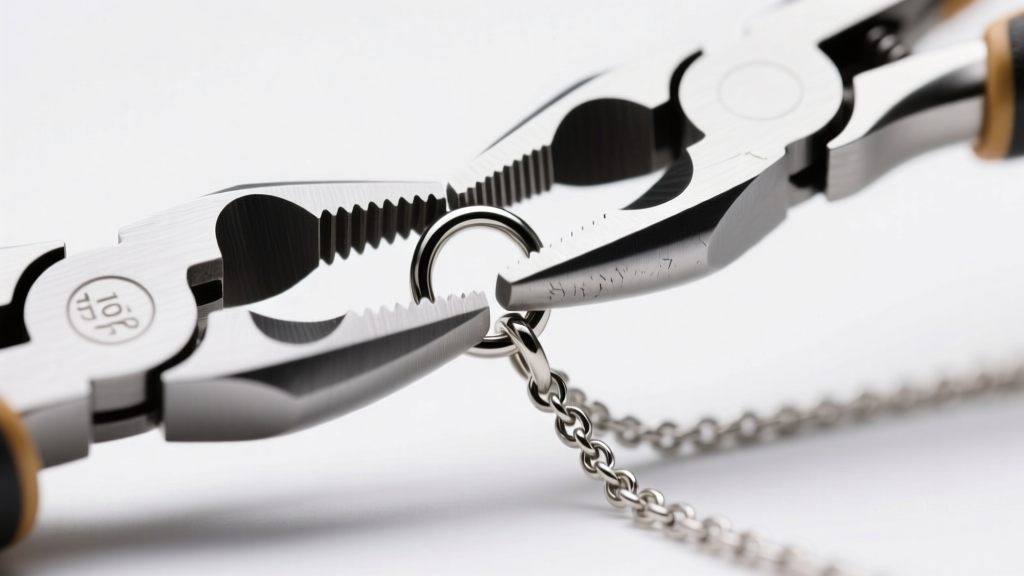
Never pull a jump ring apart laterally (like a 'C' shape). This warps the circle and ensures it will never close flush again, leaving a gap that will catch on your clothing and eventually snap.
- Use two pairs of flat-nose jewelry pliers.
- Grip the jump ring on either side of the split.
- Twist one hand toward you and the other away from you (a torsional movement).
- Thread the chain and bail back onto the ring.
- Twist the ends back together until you feel them 'click' and bind against each other.
When to Seek Professional Soldering
If your signet pendant weighs more than 15 grams, a simple closed jump ring is insufficient. The constant friction will eventually saw through the metal wire. Take the piece to a professional jeweler and request a 'soldered jump ring' or an upgrade to a 16-gauge or 14-gauge solid ring. The jeweler will use a laser or torch to fuse the gap shut, creating a continuous loop that is physically impossible to pull apart without breaking the chain itself.
Preventative Maintenance and Storage Protocols
Troubleshooting is reactive; maintenance is proactive. To preserve the structural integrity and visual brilliance of your prince sign necklace, implement the following storage and wear protocols:
- The 'Last On, First Off' Rule: Always put your necklace on after applying perfumes, lotions, and hairsprays. The alcohols and aerosols in these products accelerate the breakdown of gold vermeil and promote rapid tarnishing on silver.
- Anti-Tarnish Storage: Never store your necklace in a humid bathroom. Keep it in an airtight ziplock bag with a 3M anti-tarnish strip or a silica gel packet to absorb ambient moisture.
- Chain Selection: If your chain keeps breaking, consider the style. Delicate cable chains and rope chains are prone to snagging and snapping under heavy loads. Upgrade to a 2mm to 3mm solid curb chain or a Figaro chain, which feature flattened, interlocking links that distribute the weight of a heavy signet pendant much more effectively.
By understanding the specific metallurgical and mechanical demands of a heavy signet pendant, you can transform a problematic piece of jewelry into a lifelong, trouble-free staple in your collection.


