How to Clean, Repair, and Restore a Silver Moon Necklace
Learn how to troubleshoot, clean, and repair your silver moon necklace. Expert tips on removing tarnish, fixing broken chains, and securing pendants.

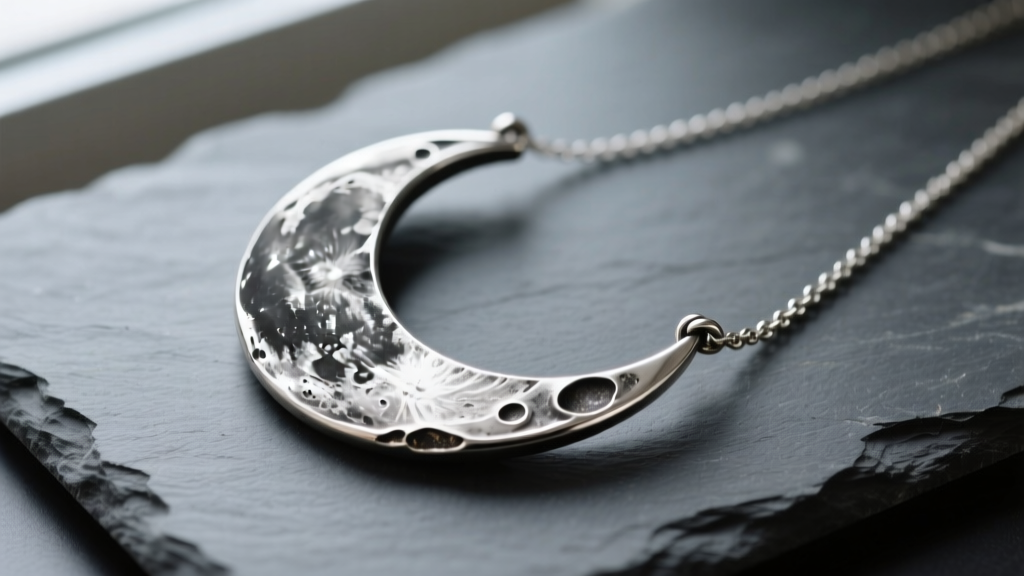
The Anatomy of Silver Tarnish: Why Your Moon Necklace Turns Black
A silver moon necklace is a staple of celestial jewelry, but its beauty is constantly under threat from atmospheric chemistry. Sterling silver (925) is an alloy composed of 92.5% pure silver and 7.5% copper. While pure silver is relatively inert, the copper content reacts with hydrogen sulfide (H2S) in the air, moisture, and everyday cosmetics to form silver sulfide (Ag2S). This manifests as a yellowish film that eventually deepens into a stark, matte black.
According to the Gemological Institute of America (GIA), environmental factors like high humidity, wool storage, and even the sulfur compounds in certain foods can accelerate this process. However, the most critical troubleshooting mistake owners make is applying the wrong cleaning method to their specific type of moon pendant. A high-polish full moon requires a completely different chemical approach than an antiqued crescent moon with deep, intentional blackening in its craters.
The Electrochemical Bath (For High-Polish Moons)
If your silver moon necklace is entirely high-polish with no intentional dark patina, you can reverse the tarnish chemically without abrasive rubbing. This method uses a galvanic reaction to transfer the sulfur from the silver to a sacrificial metal.
- Line a glass bowl with heavy-duty aluminum foil (shiny side up).
- Place the necklace in the bowl, ensuring the silver touches the foil.
- Sprinkle 2 tablespoons of baking soda and 1 tablespoon of sea salt over the jewelry.
- Pour boiling water into the bowl until the necklace is submerged. You will immediately smell a sulfur (rotten egg) odor as the Ag2S breaks down.
- Leave for 3 to 5 minutes, then remove with wooden tongs, rinse in distilled water, and pat dry with a microfiber cloth.
The Liver of Sulfur Fix (For Antiqued Craters)
Many artisan moon necklaces feature intentional oxidation—where the craters and surface textures are chemically blackened to create contrast. Never use chemical silver dips or the electrochemical bath on these pieces. Doing so will strip the patina, leaving the craters stark white and ruining the pendant's depth.
If you have accidentally stripped the antiquing, or if the black details are fading from friction against your skin, you must re-oxidize the piece. Professional jewelers and Rio Grande jewelry suppliers recommend using Liver of Sulfur (LOS). By mixing a pea-sized amount of LOS gel into warm water, you create a mild sulfur bath. Dipping the polished moon pendant for just 30 to 60 seconds will re-blacken the entire piece. You then use a polishing cloth to gently buff the raised, high-polish areas (the surface of the moon), leaving the deep craters permanently dark.
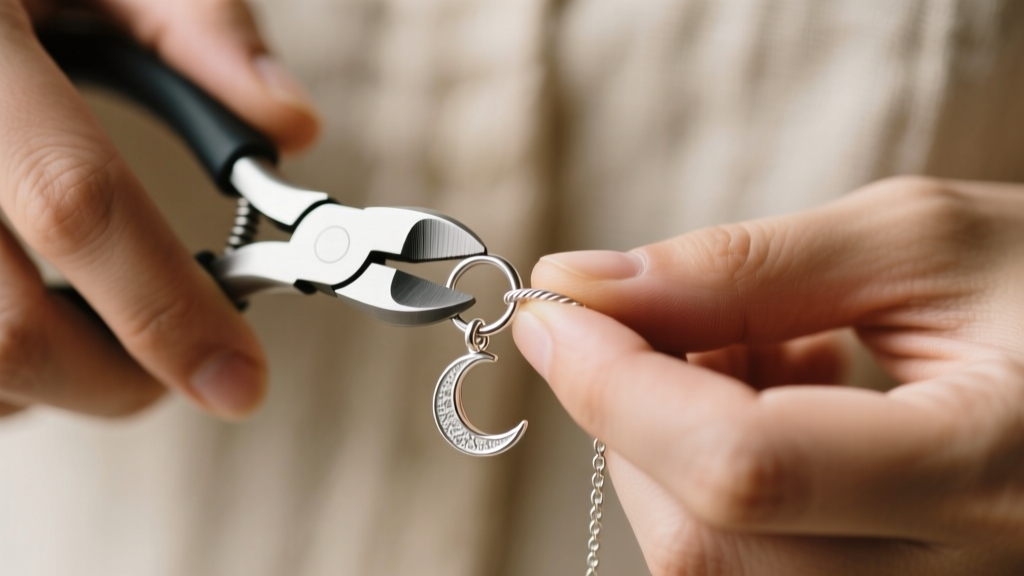
Structural Failures: Jump Rings, Bails, and Clasp Weak Points
Tarnish is a cosmetic issue; structural failure is a catastrophic one. Silver moon pendants, especially those cast in solid 925 sterling silver, carry significant weight relative to the delicate chains they hang from. The most common point of failure is the jump ring connecting the pendant bail to the chain.
The Gauge Problem
Mass-produced celestial necklaces often use 22-gauge or 24-gauge jump rings to save on metal costs. At this thickness, the weight of a solid silver moon pendant will easily pull the jump ring open, especially if the ring was cut improperly, leaving a burr that catches on the bail. To troubleshoot and prevent this, you must upgrade the hardware.
- 18-Gauge or 16-Gauge Jump Rings: Always replace the factory jump ring with a thicker 18-gauge (1.02mm) or 16-gauge (1.29mm) half-hard sterling silver jump ring.
- Flush Cuts: Ensure the jump ring is cut with flush cutters, not standard wire snips. A flush cut ensures the two ends meet perfectly without overlapping or snagging.
- Soldered Rings: For heavy, oversized moon medallions, take the piece to a jeweler to have the jump ring soldered shut. This creates a continuous, unbreakable loop.
Lobster Clasp Spring Fatigue
If your necklace frequently unclasps itself, the issue is likely spring fatigue inside the lobster clasp. Over time, the microscopic internal spring loses tension, or debris from lotions and skin cells jams the trigger mechanism. While you can sometimes clean the trigger with a drop of isopropyl alcohol and a soft toothbrush, a failing clasp on a heavy silver pendant should be replaced entirely with a high-quality, solid-cast lobster clasp or a secure box clasp with a figure-eight safety catch.
Troubleshooting Matrix: Symptoms and Solutions
Use this diagnostic table to quickly identify and resolve the most common issues plaguing sterling silver moon necklaces.
| Symptom | Root Cause | Actionable Solution |
|---|---|---|
| Yellowish/Black film on high-polish areas | Silver sulfide (Ag2S) atmospheric reaction | Electrochemical aluminum foil bath; store with anti-tarnish strips |
| Craters turning stark white/chalky | Chemical dips stripping intentional oxidation | Re-oxidize using a diluted Liver of Sulfur (LOS) gel bath |
| Pendant detaching from chain | Jump ring pulled open by pendant weight | Replace with 18-gauge half-hard jump ring; close with flush cutters |
| Chain snapping at the clasp | Work-hardening and metal fatigue at the solder point | Replace the end ring; avoid sleeping in the necklace to prevent stress |
| Clasp trigger sticking or failing to snap | Debris buildup or internal spring corrosion | Flush with isopropyl alcohol; replace clasp if tension is lost |
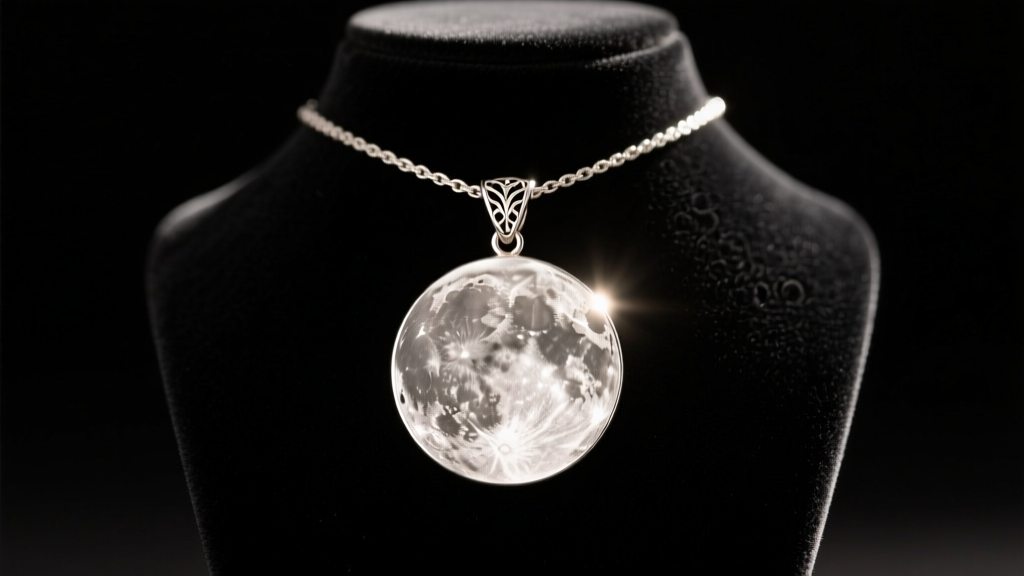
Restoring the Celestial Glow: A Step-by-Step Maintenance Framework
Once your silver moon necklace is cleaned and structurally reinforced, implementing a strict maintenance framework will drastically reduce the need for future troubleshooting.
1. The Pacific Silvercloth Protocol
Never store your silver necklace in a standard cardboard box, a plastic bag, or exposed to the open air of a bathroom. Cardboard and certain plastics emit sulfur gases. Instead, invest in a pouch made of Pacific Silvercloth. This specialized fabric is embedded with microscopic silver particles that intercept and absorb atmospheric hydrogen sulfide before it can reach your necklace, effectively acting as a sacrificial shield.
2. The 'Last On, First Off' Rule
Sterling silver is highly reactive to the chemicals found in everyday grooming products. Perfumes, hairsprays, and chemical sunscreens contain compounds that will instantly accelerate tarnishing and degrade the polish. Always put your silver moon necklace on after your cosmetics and perfumes have fully dried, and remove it before you begin your evening skincare routine or enter a chlorinated pool.
3. Gentle Mechanical Polishing
When the high-polish surface of the moon begins to look dull from micro-scratches (caused by friction against clothing), avoid aggressive rotary tools or harsh jeweler's rouges. These will round off the crisp edges of the lunar craters. Instead, use a soft, untreated horsehair detailing brush to clean out dust from the textures, followed by a gentle buff with a high-quality, untreated microfiber cloth to restore the mirror finish.
Expert Insight: If your silver moon necklace features inlaid gemstones like turquoise, moonstone, or opal, never submerge it in the electrochemical bath or use ultrasonic cleaners. The thermal shock and chemical reactions can fracture the stones or dissolve the epoxy adhesives holding them in place. Clean these composite pieces only with a damp microfiber cloth.
When to Call a Professional Jeweler
While most tarnish and jump ring issues can be solved at home, certain structural failures require a professional bench jeweler. If the actual bail (the loop soldered to the top of the moon pendant) has worn completely through due to years of friction against the chain, or if the chain itself has snapped at a link requiring laser welding, DIY attempts will only cause further damage. A professional can cast a new bail, laser-weld delicate silver links without melting the surrounding details, and apply a professional rhodium flash if you wish to temporarily halt tarnishing altogether. By understanding the metallurgy and mechanics of your jewelry, you can ensure your silver moon necklace remains a brilliant, enduring fixture in your collection.


