Lavaliere Necklace Troubleshooting: Fixes & Chain Care
Is your lavaliere necklace tangling or flipping? Discover expert troubleshooting tips to fix pendant bail issues, chain knots, and clasp failures.

The Anatomy of a Lavaliere Necklace and Common Failure Points
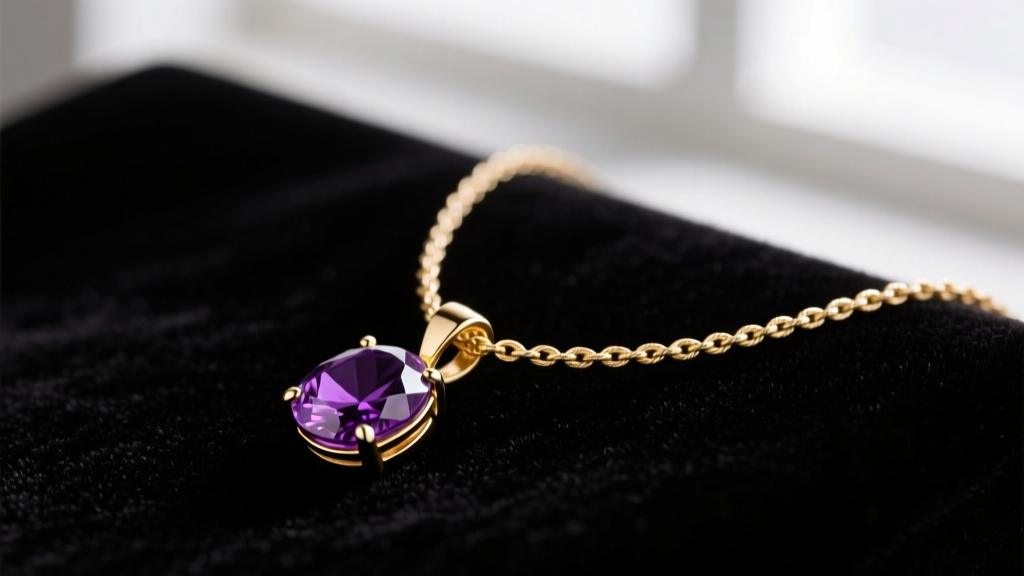
A lavaliere necklace is characterized by a single, often teardrop-shaped pendant or gemstone drop suspended from a delicate chain. Historically popularized during the Edwardian and Art Deco eras, the lavaliere remains a staple of elegant, minimalist jewelry design. However, the very features that make a lavaliere necklace so visually striking—its heavy focal drop and ultra-fine chain—create a unique set of structural vulnerabilities.
When troubleshooting a lavaliere necklace, jewelers typically encounter four primary failure modes: pendant flipping, micro-knotting in fine chains, metal-on-metal friction at the bail, and vintage clasp degradation. Because these necklaces often utilize chains ranging from 18-gauge to 24-gauge (0.8mm to 0.5mm thick), standard jewelry repair techniques must be adapted to prevent catastrophic breakage. Below, we break down the exact metallurgical and mechanical solutions for restoring and maintaining your lavaliere necklace.
Problem 1: The Pendant Keeps Flipping Upside Down
The most frequent complaint regarding a lavaliere necklace is the pendant's tendency to rotate around the chain, displaying the back of the setting or the soldered jump ring instead of the gemstone. This occurs due to an imbalance in weight distribution and a lack of friction at the bail (the loop connecting the pendant to the chain).
Bail Friction and Weight Distribution
If the inner diameter of the bail is significantly larger than the thickness of the chain, the pendant will slide freely. While this prevents chain wear, it guarantees flipping. To solve this without altering the vintage integrity of the piece, you have two primary options:
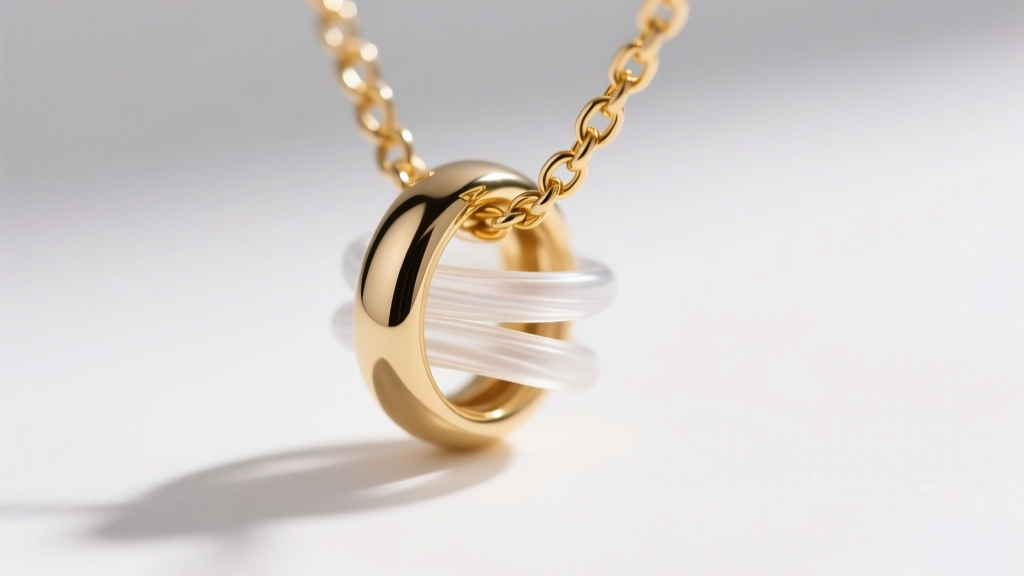
- Silicone Necklace Bumpers: For a non-invasive fix, thread a micro-silicone O-ring (typically 2mm inner diameter) onto the chain on either side of the bail. This creates a soft, invisible barrier that locks the pendant in the center of the collarbone.
- Tube Bail Conversion: If the pendant allows, a jeweler can remove the original loop and solder a 'tube bail' onto the top of the setting. A tube bail with a 1.5mm inner hole will grip a 1mm chain tightly enough to prevent rotation while still allowing the necklace to drape naturally.
Problem 2: Delicate Chain Tangling and Knotting
The fine chains used in lavaliere necklaces are highly susceptible to static electricity and body oils, which cause individual links to cling together and form micro-knots. Attempting to pull these knots apart with your fingers will permanently deform the links.
Chain Styles and Tangle Susceptibility
| Chain Style | Common Gauge | Tangle Risk | Repair Difficulty |
|---|---|---|---|
| Cable | 20g - 22g | Moderate | Easy (Soldering) |
| Box | 18g - 20g | Low | Difficult (Laser weld) |
| Rope | 22g - 24g | High | Very Difficult |
| Snake | 18g - 20g | Low | Impossible (Replace) |
The Baby Powder and Needle Method
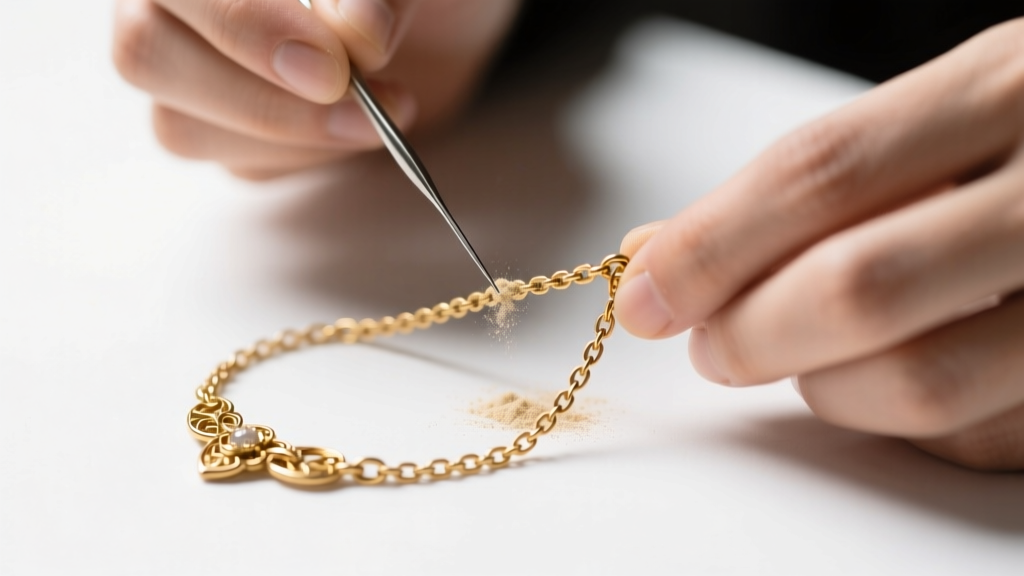
To safely untangle a severe knot in a 22-gauge or 24-gauge lavaliere chain, lay the necklace flat on a non-porous white surface. Apply a small amount of talc-free baby powder or cornstarch directly to the knot. The powder acts as a dry lubricant, eliminating the friction between the metal links. Using two fine-tipped beading needles (size 10 or 12), gently work the needles into the center of the knot and vibrate them in opposite directions to loosen the tension. Once loosened, use a soft-bristled brush to remove the powder before wearing.
Problem 3: Bail Wear and Metal-on-Metal Friction
A hidden danger in vintage lavaliere necklaces is 'sawing'—a process where the bail of the pendant slowly cuts through the chain over years of wear. This is particularly aggressive when mixing gold purities.
Gauge Matching and Jump Ring Sizing
Gold hardness is measured on the Vickers scale (HV). Standard 14k yellow gold has a hardness of approximately 130 HV, while 18k yellow gold is softer, at roughly 125 HV. If you hang a heavy 14k gold lavaliere pendant on a delicate 18k gold chain, the harder 14k bail will act like a file against the softer 18k chain links, eventually sawing through the chain at the contact point.
Expert Tip: Never mix a heavy, harder-karat pendant bail with a softer, fine-gauge chain. If you must pair them, insert a sacrificial buffer.
To prevent this, a jeweler can insert a 20-gauge, 4mm outer-diameter (OD) platinum or stainless steel jump ring through the bail, and then thread the gold chain through the jump ring. The platinum acts as a frictionless, wear-resistant buffer that will outlast both the chain and the bail. For more on metal properties and wear, consult the GIA Jewelry Care Guide.
Problem 4: Vintage Spring Ring Clasp Slippage
Many antique and vintage lavaliere necklaces feature small spring ring clasps (often 5mm or 6mm in diameter). Over decades of use, the internal tension spring weakens, or the tiny lever tab bends, causing the clasp to pop open unexpectedly and risking the loss of the necklace.
Upgrading to a Lobster Claw or Safety Chain
Rather than repeatedly bending the fragile vintage tab, the most secure troubleshooting method is to upgrade the closure system. A 7mm or 9mm 14k gold lobster claw clasp provides a much stronger internal spring mechanism and a wider opening for easy attachment. If preserving the original vintage spring ring is vital for the piece's historical value, you must install a secondary safety chain. A 1.5mm wide, 1-inch safety chain soldered to the end rings will catch the necklace if the primary clasp fails, preventing the heavy lavaliere drop from falling to the floor and shattering.
Preventative Maintenance for Lavalieres
To ensure the longevity of your lavaliere necklace, implement a strict maintenance routine. Ultrasonic cleaners are highly effective for removing body oils from the pendant setting, but the high-frequency vibrations can easily snap a 22-gauge chain if the necklace is fully submerged. Always suspend the chain outside the ultrasonic tank, allowing only the pendant to enter the cleaning solution.
Furthermore, store the necklace flat or hang it vertically on a jewelry stand. Never toss a lavaliere necklace into a communal jewelry box, as the heavy drop pendant will inevitably crush and kink the fine links of the accompanying chain. For comprehensive guidelines on storing and handling fine antique jewelry, refer to the educational resources provided by Jewelers of America. By understanding the specific mechanical stresses placed on a lavaliere necklace, you can troubleshoot issues proactively and preserve these elegant pieces for future generations.


