Fixing a White Gold Rosary Necklace: Tarnish, Tangles, and Breakage
Is your white gold rosary necklace turning yellow or tangling? Expert troubleshooting guide to fix rhodium wear, chain snags, and weak jump rings.


The Anatomy of White Gold Rosary Chain Failures
A white gold rosary necklace is more than a piece of devotional jewelry; it is a complex mechanical assembly. Unlike standard cable or curb chains, a rosary chain (often called a bead-and-link chain) alternates between rigid spherical beads and flexible oval links. While visually striking, this alternating geometry creates unique stress points that make these necklaces highly susceptible to specific failure modes. High-end manufacturers use laser-soldered links to prevent pulling, but mass-produced versions often rely on friction-closed links that easily deform. If you are dealing with a yellowing finish, chronic tangling, or broken centerpieces, understanding the metallurgy and mechanics of your chain is the first step toward a permanent fix.
Problem 1: The 'Yellowing' Effect and Rhodium Depletion
The most common complaint with any white gold jewelry is the gradual yellowing of the metal. White gold does not exist in nature; it is an alloy of yellow gold mixed with white metals like nickel, palladium, or silver. To achieve a brilliant, mirror-like white finish, manufacturers electroplate the piece with rhodium, a platinum-group metal. According to the Gemological Institute of America (GIA), rhodium plating typically ranges from 0.75 to 1.5 microns in thickness.
In a rosary chain, the friction between the swinging beads and the connecting links acts like a micro-abrasive, wearing down the rhodium on the links much faster than on a standard chain. When the plating wears thin, the natural yellowish-grey hue of the underlying 14k or 18k alloy becomes visible.
Troubleshooting and Fixes
- Do Not Use Silver Polish: Silver polishing cloths contain mild abrasives designed to remove tarnish. Using them on white gold will strip the remaining rhodium plating, accelerating the yellowing effect.
- The Re-Plating Solution: Take the necklace to a professional jeweler for a rhodium 'dip.' This process involves ultrasonic cleaning, polishing, and electroplating. Expect to pay between $45 and $75 depending on the chain's length and the thickness of the new micron layer.
- Upgrade to Palladium White Gold: If you are replacing the chain, opt for a palladium-alloyed white gold rather than a nickel-alloyed one. Palladium white gold has a naturally whiter base color, meaning rhodium wear is far less noticeable.
Problem 2: Chronic Tangling in Alternating Links
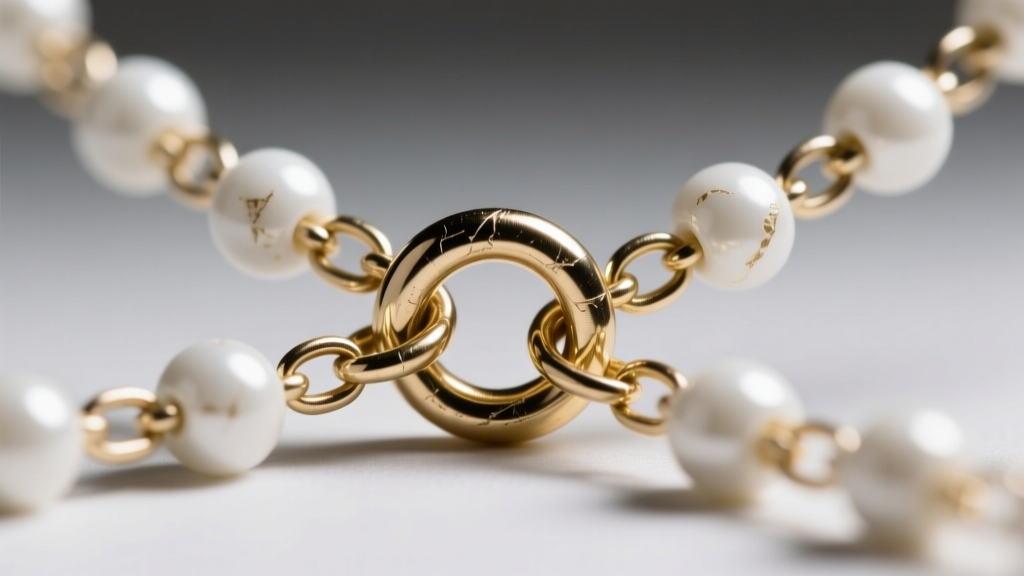
Rosary chains are notorious for tangling. The spherical beads act as rigid anchors, while the oval links serve as multi-axis hinges. When stored improperly or subjected to movement, the links can fold back onto the beads, creating tight, complex knots that easily snap if pulled.
Chain Gauge vs. Tangling Propensity
| Chain Gauge | Bead Diameter | Tangling Risk | Durability Profile |
|---|---|---|---|
| 1.0mm | 1.5mm | High | Low (Prone to snapping under knot tension) |
| 1.2mm | 2.0mm | Moderate | Medium (Industry standard for lightweight pendants) |
| 1.5mm | 2.5mm | Low | High (Best for daily wear and heavier crucifixes) |
The Cornstarch Untangling Method
If your 1.2mm rosary chain has knotted, do not pull it. Instead, lay the necklace flat on a dark, non-porous surface. Generously dust the knot with cornstarch or baby powder. The powder eliminates the microscopic friction between the gold links. Using two fine sewing needles, gently work the center link of the knot outward. The powder allows the metal to slide against itself without binding or scratching the rhodium.
Problem 3: Centerpiece and Crucifix Detachment
The structural weak point of almost every white gold rosary necklace is the jump ring connecting the crucifix and the centerpiece medal to the main chain. Because the crucifix acts as a pendulum, it exerts continuous kinetic stress on this single connection point.
Many mass-produced rosaries use unsoldered split jump rings. Over time, the pendulum motion causes the gap in the split ring to widen, eventually allowing the crucifix to slip through and fall off.
The Laser Welding Fix
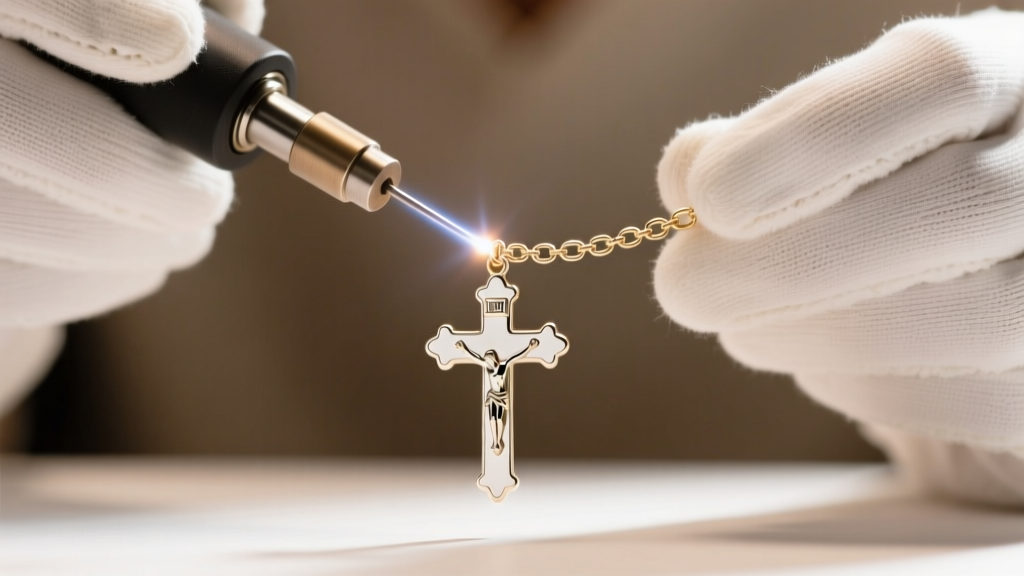
Inspect the jump ring holding your crucifix. If you see a visible seam or gap, it is unsoldered. A jeweler can easily close this ring and use a laser welder to fuse the seam shut. Laser welding is highly precise and will not melt or damage the delicate surrounding links or the rhodium plating. This preventative repair typically costs between $15 and $30 and effectively eliminates the risk of losing your centerpiece.
Problem 4: Clasp Failure and Spring Ring Fatigue
Rosary necklaces are frequently put on and taken off, placing immense repetitive stress on the clasp. Most lightweight rosaries come equipped with a 4mm or 5mm spring ring clasp. The internal spring mechanism in these tiny clasps is prone to metal fatigue, and the microscopic soldered ring on the opposite end of the chain often fractures under lateral pressure. Furthermore, the tiny gap in a spring ring easily catches hair and loose threads, which can pull the mechanism open without you noticing.
The Fix: Upgrade the clasp. Have a jeweler replace the spring ring with a 5mm or 6mm solid lobster claw clasp. Lobster claws feature a solid internal mechanism and a thicker outer shell, providing vastly superior tensile strength. Ensure the jump rings connecting the new clasp to the chain are also laser-soldered shut to prevent the clasp from sliding off the chain entirely.
Preventative Maintenance Checklist
To maximize the lifespan of your white gold rosary necklace and minimize trips to the jeweler, follow these strict maintenance protocols endorsed by industry groups like Jewelers of America:
Expert Insight: 'The combination of skin oils, cosmetic lotions, and environmental sulfur creates a corrosive film on gold alloys. Regular, gentle cleaning is non-negotiable for preserving both the metal and the rhodium finish.' — Master Jeweler Bench Notes
- Weekly Cleaning: Soak the necklace in a bowl of warm water with three drops of mild, phosphate-free dish soap for 10 minutes. Gently agitate with a baby-soft toothbrush, focusing on the crevices where the beads meet the links. Rinse with distilled water and pat dry with a microfiber cloth.
- Chemical Avoidance: Never wear your rosary in chlorinated pools or hot tubs. Chlorine reacts with the copper and nickel alloys in 14k white gold, causing 'stress corrosion cracking' that makes the links brittle and prone to shattering under minimal pressure.
- Proper Storage: Never toss a rosary chain into a jewelry box. The beads will inevitably snag on other pieces. Always hang the necklace from a dedicated hook or lay it perfectly flat in a lined, anti-tarnish drawer to prevent the links from folding onto the beads.
By understanding the specific mechanical and metallurgical vulnerabilities of your white gold rosary necklace, you can transition from reactive repairs to proactive preservation, ensuring this meaningful piece remains intact and brilliant for decades.


