Troubleshooting Your Women's Star of David Necklace: Fixes & Care
Is your women's Star of David necklace tangling, tarnishing, or flipping? Discover expert troubleshooting tips, chain fixes, and metal care solutions.
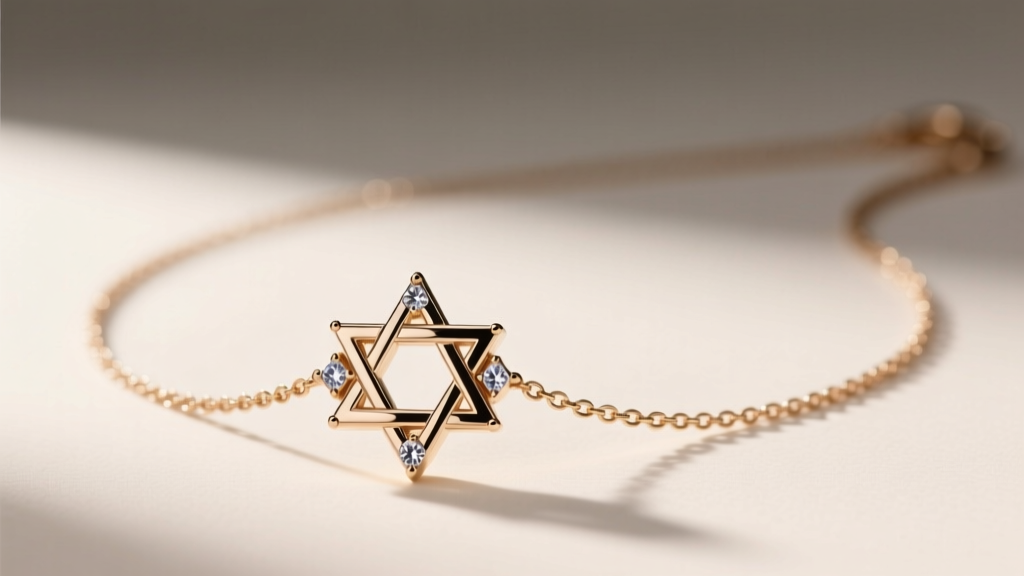

The Star of David, or Magen David, is a profound symbol of faith and heritage, but its distinct hexagram geometry presents unique engineering challenges in jewelry design. A beautifully crafted women's Star of David necklace can quickly become a source of frustration if the pendant constantly flips, the chain tangles around the sharp points, or the metal tarnishes prematurely. As jewelry specialists, we see these specific mechanical and metallurgical failures frequently. This comprehensive troubleshooting guide addresses the root causes of these issues and provides actionable, expert-level solutions to restore your necklace's function and beauty.
The Geometry Problem: Why Star Pendants Tangle and Flip
The hexagram consists of two interlocking equilateral triangles, creating six distinct points. The top apex and bottom nadir act as natural snag points. When paired with a highly flexible chain, such as a standard 1.0mm cable chain, the nadir point easily hooks into the links during daily movement, causing relentless tangling.
Solving the Tangling Issue
To prevent the chain from catching on the pendant's points, you must alter the chain's flexibility profile. We recommend upgrading to a 1.2mm to 1.5mm box chain or a wheat chain. Box chains possess a structural stiffness that prevents them from bending sharply enough to loop over the star's bottom point. If you prefer the look of a cable chain, ensure it is at least 1.2mm thick; anything thinner lacks the tensile rigidity required to resist the hexagram's snag points.
Fixing Pendant Flipping
Pendant flipping occurs when the center of gravity is misaligned with the bail. Many mass-produced Star of David pendants feature a fixed, soldered bail attached directly to the top point. Because the star is wide and relatively top-heavy, any slight movement causes it to rotate upside down.
Expert Fix: Take the pendant to a local jeweler and request a 'V-shaped floating bail' or a 'sliding tube bail.' This distributes the weight across a wider surface area of the top triangle, anchoring the pendant flat against the collarbone and reducing flipping by over 90%.

Material Degradation: Tarnish, Allergies, and Vermeil Wear
The environment against your skin is highly corrosive to certain metals. Understanding the exact material grade of your necklace is critical for troubleshooting skin irritation and discoloration.
Sterling Silver Tarnish and Green Skin
Authentic 925 sterling silver contains 92.5% pure silver and 7.5% copper. It is the copper that reacts with sulfur in the air and the acids in your sweat, causing black tarnish and occasionally leaving a green residue on your skin.
- Quick Fix: Clean the pendant using a mild, phosphate-free dish soap and a soft baby toothbrush. Avoid ultrasonic cleaners if your Star of David features intentional oxidation (blackened crevices for contrast), as the cavitation will strip the patina.
- Permanent Solution: Have the pendant electroplated with a 0.5-micron layer of rhodium. This platinum-family metal creates an inert, tarnish-proof barrier that costs between $35 and $60 at most bench jewelers.
The Truth About Gold Vermeil Friction Wear
According to the Federal Trade Commission Jewelry Guides, true gold vermeil must consist of a sterling silver base plated with at least 2.5 microns of 10k or higher gold. However, the interior of the bail experiences constant friction against the chain. A 2.5-micron layer will typically wear through to the silver base within 12 to 18 months of daily wear at this specific friction point. If your bail looks silver while the star remains gold, this is the culprit. The only permanent fix is to upgrade to a solid 14k gold chain and pendant, or to have the bail specifically re-plated with a hard, 24k gold strike layer.
Nickel Allergies in White Gold
If your white gold Star of David necklace causes a red, itchy rash on your chest, the issue is likely the nickel alloy used to bleach the gold white. While the rhodium plating on new white gold prevents this, once the plating wears thin on the back of the pendant, the nickel contacts your skin. Switch to a nickel-free 14k palladium white gold or a 316L surgical stainless steel alternative.

Hardware Failures: Clasps and Bails
The hardware components are the weakest links in any fine jewelry piece. Identifying the failure mode early can prevent the loss of a cherished heirloom.
Spring Ring vs. Lobster Clasp Fatigue
Many lightweight women's necklaces come equipped with 4mm spring ring clasps. The internal steel spring in these clasps is prone to fatigue and corrosion from sweat, leading to a trigger that fails to snap back. If your clasp feels 'mushy' or stays open, it is a critical failure risk. Upgrade to a 5mm or 6mm solid lobster clasp. Lobster clasps utilize a heavier, more reliable spring mechanism and offer a wider jaw opening, making them significantly easier to operate and far less likely to fail under the 1.2mm chain tension.
Bail Sawing and Jump Ring Gapping
Over time, a metal chain acts like a microscopic file against the inside of the pendant's bail. This phenomenon, known as 'bail sawing,' can cut completely through a 1.5mm sterling silver bail in as little as three years. Furthermore, the jump ring connecting the clasp to the chain can slowly twist open under lateral stress.
To troubleshoot this, inspect the bail hole and jump rings monthly. If you see a deep groove forming inside the bail, a jeweler can solder a hardened platinum or stainless steel liner inside the hole for approximately $45, effectively stopping the sawing process. Always ensure jump rings are soldered shut or upgraded to seamless split rings.
Quick Reference Troubleshooting Matrix
| Issue | Root Cause | Quick Fix | Permanent Solution |
|---|---|---|---|
| Pendant Flipping | Fixed bail; top-heavy hexagram geometry | Thread chain through a clear silicone stopper bead | Solder a V-shaped floating bail |
| Chain Tangling | Flexible cable chain catching on nadir point | Untangle using baby powder and two sewing needles | Swap to a 1.2mm box or wheat chain |
| Bail Wear-Through | Friction sawing from metal-on-metal contact | Inspect monthly for thinning metal | Install a hardened platinum jump ring liner |
| Skin Irritation | Nickel alloys or copper oxidation | Apply clear nail polish to the pendant's back | Rhodium plate or switch to 316L steel |
Preventative Care and Storage Solutions
Proper storage is just as critical as mechanical repairs. The Jewelers of America Care Guidelines emphasize that environmental control is the best defense against metal degradation. Never store your Star of David necklace in a humid bathroom or a cardboard box, as the sulfur compounds in paper products accelerate silver tarnishing.
Instead, store the necklace in a sealed polyethylene ziplock bag with a 3M anti-tarnish strip. These strips absorb airborne sulfur and hydrogen sulfide, keeping sterling silver bright for up to a year. Always lay the necklace flat or hang it vertically by the clasp; coiling it tightly in a jewelry box forces the chain links to bind and increases the likelihood of the star's points snagging the mesh. By understanding the unique mechanical demands of the hexagram shape and respecting the metallurgical limits of your chosen alloy, your necklace will remain a flawless, enduring symbol for decades to come.