Drawing Necklace Troubleshooting: Fixing Custom Art Pendants
Learn how to troubleshoot, clean, and repair custom drawing necklaces. Expert fixes for broken line-art pendants, chain snaps, and tarnished crevices.

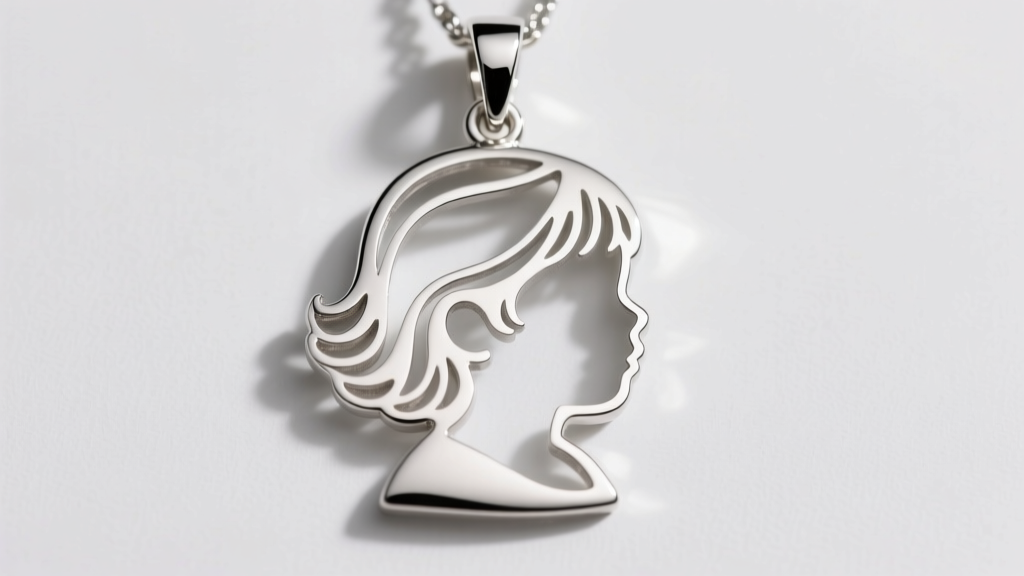
The Anatomy of a Drawing Necklace: Why Custom Art Fails
The custom drawing necklace has evolved from a niche artisan craft into a mainstream sentimental staple in 2026. Whether preserving a toddler's first crayon sketch or a detailed charcoal portrait, translating 2D paper art into 3D metal jewelry presents unique structural challenges. Unlike mass-stamped pendants, a drawing necklace relies on organic, often asymmetrical lines that can create severe weak points. When these bespoke pieces break, tarnish, or warp, standard jewelry repair advice often falls short. This guide provides metallurgical and mechanical troubleshooting for your custom art pendants.
To troubleshoot effectively, you must identify how your drawing necklace was manufactured. The two primary methods are laser-cutting from sheet metal and lost-wax casting. Laser-cut silver pendants are sheared from 1.2mm to 2.0mm sterling silver sheets. The heat of the laser leaves a microscopic recast layer along the edges, which can become brittle over time if not properly polished and tumbled. Lost-wax casting, conversely, involves 3D printing or hand-carving a wax model of the drawing, then casting it in molten metal. Cast pieces are prone to porosity—tiny internal air bubbles that compromise structural integrity, especially in the thin 'stick figure' limbs of a child's drawing.
Troubleshooting Structural Breakage in Sketch Pendants
The most catastrophic failure in a drawing necklace is the snapping of a delicate line-art appendage. If a sketched arm or petal breaks off, it is usually due to the metal's grain structure being compromised at a sharp interior corner. In metallurgy, sharp 90-degree interior angles act as stress concentrators, magnifying the kinetic force of daily movement until the metal yields.
Identifying Weak Points and Minimum Thickness
When reviewing a sketch for conversion, or diagnosing why an existing pendant fractured, examine the line width. According to fabrication guidelines from Rio Grande, laser-cut sterling silver requires a minimum continuous line thickness of 1.2mm to survive daily wear, while cast brass demands at least 1.5mm due to its lower tensile strength and higher brittleness.
| Metal Type | Manufacturing Method | Minimum Line Thickness | Vickers Hardness (HV) |
|---|---|---|---|
| 925 Sterling Silver | Laser Cut (Sheet) | 1.2mm | 65-75 (Annealed) |
| 925 Sterling Silver | Lost-Wax Cast | 1.5mm | 60-70 (As-Cast) |
| 14k Yellow Gold | Lost-Wax Cast | 1.0mm | 110-130 |
| Jeweler's Brass | Laser Cut (Sheet) | 1.5mm | 80-90 |
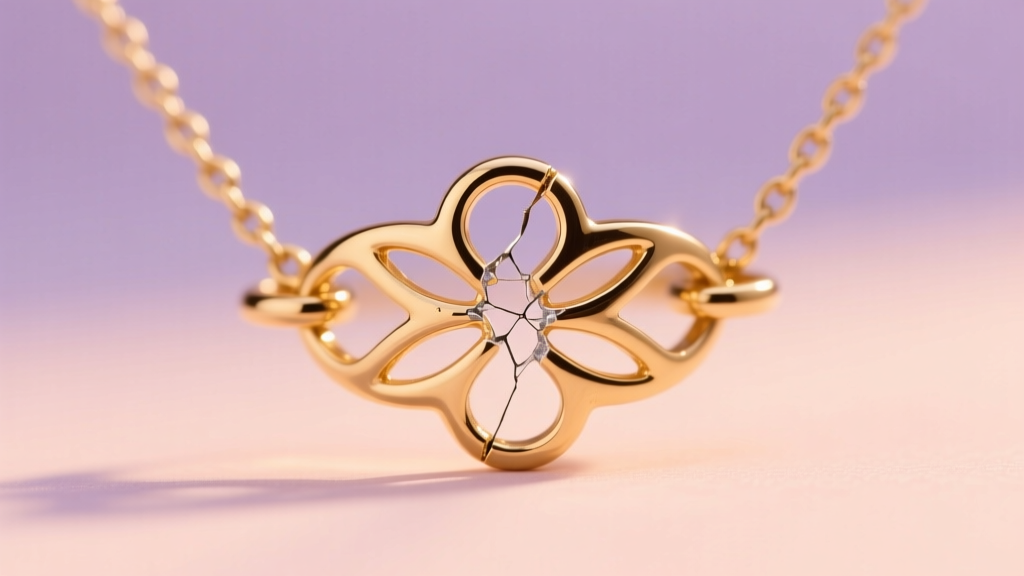
Chain Pairing: Preventing Snaps and Bail Failures
A heavy cast drawing necklace will effortlessly destroy an inadequate chain. The bail—the loop connecting the pendant to the chain—is the primary failure point. Custom art pendants often feature integrated bails (a hole punched directly through the top of the drawing) or soldered jump rings. If the drawing's top edge is less than 3mm wide, a soldered bail will lack sufficient surface area for the solder to bond, leading to inevitable shearing.
- The 3:1 Weight Rule: Your chain's breaking strength should exceed the pendant's weight by a factor of three. A 15-gram cast bronze sketch requires a chain rated for at least 45 grams of tensile pull.
- Bail Friction: Integrated holes in laser-cut silver will slowly saw through a soft 24k gold vermeil chain. Always pair raw silver or brass drawing pendants with solid stainless steel or solid gold chains to prevent galvanic corrosion and friction wear.
- Link Geometry: Wheat chains and rope chains are notorious for catching on the microscopic burrs left by laser cutters. If your drawing necklace has an unpolished or semi-matte finish, you must pair it with a smooth box chain or a sleek snake chain to prevent the pendant from acting as a saw blade against your chain links.
Fixing Warped or Bent Line-Art Pendants
Because drawing necklaces are often wide and flat, they are highly susceptible to bending when sat upon or crushed in a bag. If your sterling silver sketch pendant has warped, do not attempt to bend it back into shape with your bare hands. Sterling silver work-hardens rapidly; bending it back and forth will cause metal fatigue and a catastrophic snap at the bend line. Instead, a jeweler must anneal the piece using a butane torch, heating the silver to a dull cherry red (approximately 650°C) to relax the crystalline grain structure. Once annealed, the pendant can be gently pressed flat between two leather-covered steel blocks. If the drawing necklace was cast in brass or bronze, annealing is far more complex and requires a controlled kiln environment to prevent the zinc from volatilizing and leaving the metal spongy and pink-hued.
Cleaning Intricate Laser-Cut Crevices Without Damage
Custom drawing necklaces thrive on contrast. Jewelers often apply liver of sulfur to oxidize the recessed areas of a sketch, making the raised lines pop. However, this intentional patina makes cleaning a nightmare. Standard silver dips and ultrasonic cleaners will strip the oxidation from the crevices, leaving your drawing necklace looking flat, washed-out, and entirely devoid of its original depth.
The Safe Cleaning Protocol for Oxidized Art Jewelry
To remove sebum, lotion, and environmental dust from the intricate nooks of a sketched pendant without damaging the patina, you must abandon harsh chemicals. The Gemological Institute of America (GIA) consistently recommends mild, non-abrasive surfactants for complex jewelry topographies.
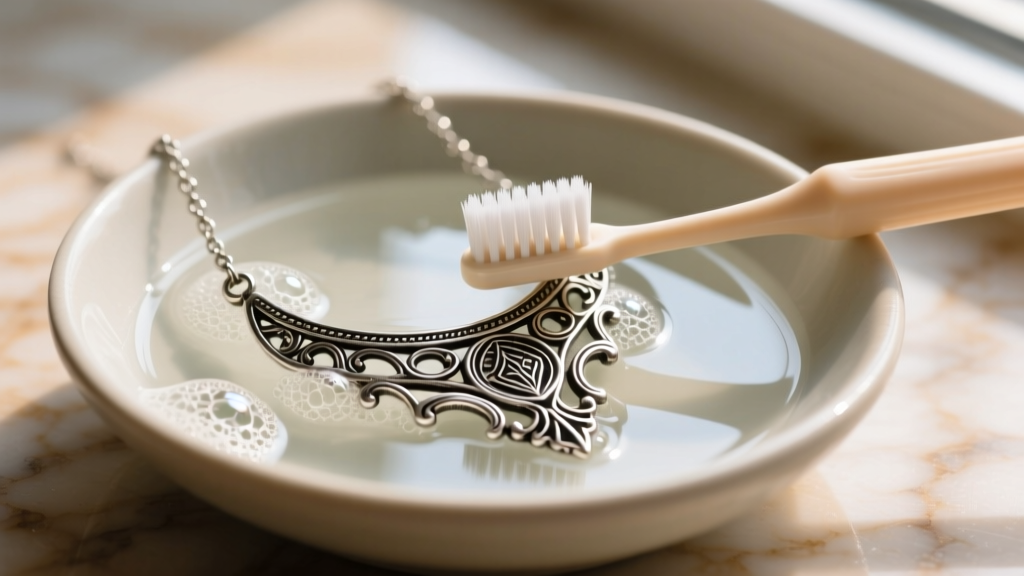
- Mix three drops of phosphate-free dish soap into a bowl of lukewarm distilled water. Avoid tap water, as dissolved minerals can leave micro-deposits in the laser-cut grooves.
- Submerge the drawing necklace for exactly four minutes to loosen organic oils.
- Use a super-soft baby toothbrush (bristles under 0.15mm) to gently agitate the crevices. Brush in the direction of the metal's grain, not against it.
- Rinse under a gentle stream of distilled water and pat dry with a lint-free microfiber cloth. Never use paper towels, as the wood fibers will snag on microscopic metal burrs left by the laser cutter.
Troubleshooting Enamel and Resin Fills in Sketch Jewelry
Many modern drawing necklaces incorporate cold enamel or UV-cured resin to add color to specific parts of a sketch, such as a child's drawing of a blue house or a red flower. Over time, these fills can shrink, crack, or detach from the metal walls. This detachment, known as delamination, occurs when the metal recess was not properly prepared before the resin was applied. To fix a shrinking resin fill, the old material must be completely excavated using a dental pick or a fiberglass scratch pen. The metal cavity must then be lightly abraded with 600-grit sandpaper and cleaned with pure acetone to ensure a mechanical bond for the new epoxy. According to jewelry conservation standards outlined by Jewelers Mutual, attempting to patch a cracked resin fill without full removal will result in a cloudy, uneven finish that traps moisture against the base metal, accelerating localized corrosion.
Upgrading Clasps for Asymmetrical Pendants
A unique problem with drawing necklaces is their asymmetrical weight distribution. A sketch of a dog, for instance, might be heavily weighted on the left side. This causes the pendant to constantly slide and rotate around the neck, bringing the clasp to the front. To solve this, you must introduce a counterweight or upgrade the clasp geometry. Adding a small, dense 14k gold or tungsten bead to the chain directly opposite the clasp will force the clasp to remain at the nape of the neck. Alternatively, swapping a standard spring-ring clasp for a magnetic neodymium clasp or a weighted box clasp provides a permanent anchor point, ensuring your custom art remains centered on the collarbone regardless of the drawing's inherent asymmetry.
Summary Checklist for Long-Lasting Art Jewelry
Preserving the emotional and material value of a drawing necklace requires proactive maintenance. By respecting the metallurgical limits of line-art jewelry, you ensure the piece survives for generations.
- Verify the pendant's thinnest point exceeds 1.2mm for silver and 1.0mm for 14k gold.
- Ensure the bail or jump ring is fully soldered, never relying on tension-closed rings for heavy cast pieces.
- Store the necklace flat in an anti-tarnish ziplock bag to prevent the chain from tangling and pulling on delicate sketched extremities.
- Avoid ultrasonic cleaners entirely if the piece features intentional oxidation or epoxy-resin enamel fills.


